Foodborne illness represents a significant health concern for families, particularly those with young children who have developing immune systems. Understanding and implementing proper food safety practices is essential for protecting your family from harmful bacteria such as Salmonella and E. coli. This guide provides practical strategies for every stage of food handling, from selection at the grocery store to preparation and storage in your home.
The Four Pillars of Food Safety
Food safety professionals and health organizations universally recommend following four fundamental principles that work together to create a comprehensive protection system. These pillars—cleaning, separating, cooking properly, and chilling—form the foundation of safe food practices in any household. By mastering each of these areas, parents can significantly reduce the risk of foodborne illness affecting their children.
Selecting and Transporting Food Safely
The journey to food safety begins before items enter your home. Smart shopping practices establish the groundwork for maintaining food quality throughout storage and preparation. When purchasing groceries, position refrigerated items such as meat, dairy products, eggs, and fish in your shopping cart last. This strategy minimizes the time these perishable foods spend at ambient temperature. Additionally, maintain physical separation between meat products and fresh produce to prevent any cross-contamination during transport.
Temperature control during transit deserves careful attention, especially during warm months or longer journeys. If your drive home exceeds one hour, transport perishable items in a cooler or insulated bag. Before purchasing packaged meat, poultry, or fish, always verify the expiration date and visually inspect the products for any signs of spoilage.
Proper Storage Techniques in Your Kitchen
Once groceries arrive home, correct storage methods preserve food quality and prevent bacterial growth. Eggs require special attention—store them in their original carton on a refrigerator shelf rather than in the door, as door compartments typically maintain warmer temperatures. Meat, poultry, and fish demand individual plastic bags to prevent their juices from contaminating other foods.
For longer-term storage, freeze raw meat, poultry, or fish if you will not be using them within several days. Processed meats require specific timelines: unopened packages of hot dogs and deli meats remain safe in the refrigerator for up to two weeks, opened hot dog packages for one week, and opened deli meat packages for three to five days.
Your refrigerator temperature should remain at 40°F or below, while your freezer should be maintained at 0°F or below. Bacteria multiply rapidly in the danger zone between 40°F and 140°F, making proper temperature control critical. If your refrigerator lacks a built-in thermometer, install an appliance thermometer to verify temperatures regularly.
Hygiene and Surface Management
Hand washing represents one of the most effective defenses against foodborne pathogens. Wash your hands thoroughly with warm water and soap for at least twenty seconds before preparing food, after handling raw meat, poultry, fish or eggs, before eating, and after using the bathroom. This simple action prevents the transfer of harmful bacteria from your hands to food and food contact surfaces.
Beyond hand hygiene, kitchen surfaces require frequent and thorough cleaning. Wash cutting boards, dishes, utensils, and countertops with hot soapy water after preparing each food item. This practice becomes especially important after handling raw meat or poultry, as these products harbor bacteria that can contaminate other foods.
Cloth materials used in food preparation deserve attention as well. Dish towels and cutting boards are known to harbor bacteria, necessitating frequent cleaning. Consider using paper towels for cleaning kitchen surfaces, or launder cloth towels regularly using the hot water cycle. Implement separate cutting boards for meat and produce, and use different plates and utensils for cooked and raw foods.
Preventing Cross-Contamination During Food Preparation
Cross-contamination occurs when bacteria from one food item transfer to another, a particularly concerning risk when raw proteins come into contact with ready-to-eat foods. Raw meat, chicken, poultry, seafood, and eggs can spread harmful germs to ready-to-eat foods unless you maintain careful separation.
Implement these separation strategies in your kitchen:
- Maintain distinct cutting boards for raw meat and fresh produce
- Use separate plates and utensils for cooked foods and raw foods
- Store raw meat on lower refrigerator shelves where juices cannot drip onto other foods
- Place raw meat, chicken, and seafood in separate plastic bags during storage
- Never transfer raw meat juices to surfaces where ready-to-eat foods will be prepared
Thawing and Preparing Raw Proteins
Proper thawing prevents bacterial multiplication that occurs at room temperature. Thaw meat, poultry, and fish in the refrigerator or microwave, never at room temperature. Once thawed, cook these proteins immediately without delay.
A common misconception involves washing raw chicken and other poultry. Washing raw meat and poultry actually spreads germs throughout your kitchen rather than eliminating them, so skip this step in your preparation routine.
When marinating meat, poultry, or seafood, use the refrigerator exclusively. If you plan to use leftover marinade as a sauce, prepare extra fresh marinade that has not contacted raw foods. Discard any uncooked marinade that has held raw proteins.
Cooking to Safe Internal Temperatures
Color and texture provide unreliable indicators of food safety. A food thermometer is the only dependable method to verify that meat, poultry, seafood, and egg products have reached temperatures that destroy harmful bacteria. Using a thermometer removes guesswork from cooking and ensures your family’s safety.
Safe minimum internal temperatures vary by protein type:
| Food Type | Temperature | Celsius Equivalent |
|---|---|---|
| Poultry (whole, pieces, and ground) | 165°F | 74°C |
| Ground beef, veal, pork, and lamb | 160°F | 71°C |
| Steaks, roasts, and chops (beef, veal, pork, lamb) | 145°F with 3-minute rest | 63°C |
| Fish | 145°F | 63°C |
| Egg dishes | 160°F | 71°C |
| Leftovers (reheating) | 165°F minimum | 74°C |
For eggs and egg-containing dishes, cook until yolks and whites are completely firm. Avoid serving foods containing raw eggs, such as uncooked cookie dough, homemade eggnog, or certain homemade ice cream recipes. If a recipe calls for raw eggs, substitute pasteurized eggs available in most grocery store dairy sections.
Safe Chilling and Refrigeration Practices
Refrigeration halts bacterial growth, but timing is critical. Never leave perishable food out for more than two hours at room temperature. If the environment exceeds 90°F, reduce this window to one hour. This time restriction applies to prepared foods, cooked dishes, and perishable items awaiting storage.
Bacteria capable of causing foodborne illness multiply rapidly in the danger zone between 40°F and 140°F. Even brief periods in this temperature range allow bacterial populations to expand significantly. Once food reaches room temperature, bacteria have already begun reproducing, and subsequent refrigeration cannot eliminate the pathogens that have already multiplied.
Managing Produce and Special Food Items
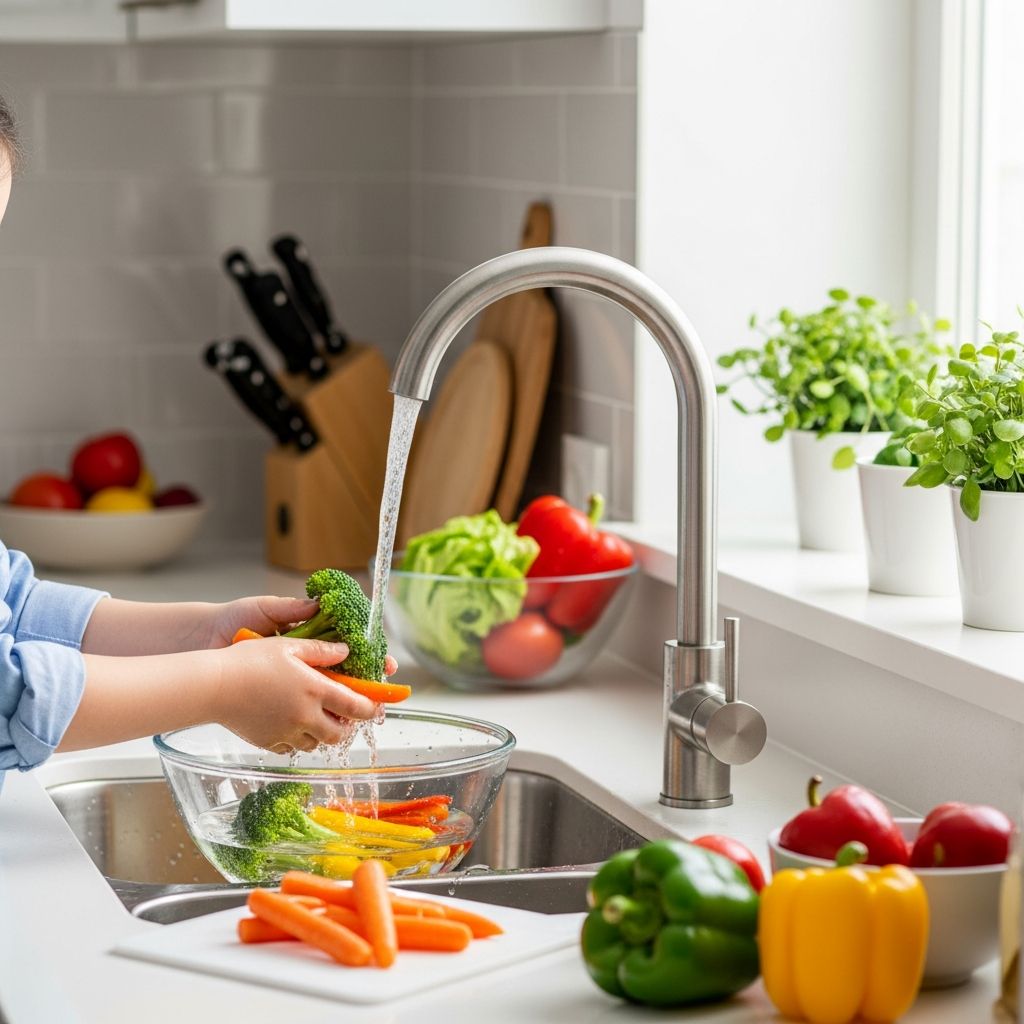
Fresh fruits and vegetables require washing under running water before consumption. This simple step removes surface dirt and reduces contamination risk. Prioritize fresh or frozen fruits and vegetables over packaged or processed alternatives whenever possible.
Rice-based products present special concerns, as inorganic arsenic can be found in rice and may contaminate some private water wells. While rice cereal fortified with iron provides valuable nutrients for infants, it should not be the sole source of grains. Diversify grain offerings with oat, barley, and multigrain cereals. Reduce rice-based snacks in favor of fresh fruits and vegetables.
Families relying on private water wells should test for arsenic and other key contaminants as directed by the U.S. Environmental Protection Agency.
Reducing Chemical Exposure Through Food Storage
Beyond bacterial contamination, certain plastics used in food storage and preparation can leach harmful chemicals. To reduce exposure to plastic-based chemicals such as bisphenol-A (BPA) and phthalates, choose glass or stainless steel containers when possible.
Recycling codes on plastic containers indicate relative safety levels. Codes 1, 2, 4, and 5 represent safer alternatives, while codes 3 (phthalates), 6 (styrene), and 7 (bisphenols) pose greater concerns. Never microwave food in plastic containers—use glass instead. Additionally, avoid placing plastic food containers in the dishwasher, as heat exposure may increase chemical leaching.
Recognizing Symptoms of Foodborne Illness
Despite careful planning and implementation of safety practices, food can occasionally become contaminated. Symptoms of foodborne illness resemble other intestinal conditions and may include nausea, vomiting, diarrhea, and abdominal cramps. Symptoms can appear within hours of consuming contaminated food or may take several days to develop.
Children under age five face higher risk of developing serious illness from contaminated food, making prevention practices especially important for families with young children. If you suspect foodborne illness, consult with your healthcare provider about appropriate treatment and monitoring.
Frequently Asked Questions
Is it safe to wash raw chicken before cooking?
No. Washing raw chicken and other poultry spreads bacteria around your kitchen rather than removing it. Skip this step and rely on cooking to proper internal temperatures to eliminate harmful bacteria.
How long can food safely sit at room temperature?
Perishable foods should not sit out for more than two hours at room temperature. If the temperature exceeds 90°F, reduce this time to one hour. Bacteria multiply rapidly in the danger zone between 40°F and 140°F.
What is the most reliable way to ensure meat is safely cooked?
Use a food thermometer to check internal temperature. Color and texture are unreliable indicators of safety. Different proteins require different safe minimum temperatures, ranging from 145°F for fish to 165°F for poultry.
Should I store eggs in the refrigerator door?
No. Store eggs in their original carton on a refrigerator shelf. Refrigerator doors do not maintain cold enough temperatures to safely store eggs.
Are there special considerations for children at higher risk of foodborne illness?
Yes. Children under age five, along with pregnant people, immunocompromised individuals, and elderly family members, face higher risk. Consider safer food options such as pasteurized eggs in dressings, thoroughly cooked sprouts instead of raw, and avoiding raw eggs and honey.
References
- Food Safety and Children — American Academy of Pediatrics (AAP). 2024. https://www.aap.org/en/patient-care/environmental-health/promoting-healthy-environments-for-children/food-safety/
- Preventing Food Poisoning — Centers for Disease Control and Prevention (CDC). 2024. https://www.cdc.gov/food-safety/prevention/index.html
- Safe Food Handling — U.S. Food and Drug Administration (FDA). 2024. https://www.fda.gov/food/buy-store-serve-safe-food/safe-food-handling
- 4 Steps to Food Safety — FoodSafety.gov, U.S. Department of Agriculture. 2024. https://www.foodsafety.gov/keep-food-safe/4-steps-to-food-safety
- Summer Food Safety Tips: Don’t Let Germs Spoil Your Outdoor Family Meal — American Academy of Pediatrics (AAP) HealthyChildren.org. 2024. https://www.healthychildren.org/English/healthy-living/nutrition/Pages/food-safety-tips-for-your-next-outdoor-family-meal.aspx