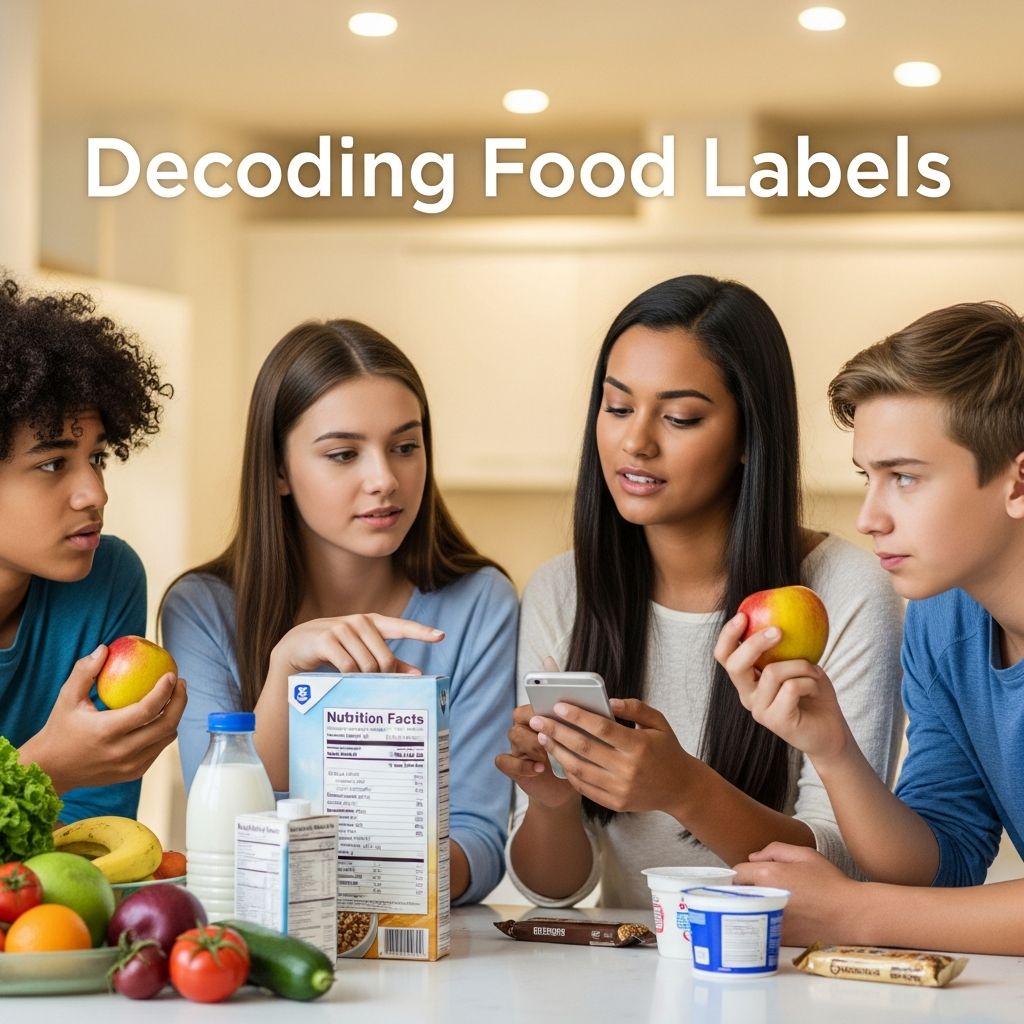
Food labels hold the secrets to what you’re really eating. As a teen, mastering them helps you fuel your body right, whether for sports, studies, or just feeling great. This guide breaks down every part, from servings to sneaky sugars, so you can pick foods that support your energy and health.
Why Teens Need Label-Reading Skills
Your body is changing fast—growth spurts, brain development, and active lifestyles demand top nutrition. Poor choices like high-sugar snacks can lead to energy crashes, weight gain, or long-term issues like diabetes risk. Labels give facts to compare options, spot hidden unhealthy stuff, and align eats with goals like building muscle or staying lean.
Start by flipping packages over. Ignore flashy fronts; real info hides on the back. With practice, you’ll spot winners fast, saving money and health.
Mastering Serving Sizes and Calories
The top of every label starts with serving size and servings per container. This is the baseline for all numbers below—one serving might be half a bag or one cookie, not what you actually eat.
For example, a chip bag lists 150 calories per serving but has 3 servings. Eat the whole thing? That’s 450 calories. Always check and multiply if needed. Serving sizes are standardized by FDA to match typical teen portions like a cup of cereal or a soda can.
| Common Serving Tricks | Reality Check |
|---|---|
| Small candy bar: 1 piece (100 cal) | Bar has 4 pieces = 400 cal total |
| Yogurt: 1/2 cup (120 cal) | Full container = 1 cup, 240 cal |
| Juice: 8 oz (110 cal) | Bottle has 2.5 servings = 275 cal |
Calories show energy per serving. Aim for balance: active teens need 2,200-3,200 daily, but quality matters—veggies over candy. Bolded on new labels for quick scans.
Nutrients to Boost: The Good Guys
Labels split nutrients into limit (fats, sodium) and get more (fiber, protein). %Daily Value (%DV) gauges: 5% or less low, 20%+ high, based on 2,000-calorie diet.
- Total Fat: Needed for hormones, but watch types. Saturates <10% calories; trans fats zero.
- Cholesterol & Sodium: Limit to <300mg and <2,300mg daily. High links to heart strain.
- Carbs: Fuel brain/sports. Prioritize fiber (25-30g/day) over sugars.
- Protein: Builds muscle—teens need 45-60g. Great in nuts, yogurt.
- Vitamins/Minerals: Vitamin D, calcium for bones; iron for energy.
Added sugars now called out—cap at <10% calories (50g max). They spike blood sugar without nutrition.
Ingredients: What’s Really Inside?
Listed by weight, first items dominate. Short lists with real foods (oats, apples) beat long ones with syrups, dyes.
Sugar aliases: corn syrup, dextrose, maltose—over 60 names. Artificial stuff signals ultra-processed junk linked to obesity. Check for allergens like nuts, gluten at end.
Quick Ingredient Red Flags
- Ends in “-ose” (fructose, sucrose)
- Partially hydrogenated oils (trans fat)
- Long chemical names
- Artificial colors/flavors
Understanding Claims and Buzzwords
Front labels tempt with “low-fat” or “natural.” Verify with facts:
| Claim | Legal Meaning (per FDA) |
|---|---|
| Low Fat | <3g fat/serving |
| Reduced Sugar | 25% less than original |
| Good Source of Fiber | 10-19% DV/serving |
| Calorie Free | <5 cal/serving |
“Organic” means no synthetics but can still be sugary. “Natural” has no strict rules. Use %DV to confirm claims.
Practical Strategies for Daily Wins
Make label-reading a habit:
- Shop Smart: Compare 2-3 similar items. Choose higher protein/fiber, lower sugar.
- Apps Help: Scan barcodes for grades (Yuka, Fooducate).
- Family Challenge: Weekly hunts for hidden sugars.
- Athlete Focus: Protein-packed, low-sodium for recovery.
For weight management, track totals. Apps like MyFitnessPal log accurately.
Labels for Special Needs
Diabetes? Eye carbs, pick high-fiber. Allergies? Scan bold warnings. Athletes: Balance macros for performance.
Vegetarian? Check hidden gelatin. New labels highlight vitamins like potassium for blood pressure.
Frequently Asked Questions (FAQs)
Q: How do I know if a food is healthy overall?
A: Balance: High in fiber/protein/vitamins, low in added sugars/sodium/saturates. Short ingredients win.
Q: What’s the %DV based on?
A: 2,000-calorie adult diet, but adjust for teens: more active = higher needs.
Q: Are front claims trustworthy?
A: Not always—check Nutrition Facts to verify.
Q: How to teach friends label-reading?
A: Play games like word searches or comparisons at lunch.
Q: Do drinks have labels?
A: Yes—watch sugars in sodas, energy drinks.
Build Your Label Superpowers Now
Practice weekly: Next grocery trip, decode 5 items. Share wins online or with fam. Over time, you’ll eat intuitively healthy, dodging traps. Your future self—stronger, sharper—thanks you.
References
- Smart Label Reading for Kids’ Healthier Eating — Kidsville Pediatrics. 2023-10-12. https://www.kidsvillepeds.com/blog/1329249-reading-food-labels-the-key-to-healthier-eating-habits/
- Understanding Food Nutrition Labels — American Heart Association. 2024-05-15. https://www.heart.org/en/healthy-living/healthy-eating/eat-smart/nutrition-basics/understanding-food-nutrition-labels
- A Guide to Reading and Understanding Food Labels for Better Health — BayCare. 2024-04-10. https://baycare.org/newsroom/2024/april/a-guide-to-reading-and-understanding-food-labels-for-better-health
- Read the Label Youth Outreach Materials — U.S. Food and Drug Administration (FDA). 2023-11-01. https://www.fda.gov/food/nutrition-facts-label/read-label-youth-outreach-materials
- How to Understand and Use the Nutrition Facts Label — U.S. Food and Drug Administration (FDA). 2024-08-20. https://www.fda.gov/food/nutrition-facts-label/how-understand-and-use-nutrition-facts-label
- Understanding Food Labels — Harvard T.H. Chan School of Public Health. 2024-02-14. https://nutritionsource.hsph.harvard.edu/food-label-guide/