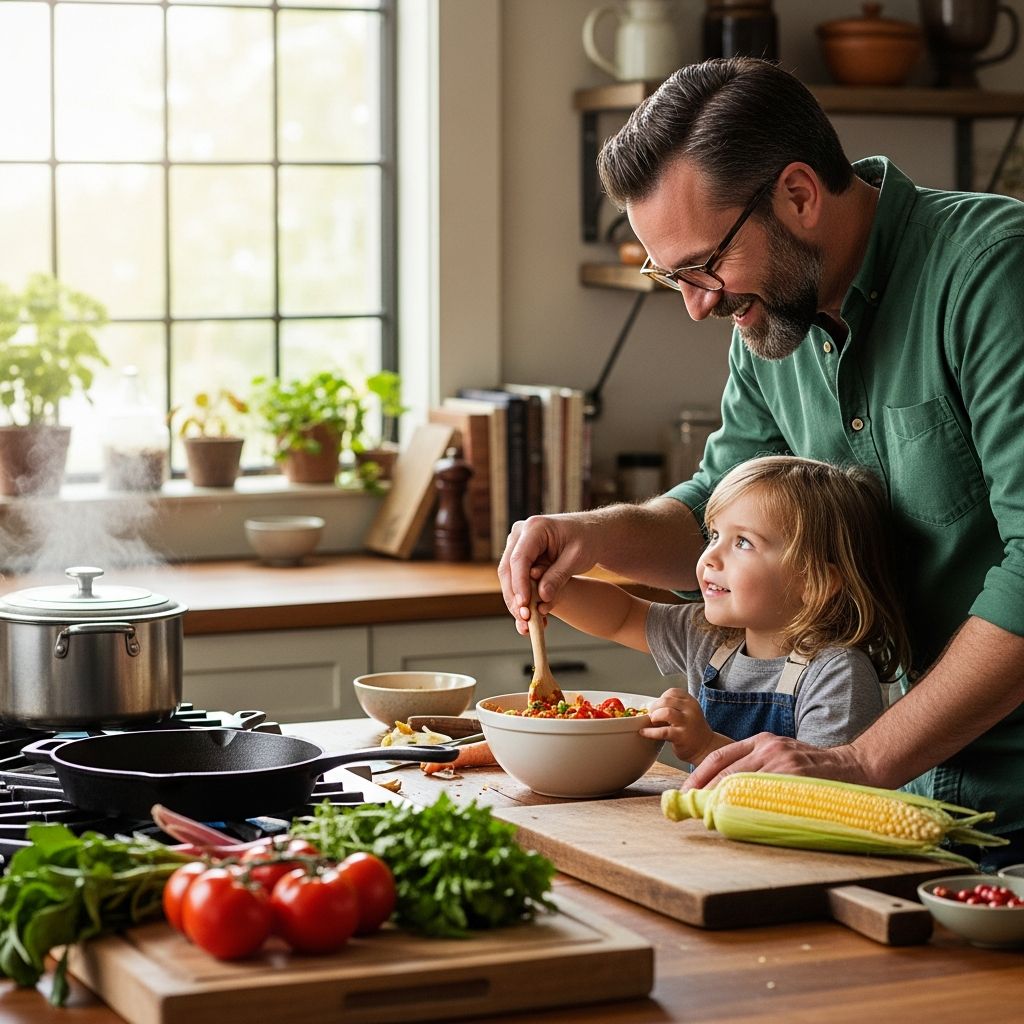
Successful chefs and present fathers seem to live in different worlds: one runs on late nights, relentless pressure, and perfection; the other asks for patience, flexibility, and time on the floor with sticky-fingered kids. Yet when looking closely at a chef who has devoted years to mastering Southern food and later turned intense focus toward his child, a surprising truth emerges: the same dedication that builds a great restaurant can also build a great home.
The Kitchen and the Nursery: Two Demanding Worlds
Professional kitchens and parenting share a core tension: both demand more energy, time, and emotional presence than seems humanly possible. The sharp contrast between the adrenaline of dinner service and the quiet vulnerability of bedtime stories exposes how modern fathers often live in two competing realities. Learning to move between those realities without burning out becomes a central challenge.
For many chefs-turned-dads, the birth of a child forces a difficult reckoning with schedules, priorities, and the legacy they want to leave behind. The measure of success starts to shift from reviews and awards to the everyday moments a child may one day remember: who showed up at dinner, who listened, and who stayed kind when things went wrong.
From Fire to Focus: Redefining Ambition After Kids
Before parenthood, ambition in the culinary world often means saying yes to everything: every new concept, every collaboration, every 16-hour shift that might push a career forward. The rewards are tangible—headlines, full reservation books, and the thrill of leading a high-performing team. Yet this same all-in mindset can quietly erode the foundations of family life if left unchecked.
When a committed chef becomes a parent, ambition does not disappear; it changes direction. The goals expand from building restaurants to building a life that a child experiences as safe, joyful, and rooted. That realignment can feel like a loss at first, but over time many fathers discover it as a deeper form of success: trading constant visibility for intentional presence.
Why Food Matters So Much to Fathers
Food is often the first language of care that many fathers were taught, whether through a grandparent’s garden, a parent’s cast-iron skillet, or a holiday table loaded with dishes that only appeared once a year. When they become parents themselves, cooking transforms from personal passion into a way of expressing love and security to their children.
For a chef steeped in Southern traditions, dishes like long-simmered beans, heirloom vegetables, and hand-ground cornmeal represent more than taste. They serve as living evidence of older generations’ resilience and creativity, particularly in rural communities where waste was unthinkable and every ingredient demanded respect.
Emotional Ingredients in Family Food
- Memory: A simple biscuit can carry decades of family history without a single word being spoken.
- Security: Predictable meals and familiar smells quietly reassure children that the world is stable and they are cared for.
- Identity: Regional dishes, accents, and rituals around the table help kids understand where they come from and who they belong to.
- Respect: Teaching kids not to waste food becomes a way of honoring the labor behind every ingredient—from seed to plate.
Lessons From the Line: What the Kitchen Teaches About Parenting
Life on the line trains chefs to manage chaos, coordinate complex tasks, and respond to constant feedback without losing composure. Many of those skills translate directly into parenting, especially in the unpredictable early years. The challenge is learning when to bring that structure home—and when to leave the barking orders at the restaurant door.
| Kitchen Skill | What It Looks Like at Work | How It Helps in Fatherhood |
|---|---|---|
| Time management | Coordinating dozens of dishes so they leave the pass together. | Balancing work, meals, bedtime, and partner time without constant crisis. |
| Planning and prep | Prepping ingredients hours before service for smooth execution. | Batch cooking, packing snacks, and organizing school mornings in advance. |
| Communication under pressure | Calling orders clearly and calmly in a noisy kitchen. | Staying patient with kids’ big feelings instead of yelling when stressed. |
| Respect for ingredients | Using every part of a vegetable or animal to avoid waste. | Teaching kids gratitude for food and awareness of where it comes from. |
| Adaptability | Changing dishes on the fly when suppliers run out of key items. | Handling sick days, schedule changes, and meltdowns with flexibility. |
Rituals at the Table: Building a Family Culture
In most restaurant kitchens, rituals keep teams grounded: pre-service meetings, staff meal, and the quiet routine of sharpening knives before the chaos begins. Fathers can borrow the power of ritual to build predictable, comforting rhythms at home, especially around the dinner table.
Children tend to remember repeated, simple moments more vividly than extravagant events. A Tuesday night pasta tradition or a weekly “breakfast for dinner” can anchor busy weeks and give kids something to look forward to, regardless of what storms may be swirling around the family.
Simple Family Meal Rituals Any Dad Can Start
- Rose and thorn: Each person shares one good thing and one hard thing from their day before eating.
- Helper rotation: Kids take turns choosing music, setting the table, or picking the vegetable side.
- Story night: Once a week, someone tells a story about an ancestor or memory connected to a dish.
- Phone-free zone: All devices stay off the table to protect 30–45 minutes of undistracted connection.
Balancing Heat: When Work Passion Burns Too Hot
For many high-achieving fathers—chefs or not—work can become both a sanctuary and an addiction. The kitchen, with its clear hierarchies and immediate feedback, may feel easier to manage than a household where toddlers change the rules every hour. The lure of staying late, adding another project, or opening one more location can quietly crowd out family life.
Learning to step away from the pass and go home requires a different kind of courage than running a kitchen. It means accepting imperfection in the professional realm in order to be more fully present in the personal one. This trade-off is often hardest for fathers whose identities are tightly wrapped around their work.
Warning Signs Work Is Taking Over
- Regularly missing bedtime, school events, or partner check-ins for non-emergency work tasks.
- Feeling more at ease at work than at home and extending shifts to avoid family conflict.
- Having no regular meals with kids during the week, even when schedules could be adjusted.
- Bringing kitchen-style intensity and criticism into everyday home interactions.
From Scarcity to Abundance: Healing Old Stories Through Food
Many chefs who come from modest or rural backgrounds carry vivid memories of food scarcity, financial stress, or parents who worked multiple jobs. These early experiences shape how they relate to both money and meals as adults and can influence how they raise their own children.
Fatherhood offers a chance to rewrite those stories, not by hiding hardship but by showing kids how resourcefulness and creativity can turn limited ingredients into plenty. Teaching children to cook simple, inexpensive dishes with respect can be a powerful way of passing down pride instead of shame.
Teaching Resilience Through the Pantry
- Turn pantry nights into a game: create dinner only from what is already on hand.
- Share age-appropriate stories of past struggles, focusing on how people helped one another and what was learned.
- Invite kids to help plan a low-cost meal, emphasizing flavor and technique instead of expensive ingredients.
- Celebrate humble dishes—beans, cornbread, stews—as “hero meals” that sustained previous generations.
Caring for the Caretaker: When Dad’s Health Is on the Line
The culture of professional kitchens often glorifies exhaustion, pain, and self-neglect as proof of dedication. Over time, this lifestyle can exact a steep physical and mental price, especially when combined with the emotional load of parenting. Many fathers reach a breaking point—health crises, burnout, or relationships fraying—before realizing how unsustainable their pace has become.
Choosing to prioritize sleep, therapy, medical care, or time away from work can feel selfish to a provider wired for constant output. Yet from a child’s perspective, a healthy, stable father is far more valuable than any accolade. Kids do not remember the review in a national magazine; they remember who walked them to school and who was calm enough to listen.
Practical Self-Care for Overworked Dads
- Non-negotiable rest: Schedule at least one regular block each week for real recovery, whether that’s sleep, quiet, or a simple walk.
- Checkups without crisis: Treat annual physicals and therapy sessions as routine maintenance, not emergency repairs.
- Emotional vocabulary: Practice naming stress, fear, and exhaustion out loud so they do not leak out as anger.
- Boundaries with work: Agree on specific times when calls and emails are off-limits except in genuine emergencies.
Inviting Kids Into the Kitchen
For a chef, the kitchen is both workplace and sacred space. Allowing children into that world—where knives are sharp and systems are precise—requires patience and a willingness to embrace mess. Yet those shared moments at the cutting board or stove become some of the most potent parenting tools available.
Cooking with kids turns abstract lessons into tangible, sensory experiences: math through measuring, science through heat and transformation, and empathy through cleaning up together. For fathers, it offers a way to connect beyond words, especially when talking about emotions feels difficult.
Age-Appropriate Kitchen Tasks
| Age Range | Suggested Tasks | Skills Practiced |
|---|---|---|
| 3–5 years | Washing vegetables, tearing herbs, stirring batter, arranging toppings on pizza. | Fine motor skills, following simple directions, sensory exploration. |
| 6–8 years | Measuring ingredients, cracking eggs with supervision, using a dull kid-safe knife. | Basic math, patience, hand–eye coordination, responsibility. |
| 9–12 years | Chopping soft foods, cooking simple dishes on the stove with supervision, reading recipes. | Independence, planning, safety awareness, problem-solving. |
| 13+ years | Planning full meals, managing timing, experimenting with spices and techniques. | Leadership, creativity, confidence, long-term life skills. |
Legacy on a Plate: What Fathers Really Leave Behind
Chefs often talk about legacy in terms of recipes, restaurants, and the influence they have on younger cooks. Fathers, whether they wear a chef’s jacket or not, operate with a quieter but more powerful form of legacy: the emotional climate they create at home and the beliefs their children internalize about love, work, and worth.
In the end, the dishes that survive a generation are usually the simplest: a soup that appears every winter, a cake baked for every birthday, a pan of cornbread that never quite tastes the same anywhere else. Through repetition, these foods become shorthand for care, sacrifice, and joy. They remind grown children that someone once woke up early, stayed up late, or skipped a night out so they could feel held by something warm on a plate.
Every Dad Can Cook Meaning Into Daily Life
Not every father will earn awards or run kitchens, but every father can harness the deeper lessons from a chef’s story. The point is not to perfect technique or plate restaurant-worthy meals; it is to show up consistently and transform everyday routines into opportunities for connection. Choosing to sit and eat together, even over takeout, sends a message: this time matters, and so do you.
Modern fatherhood asks men to combine drive with gentleness, structure with flexibility, and ambition with deep care. Watching a chef redirect fierce professional focus toward a child illustrates that this balance is possible, not through grand gestures but through daily, often invisible acts of love. The kitchen simply offers one of the clearest, most delicious ways to practice.
Frequently Asked Questions About Food and Fatherhood
Do I need to be a good cook to make food meaningful for my kids?
No. Children remember presence and warmth far more than complex techniques. A simple grilled cheese shared at the table, with eye contact and conversation, carries more emotional weight than a complicated recipe eaten in front of a screen.
How often should families eat together?
There is no perfect number, and schedules differ, but aiming for a few shared meals each week is a powerful starting point. Consistency matters more than frequency; one protected dinner repeated every Sunday can shape a child’s sense of stability more than sporadic, rushed gatherings.
What if my work schedule makes dinner impossible?
Many fathers in demanding fields—especially restaurant work—cannot be home at traditional dinner time. In those cases, consider shifting the ritual to breakfast, late-night snacks, or a weekly cooking project on a day off. The goal is a regular, predictable pocket of connection, not adherence to a specific mealtime.
How can I pass down family food traditions if I didn’t grow up with many?
Family traditions do not have to be inherited; they can be invented. Start with one dish you enjoy or can learn easily, repeat it on special days, and tell your kids why it matters to you. Over time, those small choices solidify into rituals they may one day pass to their own children.
What if I’m still figuring out my own relationship with food and work?
Many fathers carry complicated histories with both food and overwork, and there is no shame in being a work in progress. Being honest with yourself, seeking support, and making incremental changes—like one device-free meal or one therapy session—can shift the trajectory for both you and your children.