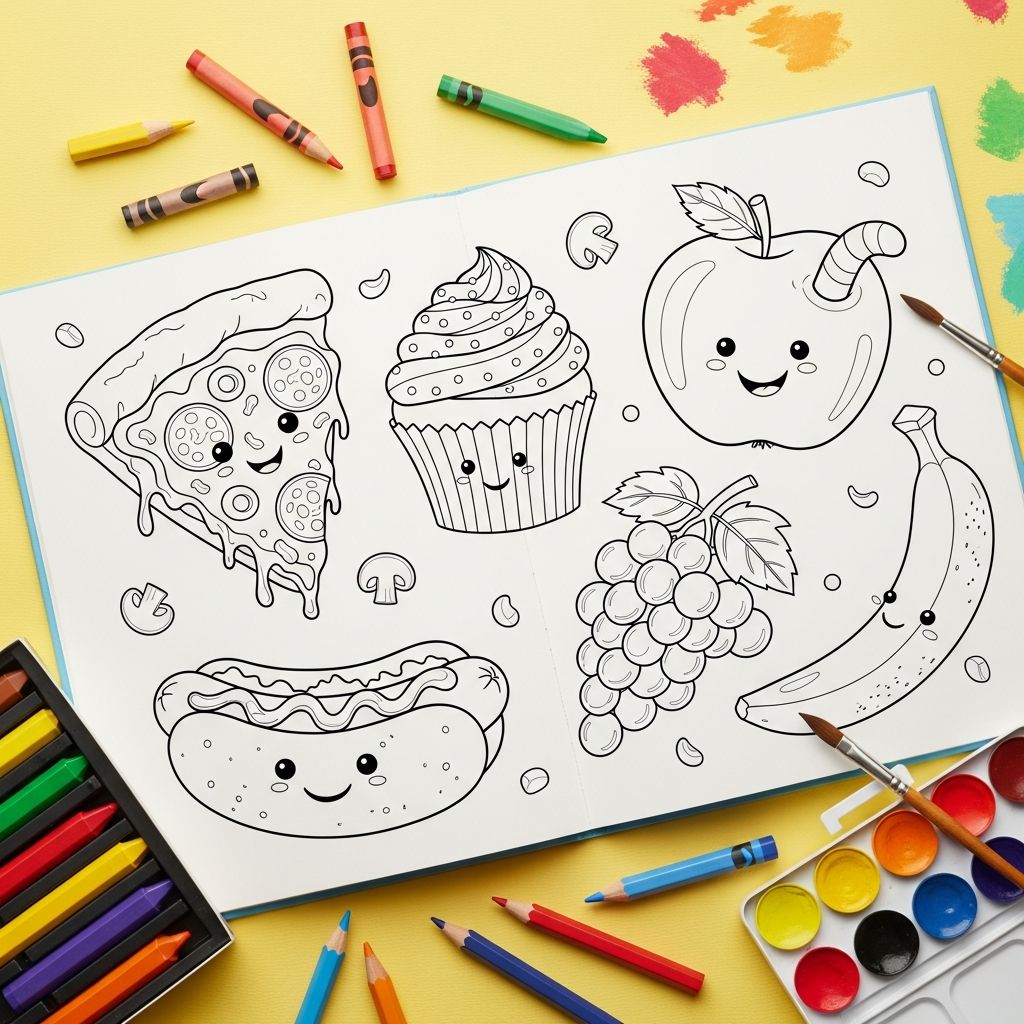
Food-themed coloring pages bring together two things most kids adore: tasty treats and creative play. These pages can do far more than fill a rainy afternoon; they can support healthy habits, fine motor skills, and early learning in a simple, screen-free way.
Whether you are a parent, teacher, or caregiver, a collection of food coloring sheets can turn everyday moments into opportunities to talk about nutrition, colors, shapes, and even simple math, all while children relax and enjoy themselves.
Why Food Coloring Pages Are So Engaging
Children often connect with visuals of familiar objects, and food is one of the most recognizable and exciting categories for young learners. When kids color foods they know and love, they are more likely to stay focused and finish their artwork.
- Instant recognition: Fruits, snacks, and meals are part of daily life, so kids quickly understand what they are coloring.
- Built-in motivation: Cute cupcakes or smiling strawberries feel fun and inviting, encouraging even reluctant colorers.
- Conversation starters: Food pages naturally invite questions and stories about family meals, favorite snacks, and cultural dishes.
Developmental Benefits of Coloring Food Images
Coloring is more than a pastime; it supports multiple areas of development. When a child carefully fills in a picture of a fruit bowl or a picnic, many skills work together in the background.
- Fine motor control: Holding crayons, markers, or pencils strengthens small hand muscles and improves control needed for writing.
- Hand–eye coordination: Staying within lines and reaching small details trains the eyes and hands to work as a team.
- Focus and patience: Completing a page from start to finish builds attention span and perseverance.
- Color recognition: Naming and choosing colors while deciding which hues match which foods reinforces early color concepts.
Using Food Coloring Pages to Talk About Healthy Eating
Food-themed pages are a gentle, non-preachy way to introduce conversations about balanced meals and nutrition. Instead of lecturing, adults can ask simple questions while kids color.
- Ask which foods on the page are “everyday foods” (like fruits and vegetables) and which ones are “sometimes treats”.
- Invite children to add extra healthy items to the picture, such as more vegetables on a pizza or water alongside a dessert.
- Use coloring time to talk about how different foods help the body grow, give energy, or keep us strong.
| Coloring Page Theme | Conversation Prompt | Learning Goal |
|---|---|---|
| Fruit salad bowl | “Can you color each fruit a different color and name them?” | Food variety and color recognition |
| Lunchbox | “What could we add to make this lunch more balanced?” | Balanced meals and planning |
| Grocery cart | “Which foods here help our bodies grow strong?” | Basic nutrition awareness |
| Dessert table | “Which treats would you enjoy sometimes, and what could we eat every day?” | Understanding moderation |
Fun Food Themes to Include
Designing a diverse set of food coloring pages keeps kids excited and curious. Mixing fun treats with wholesome options helps children see that food can be both enjoyable and nourishing.
- Fruit and veggie heroes: Smiling carrots, caped apples, and dancing broccoli make produce feel playful.
- Breakfast favorites: Bowls of cereal, toast, eggs, and smoothies introduce the idea of starting the day with fuel.
- World foods: Tacos, sushi, curries, and dumplings help children meet dishes from different cultures.
- Snack time: Cheese cubes, crackers, yogurt cups, and fruit slices reflect realistic snack choices.
- Party treats: Cupcakes, ice cream, and cookies add a sense of celebration and fun.
Ideas for Different Age Groups
Matching page complexity to a child’s age makes coloring more satisfying. Younger kids need bold shapes, while older kids often enjoy intricate patterns and scenes.
- Toddlers and preschoolers: Choose large, simple images like one big apple, banana, or slice of pizza with thick outlines and minimal detail.
- Early elementary: Offer small group scenes, such as a fruit basket, a plate with several foods, or a picnic blanket with simple backgrounds.
- Older kids: Provide detailed pages featuring restaurant scenes, food trucks, farmers’ markets, or patterned desserts that take longer to complete.
Creative Ways to Use Food Coloring Pages at Home
Food coloring sheets can blend seamlessly into everyday family routines. They can support meal planning, chores, and even calm-down time.
- Cooking companions: Let kids color foods they will later help prepare, such as vegetables for a stir-fry or toppings for homemade pizza.
- Menu makers: Invite children to color and cut out foods to design a pretend restaurant menu or a weekly meal board.
- Reward charts: Turn small food icons into stickers or tokens kids earn for trying new foods or helping in the kitchen.
- Quiet corner activity: Keep a folder of printed food pages and a small basket of crayons where kids can unwind after school.
Using Food Coloring Pages in the Classroom
Teachers can integrate food-themed pages into lessons about science, math, language arts, and social studies. Coloring supports cross-curricular learning when paired with thoughtful prompts.
- Science and health: Use coloring sheets of body systems and foods to show how different nutrients support growth and energy.
- Math connections: Ask students to count, group, or graph different foods from their pages to practice basic statistics.
- Language practice: Have children label foods, write short stories about a picnic, or describe their colored plate using full sentences.
- Cultural studies: Create pages themed around foods from various countries to support discussions about geography and traditions.
Food Coloring Pages for Parties and Events
Coloring pages work beautifully as low-mess entertainment at birthday parties, family gatherings, and holiday events. Food themes fit especially well with celebrations that involve snacks and cake.
- Birthday buffets: Set up a “color your cupcake” or “design your pizza” table where kids decorate printed outlines.
- Holiday feasts: Provide pages featuring seasonal foods, like pumpkins, gingerbread cookies, or fresh summer fruits.
- Community events: Offer food coloring sheets at school fairs, farmers’ markets, or health fairs as family-friendly activities.
- Party favors: Roll up a mini bundle of themed pages with a small pack of crayons as a practical take-home gift.
Tips for Printing and Presenting Your Pages
A little planning makes coloring more enjoyable and less messy. Choosing the right materials and organization system can turn casual pages into a helpful resource you reach for again and again.
- Paper quality: Use slightly thicker paper if possible so markers do not bleed through and finished art lasts longer.
- Simple storage: Keep printed sheets in labeled folders or binders by theme, such as “Fruits,” “Meals,” or “Treats.”
- Display space: Hang finished artwork on the fridge, a corkboard, or a classroom bulletin board to celebrate effort.
- Travel kits: Create a compact coloring kit with a few food pages and crayons for restaurants, flights, or road trips.
Mixing Coloring with Other Hands-On Activities
Food coloring pages can be a starting point for crafts, role play, and sensory learning. Combining art with additional materials deepens the experience and appeals to different learning styles.
- Cut-and-paste meals: Have kids color foods, cut them out, and glue them on a paper plate to build a balanced breakfast, lunch, or dinner.
- Pretend grocery store: Use colored food pictures as “products” with play money and price tags for imaginative shopping games.
- Sorting and categorizing: Ask children to group their colored foods by color, food group, or meal type.
- Texture collage: Add cotton balls for whipped cream, tissue paper for lettuce, or foil for wrapped snacks to make mixed-media creations.
Encouraging Creativity, Not Just Accuracy
While realistic colors can support learning, there is also room for silliness and imagination. Letting kids experiment with unexpected color choices keeps coloring lighthearted and expressive.
- Invite children to design fantasy foods, like rainbow spaghetti or star-shaped apples.
- Encourage them to create patterns and decorations on simple items, such as polka-dot bananas or zigzag watermelon rind.
- Offer a mix of traditional and unusual coloring tools, including gel pens, colored pencils, and metallic markers.
Frequently Asked Questions
Are food coloring pages educational or just for fun?
Food-themed pages can be both enjoyable and educational. When paired with simple questions and discussions, they support lessons about nutrition, counting, colors, and cultural foods, all while children feel like they are simply having fun.
How can I use these pages to encourage picky eaters?
Coloring pages help make unfamiliar foods look less intimidating. Over time, talking about new fruits and vegetables while coloring them can build curiosity, which may make children more willing to smell, touch, or eventually taste those foods.
What supplies work best for food coloring pages?
Crayons and colored pencils are ideal for younger children because they are easier to control and create less mess. Older kids may enjoy markers, gel pens, or watercolor pencils, especially on thicker paper that can handle more pigment.
Can food coloring pages be adapted for different learning needs?
Yes. You can enlarge images for kids who struggle with small details, use high-contrast outlines for visual support, or choose pages with minimal background clutter. Pairing coloring with verbal prompts, story-telling, or tactile materials can further support diverse learners.
How many pages should I offer at once?
Offering two or three options at a time is often enough to give children a sense of choice without overwhelming them. Rotating themes regularly keeps the activity fresh and invites kids to return to coloring again and again.
Bringing It All Together
Food coloring pages blend art, learning, and everyday life in a way that feels natural and enjoyable for children. With a thoughtful mix of healthy foods and fun treats, these pages can spark creativity, open the door to conversations about nutrition, and give kids a calm, screen-free way to express themselves.
By keeping a small collection of themed sheets ready for home, classroom, or events, you ensure that a meaningful, low-prep activity is always within reach—one that nourishes both imagination and understanding.