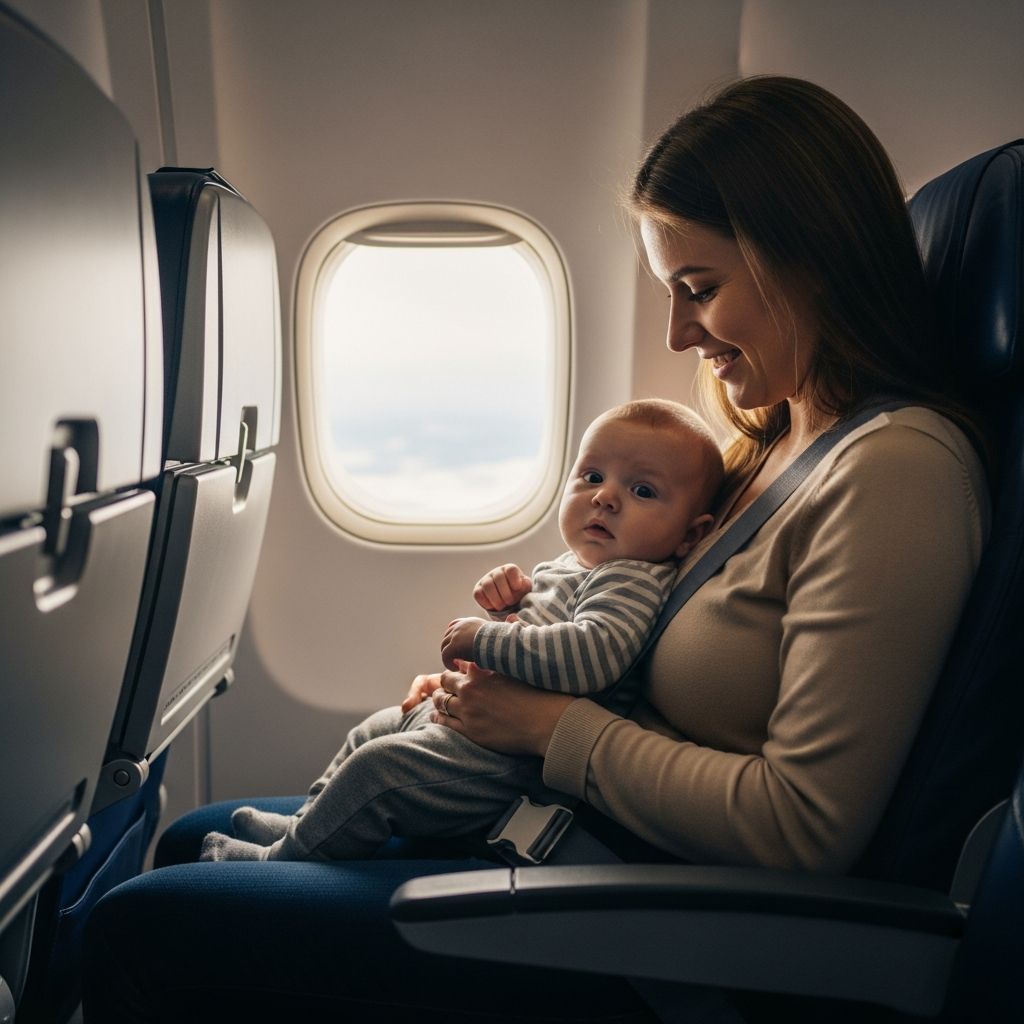
Traveling by air with a newborn or young infant requires careful planning to prioritize safety and comfort. While air travel is generally safe for healthy full-term babies after the initial weeks, factors like age, health status, and proper restraint use play critical roles in minimizing risks. This guide draws from authoritative sources to help parents navigate airline policies, medical advice, and practical strategies.
Determining the Right Age for Your Baby’s First Flight
The consensus among pediatric experts is to delay air travel with newborns as long as possible. Most healthy, full-term infants can fly safely after 7-14 days, but waiting until 2-3 months is ideal to allow the immune system to mature and reduce infection risks in crowded airports and cabins.
- Newborns under 7 days: Avoid flying unless medically cleared; some airlines like Delta require a physician’s approval letter after a physical exam.
- Premature babies: Consult a doctor, as immature lungs may not handle cabin pressure or high altitudes well.
- 2-3 months and older: Lower risk of illness and better tolerance for pressure changes; this is the recommended window for non-essential trips.
Babies with recent ear infections, surgeries, or respiratory issues should get clearance from a pediatrician, as pressure shifts during ascent and descent can exacerbate problems.
Understanding Airplane Safety Restraints for Infants
The Federal Aviation Administration (FAA) emphasizes that lap-holding infants under 2 years is risky, especially during turbulence—the leading cause of in-flight pediatric injuries. Instead, secure your baby in an FAA-approved Child Restraint System (CRS).
| Restraint Type | Age/Weight Suitability | Airplane Use Rules | Key Notes |
|---|---|---|---|
| FAA-Approved Car Seat | Birth to seat’s weight limit (typically up to 40 lbs) | Must fit in seat (≤16 inches wide); window seat preferred; secure with aircraft belt | Check label for aviation approval; rear-facing for infants |
| CARES Harness | 22-44 lbs (toddlers) | Approved harness for forward-facing seats during cruise | Not for infants; no boosters allowed |
| Lap-Holding | Under 2 years | Allowed but strongly discouraged; no restraints during takeoff/landing/turbulence | Buy a seat for CRS to guarantee space |
To use a CRS, purchase a ticket for your infant, measure the seat width beforehand, and install per manufacturer instructions. Airlines may require window seats to avoid blocking aisles. Baby carriers or slings are prohibited during critical phases.
Health Risks and Precautions During Flights
Infants’ developing immune systems make them vulnerable to germs in recirculated cabin air and busy terminals. Noise from engines can also disrupt sleep—consider noise-canceling headphones or ear protection.
- Infection prevention: Nurse or bottle-feed frequently to maintain hydration; wipe surfaces; avoid close contact with sick passengers.
- Ear pressure relief: Encourage sucking/swallowing during takeoff and landing via breastfeeding, bottles, pacifiers, or snacks for older babies.
- Sleep safety: If lap-sleeping (not recommended), keep airways clear on a firm surface without soft bedding.
For high-altitude destinations post-flight, monitor premature or respiratory-compromised babies closely.
Packing Smart: Essentials for Baby’s Airplane Kit
Prepare a compact diaper bag with extras for delays. Liquids like formula, breast milk, and baby food are exempt from the 3-1-1 TSA rule if needed during flight—declare at security.
- Diapers (2x expected needs), wipes, changing pad, plastic bags for soiled items.
- Extra outfits (2-3), blanket, burp cloths—turbulence can complicate changes.
- Feeds: Bottles, formula, nursing cover; solid foods in pouches.
- Comfort: Pacifiers, teething toys, familiar lovey; medications with syringes.
- Health: Thermometer, infant pain reliever, saline drops for congestion.
Gate-check strollers or car seat frames; use luggage carts for onboard transport if allowed.
Navigating Airport and Airline Policies
Contact your airline early: Confirm pre-boarding for families (often available), car seat acceptance, and bassinet options on long-haul flights. Delta, for example, verifies CRS compliance during boarding.
- Book adjacent seats; request bulkhead or window for restraints.
- International flights may have varying rules—check destination regs.
- Unaccompanied under 7 days prohibited without medical note.
FAA prohibits CRS in exit rows; ensure no escape path blockage.
Tips for a Smoother Flight Experience
Time flights around baby’s sleep schedule; choose daytime for stimulation or red-eyes for drowsiness. Walk the aisle to soothe fussiness; engage with smiles and play.
- Fed and changed babies board calmer.
- Layer clothing for cabin temperature swings.
- Download airline apps for real-time updates.
Post-flight, watch for dehydration signs like fewer wet diapers.
Frequently Asked Questions (FAQs)
Can I fly with a baby under 2 weeks old?
It’s risky; wait at least 7 days and get pediatrician approval. Airlines may require a doctor’s note for newborns.
Do I need to buy a seat for my lap infant?
No, but strongly recommended by FAA for using an approved CRS—lap-holding is unsafe in turbulence.
How do I protect my baby’s ears on the plane?
Feed or offer a pacifier during pressure changes to encourage swallowing.
Are breast milk and formula allowed through security?
Yes, exempt from 3-1-1; reasonable amounts permitted—screen separately.
Can I use a baby carrier during takeoff?
No, FAA bans non-approved devices during takeoff, landing, or turbulence.
What if my baby has a cold or ear infection?
Consult a doctor first; congestion worsens ear pain from pressure.
This comprehensive guide ensures parents fly confidently. Always verify with your pediatrician and airline for personalized advice.
References
- Air travel with infant: Is it safe? — Mayo Clinic. 2023-05-12. https://www.mayoclinic.org/healthy-lifestyle/infant-and-toddler-health/expert-answers/air-travel-with-infant/faq-20058539
- Flying with Baby: Parent FAQs — American Academy of Pediatrics (HealthyChildren.org). 2024-02-01. https://www.healthychildren.org/English/safety-prevention/on-the-go/Pages/Flying-with-Baby.aspx
- Flying With A Baby: 12 Travel Tips For Parents — Newton Baby. 2023-11-15. https://www.newtonbaby.com/blogs/parenting-kids/flying-traveling-with-a-baby
- Flying with Children — Federal Aviation Administration. 2025-01-10. https://www.faa.gov/travelers/fly_children
- Infant Air Travel — Delta Air Lines. 2024-09-20. https://www.delta.com/us/en/children-infant-travel/infant-travel
- Leaving on a Jet Plane – The CSFTL Guide to Safe Air Travel with Children — CSFTL.org. 2023-07-05. https://csftl.org/leaving-on-a-jet-plane-the-csftl-guide-to-safe-air-travel-with-children/
- Safety Tips for Traveling with Infants and Toddlers — Allen & Allen. 2024-03-18. https://www.allenandallen.com/blog/safety-tips-for-traveling-with-infants-and-toddlers/