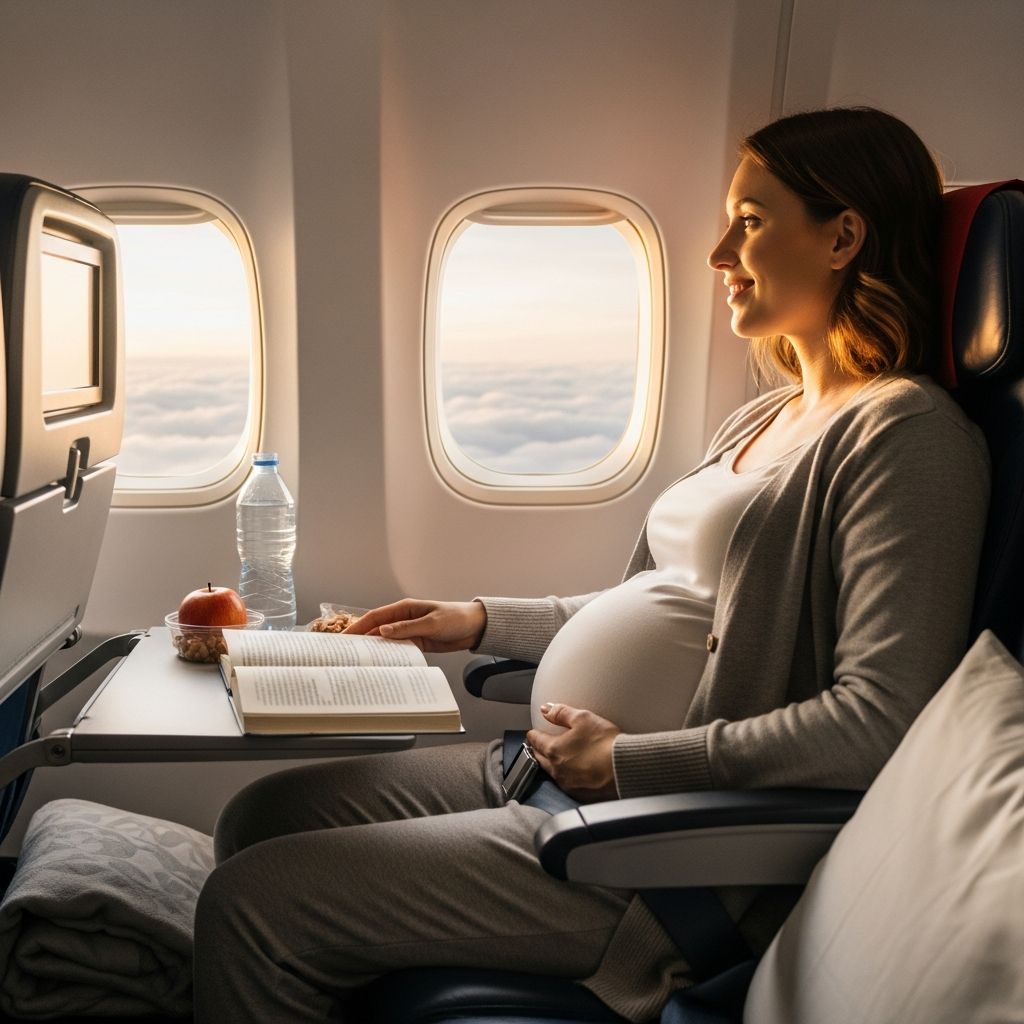
Many people travel by plane during pregnancy for work, family visits, or vacations. For most healthy pregnancies, occasional flying is considered safe, especially before late pregnancy, but it does require extra planning and precautions.
This guide explains when air travel is usually safe, when it may be risky, which questions to ask your health care provider, and how to make flights as comfortable and low-risk as possible for you and your baby.
Is It Generally Safe to Fly While Pregnant?
For most healthy pregnant people without complications, occasional commercial air travel is usually safe. Major medical organizations note that air travel does not appear to increase the risk of miscarriage, birth defects, or preterm labor in otherwise low-risk pregnancies.
However, every pregnancy is different. Your individual health, pregnancy history, and destination all matter, so always ask your maternity provider before booking tickets.
Typical Airline Limits by Stage of Pregnancy
Airlines set their own rules, but common policies include:
- Early and mid-pregnancy (up to around 28–32 weeks): Most airlines allow travel without special paperwork if you are healthy.
- Late pregnancy (around 32–36 weeks): Many airlines begin to restrict travel, especially on long-haul or international flights, and may ask for a note confirming your due date.
- Very late pregnancy (after about 36 weeks for singletons, earlier for multiples): Most airlines no longer permit flying because of the higher chance of labor starting during the trip.
Always check the specific airline policy for both your outbound and return flights, considering how far along you will be on each travel date.
Best Time of Pregnancy to Travel by Air
Many experts consider the second trimester (about 14–28 weeks) the most comfortable and practical time to fly.
- You are usually past early nausea and severe fatigue.
- Your energy is often higher, and your bump is smaller, making walking and sitting easier.
- The risk of miscarriage (most common in the first trimester) and spontaneous labor (more common in the third trimester) is relatively lower in this period overall.
That said, if you have complications or a high-risk pregnancy, your provider may suggest avoiding flying even in the second trimester.
When Air Travel May Not Be Recommended
Certain health or pregnancy conditions can make flying riskier. In these situations, your provider may advise against air travel, especially long or international flights.
Conditions That Often Require Extra Caution or Avoidance
- High blood pressure or preeclampsia
- History of blood clots (deep vein thrombosis or pulmonary embolism)
- Placental problems (such as placenta previa or placental abruption)
- Risk of preterm birth or a history of premature labor or preterm premature rupture of membranes
- Significant vaginal bleeding in the current pregnancy
- Severe anemia or serious heart or lung disease
- Multiple pregnancy (twins, triplets, etc.), particularly later in the third trimester
Because emergencies are more common in the first and third trimesters, providers may be especially careful about approving travel in those stages.
Destinations That May Be Unsafe During Pregnancy
Even if flying itself is safe for you, some locations can pose extra risks when you are pregnant.
- Regions with serious infectious disease outbreaks, including viral infections that can harm a developing baby (for example, Zika or certain mosquito-borne illnesses).
- Areas where special vaccines are recommended that are not ideal in pregnancy, such as some live vaccines.
- Very high-altitude destinations, where lower oxygen levels and limited medical care can be problematic.
- Remote areas with limited hospital access or neonatal intensive care.
Before choosing a destination, review the latest guidance from your country’s public health agency and discuss vaccine and infection risks with your prenatal care provider.
Medical and Practical Risks of Flying While Pregnant
For most healthy travelers, the risks from a single or occasional flight are low, but being pregnant changes how your body responds to long periods of sitting, changes in pressure, and dehydration.
| Potential Issue | Why It Matters in Pregnancy | Typical Advice |
|---|---|---|
| Blood clots in the legs (DVT) | Pregnancy naturally increases clotting tendency, and sitting for long periods further raises risk. | Walk regularly, do leg exercises, wear compression stockings if advised, stay hydrated. |
| Discomfort and swelling | Feet and ankles often swell more easily, and gas in the intestines expands with altitude. | Wear loose clothing, avoid gas-producing foods and fizzy drinks, move and stretch. |
| Turbulence and injury | Sudden bumps can throw you forward if not strapped in. | Keep the seat belt fastened low across the hips, under the belly, whenever seated. |
| Limited access to care | In-flight medical care is basic, and diversions can be complex if severe symptoms occur. | Avoid travel if complications are likely; know where to get care at your destination. |
| Cosmic radiation | At cruising altitude, radiation exposure is higher than at ground level, but short trips add only small doses. | Occasional flights are not considered a concern, but frequent flyers, pilots, or crew should discuss exposure limits with a provider. |
How to Prepare for Flying While Pregnant
Planning ahead can reduce stress and help protect both you and your baby.
1. Talk With Your Health Care Provider
Schedule a visit or telehealth appointment before booking, particularly for long or international trips. Be prepared to discuss:
- Your expected due date and how far along you’ll be when you travel.
- Your medical history, including previous pregnancies, blood clots, or chronic conditions.
- Details of the trip: length of flight, connections, altitude of destination, and local health risks.
- Any vaccines or medications that may be recommended or unsafe in pregnancy.
Ask your provider if they recommend:
- Compression stockings to lower the risk of leg clots.
- A letter stating your due date and fitness to fly, which some airlines may request.
- Specific steps to adjust medications or insulin if you have chronic conditions.
2. Check Airline and Insurance Policies
- Review the airline’s rules about pregnant passengers, proof of due date, and cut-off weeks for travel.
- Confirm whether your health insurance covers pregnancy and newborn care at your destination, especially in another country.
- Consider extra travel medical insurance or evacuation coverage, particularly for remote or international trips.
3. Choose Flights and Seats Wisely
- Whenever possible, select nonstop flights to avoid extra walking, security lines, and connections.
- Book an aisle seat so you can get up to walk and reach the restroom more easily.
- Try to avoid very late-night or red-eye flights if fatigue or sleep problems are a concern.
Comfort and Safety Tips During the Flight
Simple actions during the flight can make a big difference in how you feel and may help prevent complications.
Seat Belt Position and Turbulence
Always keep your seat belt fastened when you are seated, even if the sign is off, because turbulence can occur suddenly.
- Buckle the belt low and snug across your hip bones, below your belly, not over the uterus.
- Adjust the belt as your body shifts so it remains comfortable and in the correct position.
Moving and Stretching to Support Circulation
To reduce the risk of blood clots in your legs and to minimize stiffness:
- Stand up and walk the aisle briefly every 30–60 minutes on long flights, when it is safe to do so.
- In your seat, regularly flex and point your feet, roll your ankles, and gently bend and straighten your knees.
- Avoid crossing your legs for long periods.
Hydration and Food Choices
- Drink water regularly throughout the flight. Dehydration may contribute to contractions and low blood pressure.
- Limit caffeine and avoid alcohol.
- Before and during the flight, try not to overdo foods that cause gas (such as beans, cabbage, or carbonated drinks), as gas expands at altitude and can cause discomfort.
- Carry healthy snacks such as nuts, crackers, or fruit to avoid long stretches without food.
Clothing and Comfort Items
- Wear loose, breathable clothing and comfortable shoes that can accommodate swelling.
- Consider support or compression stockings if recommended for your circulation.
- Bring a small pillow or rolled-up jacket to support your lower back.
- Layer your clothing so you can adjust to changes in cabin temperature.
Airport Security and Scanners
Common airport screening technologies (including metal detectors and millimeter-wave scanners) are considered safe for pregnant travelers, and radiation exposure is extremely low. If you feel uncomfortable with a particular scanner, you can typically request a manual pat-down instead.
Planning for Health Care at Your Destination
Even if you feel well, it is wise to prepare for the unexpected, particularly later in pregnancy or when traveling far from home.
- Know the location and contact details of the nearest hospital or maternity unit at your destination.
- Carry a copy (paper or digital) of your prenatal records, including lab results, ultrasounds, and medication list.
- Have a plan for what you will do if you develop bleeding, contractions, fluid leakage, severe pain, or other urgent symptoms.
- If traveling abroad, learn how to contact local emergency services and your country’s embassy or consulate if needed.
Frequently Asked Questions About Flying While Pregnant
Q1: Can flying cause miscarriage or birth defects?
Current evidence does not show that occasional commercial air travel increases the risk of miscarriage or birth defects in healthy pregnancies. Most concerns relate instead to immobility, blood clots, and access to medical care if problems arise, which can be managed with precautions and careful trip planning.
Q2: Is cabin pressure dangerous for my baby?
Airplane cabins are pressurized to levels similar to being at about 1,800–2,500 meters (roughly 6,000–8,000 feet) above sea level. In an uncomplicated pregnancy, this modest drop in oxygen level is not expected to harm the fetus. If you have heart, lung, or blood conditions, or severe anemia, your provider may need to evaluate whether flying is safe for you personally.
Q3: How many weeks pregnant is too late to fly?
Many airlines allow domestic travel until about 36 weeks of pregnancy for a single baby, with earlier cutoffs for international flights or multiple pregnancies. However, your provider might recommend stopping travel earlier if you have risk factors for preterm labor or other complications.
Q4: I fly often for work. Should I worry about radiation?
For most people, the extra radiation from a few flights during pregnancy is minimal and not considered a concern. Those who fly very frequently (such as pilots, flight attendants, or frequent business travelers) might approach the recommended limits for occupational radiation during pregnancy and should discuss their total expected exposure with a health care provider or occupational health service.
Q5: What symptoms mean I should not get on the plane?
Do not travel if you are experiencing heavy vaginal bleeding, strong or regular contractions, leakage of amniotic fluid, severe shortness of breath or chest pain, severe headache with vision changes, or any symptom your provider has warned you about. In these cases, seek immediate medical evaluation instead of boarding a flight.
Q6: What should I pack in my carry-on when pregnant?
Keep essential items with you, not in checked luggage. Useful carry-on items include prenatal vitamins and daily medications, a copy of your prenatal records, snacks, a refillable water bottle (filled after security), compression stockings if prescribed, and contact information for your maternity provider and destination clinic.
References
- Pregnant Travelers — Centers for Disease Control and Prevention (CDC), Yellow Book. 2024-01-10. https://www.cdc.gov/yellow-book/hcp/family-travel/pregnant-travelers.html
- Travel During Pregnancy — American College of Obstetricians and Gynecologists (ACOG). 2023-06-01. https://www.acog.org/womens-health/faqs/travel-during-pregnancy
- Travelling in Pregnancy — National Health Service (NHS), UK. 2022-09-01. https://www.nhs.uk/pregnancy/keeping-well/travelling/
- Air Travel During Pregnancy — CHOC / KidsHealth. 2022-08-15. https://kidshealth.org/CHOC/en/parents/flying-pregnancy.html
- 5 Tips to Stay Safe When Flying While Pregnant — WebMD. 2023-03-20. https://www.webmd.com/baby/taking-to-the-skies-pregnant-and-safe