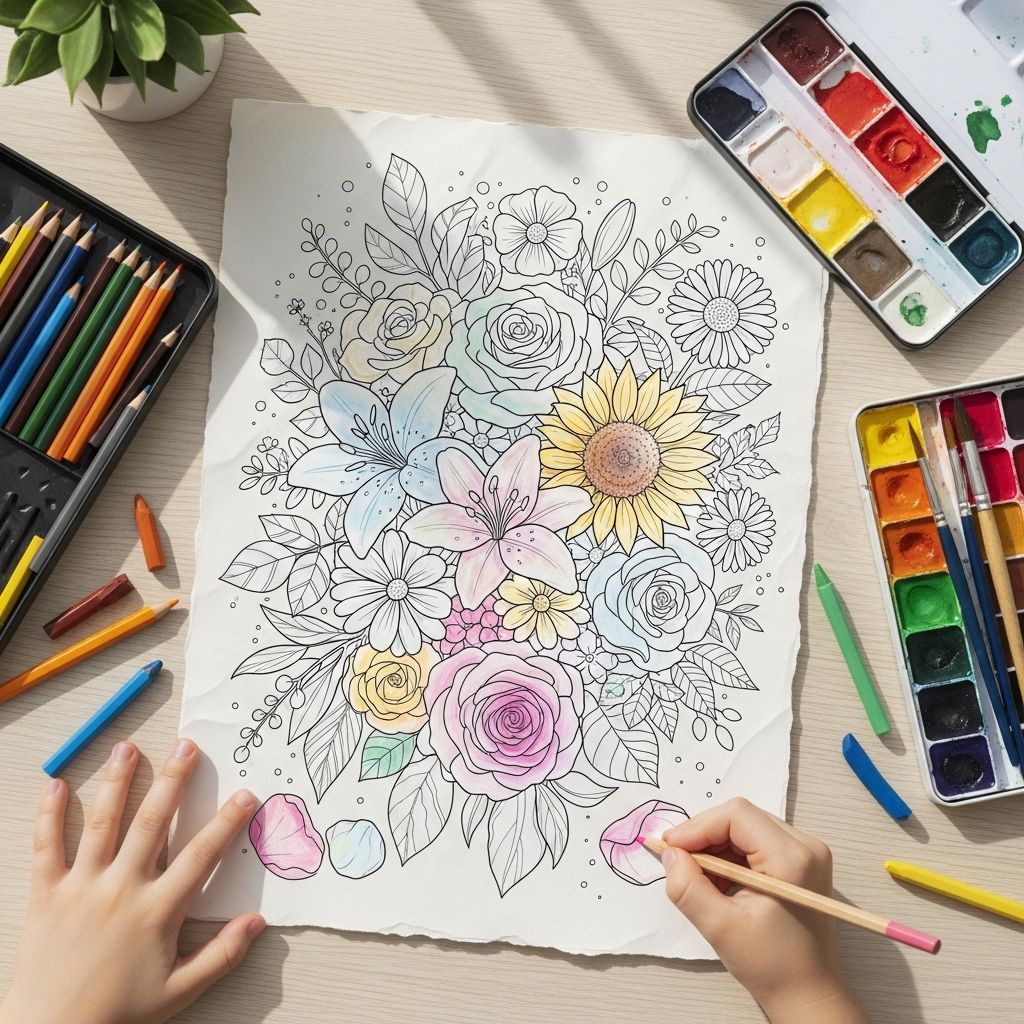
Flower coloring pages turn simple outlines into a calm, creative experience that works just as well at the kitchen table with toddlers as it does for adults unwinding after a long day.
With the right designs, a few basic supplies, and a bit of imagination, anyone can enjoy the beauty of flowers on paper, no matter the season or skill level.
Why Flower Coloring Pages Are So Popular
Flowers are instantly recognizable, comforting, and full of color, which makes them a natural fit for coloring activities. Petals, stems, leaves, and simple shapes provide a clear structure that even very young children can follow while still leaving plenty of room for creativity.
For adults, floral designs offer a soothing mix of repetition and detail that encourages focus and mindfulness. The same rose or daisy can be colored a dozen different ways, so these pages never feel exactly the same twice.
Benefits of Flower Coloring Pages
Coloring flowers is much more than a way to pass the time; it can support emotional well-being, cognitive growth, and fine-motor control. A single printable page can quietly combine art, science, and stress relief.
These benefits apply across ages, although they show up differently for toddlers, school-age children, teens, and adults.
Emotional and Mental Health Benefits
- Encourages relaxation by giving the mind a simple, repetitive task.
- Provides a screen-free break that can reduce feelings of overwhelm.
- Offers a gentle way to express emotions through color choices and shading.
- Creates a sense of accomplishment when a page or section is completed.
Educational and Developmental Benefits for Kids
- Strengthens fine-motor skills through controlled crayon, marker, or pencil movements.
- Builds hand–eye coordination while children stay inside petal and leaf outlines.
- Reinforces color recognition, counting (petals, leaves), and simple patterns.
- Introduces basic nature concepts like plant parts, seasons, and pollination.
Creative and Artistic Benefits
- Encourages experimentation with color combinations, shading, and blending.
- Helps children and adults explore personal style in a low-pressure format.
- Provides a simple way to practice design principles like contrast and balance.
Types of Flower Coloring Pages
Not all floral printables look or feel the same. Choosing the right style makes the activity more enjoyable and better matched to the age and mood of the person coloring.
Below is a quick overview of common flower coloring page styles and how they are typically used.
| Style | Description | Best For |
|---|---|---|
| Simple blooms | Large petals, thick outlines, minimal background details. | Toddlers and preschoolers who need clear, open spaces. |
| Realistic flowers | More lifelike roses, lilies, tulips, and other species. | School-age children, teens, and adults interested in nature study. |
| Pattern flowers | Floral shapes filled with stripes, dots, and geometric designs. | Older kids and adults who enjoy detailed pattern work. |
| Floral scenes | Gardens, meadows, potted plants, butterflies, and outdoor backgrounds. | Storytelling, classroom activities, and longer coloring sessions. |
| Mandala flowers | Circular, symmetrical floral designs with many repeating elements. | Teens and adults looking for meditative, intricate pages. |
Choosing Age-Appropriate Flower Pages
Matching the complexity of the design to the age and skills of the person coloring leads to more success and less frustration. Bigger spaces and bold lines tend to work better for younger children, while older artists may crave small details and layered patterns.
Use the ideas below as a flexible guide rather than a strict rulebook.
For Toddlers and Preschoolers
- Pick pages with one large flower or a small cluster of simple blooms.
- Avoid tiny shapes or delicate edges that are hard for little hands.
- Offer chunky crayons or washable markers that are easy to grip.
- Focus on fun and exploration, not staying perfectly inside the lines.
For Early Elementary Kids
- Introduce flowers with clear petals, leaves, and stems to support learning.
- Try pages that include insects, pots, or background elements for storytelling.
- Encourage simple patterns like stripes or polka dots on petals and leaves.
- Invite children to label parts of the flower or write a short caption.
For Older Children, Teens, and Adults
- Choose realistic flowers, mandalas, or pages with detailed vines and borders.
- Experiment with shading, gradients, and colored pencil layering.
- Use fine-tip markers or gel pens to fill in very small sections.
- Turn finished pieces into cards, bookmarks, or framed decor.
Supplies That Make Coloring More Enjoyable
Flower coloring pages can be as simple or as fancy as you want. A basic set of crayons and regular printer paper is enough to get started, but a few thoughtful choices can make the experience more satisfying and the results longer lasting.
You do not need every supply on this list; mix and match according to age, budget, and purpose.
Basic Coloring Tools
- Crayons for young children who need sturdy, forgiving tools.
- Washable markers for bright color and easy cleanup.
- Colored pencils for older kids and adults who want more control and shading.
- Gel pens or fine liners for tiny spaces and decorative accents.
Paper Types and Extras
- Standard printer paper for quick, everyday coloring sessions.
- Thicker cardstock for pages that will be displayed, gifted, or painted.
- Clipboards or drawing boards to stabilize the page on the go or in the car.
- Plastic sleeves or lamination to turn pages into reusable, wipe-clean activities.
Optional Creative Add-Ons
- Glitter glue or metallic pens for special highlights on petals and centers.
- Stickers to decorate the sky, grass, or background areas.
- Watercolor pencils activated with a damp brush for a painted effect.
Creative Ways to Use Flower Coloring Pages
Once a flower page is colored, it does not have to disappear into a drawer. Floral designs are easy to cut, mount, and reuse in a variety of simple craft projects that add beauty to everyday life.
Try reimagining finished pages as decorations, gifts, or teaching tools.
Everyday and Seasonal Activities
- Create a rotating mini gallery on the refrigerator or a bulletin board.
- Make a “garden wall” by taping or framing several floral pages together.
- Use themed pages for seasons like spring, summer, or special holidays.
- Turn extra printouts into rainy-day kits stored in folders or envelopes.
Gift and Keepsake Ideas
- Fold finished pages into greeting cards for birthdays, Mother’s Day, or thank-you notes.
- Cut out individual flowers and glue them onto blank cards or tags.
- Laminate a favorite page and use it as a placemat or desk protector.
- Bind several completed pages together to create a personal flower art book.
Classroom and Group Uses
- Assign different flower types to each student and display them as a labeled garden.
- Use pages as early finisher work, calming corners, or rainy day indoor recess.
- Combine coloring with writing by having students describe the scene or invent a story.
- Offer floral pages as a quiet station during parties or community events.
Learning With Flower Coloring Pages
Flower pages can support more than art time. When used intentionally, they become a gentle introduction to science, vocabulary, and early math skills, especially for young learners who thrive on hands-on activities.
Simple questions and prompts turn a relaxed activity into a light learning opportunity without overwhelming children.
Nature and Science Connections
- Point out and label parts of the flower such as petals, leaves, stem, and roots.
- Discuss what flowers need to grow: sunlight, water, soil, and pollinators.
- Compare wildflowers with garden flowers or potted plants.
- Match the colors used on the page to real flowers seen in books or outdoors.
Early Math and Literacy Ideas
- Count petals, leaves, or flowers in a row and write the numbers in the margin.
- Ask children to color all even-numbered petals one color, odd-numbered petals another.
- Practice color words and flower names by writing them beneath the finished page.
- Invite older kids to write a short poem or story inspired by their drawing.
Tips for a Calm, Enjoyable Coloring Session
A little planning can transform basic flower coloring pages into a peaceful, focused activity that the whole family looks forward to. The goal is not perfection, but connection and relaxation.
Use these ideas to set the mood and keep everyone engaged.
Setting Up the Space
- Choose a table or surface with enough room for papers, supplies, and elbows.
- Place supplies in small bins or cups so colors are easy to see and reach.
- Keep a scrap sheet under the coloring page to protect the table from markers.
- Play soft background music or enjoy quiet conversation while coloring.
Encouraging Creativity Without Pressure
- Avoid correcting color choices; there is no wrong way to color a flower.
- Model trying new techniques, such as blending two colors on a single petal.
- Offer praise for effort and persistence instead of neatness alone.
- Allow breaks for active movement, especially for young children.
Simple Flower Coloring Challenges
Lighthearted challenges can add interest to familiar pages and keep older kids and adults engaged. These can be done individually or as a friendly family competition.
Adjust the difficulty to match attention span and comfort levels.
- Monochrome flower: Use different shades of a single color to complete the whole page.
- Opposite colors: Choose two opposite colors on the color wheel and use only those plus neutrals.
- Pattern petals: Add a different pattern to each petal, such as stripes, dots, or tiny hearts.
- Story scene: Color the page, then write a few sentences about who might visit this garden and why.
Frequently Asked Questions About Flower Coloring Pages
Are flower coloring pages just for kids?
No. While many designs are created with children in mind, there are also intricate floral pages specifically designed for teens and adults who enjoy detailed, meditative coloring. These more advanced pages often feature tiny petals, repeating patterns, and mandala-style layouts.
How can I keep young children from becoming frustrated?
Offer large, simple designs with thick outlines and avoid tiny spaces that are hard to reach. Using short coloring sessions, easily washable supplies, and plenty of encouragement helps children focus on enjoyment rather than perfection.
What is the best way to store finished pages?
Finished flower pages can be slipped into clear page protectors and stored in a binder, taped onto walls or doors, or scanned and saved digitally. Creating a simple scrapbook or “art portfolio” makes it easy to look back on progress over time.
Can flower coloring pages support school learning?
Yes. Teachers and parents can combine coloring with short lessons about plant life cycles, seasons, or vocabulary words. Counting petals, labeling parts of the plant, and writing descriptions or stories turn creative time into gentle academic practice.
What if I am not artistic?
Coloring pages remove the pressure of drawing from scratch, so even people who do not consider themselves artistic can enjoy them. The outlines are already there; all that is required is choosing colors and filling in shapes in whatever way feels satisfying.
Let Your Flower Garden Grow on Paper
Flower coloring pages are a simple, flexible resource that can adapt to nearly any setting, from a busy classroom to a quiet evening at home. With a handful of supplies and a stack of printables, children and adults can create an ever-changing paper garden full of color and personality.
Whether the goal is relaxation, learning, or making something beautiful to share, floral pages offer a gentle reminder that creativity can bloom almost anywhere.