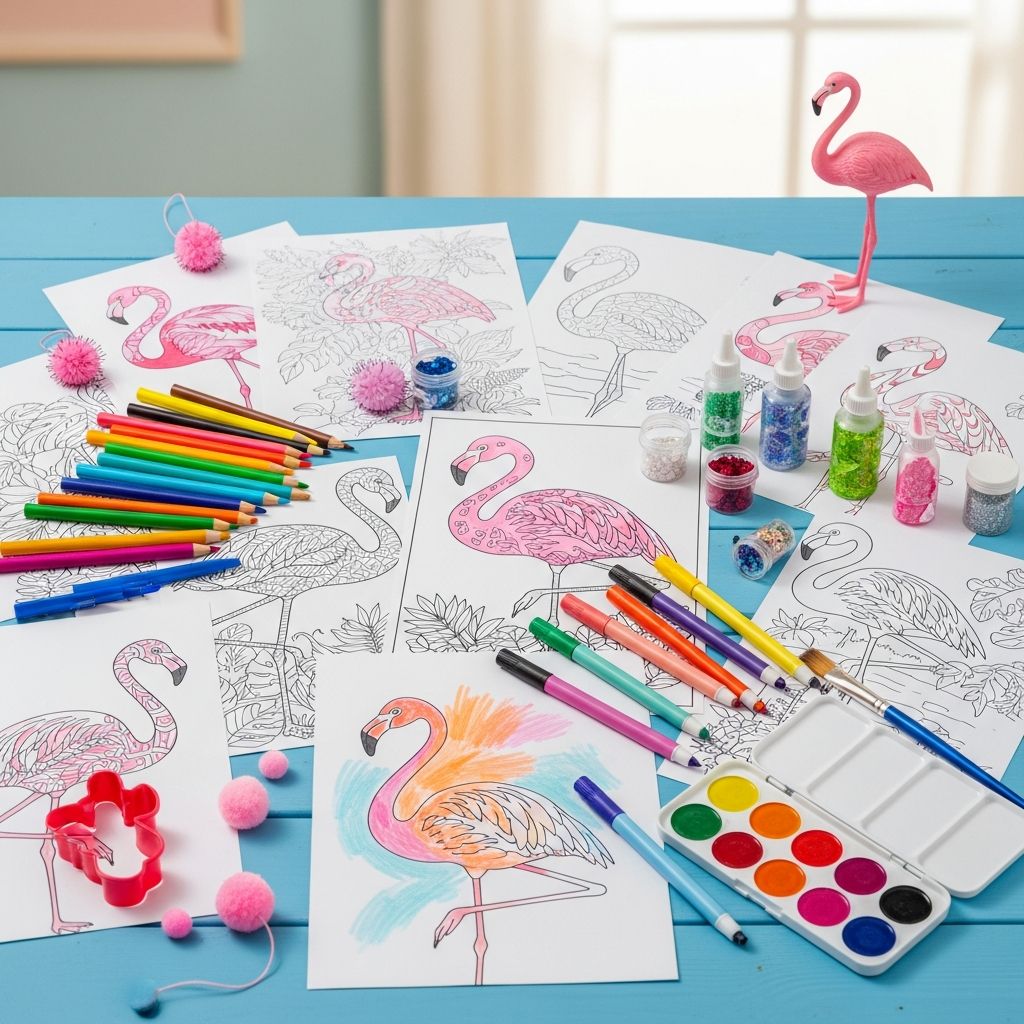
Flamingo coloring pages are more than cute pink birds on paper—they are a simple, low-cost way to entertain kids while building real skills in creativity, focus, and early learning. Whether used at home, in the classroom, or for a party, these tropical-themed printables can keep children engaged for far longer than most screens.
Why Flamingos Are Perfect for Coloring Time
Flamingos are instantly recognizable, friendly-looking birds with bright colors and fun shapes, which makes them ideal subjects for kids’ coloring pages. From their long wiggly legs to their curved necks, they invite creative choices and playful imagination.
- Pink and coral feathers give children an exciting color palette to explore, but they can also invent rainbow or fantasy flamingos.
- The simple, bold shapes are easy for beginners, while details like feathers and backgrounds challenge older kids.
- Flamingos feel “summery” and festive, making them popular for parties, vacation themes, and classroom decor.
Types of Flamingo Coloring Pages for Different Ages
Not all flamingo coloring pages are the same. Choosing the right type for your child’s age and skill level can make coloring time calmer, more successful, and more fun.
Simple Outlines for Toddlers and Preschoolers
Young children benefit from big, open shapes that make it easier to stay on the page without worrying about tiny details. These pages allow them to focus on color choice and basic crayon control.
- Thick outlines and large spaces encourage early motor control.
- Minimal background elements reduce visual clutter and frustration.
- One or two flamingos per page avoid overwhelming little artists.
Detailed Flamingos for Older Kids
Elementary-age kids often enjoy more intricate designs that feel “grown-up” and give them time to zone out and relax. These pages might include patterned feathers, tropical plants, or beach scenes.
- More lines and patterns invite experimentation with shading and blending.
- Backgrounds like palm trees, water, or sunsets offer more color choices.
- Smaller sections help build patience and careful hand control.
Themed Pages for Parties and Events
Flamingo coloring sheets work beautifully as party activities or themed favors. You can match the design to your event, turning simple printables into personalized decor.
- Birthday pages with space to write the child’s name or age.
- Flamingos with party hats, balloons, or cakes for celebrations.
- Vacation or pool party styles with sunglasses, floaties, and beach scenes.
Educational Benefits of Flamingo Coloring Pages
Coloring flamingos doesn’t just pass time—it naturally supports key areas of child development. When planned intentionally, one cute coloring page can turn into a mini learning activity.
Fine Motor Skills and Handwriting Readiness
Coloring involves many of the same muscles and coordination needed for writing letters. Repeated coloring practice helps strengthen hand and finger control over time.
- Holding crayons, markers, or colored pencils correctly improves grip strength.
- Trying to “stay in the lines” builds control and precision.
- Changing colors and switching tools encourages hand flexibility.
Color Recognition and Early Art Skills
Flamingo pages are a fun way to talk about colors, shades, and simple art concepts. Because most children expect flamingos to be pink, they enjoy experimenting with color choices around that expectation.
- Ask children to find or mix different shades of pink, coral, and orange.
- Talk about cool colors (blue water, green leaves) versus warm colors (sunsets, sand).
- Introduce ideas like light and dark, or background and foreground.
Focus, Patience, and Relaxation
Coloring encourages kids to slow down and stick with a task from beginning to end. Focusing on small areas and repetitive strokes can be calming, almost like a kid-friendly mindfulness practice.
- Completing a full page gives a sense of accomplishment and pride.
- Coloring can help transition from high-energy play to quieter activities.
- Sitting together to color opens the door to relaxed conversation and connection.
Flamingo Facts to Share While Coloring
Adding a few kid-friendly flamingo facts turns a simple coloring page into a mini science lesson. You can chat about these while your child colors or write them on the back of the page.
| Fun Flamingo Fact | Kid-Friendly Explanation |
|---|---|
| Why flamingos are pink | Flamingos eat tiny shrimp and other foods that have special pigments, which slowly turn their feathers pink. |
| Where flamingos live | They usually live near shallow lakes, lagoons, and wetlands, often in warm parts of the world. |
| How they stand on one leg | Flamingos often rest on one leg, which may help them keep warm or rest their muscles. |
| Flamingo families | They live in large groups called colonies, sometimes with thousands of birds together. |
You can ask kids to draw some of these details into the background: a lake, some other flamingos, or tiny shrimp in the water. This helps them connect the facts to their artwork.
Creative Ways to Use Flamingo Coloring Pages
Once a flamingo coloring page is finished, you do not have to stop there. Completed pages can become decorations, gifts, or part of bigger craft projects.
Turn Pages into Room Decor
Kids love seeing their art displayed. A simple flamingo print can easily become a cheerful piece of decor for bedrooms, playrooms, or classrooms.
- Trim and frame the best pages to create a mini gallery wall.
- Hang several flamingos on a string to make a colorful garland.
- Attach pages to clipboards so kids can easily switch out their newest artwork.
Use Flamingos in Crafts and Gifts
Cut, fold, or glue finished flamingo pages into simple handmade projects that kids can give to friends or family. This shows them that their artwork has real purpose and value.
- Cut out colored flamingos and glue them to the front of greeting cards.
- Laminate a colored page to make a placemat or desk protector.
- Cut a tall flamingo into a long strip and punch a hole at the top to create a bookmark.
Party Ideas with Flamingo Printables
Flamingo coloring pages are a budget-friendly lifesaver for parties, especially when you need something for kids to do while adults chat or food is being prepared.
- Set up a coloring station with crayons, markers, and several styles of flamingos.
- Offer small prizes or stickers for anyone who finishes a page or adds creative details.
- Let guests take their finished pages home as party favors, rolled and tied with ribbon.
Tips for Printing and Organizing Flamingo Coloring Sheets
A little planning can make coloring time smoother, especially when printing at home. Keeping pages organized also makes it easier to reuse favorite designs for siblings or students later.
Best Paper and Printing Settings
You do not need fancy supplies, but a few choices will improve the coloring experience and final look of each flamingo page.
- Use slightly heavier printer paper if children will press hard or use markers.
- Print in full black and white for crisp outlines that are easy to see.
- Check print preview to be sure the entire flamingo fits on the page.
Organizing Pages by Age and Theme
Keeping your flamingo printables sorted helps you quickly grab the right page for each child or activity. This is especially useful for teachers or caregivers with mixed-age groups.
- Store simple outlines and detailed designs in separate folders.
- Create seasonal or themed sections, such as “Summer Flamingos” or “Birthday Flamingos.”
- Slide favorite pages into plastic sleeves in a binder for easy re-printing.
Ideas to Extend Learning with Flamingo Coloring
Coloring can be a starting point for bigger lessons in science, language, and creativity. Use your flamingo pages as a springboard into broader topics.
Vocabulary and Early Literacy Activities
Pair flamingo images with simple words and sentences to practice reading, writing, and spelling. This keeps literacy practice fun and visual.
- Write words like “feather,” “beak,” “lake,” and “pink” around the edges of the page.
- Have children label parts of the flamingo, such as legs, wings, and neck.
- Ask older kids to write a short story about their flamingo on the back of the page.
Simple Science and Nature Lessons
Flamingos open the door to gentle discussions about habitats, food chains, and animal groups. These short conversations add meaning to the art activity.
- Talk about what a wetland is and why birds might like shallow water.
- Discuss what animals need to survive: food, water, shelter, and space.
- Compare flamingos to other birds kids know, such as ducks or penguins.
Math and Pattern Play
Simple math games can be tucked into coloring without feeling like “work.” Flamingo feathers and backgrounds lend themselves nicely to patterns and counting.
- Ask kids to create a pattern on the feathers, such as pink-yellow-pink-yellow.
- Have them count how many flamingos or palm trees are on the page.
- Invite older children to divide the background into sections and color each with different numbers of stripes or shapes.
FAQ: Flamingo Coloring Pages
1. What age are flamingo coloring pages best for?
Flamingo coloring pages can work for a wide range of ages. Very simple outlines suit toddlers and preschoolers, while more detailed scenes are better for elementary children and even teens who use coloring to relax.
2. Which coloring tools work best on printed pages?
Crayons are great for younger children because they are easy to hold and do not bleed through paper. Older kids might enjoy colored pencils for detail and markers for bold, bright flamingos, especially when printed on slightly thicker paper.
3. How can I keep kids interested beyond one page?
Offer kids a small set of choices, like three different flamingo designs, and let them pick. You can also add challenges such as “color a sunset sky” or “hide a tiny fish in the water,” which turns each page into a little art mission.
4. Are flamingo coloring pages good for the classroom?
Yes, they work well in classrooms as early finisher work, art centers, or part of lessons about birds and habitats. Teachers can pair the pages with short reading passages, vocabulary lists, or simple science facts to create a complete mini-unit.
5. What can I do with finished flamingo pages?
Instead of recycling them right away, try turning completed pages into decorations, greeting cards, bookmarks, or classroom displays. Kids feel proud when their flamingos are used as real art or gifts, which also encourages them to take their time on future pages.
Bringing Flamingo Coloring into Everyday Life
Flamingo coloring pages fit easily into everyday routines—quiet time before bed, rainy afternoons, or weekend family art sessions. With just a printer and some basic coloring tools, you can create a relaxing, educational, and screen-free activity that children look forward to.
By choosing age-appropriate designs, pairing them with fun facts and simple learning activities, and turning finished pages into crafts or decor, flamingos can brighten your child’s art time in more ways than one. A single pink bird on paper can spark stories, questions, and creativity that last far beyond the final crayon stroke.