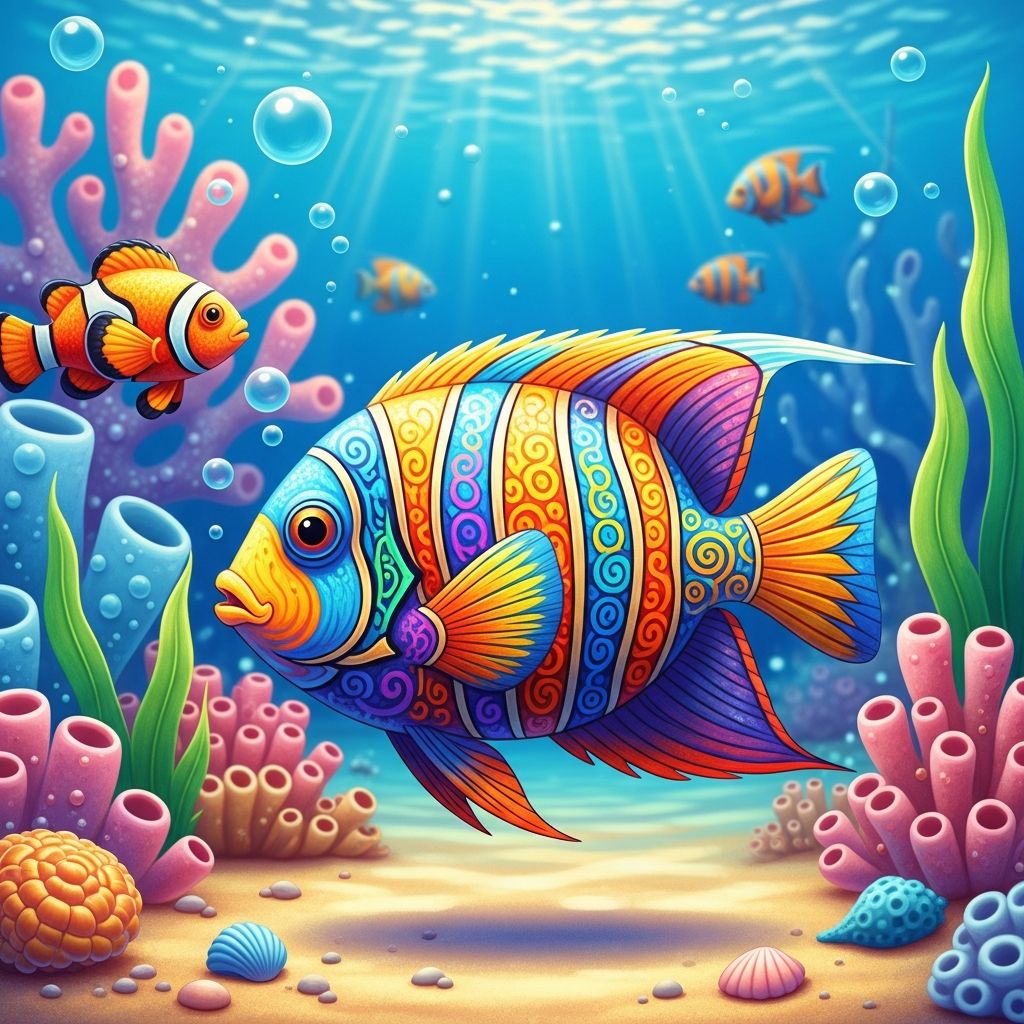
Fish coloring pages are more than a quick distraction. Used thoughtfully, they can become rich opportunities for kids to explore the underwater world, practice key skills, and enjoy calming, screen-free fun. This guide walks you through creative ways to use fish coloring sheets with toddlers, preschoolers, and elementary-aged kids.
Why Fish Coloring Pages Are Great for Kids
Coloring might look simple, but it supports many areas of development when children have regular opportunities to draw, color, and create.
- Fine motor practice: Holding crayons and coloring small areas helps strengthen the tiny muscles of the hands and fingers that kids need for writing, buttoning, and tying shoes.
- Hand–eye coordination: Trying to stay within lines encourages kids to coordinate what they see with how they move their hands.
- Focus and patience: Completing a coloring page requires attention, persistence, and the ability to stick with a quiet task.
- Emotional regulation: Coloring can have a calming, almost meditative effect for many children and adults, and art activities are often used to help manage stress and big feelings.
- Creativity and self-expression: Kids get to choose colors, patterns, and even add their own details to make each fish unique.
Fish themes work especially well because they invite bright colors, swirly patterns, and imaginative underwater scenes.
Types of Fish Coloring Pages to Use
Offering a mix of page styles keeps kids engaged and lets you match the challenge level to their age and skills.
| Type of Page | Best For | How It Helps |
|---|---|---|
| Simple cartoon fish | Toddlers & young preschoolers | Large shapes, thick outlines; great for early coloring and scribbling. |
| Realistic fish outlines | Older preschoolers & early elementary | Introduces real species, patterns, and body parts like fins and gills. |
| Underwater scenes | Mixed ages | Encourages storytelling and adding details like seaweed or bubbles. |
| Aquarium or coral reef pages | Elementary kids | Invites kids to use many colors and think about habitats and ecosystems. |
| Pattern or mandala-style fish | Older kids & adults | Small, repeating shapes promote focus and can be very relaxing. |
Setting Up a Fish Coloring Station
A dedicated coloring spot can make art time smoother and more inviting.
- Choose kid-friendly tools: Stock washable crayons, colored pencils, and markers so kids can experiment without worrying about stains.
- Offer a variety of blues and greens: Ocean colors are fun, but still encourage kids to use unexpected shades like pink, gold, or neon.
- Provide clipboards or trays: These make it easy to color on the floor, couch, or outdoors.
- Keep pages accessible: Place printed fish sheets in a low basket or folder so children can grab what they want independently.
- Display finished work: Hang a rotating “under the sea” gallery to celebrate their efforts and build confidence.
Age-by-Age Ideas for Fish Coloring Activities
Fish coloring can be tailored to different ages so that every child feels successful and challenged in just the right way.
Toddlers (1–3 Years)
At this age, the goal is exploration, not perfection. Scribbles are an important part of learning to draw.
- Offer large, simple fish shapes with plenty of white space.
- Use chunky crayons or washable markers that are easy to grip.
- Talk as they color: “You’re making the tail blue. This fish swims in the water.” Simple language supports early vocabulary.
- Allow them to color beyond the lines. The experience matters more than the outcome.
Preschoolers (3–5 Years)
Preschoolers often enjoy naming colors, trying to stay in the lines, and imagining stories about their creations.
- Offer both cute cartoon fish and slightly more detailed designs.
- Ask open-ended questions: “Where does your fish live?” or “What is your fish’s name?”
- Introduce basic ocean words like fin, tail, scales, and reef while they color.
- Invite kids to add bubbles, seaweed, or sand around the fish to build a whole scene.
Early Elementary (6–8 Years)
Older kids can handle more detail and often enjoy adding facts, labels, and patterns.
- Offer realistic fish pages such as goldfish, clownfish, or koi.
- Encourage them to research a fish in a children’s book or website, then choose colors based on what they learned.
- Introduce simple concepts like freshwater vs. saltwater fish as they color different habitats.
- Suggest they write a short caption or fun fact underneath each finished picture.
Learning Through Fish Coloring
With a little planning, coloring time can easily double as a gentle science or literacy lesson.
Science Connections
- Body parts: Point out and label the fins, tail, gills, eyes, and mouth as children color.
- Habitats: Talk about where different fish live—rivers, lakes, coral reefs, or deep oceans—and how their colors help them blend in or stand out.
- Life cycles: For older kids, pair coloring with a simple explanation of how fish hatch from eggs and grow.
- Ocean care: Briefly discuss why clean water is important for fish and how litter can hurt sea life.
Language and Storytelling
- Ask kids to tell a story about their fish: Where is it going? Does it have friends?
- Help them create a mini book by stapling several completed pages and writing a short line of text on each one.
- Practice describing words: shiny, stripy, spotted, tiny, gigantic, gentle, speedy.
Crafts You Can Make from Finished Fish Pages
Instead of recycling finished coloring pages right away, turn them into easy crafts. This extends the activity and gives new life to kids’ artwork.
- Paper aquarium: Cut out colored fish and glue them onto blue construction paper. Add tissue paper seaweed, drawn rocks, and glitter for sparkling “water.”
- Fish mobiles: Punch a small hole in each colored fish, tie on string, and hang them from a coat hanger or stick to create a floating school of fish.
- Ocean collage: Combine fish, shells (drawn or real), and waves into a large poster for a classroom or playroom wall.
- Story cards: Glue smaller fish images onto index cards and write a sentence on the back. Kids can shuffle and arrange them into a new story each time.
- Greeting cards: Fold a piece of cardstock, glue a favorite fish to the front, and add a note inside for birthdays or thank-you cards.
Supporting Different Learning Needs
Coloring projects can be easily adjusted to support children with varying needs or preferences.
- For kids who tire easily: Choose smaller designs and break the activity into short sessions.
- For sensory seekers: Offer textured materials—like sandpaper “rocks” or fabric scraps for seaweed—to glue onto the page.
- For reluctant colorers: Let them use markers or gel pens instead of crayons, or pair coloring with music or an audiobook.
- For perfectionists: Provide several copies of the same page so they know they can try again. Emphasize fun over “neatness.”
Tips for Parents and Educators
A few simple habits can make fish coloring time smoother and more meaningful.
- Set realistic expectations: Young children are still developing control. Celebrate effort, not perfection.
- Join in: When adults color alongside kids, it can strengthen connection and model relaxed creativity.
- Use positive language: Comment on specific choices—“You chose very bright colors for that fish!”—rather than only saying “good job.”
- Rotate page types: Alternate between simple and detailed sheets to keep interest high.
- Connect to books: Pair coloring with picture books or short articles about oceans, coral reefs, or freshwater ponds to deepen learning.
Frequently Asked Questions (FAQs)
What age can children start using fish coloring pages?
Many toddlers show interest in scribbling around 12–18 months. At this stage, offer very simple fish outlines and focus on safe materials and exploration. More detailed fish and full underwater scenes are better suited to preschool and early elementary ages.
How can I make fish coloring more educational?
Add brief discussions about body parts, habitats, and colors found in real fish. You can show a photo in a book or on a trusted educational site and invite kids to match or reinterpret the colors. Older children can label parts or write a fact next to each picture.
Are fish coloring pages helpful for kids who feel anxious?
Many people find repetitive, focused activities like coloring to be calming. Research on adult coloring suggests it may reduce anxiety by encouraging mindfulness and narrowing attention to the present moment, and similar effects are often seen in children. Coloring should not replace professional support, but it can be one useful coping tool.
What if my child only wants to use one color?
Using a single color is not a problem, especially for younger children. You can gently encourage variety by offering new shades of the same color or inviting them to add one new color for a detail like bubbles or seaweed, but there is no need to force it.
How do I store or display all the finished pages?
Consider a rotating display: hang a few favorites on a string with clothespins, keep a small portfolio or binder for special pages, and turn others into crafts like collages or greeting cards. Involving kids in choosing what to keep teaches decision-making and respect for their work.
References
- Development of Fine Motor Skills: Handwriting and Beyond — American Occupational Therapy Association. 2020-06-01. https://www.aota.org/practice/children-youth/school-based/fine-motor-skills
- Creative Arts and Mental Health — World Health Organization, Regional Office for Europe. 2019-11-11. https://www.euro.who.int/en/publications/abstracts/what-is-the-evidence-on-the-role-of-the-arts-in-improving-health-and-well-being-a-scoping-review-2019
- Oceans for Kids — National Oceanic and Atmospheric Administration (NOAA). 2022-05-10. https://oceanservice.noaa.gov/kids/
- Can Coloring Mandalas Reduce Anxiety? — Curry, N.A., Kasser, T. Art Therapy Journal (American Art Therapy Association). 2005-01-01. https://doi.org/10.1080/07421656.2005.10129441
- Literacy Milestones for Young Children — U.S. Department of Education. 2021-03-15. https://www2.ed.gov/parents/earlychild/ready/resources.html