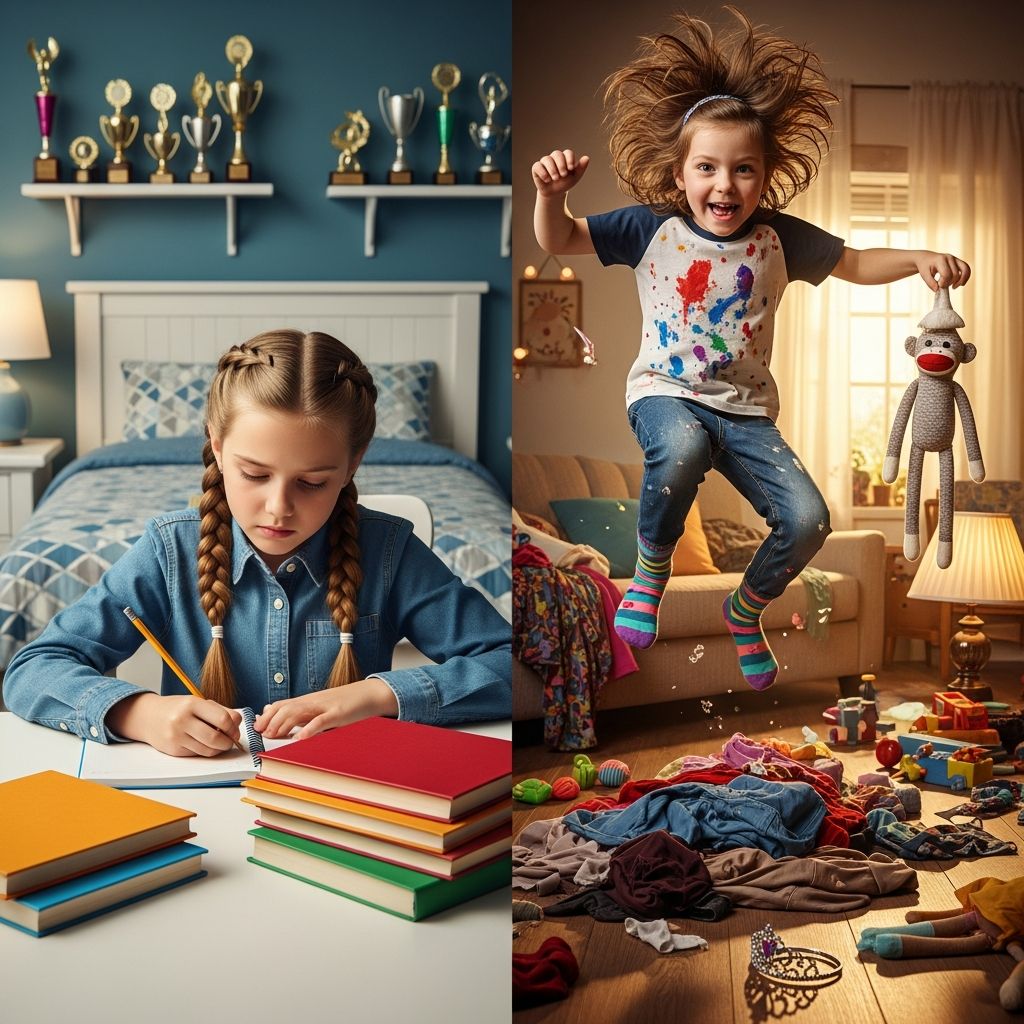
Parents with more than one daughter often joke that their girls are like night and day. The firstborn tends to act like a tiny adult, while the second-born seems to float through life with the confidence of someone who knows the rules but decides they are optional. This article explores those funny, relatable differences and why they feel so universal for many families.
Firstborn vs. Second-Born Daughters at a Glance
While every child is unique, certain patterns appear again and again when parents talk about their first and second daughters. These patterns show up in everything from how they play to how they handle rules, attention, and responsibility.
| Aspect | Firstborn Daughter | Second-Born Daughter |
|---|---|---|
| Overall vibe | Careful, cautious, often serious | Relaxed, bold, often carefree |
| Relationship to rules | Follows them closely and reminds others | Tests limits and bends rules creatively |
| Attention from parents | Used to being watched closely | Used to sharing attention or flying under the radar |
| Typical role at home | Helper, organizer, mini-parent | Comic relief, free spirit, rule-tester |
| Reaction to new situations | Wants to prepare and do things “right” | Jumps in and figures it out on the way |
Why Firstborn Daughters Feel Like Mini Adults
Firstborn daughters often arrive to parents who are still figuring everything out. New parents tend to read all the manuals, compare notes, and worry over every milestone. That intensity can shape the firstborn into someone who feels responsible, watchful, and eager to please.
Because she is the first to do everything in the family, the firstborn is the “test run” for school routines, activities, and rules. She often learns quickly that being careful and compliant keeps everyone calm and happy, which can make her seem wise beyond her years.
Common Traits of Firstborn Daughters
- They often ask permission before trying something new, even something small.
- They tend to worry about doing things “the right way” and avoiding mistakes.
- They may correct younger siblings and act like a second parent.
- They are usually very aware of adult expectations and household rules.
- They may feel pressure to be the example for everyone else.
Why Second-Born Daughters Feel So Laid-Back
By the time a second daughter arrives, the parents are usually less anxious and more experienced. The household is already set up for kids, and the new baby joins a rhythm that is already in motion. That atmosphere can lead to a more relaxed, flexible personality.
The second-born learns early that she is not the only focus of attention. She watches her older sister do everything first and may copy, compete, or choose a completely different style. Many second-born daughters respond by being funnier, louder, or more daring, almost as if they are carving out their own stage.
Common Traits of Second-Born Daughters
- They often dive into new situations with less hesitation.
- They naturally experiment with breaking or stretching the rules.
- They are used to tagging along and adapting to whatever is happening.
- They often have a playful, comedic side that gets attention.
- They may seem more independent about entertaining themselves.
How Parents Behave Differently the Second Time
Part of what makes the daughters so different is not just their birth order, but also how parenting changes. With the first child, everything feels new and high stakes. With the second, parents have seen more, survived more, and worry a little less.
What once required full research, group chats, and careful planning often becomes, “It will be fine; we’ve done this before.” That shift in attitude filters down into the everyday lives of both daughters.
Typical Parenting Shifts from First to Second Daughter
- Rules become looser: The strict bedtimes for the firstborn often become flexible suggestions for the second-born.
- Safety checks soften: The firstborn might have been surrounded by baby gates and foam corners; the second-born learns to navigate more freely.
- Milestones feel less intense: Every new word or step from the firstborn is a big event, while the second-born’s milestones blend more into busy family life.
- Expectations shift: Parents may expect the firstborn to lead and the second-born to follow, even without saying it out loud.
Everyday Scenarios That Show the Difference
The contrast between firstborn and second-born daughters becomes most obvious in small, everyday moments. These situations bring out their personalities and highlight how differently they respond to the same world.
From snacks to school to bedtime, each daughter brings her own energy and approach, often making parents laugh at how two children from the same home can feel so opposite.
Snack Time and Messes
- The firstborn daughter may carefully sit at the table, use a napkin, and worry about spilling.
- The second-born daughter might walk around with her snack, leave a trail of crumbs, and shrug when something drops.
- Parents often rush to tidy after the firstborn but simply accept a certain level of chaos with the second-born.
Play, Risk, and Adventure
- The firstborn tends to read instructions, ask for guidance, or wait for a green light before trying something new.
- The second-born is more likely to leap first and ask questions later, especially if big sister already survived the activity.
- Parents may instinctively hover over the firstborn while trusting the second-born to bounce back from minor bumps.
Schoolwork and Responsibility
- The firstborn daughter often takes school projects very seriously, double-checking everything and asking if it is good enough.
- The second-born may start later, improvise more, or rely on last-minute bursts of effort.
- Teachers and relatives may see the firstborn as the “responsible one,” while the second-born carries a more “easygoing” reputation.
Emotional Worlds: Anxiety vs. Ease
A big part of the humor in comparing the two daughters lies in how differently they react emotionally. Firstborn daughters often carry a visible sense of worry and pressure, while second-born daughters appear relaxed and unbothered, even in the same situation.
This difference does not mean one child is stronger than the other. It simply shows how each responds to family expectations, attention, and experiences.
Firstborn Emotional Tendencies
- More likely to worry about disappointing parents or teachers.
- May become anxious about changes in routine or new experiences.
- Often carries a sense of duty or responsibility for younger siblings.
Second-Born Emotional Tendencies
- More likely to laugh off minor mistakes and move on quickly.
- May rely on humor or silliness to handle stress or tension.
- Often seems more resilient about small setbacks or corrections.
How Sisters Balance Each Other
Despite their differences, firstborn and second-born daughters often turn into a powerful team. The firstborn’s sense of order and planning combines with the second-born’s spontaneity and courage. Together, they create a dynamic that can be both chaotic and beautiful.
Over time, each sister influences the other. The firstborn learns to relax and play more, while the second-born learns from the older sister’s structure and care. Their contrasting styles can strengthen both of them.
Ways Their Differences Become Strengths
- The firstborn may help the second-born stay on track with school or routines.
- The second-born may encourage the firstborn to try new things and loosen up.
- Both learn negotiation, compromise, and empathy by living with someone so unlike themselves.
Tips for Parents of First and Second Daughters
Parents cannot change birth order, but they can respond thoughtfully to each daughters individual needs. Understanding the patterns can help avoid unintentional pressure on one child and unintentional neglect of the other.
The goal is not to erase the differences, but to support each daughter so she can grow into the healthiest version of herself, not just a stereotype of her birth order.
Supporting Your Firstborn Daughter
- Reassure her that she does not always have to be perfect or responsible.
- Avoid making her the default “assistant parent” or constant helper.
- Give her time to be silly, messy, and carefree without judgment.
Supporting Your Second-Born Daughter
- Make sure she receives individual attention, not just shared moments with siblings.
- Offer clear boundaries and routines so her free spirit has a safe container.
- Recognize and praise her unique strengths, not only in comparison to her sister.
SEO-Optimized Key Takeaways
For parents searching about the difference between firstborn and second-born daughters, certain themes tend to stand out. These ideas can help frame how to think about birth order without locking children into rigid labels.
- Firstborn daughters often appear cautious, responsible, and eager to please, especially in families where parents were highly focused with their first child.
- Second-born daughters frequently seem relaxed, funny, and adventurous, shaped by a more experienced household and the presence of an older sibling.
- Birth order is only one influence; personality, parenting style, and life experiences also play important roles.
FAQs About Firstborn and Second-Born Daughters
1. Are firstborn daughters always more responsible?
No, not always. Many firstborn daughters do become more responsible because they are given extra expectations and often help care for younger siblings, but personality and family culture also matter. Some second-born daughters can be just as organized and driven, especially if they naturally lean in that direction.
2. Why does my second-born daughter seem so fearless?
Second-born daughters often grow up watching an older sibling do everything first, from climbing at the playground to starting school. Seeing someone else survive those experiences can make new situations feel less scary, which can show up as fearlessness or boldness in daily life.
3. Is it bad if my firstborn daughter feels a lot of pressure?
Feeling some responsibility is common, but constant pressure can become stressful. Parents can help by reminding the firstborn that mistakes are allowed, that she is still a child, and that it is not her job to manage everything or everyone in the family.
4. How can I avoid comparing my daughters?
Try to notice and describe each daughter in terms of her individual strengths, not as the “opposite” of her sister. Give each child one-on-one time, ask about her thoughts and feelings, and celebrate her efforts rather than focusing on direct comparisons like who is braver, tidier, or smarter.
5. Do these birth-order patterns last into adulthood?
They can, but they may soften or shift as daughters grow up and build their own lives. A once-anxious firstborn may become more relaxed, and a carefree second-born may take on serious leadership roles. Birth order can shape habits, but it does not fully define who someone becomes.
Final Thoughts on First and Second Daughters
The contrast between firstborn and second-born daughters is one of the most entertaining and relatable parts of parenting multiple kids. Watching one child carefully color within the lines while the other doodles all over the page can be both challenging and deeply funny.
Instead of trying to make them the same, parents can enjoy the humor in their differences and support each daughter in her own way. In the end, the balance between the responsible firstborn and the free-spirited second-born is often what gives a family its unique character and charm.