Your first period is a major milestone in puberty, and it can bring up a mix of curiosity, worry, and excitement. This guide explains what is happening in your body, what to expect before and during your period, and how to look after yourself with confidence.
What a Period Actually Is
A period is a normal, healthy process where the lining inside the uterus (womb) leaves the body through the vagina. This lining builds up each month to prepare for a possible pregnancy. When pregnancy does not happen, the body releases that lining as menstrual blood.
The blood you see is usually a mix of blood, tissue from the uterine lining, and natural fluids from the vagina and cervix. The color may be bright red, dark red, or even brown, and it can change from day to day during the same period.
- A period is not the body “losing too much blood”; the amount is usually small.
- Menstruation is a key sign that the reproductive system is working.
- Having a period does not mean a person is fully grown or emotionally mature.
When Periods Typically Begin
There is no single “right age” to get a first period. Many people start between ages 10 and 15, but some begin a little earlier or later. Family history, body size, nutrition, and overall health can all play a part in timing.
Usually, periods begin about two years after breast development starts and several months after a person notices a clear or white vaginal discharge for the first time. These are signs that hormones are changing and the body is getting closer to menstruation.
Common Signs Your First Period May Be Near
- Breasts have started to develop and feel fuller.
- Hair is growing in the armpits and pubic area.
- Vaginal discharge appears regularly in underwear.
- Mood swings, mild cramps, or bloating show up around the same time each month.
What a Normal Teen Cycle Looks Like
The menstrual cycle is counted from the first day of one period to the first day of the next. In the first couple of years after the first period, cycles are often irregular. They may come closer together some months and farther apart in others.
For many teens, a cycle can last anywhere from about three weeks to about six weeks. Over time, cycles often settle into a more regular pattern, but “regular” still looks different from person to person.
| Feature | What Is Common |
|---|---|
| Cycle length | About 21–45 days from one period start to the next |
| Bleeding days | Around 2–7 days of bleeding or spotting |
| Flow amount | Light on some days, heavier on others; usually heaviest in the middle |
| Regularity | Often unpredictable during the first 1–2 years |
How Periods Might Feel in Your Body
Some people barely notice their periods, while others have noticeable symptoms before and during bleeding. The group of symptoms that appear in the days leading up to a period is often called premenstrual symptoms.
Symptoms can shift from cycle to cycle. Paying attention to patterns helps you prepare and decide when to seek medical advice if something feels extreme or unmanageable.
Typical Physical Symptoms
- Cramping or aching in the lower belly, back, or thighs.
- Bloating or a puffy feeling, especially in the stomach area.
- Breast tenderness or a sense of heaviness.
- Headaches or general body aches.
- Changes in digestion, such as constipation or loose stools.
- Feeling more tired than usual or having trouble sleeping.
Common Emotional and Mental Changes
- Sudden mood swings or irritability.
- Feeling unusually sad, sensitive, or tearful.
- Having trouble concentrating or feeling easily overwhelmed.
- Wanting more alone time or feeling more anxious than usual.
Mild to moderate symptoms that improve a few days after bleeding starts are usually considered within the normal range. Very intense symptoms that interfere with school, activities, or relationships may need medical attention.
Practical Ways to Manage Cramps and Discomfort
Period discomfort can often be reduced with simple strategies at home. The goal is not perfection, but to find a combination of habits that makes each cycle easier to handle.
It can be useful to try one or two approaches at a time and notice what helps most. Keeping a small note in a journal or period-tracking app can reveal patterns over several cycles.
Comfort Strategies That Often Help
- Place a warm heating pad or hot water bottle on the lower belly or back for 15–20 minutes at a time.
- Take a warm bath or shower to relax tight muscles.
- Gently stretch or do light activities like walking or yoga to boost blood flow.
- Drink water throughout the day and avoid overdoing caffeine and very salty snacks.
- Use relaxation tools such as deep breathing, calming music, or a short guided meditation.
- Ask a trusted adult or health professional about over-the-counter pain relievers and safe dosages, if needed.
Choosing Menstrual Products
There are many ways to catch menstrual blood. No single product is “best” for everyone. Comfort, lifestyle, body size, and personal values all influence what feels right.
Trying different options over time is normal. Reading instructions carefully and changing products regularly is important for hygiene and safety.
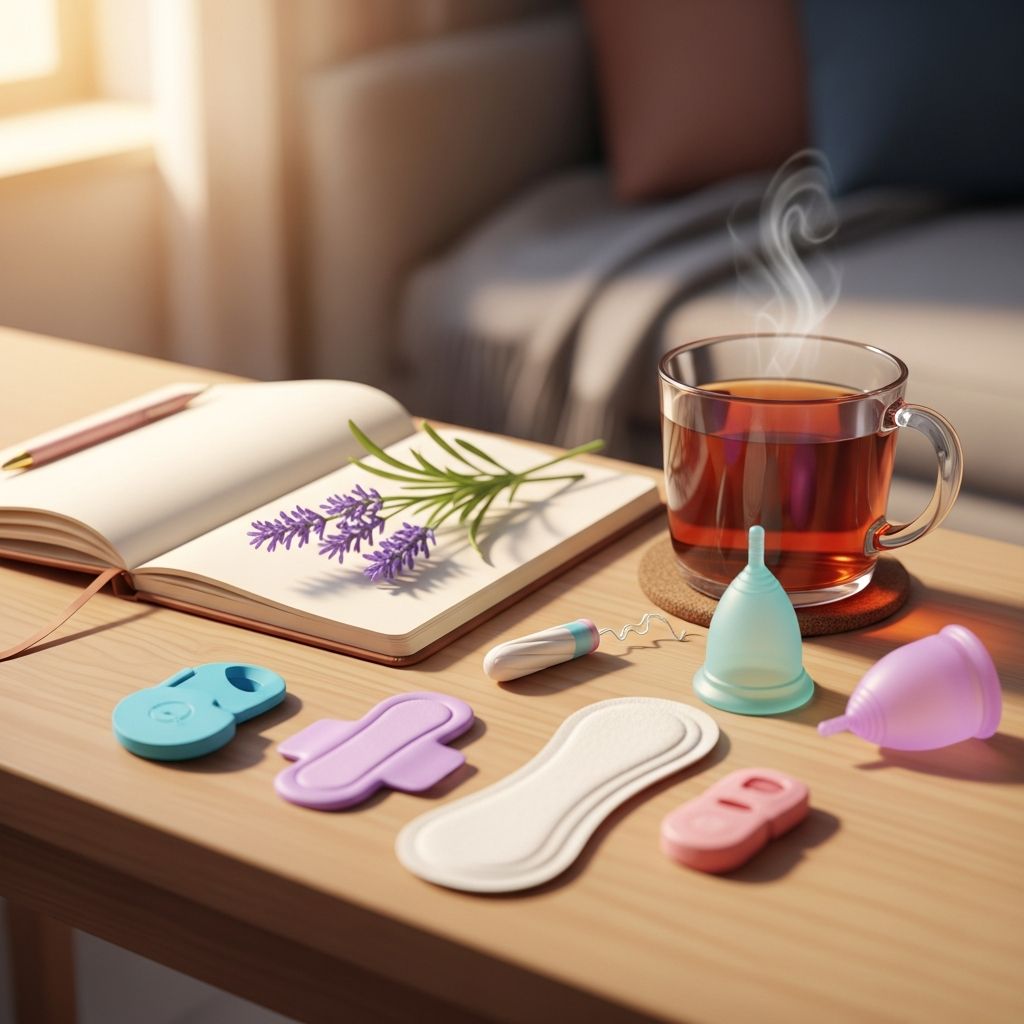
Main Types of Products
- Disposable pads: Worn in underwear; easy to use, especially for a first period. They come in different lengths and absorbency levels.
- Panty liners: Thinner pads used for very light days or spotting.
- Tampons: Placed inside the vagina to absorb blood before it leaves the body. They must be changed regularly following package directions.
- Menstrual cups: Reusable silicone or rubber cups worn inside the vagina to collect blood. They can last for several years with proper care.
- Period underwear: Washable underwear designed with absorbent layers to catch menstrual flow directly.
| Product | Pros | Considerations |
|---|---|---|
| Disposable pads | Simple to use; no insertion; widely available. | Can feel bulky; must be thrown away after use. |
| Tampons | Discrete; good for sports and swimming. | Require insertion; must be changed regularly and never left in too long. |
| Menstrual cups | Reusable and cost-effective over time; hold more than many tampons. | Takes practice to insert and remove; need washing between uses. |
| Period underwear | Comfortable; feels like regular underwear; reusable. | Requires washing; may need extra protection on heavy days. |
A Simple “First Period” Kit
Periods sometimes start when least expected, such as during school, sports, or a trip. Having a small kit ready can reduce stress and make surprise periods easier to handle.
This kit can stay in a backpack, locker, or sports bag. A small pouch or pencil case works well to keep items together and private.
- 2–3 pads and a panty liner.
- 1 pair of spare underwear, rolled up tightly.
- Travel-size pack of wet wipes or tissue.
- Small plastic or reusable bag for storing soiled clothes if needed.
- A slip of paper with contact numbers for a parent, guardian, or trusted adult.
Hygiene and Self-Care During Your Period
Good hygiene helps prevent irritation and infection and can make you feel fresher. Menstrual blood has a natural smell that can become stronger if products are left on too long.
Gentle, consistent care is more helpful than harsh soaps or strong perfumes, which can upset the natural balance of the genital area.
Everyday Hygiene Tips
- Change pads, tampons, cups, or period underwear as often as the instructions recommend, or more frequently if they feel full.
- Wash the outside of the genital area with warm water; mild, unscented soap can be used on the outer skin if it does not cause irritation.
- Avoid scented sprays, douches, or powders in or around the vagina.
- Wear breathable underwear, like cotton, and change it daily or more often if needed.
Understanding When Flow Is “Heavy” or “Light”
Flow level changes from day to day. The first and last days may be more like spotting, while the middle days are often heavier. Comparing your experience from month to month helps you recognize what is normal for you.
In general, soaking through a pad or tampon in a couple of hours repeatedly, or passing large clots often, may indicate bleeding that is heavier than usual and worth discussing with a health professional.
Tracking Your Cycle
Tracking periods helps you predict when the next one might arrive and spot patterns in cramps, mood, and energy changes. Tracking does not need to be perfect; even simple notes are valuable.
You can use a paper calendar, a notebook, or a phone app dedicated to period tracking. Over time, you may be able to plan around big events, sports, or trips more easily.
Details You Might Track
- First and last day of bleeding.
- Flow level each day (for example: light, moderate, or heavy).
- Symptoms like cramps, headaches, or mood changes.
- Any pain medicines taken and how well they worked.
Emotional Well-Being and Body Image
Starting a period can bring up questions about identity, privacy, and body image. It is normal to feel shy, confused, or even annoyed about having to deal with bleeding and symptoms every month.
Talking with a trusted adult, friend, coach, or counselor can help. Remember that bodies develop at different speeds, and comparing yourself to others rarely gives a full picture of what is normal.
When to Talk to a Health Professional
Most teen periods fall within a wide “normal” range, even if they are irregular at first. However, certain signs suggest that a medical check is a good idea.
Seeking help is not a sign of weakness. It is a way of learning more about your health and making sure your body is getting the support it needs.
Warning Signs to Get Checked
- Periods have not started by around age 15, especially if other signs of puberty began several years earlier.
- Periods were regular for a while and then stop for several months in a row without a clear reason such as pregnancy or a major change in activity or weight.
- Bleeding is so heavy that you soak through products in an hour or less repeatedly, or you pass large clots often.
- Cramps are so severe that you regularly miss school, sports, or activities and typical pain relievers do not help.
- Periods come very far apart or very close together for a long time, instead of gradually becoming more regular.
- You experience intense mood changes that feel unmanageable or include thoughts of self-harm.
Talking About Periods With Others
Periods are personal, but that does not mean they must be a secret. Choosing who to tell and how much to share is up to you. Sharing basic information with at least one trusted adult is helpful in case of questions or problems.
It can also help to practice what you might say to a teacher, nurse, or coach if you need to leave class, ask for supplies, or explain why you are not feeling well.
People You Might Choose to Tell
- Parents, guardians, or other caregivers.
- School nurse or counselor.
- Close friends who you feel safe with.
- Coaches or leaders of activities that involve physical exertion.
- Doctors or nurses during checkups.
Frequently Asked Questions
Can I get pregnant after my first period?
Yes. Once ovulation begins, pregnancy becomes possible even if cycles are not regular. If you are sexually active, talk to a health professional about contraception and protection against sexually transmitted infections.
Is it safe to exercise or play sports during my period?
In most cases, yes. Many people find that light to moderate activity actually reduces cramps and improves mood. On very painful days, you may choose gentler movement or rest, but periods alone usually do not require stopping normal activities.
Do tampons or cups affect virginity?
No. Virginity is about personal and cultural definitions of sexual activity, not about which menstrual products are used. Tampons and cups may stretch the hymen, but they do not change sexual history or identity.
Why does my friend’s period seem so different from mine?
Every body responds to hormones in its own way. Genetics, lifestyle, stress, and health conditions can all influence flow, pain, and mood. Comparing experiences can be interesting, but differences are usually normal.
Will my period always stay the same?
Not necessarily. Periods often change over the teen years and into adulthood. Tracking changes over time and mentioning major shifts at medical visits helps make sure everything remains healthy.
Key Takeaways
- A period is a normal, healthy part of puberty and does not mean anything is “wrong” with your body.
- Early cycles can be irregular, and symptoms can vary widely from person to person.
- There are many ways to manage flow and discomfort; it can take time to discover what works best for you.
- Asking questions and seeking medical advice when something feels off is a smart way to care for your health.