Getting a first period is a big milestone in growing up. It can feel exciting, confusing, or even a little scary, especially if you are not sure what is happening. This guide explains what a first period is, what it may feel like, how to take care of yourself, and how to talk to trusted adults when you need support.
What Is a Period, in Simple Words?
A period is a sign that your body is becoming capable of pregnancy someday, even if you are not ready to think about that yet. Each month, the lining inside the uterus (the small, hollow organ where a baby could grow) thickens to prepare for a possible pregnancy. If pregnancy does not happen, that lining breaks down and leaves the body as blood and tissue through the vagina. That is what is called a period, or menstruation.
Even though there is blood, a period is not an injury and it is not dirty. It is a natural body process that many girls and people with a uterus experience for many years.
When Do Most People Get Their First Period?
There is no single “right” age to get a first period. Some people get it earlier, and some get it later. Bodies grow at different speeds, so comparing yourself to friends is not very helpful.
Instead of focusing only on age, it helps to pay attention to changes in your body. These changes give clues that your first period may be on its way.
Body Changes That Often Come First
- Breasts starting to grow and feel tender.
- Hair growing under your arms and around your pubic area.
- A growth spurt where you suddenly get taller.
- Clear or white discharge (moisture) in your underwear.
These changes usually show up months or even years before a first period. They are all normal parts of puberty.
What Will My First Period Look and Feel Like?
Your first period may not look like what you imagine from movies or stories. It is usually lighter and may be more like spotting than a steady flow. The color can be bright red, dark red, brownish, or even a little rusty-looking as it dries.
You might notice:
- Small spots of blood on your underwear or toilet paper.
- A smear or streak of brown or red in your underwear.
- More steady bleeding that needs a pad or other product.
Common Physical Feelings
Everyone’s period experience is different. Some people do not feel much change at all. Others notice new sensations in their body, such as:
- Mild cramping or a heavy feeling low in the belly.
- Back aches, especially in the lower back.
- Feeling tired more easily than usual.
- Breasts that feel sore or extra sensitive.
These feelings can be annoying, but they are usually not a sign that something is wrong. If pain is very strong or stops you from doing regular activities, it is important to talk with a parent, caregiver, or health professional.
How Long Does a Period Last?
Many first periods last only a few days, while others may continue a bit longer. During the first year or two, your cycle might not be regular. You might have a period and then not see another one for several weeks or even a few months.
| Feature | What You Might Notice |
|---|---|
| Length of bleeding | Often between 2 and 7 days. |
| Amount of flow | May be light, with small spots or a gentle flow. |
| Color of blood | Can be bright red or darker brown, especially at the beginning and end. |
| Timing between periods | May be irregular at first, sometimes skipping months. |
As you get older, your cycle usually becomes more predictable. Many people find that their period comes about once a month, though “normal” can mean a few days shorter or longer for each person.
Period Products: What Can I Use?
There are several products made to absorb menstrual blood and keep it from leaking onto clothing. It is okay to try different options to see what feels most comfortable and safe for you.
Pads
Pads are soft rectangles that stick to the inside of underwear. They are often the easiest choice for a first period because they do not go inside the body.
- Come in different lengths and thicknesses for light, medium, or heavy flow.
- Some have “wings” that wrap around the sides of underwear to help prevent leaks.
- Need to be changed every few hours or whenever they feel full, damp, or uncomfortable.
Tampons
Tampons are small cotton or fiber plugs that go gently into the vagina to soak up blood before it leaves the body. Some people prefer them later on, especially for swimming or sports.
- Come in different sizes for different levels of flow.
- Should be changed every few hours; leaving them in too long is not safe.
- Not everyone is ready to try them at first, and that is okay.
Period Underwear and Other Options
Period underwear looks like regular underwear but has extra layers designed to absorb blood. Some people wear it alone on lighter days or as backup with pads or tampons. There are also menstrual cups and reusable pads, which can be good choices for later on when you feel more comfortable with your cycle.
Staying Clean and Comfortable
Good hygiene can help you feel fresh and prevent irritation while you have your period. It also keeps your skin healthy in the sensitive areas around your genitals.
- Change pads, period underwear, or tampons regularly, usually every 3–4 hours when awake.
- Wash your hands before and after changing any product.
- Use plain water or a gentle, unscented soap for the outside of your vulva; strong perfumes or sprays can irritate the skin.
- Wear clean underwear each day and choose breathable fabrics like cotton when possible.
Comfort Tips for Cramps and Mood Swings
Some people feel moody, weepy, or easily annoyed before or during their period. Others have cramps or headaches that make them uncomfortable. These changes are linked to hormones, which are chemical messengers in your body.
Ways to Ease Cramps
- Place a warm (not too hot) heating pad or warm water bottle on your lower belly or back.
- Try gentle movement like walking, stretching, or yoga to relax tight muscles.
- Practice slow, deep breathing to calm your body.
- If your parent or caregiver agrees, a health professional may suggest safe pain-relief medicine.
Caring for Your Emotions
- Talk with someone you trust if you feel sad, angry, or overwhelmed.
- Get enough sleep; feeling tired can make emotions feel bigger.
- Do something soothing, like reading, drawing, listening to music, or taking a warm bath.
Being Prepared: Your Period Kit
Because periods can be a bit unpredictable at first, it is helpful to be prepared. A simple “period kit” can help you feel more confident at school, activities, or on trips.
- A small pouch or pencil case.
- 2–3 pads in the size you prefer.
- A spare pair of underwear.
- A small plastic or reusable bag for storing stained underwear if you need to change.
- Individually wrapped wipes for times when you do not have easy access to a sink.
Keep your kit in your backpack, locker, or another place you use often. Knowing it is there can make surprise periods a lot less stressful.
Leaking and Stains: What If I Bleed on My Clothes?
Leaking is very common, especially while you are still learning how heavy your flow is. It can feel embarrassing in the moment, but it happens to many people and does not mean you did anything wrong.
- If you notice a leak, ask to use the bathroom and change your pad or product if you can.
- Wrap a sweatshirt or jacket around your waist if you feel more comfortable while you wait to change.
- At home, rinse stained clothes with cold water as soon as possible; then wash them with laundry soap.
Talking About Your Period With Adults
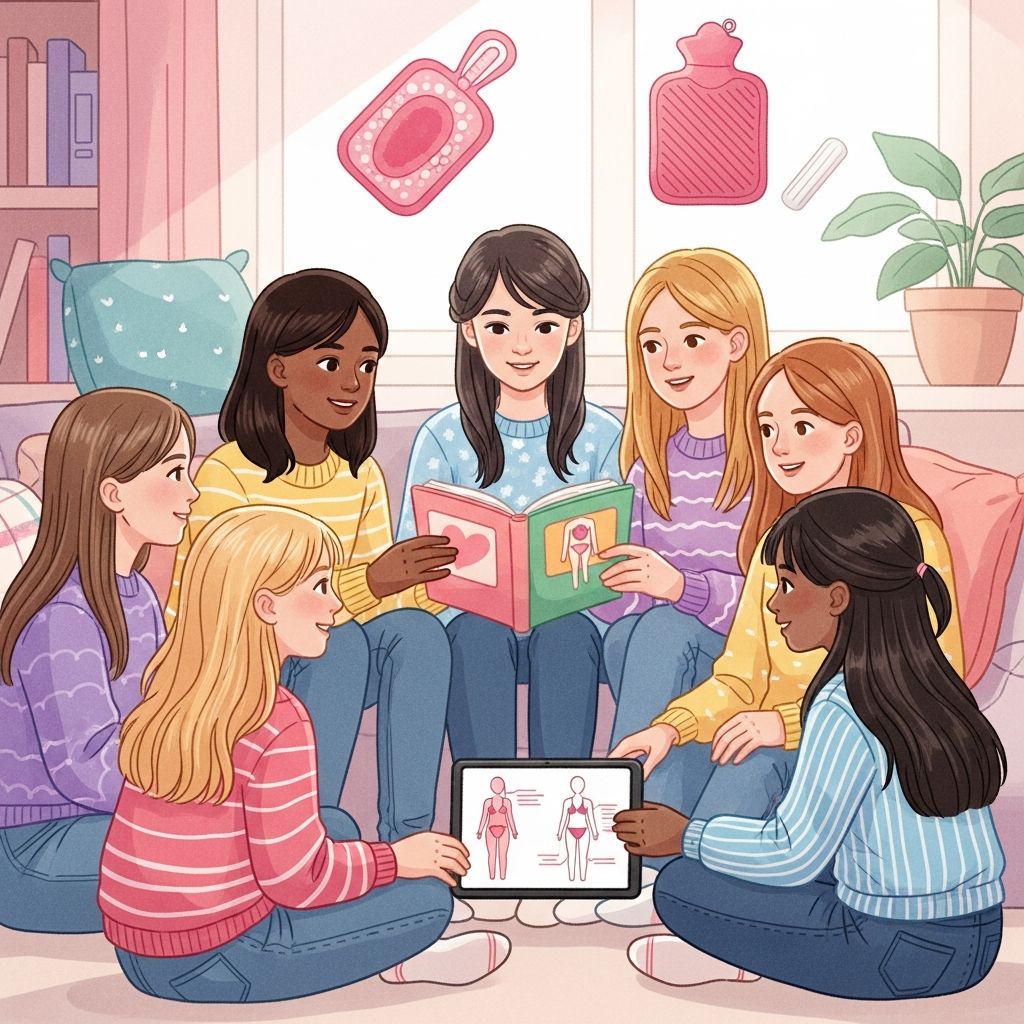
Talking about periods may feel awkward at first, but trusted adults can support you with supplies, information, and comfort. You do not have to handle everything alone.
People you might talk to include:
- A parent or caregiver.
- An older sister, cousin, or close family member.
- A school nurse or counselor.
- A doctor or other health professional.
You could start the conversation with simple words, like, “I think I got my period,” or “Can you help me understand what is going on with my body?” Most adults will be glad that you trusted them and will want to help.
When Should I See a Doctor?
Most first periods are normal and do not require special treatment. Still, there are times when talking to a health professional is a good idea. Do this with a parent or caregiver if possible.
- You are much older than your friends and have other signs of puberty, but no period at all yet.
- Your period lasts longer than about a week, or you bleed very heavily (for example, soaking through a pad every hour for several hours in a row).
- Your cramps are so strong that you cannot go to school or enjoy regular activities, even with rest and home care.
- You feel dizzy, very weak, or short of breath during your period.
- You feel very sad, hopeless, or unlike yourself for long stretches of time.
Myths and Facts About Periods
There are many stories and myths about periods. Some come from older traditions or from people feeling uncomfortable talking about bodies. Learning the facts can make you feel calmer and more confident.
- Myth: You should not exercise during your period.
Fact: Many people safely play sports and stay active. Gentle movement can even ease cramps. - Myth: Period blood is dirty or poisonous.
Fact: Period blood is simply a mix of blood and tissue from the uterus leaving the body. - Myth: You can always tell when someone has their period.
Fact: Periods are usually not visible from the outside when using products that fit well.
Frequently Asked Questions (FAQs)
Will my period hurt?
A period itself does not usually hurt, but some people get cramps, back aches, or headaches. These can often be eased with warmth, rest, gentle movement, or advice from a health professional. If pain feels very strong or makes it hard to live your normal life, ask an adult to help you get medical advice.
Can I go to school or play sports on my period?
Yes. Most people continue their usual activities while on their period. You might need to bring extra pads or other products and maybe a small pouch for your supplies. If you feel tired or have cramps, you can pace yourself, but there is no rule that you must stay home just because you have your period.
How often should I change my pad or tampon?
It depends on how heavy your flow is, but a common rule is every 3–4 hours during the day, and more often if your pad or tampon feels wet, uncomfortable, or nearly full. At night, many people prefer a longer pad and change it when they wake up. Tampons should not be worn for very long stretches, so a pad or period underwear is usually better while sleeping.
Is it normal if my periods are not regular at first?
Yes. During the first year or two, your cycle is often still settling into a pattern. This can mean that one period is close to the next, while another is weeks late. Keeping a simple calendar or using a period-tracking app (with a parent’s permission) can help you notice your own rhythm over time.
What if I feel embarrassed?
Feeling shy or awkward about periods is common, especially before people around you talk about them openly. Remember that many classmates, family members, and adults have periods or have had them in the past. With time and information, most people feel much more at ease talking about and managing their periods.
Growing Up With Confidence
A first period is just one part of growing up, but it can be a powerful moment. Learning about your body, asking questions, and practicing self-care are all signs of maturity. You do not need to know everything right away. You simply need honest information, support from trusted adults, and time to get used to the changes.
As your body continues to grow, remember that you deserve to feel safe, respected, and informed. Your period is a natural part of who you are, and you have every reason to face it with confidence.