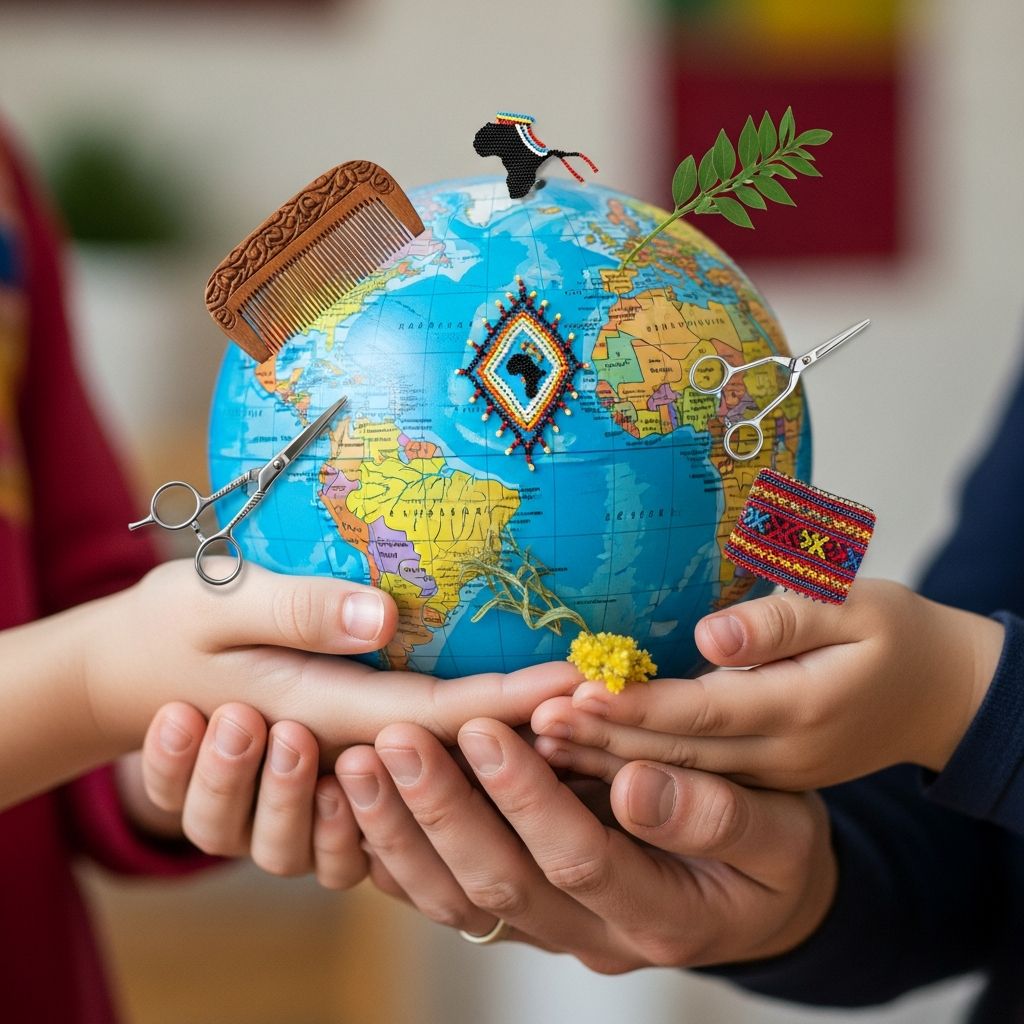
A child’s first haircut is more than a practical grooming task in many parts of the world. It can mark a transition from babyhood to childhood, connect a family to its ancestors, and express religious or spiritual beliefs about purity, luck, and identity. For parents, this small snip of hair often becomes a big emotional moment that signals how quickly a child is growing.
This article explores how different cultures approach a baby’s first haircut, why hair holds such powerful symbolism, and how modern families can thoughtfully shape their own rituals—whether rooted in faith, heritage, or personal meaning.
Why Hair Matters So Much in Rituals
Across religions and cultures, hair is often treated as more than simple biology. It can be seen as a vessel of spiritual energy, a sign of maturity, or a visible marker of religious commitment.
- Identity and belonging: Hairstyles can signal gender, status, and community membership, from religious side-locks to shaved heads in monastic traditions.
- Purity and renewal: Many faiths link cutting or shaving hair with cleansing, rebirth, or leaving behind a past state of being.
- Respect for the body: Some traditions bury, burn, or offer hair in sacred places, reflecting the belief that even cut hair deserves careful treatment.
These beliefs help explain why a first haircut, in particular, becomes a natural point for ceremony and celebration.
Hindu Mundan and Related Ceremonies
In many Hindu communities, a child’s first haircut—often a full shave—is known as mundan or choula, one of a series of life-cycle rites called saṃskāras that are intended to purify and prepare a person for a life of worship.
Spiritual Ideas Behind the Shave
- Newborn hair is sometimes viewed as carrying remnants of past lives, including negative qualities or burdens.
- Shaving is understood as a symbolic fresh start, removing old ties and inviting blessings for the child’s future.
- Families may believe the act helps protect against misfortune or the “evil eye,” and promotes spiritual and physical well-being.
How a Mundan Ceremony Often Looks
Practices vary between regions and families, but several elements are common:
- The ceremony usually happens between 1–3 years of age for boys; in many communities girls also undergo a version of the ritual, sometimes earlier and without a full shave.
- Parents frequently travel to a temple or sacred river where a priest leads prayers and the initial cutting of hair.
- A barber or family member then completes the shave while mantras or blessings are recited.
- Afterward, soothing pastes—often sandalwood and turmeric—may be applied to protect the scalp and reduce irritation.
- The cut hair is treated respectfully: it may be gathered and offered at a temple or immersed in a holy river.
In some Indian communities, such as Gujarati families, a paternal aunt or another relative plays a special role by catching the hair and offering blessings, emphasizing the broader family’s involvement.
Orthodox Jewish Upsherin: Learning, Not Just Looks
Among many Orthodox Jewish families, particularly in Hasidic communities, the first haircut for a boy is delayed until he turns three. The event, called upsherin or upsherenish (Yiddish for “shear off”), is both a grooming milestone and a spiritual turning point.
Why Age Three Matters
- The tradition is partly inspired by a verse likening a person to a tree; in biblical agricultural law, fruit trees are not harvested during their first three years.
- By analogy, a boy’s hair is left untouched until he is considered ready to “bear fruit” in learning and observance.
- Age three is also viewed as the beginning of formal religious education, when a child starts to learn Torah and basic blessings.
Key Features of an Upsherin
Ceremonial details differ by community, but commonly include:
- Friends and relatives gather in a home, school, or synagogue.
- Multiple guests each snip a small lock of hair, often in exchange for a charitable donation, symbolizing shared responsibility for the child’s growth.
- The boy may begin wearing a yarmulke (kippah) and, in many traditions, payot (sidecurls), making his Jewish identity more visible.
- Teachers sometimes introduce the child to learning with sweet treats—such as honey placed on letters—to create a joyful first memory of study.
In this context, the haircut is less about appearance and more about publicly welcoming the child into a community of study and religious practice.
Chinese “Good Luck” Haircuts
Many Chinese families historically performed a first haircut ceremony around the time of a baby’s first month, sometimes associated with the “full month” celebration when mother and infant are presented to the wider community.
Hair, Luck, and Survival
- Before modern medicine, infant mortality was high in many regions of China. A ritualized haircut became a way to mark survival past the most fragile weeks of life.
- The ceremony is often framed as a good luck haircut, calling in blessings for health and longevity.
- Some families fully shave the baby’s head, while others simply trim a little hair to acknowledge the milestone.
The Color Red and Community Celebration
Red, associated with happiness, prosperity, and good fortune in Chinese culture, plays a central role:
- Families may serve red-dyed foods such as eggs or cakes during the gathering.
- Babies might wear a red cap or clothing after the haircut to reinforce auspicious symbolism.
- Gifts, blessings, and shared meals link the child’s personal milestone to the strength of the extended family network.
Even as modern urban life changes how strictly such customs are observed, many families maintain some form of the ritual for its emotional and cultural resonance.
Native American Perspectives: Long Hair and an Apache Exception
In many Native American nations, long hair is intimately connected to identity, spirituality, and maturity, and cutting it can be associated with grief or profound life changes.
- For numerous tribes, hair is traditionally cut only in circumstances of mourning or serious transition, making routine haircuts uncommon for children.
- Long hair can symbolize a living connection to ancestors, the land, and personal strength.
The Apache are often cited as an exception among Native nations in that children may participate in a seasonal haircutting ceremony in the spring, intended to encourage health and success and followed by a communal celebration. While the details differ between Apache communities, this practice shows how hair can represent growth and renewal as much as continuity.
European Historical Traditions
Certain European cultures once used a child’s first haircut to signify the shift from early childhood into a new social role.
Polish Postrzyżyny
In pre-Christian Slavic Poland, boys underwent a rite called postrzyżyny between about seven and ten years of age.
- Before the ceremony, a boy’s life was understood as closely tied to his mother; afterward, he was formally recognized as belonging to the world of men.
- The haircut could be carried out by the father or by a respected outsider who symbolically entered the family by performing the act.
- The ritual often coincided with the granting of an additional given name and new responsibilities.
While not widely practiced today, this tradition illustrates how haircuts historically marked clear social transitions rather than just aesthetic choices.
Other European and Eurasian Variations
Related customs have appeared elsewhere in Eastern Europe and Eurasia, where the timing of the first haircut signaled that a child was leaving the protected sphere of infancy and entering a broader communal role. Though many of these practices faded or were reshaped under Christian influence and modernization, echoes remain in family stories and local folk customs.
Comparing First Haircut Traditions
The table below highlights how selected cultures differ in timing, setting, and meaning of a child’s first haircut.
| Culture / Tradition | Typical Age | Haircut Style | Main Setting | Key Symbolism |
|---|---|---|---|---|
| Hindu (Mundan / Choula) | 1–3 years | Head shaved or closely cut | Temple, holy place, or home | Purification, release of past-life burdens, auspicious future |
| Orthodox Jewish (Upsherin) | 3 years (boys) | Trimmed with sidecurls left | Synagogue, school, or home | Start of religious study, visible Jewish identity, communal responsibility |
| Chinese “Good Luck” Haircut | Around 1 month | Shave or trim | Family gathering | Celebration of survival, blessing for luck and longevity, red for good fortune |
| Apache (Native American) | Varies (spring ceremony) | Cut as part of ritual | Community ceremony | Health, success, seasonal renewal |
| Polish Postrzyżyny | 7–10 years (historical) | First significant haircut | Family / community event | Transition to boyhood and paternal domain, coming-of-age marker |
Modern Parents: Balancing Tradition and Practicality
Today’s parents often navigate a mix of medical advice, cultural expectations, and personal preference when planning a first haircut.
Health and Comfort Considerations
- Pediatric organizations emphasize that haircuts themselves do not affect brain development or intelligence; claims that shaving stimulates brain growth are symbolic rather than scientific.
- Young children may be sensitive to noise, new environments, or strangers touching their head. Parents can reduce stress by choosing a calm setting, scheduling the cut when the child is rested, and allowing a familiar adult to hold them during the process.
- Using clean tools and gentle products helps minimize the risk of skin irritation or infection, especially if a full shave is involved.
Creating a Personal Ritual
Even families without a strong religious or cultural script often turn a first haircut into a meaningful occasion. Possibilities include:
- Story-sharing: Have grandparents share memories of their own first haircut or those of older siblings.
- Saving a lock: Place a small curl in a dated envelope or baby book as a keepsake.
- Charity connection: For older children with longer hair, consider participating in programs that accept hair donations for wigs, when appropriate.
- Photos and letters: Take pictures or write a short note to your child about why this moment matters to your family.
These practices echo the core theme seen across global traditions: the desire to pause, reflect, and honor a step in a child’s journey.
Frequently Asked Questions (FAQs)
Does shaving a baby’s head make the hair grow back thicker?
No. Research in dermatology shows that cutting or shaving hair does not change the thickness, color, or growth rate of hair follicles; it only makes the blunt tips feel coarser as they grow out. Any perceived thickening is an optical and tactile effect, not a biological one.
Is there a medically recommended age for a first haircut?
Major pediatric organizations do not specify an ideal age for cosmetic haircuts. Parents are mainly advised to consider the child’s comfort, safety in the chair, and the cleanliness of tools used. Cultural or religious timing—such as one month, one year, or three years—is usually a family decision rather than a medical requirement.
Are ritual first haircuts safe if done in crowded or outdoor settings?
They can be, if basic hygiene measures are observed. Health guidance emphasizes using properly cleaned blades or clippers, avoiding shared razors that may spread infection, and keeping the scalp protected from sun and harsh products after shaving. Parents can ask who will cut the hair, what tools they will use, and how those tools are sanitized.
Can non-religious families adapt these rituals without appropriating culture?
Many families choose to draw broad inspiration—such as the idea of blessing a child or gathering loved ones—while avoiding copying specific sacred symbols from cultures they do not belong to. Focusing on your own family stories, values, and languages helps create a respectful, authentic ceremony.
What if parents from different backgrounds disagree on how to handle the first haircut?
Intercultural couples often compromise by combining elements—for example, keeping the culturally significant age or location from one partner’s tradition but adjusting details like the extent of shaving or the religious framing. Honest conversation about what each practice means emotionally and spiritually can guide a solution that honors both sides.
References
- First Haircut — Kveller. 2013-03-19. https://www.kveller.com/article/first-haircut/
- First haircut — Wikipedia (summary of cross-cultural practices; specific cultural details cross-checked with primary references). 2024-01-10. https://en.wikipedia.org/wiki/First_haircut
- Mundan Ceremony: The Baby’s First Haircut — BabyForest. 2023-05-12. https://www.babyforest.in/blogs/thoughts-and-ideas/mundan-the-babys-first-haircut
- How 7 Different Cultures Approach A Child’s First Haircut — Fatherly. 2018-09-18. https://www.fatherly.com/health/first-haircut-rituals
- BAABRI – THE FIRST HAIRCUT — Sanskar Teaching. 2021-06-15. https://www.sanskarteaching.com/post/baabri-the-first-haircut
- Why a child’s first haircut is Judaism’s sweetest ritual — The Forward. 2023-05-03. https://forward.com/culture/616387/upsherin-jewish-ritual-haircut-mount-meron/