Digital sex (using fingers to touch a partner’s genitals or anus) is common, but it is often left out of basic sex education. Finger condoms are one simple tool that can help make these activities safer and more comfortable for everyone involved.
What Exactly Is a Finger Condom?
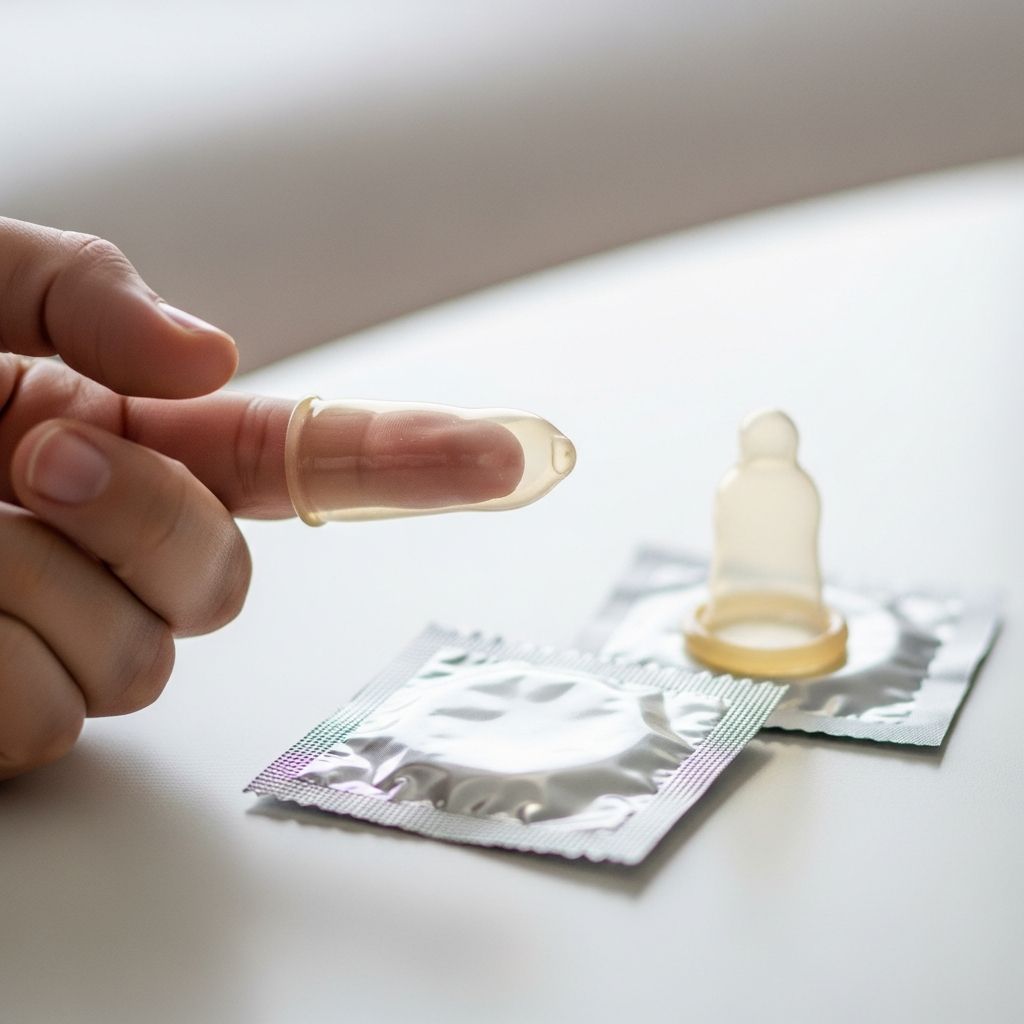
A finger condom is a small, stretchy cover designed to fit over a single finger. It works as a barrier between your skin and another person’s body, similar to how a regular condom forms a barrier on the penis.
Most disposable finger condoms are made from thin materials like latex or nitrile and are meant to be used once and then thrown away. Reusable finger sleeves, usually made from silicone or rubber, exist for non-medical purposes like gripping pages or tools, but they are not designed or tested for protection during sexual activity.
- Single-finger coverage instead of a full glove.
- Very thin so that touch and movement are still possible.
- Sold as individual covers or as strips of multiple covers.
Why People Use Finger Condoms During Sex
People use finger condoms during sex for several reasons: to lower the chance of passing infections, to protect cuts or sensitive skin on the fingers, and to make cleanup easier. They can also be helpful when people want to feel more confident that they are looking after each other’s health.
Digital sex can involve direct contact with bodily fluids and delicate tissue. Even though it might seem low-risk, tiny breaks in the skin or contact with blood can provide a pathway for infections to spread.
- Reducing the spread of some sexually transmitted infections (STIs).
- Helping keep germs out of cuts, hangnails, or irritated skin.
- Limiting contact with blood during a period or with stool during anal play.
How Finger Condoms Help With Protection
Finger condoms provide a physical barrier between your skin and another person’s genitals or anus. This barrier can help lower the chance of exposure to viruses and bacteria that live in bodily fluids or on the skin.
While no finger barrier can guarantee complete protection, using one correctly is usually safer than using bare hands, especially when there are open skin areas or when partners are unsure of each other’s STI status.
| Barrier Type | Covers | Typical Use | When It May Be Helpful |
|---|---|---|---|
| Finger condom | One finger | Digital vaginal or anal sex | Protecting a single finger with cuts or hangnails; keeping nails from scratching |
| Medical glove | Whole hand | Exams and some sexual activities | When more coverage is wanted, or multiple fingers are used |
| External (penis) condom | Penis | Penetrative vaginal, oral, or anal sex | Preventing pregnancy and many STIs during intercourse |
| Internal condom or dental dam | Inside or over genitals/anus | Penetrative or oral sex | Extra barrier inside the body or over the vulva/anus |
Common Situations Where Finger Condoms Are Useful
Finger condoms are not only for people who already know they have an STI. Many people use them whenever there is a higher chance of contact with fluids, blood, or broken skin. They can be especially useful in new or casual sexual relationships, where partners may not yet have shared full health information.
If you are experimenting with different types of touch or are unsure of your partner’s comfort level, talking about using barriers can show that you are thinking about both safety and respect.
- Digital vaginal sex where there may be menstrual blood.
- Anal fingering, where contact with stool is more likely.
- Situations where someone has eczema, dermatitis, or recent tattoos on their fingers.
- When one or both partners have multiple sexual partners and want added protection.
Step-by-Step: How to Use a Finger Condom
Using a finger condom is simple, but it helps to follow a clear routine so that you do not accidentally spread germs from one area of the body to another. Taking a few extra seconds to do it right can make a big difference in safety.
- Wash your hands first. Use soap and water, paying attention to nails and any visible dirt. Dry your hands completely so the cover does not slip.
- Check the packaging. Make sure the wrapper is sealed and not torn, and check the expiration date if one is listed.
- Open carefully. Tear the package gently along the edge rather than cutting with scissors, which can damage the finger condom.
- Place on the fingertip. Hold the rolled ring on the pad of your finger, with the rolled edge facing outward so it can unroll easily.
- Roll down to the base. Use your other hand to unroll the cover all the way to the base of your finger, smoothing out twists or bubbles.
- Add water-based lube if needed. Lubricant on the outside can reduce friction and make touch more comfortable.
- Use one barrier per body area. If you move from the anus to the vagina or vice versa, change to a new finger condom to avoid transferring bacteria.
- Remove and throw away. After you are done, unroll or pinch at the tip and slide it off carefully so fluids stay inside. Put it in the trash, not the toilet.
- Wash your hands again. Even with a barrier, washing up afterward is a good hygiene habit.
Pros and Cons You Should Know
Finger condoms can be very helpful, but they are not perfect. Knowing their strengths and limits will help you decide when and how to use them as part of your overall safer sex strategy.
| Benefits | Drawbacks |
|---|---|
| Form a barrier between skin and bodily fluids. | Do not cover the entire hand or all nearby skin. |
| Help keep germs away from cuts, scrapes, and hangnails. | Might slightly reduce sensation for the person using their fingers. |
| Can reduce scratching from nails or rough skin. | Can sometimes feel “medical” or awkward at first. |
| Easy cleanup; no need to scrub under nails afterward. | May be harder to find in regular drugstores than standard condoms. |
| Small and discreet to carry in a bag or pocket. | Can roll off or break if the wrong size or used roughly. |
Potential Problems and What to Do
Like other barriers, finger condoms can sometimes fail. They may slip off if they are too loose or if a lot of lubricant is used, or they can tear if they are scraped by nails, jewelry, or rough edges on the skin.
Knowing how to react if something goes wrong can make the situation less stressful and help protect your health and your partner’s health.
- If it falls off during use: Stop immediately. If it is visible and easy to remove from the body, use a clean finger to gently slide it out. If it is not easy to remove or cannot be seen, it is best to contact a healthcare provider or clinic as soon as possible.
- If it tears: Stop, remove the damaged finger condom, wash your hands, and put on a new one before continuing.
- If there was contact with blood or fluids: Consider getting tested for STIs, especially if you are unsure of either partner’s status or if there are open cuts on the fingers or in the genital or anal area.
- If there is pain or irritation afterward: Take a break from sexual activity until things feel normal again. If symptoms like itching, discharge, burning during urination, or unusual sores appear, seek medical advice.
Finger Condoms and Pregnancy Risk
Finger condoms are not designed to prevent pregnancy. Their main purpose is to reduce some types of infection risk and to protect the skin on the fingers and around the genitals or anus.
Digital sex, by itself, does not involve the penis entering the vagina, so the pregnancy risk is much lower than with intercourse. However, if semen is on the fingers and then those fingers are placed inside the vagina, there is a small possibility of pregnancy. Wiping semen away and washing hands before touching another person’s genitals is still important, whether or not a finger condom is used.
Communication, Consent, and Comfort
Using a finger condom is not only a medical decision; it is also a communication choice. Bringing up barriers can feel awkward at first, but it often leads to more open conversations about comfort, boundaries, and health history.
Consent is more than a one-time yes. It means checking in before changing what you are doing, respecting body language, and being willing to stop immediately if anyone feels unsure, uncomfortable, or in pain.
- Ask before touching and be specific about how you want to touch.
- Say that you would like to use a barrier to protect both of you, and invite your partner’s thoughts.
- Agree that anyone can change their mind at any time.
- Use words, gestures, or “safe words” that make it easy to pause or stop.
Where to Find Finger Condoms and What to Look For
In some places, finger condoms are sold under names like “finger cots” or “finger covers” in medical supply sections, online stores, or specialty sexual health shops. Not every product labeled this way is meant for sexual use, so it helps to read the description carefully.
When choosing a product, it is worth considering whether you or your partner have allergies, how thick or thin you want the material to be, and whether you prefer single-use or reusable options for non-sexual purposes.
- Look for materials labeled latex-free if anyone has a latex allergy.
- Choose thin, smooth covers for better sensitivity.
- Check for medical- or sexual-health-grade products when you want reliable barrier protection.
- Store them in a cool, dry place away from sharp objects that could puncture them.
Safer Sex Is More Than One Product
Finger condoms are just one small part of a larger safer sex picture. Using them does not replace regular STI testing, honest conversations, or other methods like condoms and birth control for activities that can lead to pregnancy.
Knowing your options and combining them in ways that feel right for you can help you stay healthier and more relaxed, which often makes sexual experiences more enjoyable.
- Routine STI testing based on your activity and number of partners.
- Using condoms or other barriers for oral, vaginal, and anal sex.
- Considering contraception if you are having penis-in-vagina sex.
- Talking openly about likes, dislikes, boundaries, and health.
Frequently Asked Questions
Are finger condoms only for people with STIs?
No. Many people use finger condoms even when they do not know of any infection. They are a preventative tool, just like a seatbelt is worn even when you do not expect to crash.
Do finger condoms completely prevent STIs?
No barrier can guarantee zero risk. Finger condoms can cover the skin of the finger, but they do not protect every part of the hand or the surrounding areas, and some infections can spread through uncovered skin or other types of contact.
Can I reuse a disposable finger condom if I wash it?
Disposable finger condoms are meant for one-time use only. Washing them can weaken the material, make small tears more likely, and reduce how well they protect you.
Is it okay to use the same finger condom for different parts of the body?
It is safer to use one finger condom for each area. For example, if you move from the anus to the vagina, changing to a fresh barrier helps avoid moving bacteria to a place where they can cause infections.
What if I cannot find finger condoms where I live?
In some cases, people use clean medical gloves as an alternative, putting them on the whole hand for digital sex. If you try this, you can apply lubricant on the outside of the glove and follow similar hygiene steps as with finger condoms.
How do I talk to a partner about using them without killing the mood?
Bringing up barriers can actually increase trust if you frame it as wanting to care for both of you. A simple line like, “I feel better using a cover for my fingers so we both stay healthy—how do you feel about that?” keeps the tone respectful and focused on mutual safety.
Key Takeaways for Teens
Finger condoms are a small, practical tool that can support safer digital sex. They help limit contact with bodily fluids, protect broken skin on the hands, and reduce the chances of irritation or infection in sensitive areas.
They do not replace the need for regular sexual health checkups, honest communication, or other protection methods where pregnancy or higher STI risks exist. Learning about them now simply gives you one more option to make informed, respectful choices about your body and your relationships.