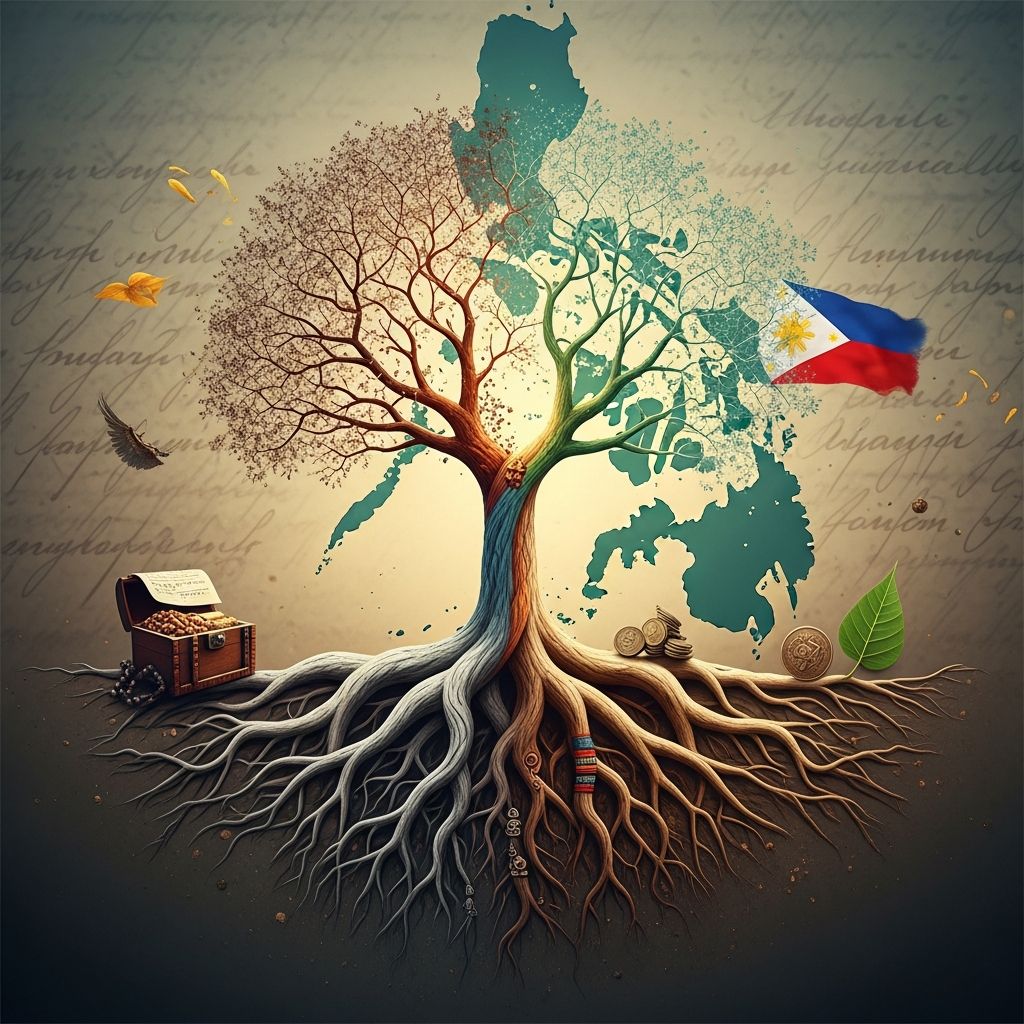
Filipino surnames are more than labels on official documents; they are compact stories of colonization, resistance, migration, faith, and family ties that stretch across oceans and generations. While many outsiders notice how common Spanish-style last names are in the Philippines, the deeper reality is more complex and far more interesting.
This article explores the origins, meanings, and cultural significance of Filipino surnames, highlighting both well-known and often-overlooked influences. It offers a fresh, original look at how names were imposed, adapted, preserved, and reinvented—and how they continue to shape Filipino identity today.
Why So Many Filipino Surnames Sound Spanish
One of the most striking features of Filipino surnames is the strong presence of Spanish forms such as “Santos,” “Reyes,” “Garcia,” and “Cruz.” This pattern did not simply arise through intermarriage or voluntary cultural borrowing. Instead, it was largely the result of deliberate colonial policy designed to standardize and control the population.
In the nineteenth century, the Spanish colonial government introduced a sweeping reform that required Filipinos to adopt approved surnames from an official list. This measure made record-keeping and taxation easier for colonial administrators, but it also reshaped family naming traditions and blurred many indigenous lines of descent. As a result, countless Filipinos today share surnames with one another—and with families in Spain and Latin America—without necessarily sharing ancestry.
- Many common Filipino surnames were chosen from official catalogues rather than passed down organically through lineage.
- The same Spanish surname may appear in many unrelated Filipino families, so a shared last name does not always indicate blood relation.
- Some communities managed to retain older surnames, especially in areas less tightly controlled by colonial authorities.
Layers of Influence: Not Only Spain
Although Spanish influence is highly visible, Filipino surnames draw from multiple linguistic and cultural sources. The archipelago has always been a crossroads of maritime trade, missionary activity, and migration, and this diversity is clearly reflected in last names.
Broadly speaking, Filipino surnames today can be grouped into several overlapping streams of influence, each with its own history and flavor.
Major Sources of Filipino Surnames
| Origin | Typical Features | What It Often Reflects |
|---|---|---|
| Spanish | Use of “de,” “del,” “-ez” endings, religious words like “Santos” or “Cruz” | Colonial policy, Catholic faith, administrative standardization |
| Indigenous (Tagalog, Ilocano, Visayan, etc.) | Words linked to nature, character traits, everyday life | Pre-colonial concepts of identity, local geography, and social reputation |
| Chinese | Short syllabic names or Hispanized multi-syllable surnames | Long-distance trade networks, migration of merchants and artisans |
| Other foreign (Malay, American, etc.) | Loanwords, adapted spellings, or imported family names | Regional exchanges and later waves of contact and colonization |
Indigenous Naming Traditions Before Standardized Surnames
Long before colonial decrees and alphabetized catalogues, Filipino communities used their own systems to name people and track relationships. Many groups did not rely on fixed inherited surnames as understood today. Instead, names could change during a person’s life to reflect major events, status, or new roles within the community.
In several lowland societies, people might be identified by their parentage, such as being known as a son or daughter of a particular person, or by a notable personal trait. In highland areas that remained largely independent of Spanish rule, single-name systems endured even longer, with individuals recognized primarily through unique given names often connected to nature or circumstance.
- Names could signal family ties but did not always operate as fixed hereditary surnames.
- Descriptive nicknames related to physical appearance or character were common and sometimes more widely used than formal names.
- Conversion to Christianity often introduced a Christian given name alongside an older indigenous one.
How Colonial Reforms Reshaped Filipino Family Names
When standardized surnames were imposed, the process did not simply add new names; it disrupted and replaced entire naming systems. Families received surnames from official lists distributed through local officials, who often assigned them by neighborhood or cluster rather than by genetic lineage.
This had several long-term consequences. It created the illusion of extensive kin networks among people who shared the same surname but not the same ancestry. It also erased or obscured many indigenous names, especially in areas under close colonial supervision. At the same time, some families kept their traditional names due to prior registrations, negotiated exceptions, or sheer distance from colonial reach.
Long-Term Effects of Standardization
- Widespread sharing of a relatively small pool of surnames across the archipelago.
- Difficulty tracing pre-colonial family lines using surnames alone.
- Coexistence of Spanish-style surnames with distinctly local given names and nicknames.
Religious and Devotional Themes in Filipino Surnames
Catholicism played a central role in the colonial project, and this is clearly reflected in many Filipino surnames. Names referencing saints, holy concepts, or Christian imagery became common, particularly in urban centers and missionized regions.
Such surnames can signal the historical influence of missionary work but do not always indicate any special religious status in the present. Many families with explicitly devotional surnames today are diverse in their beliefs, including Catholic, Protestant, non-Christian, and non-religious members.
- Surnames referring to saints, miracles, or religious objects show how faith language entered everyday identity.
- These names often coexist with deeply local given names, producing a blend of global religion and local culture.
Nature, Virtues, and Everyday Life in Indigenous Surnames
Not all Filipino surnames are colonial imports. Many come directly from local languages, preserving words and images deeply rooted in the land and in community values. These surnames may refer to natural elements, personal qualities, animals, plants, or common experiences.
Because they are tied to everyday vocabulary, these names often carry immediately recognizable meanings for speakers of the language. For younger generations, understanding the literal meaning of a family surname can be a powerful way to reconnect with heritage languages and regional identities.
- Nature-based surnames may evoke light, water, mountains, or seasons.
- Character-based surnames can describe traits such as strength, purity, or perseverance.
- Some surnames memorialize historical events or significant local objects.
Chinese and Other Asian Footprints in Filipino Surnames
Chinese merchants and settlers have been part of the Philippine story for centuries, and their influence lives on in many Filipino surnames. Some families carry short, single-syllable surnames shared with Chinese communities elsewhere. Others have multi-syllable names that were adapted into Spanish-style spelling but still reflect earlier Chinese forms.
Beyond Chinese influences, some surnames trace back to Malay, Indonesian, or other regional languages, reflecting the interconnected maritime world of Southeast Asia. These surnames underline that Filipino identity has never been purely local or purely colonial, but always part of larger regional and global flows.
Modern Filipino Naming Patterns and Double Surnames
Contemporary Filipino naming practices show a blend of older patterns and imported legal norms. Today, many children carry both a paternal and maternal family name in some form, either as a middle name plus surname or as hyphenated combinations. This creates a visible bridge between two family lines in each generation.
Meanwhile, the use of nicknames—often playful, inventive, or derived from English, Tagalog, or mixed-language phrases—remains extremely common. On paper, a person may appear with a long formal name; in daily life, a short and affectionate nickname usually takes over.
- Official documents tend to use full legal names, including inherited surnames from both parents.
- Social circles often recognize individuals by nicknames that may bear little resemblance to the names on their ID cards.
- Urbanization and migration continue to mix surname traditions from different regions of the Philippines.
What Your Filipino Surname Might Reveal
No surname can tell the full story of a person or family, but Filipino surnames can offer valuable clues. The language of origin, structure, and meaning may suggest a region, a historical moment, or a cultural influence that shaped earlier generations.
To interpret a surname, it helps to consider it together with family oral history, place of origin, religious background, and other contextual details. Looking at the name in isolation can be misleading, especially in a country where many surnames were assigned in bulk by colonial officials.
Questions to Ask About Your Surname
- What language does it appear to come from—Spanish, a Philippine language, Chinese, or something else?
- Does it have an obvious meaning in a local language, especially in the region your family comes from?
- Are there stories in your family about an ancestor who changed or adopted a different surname?
- Does the surname cluster heavily in one town or province when you search public records or directories?
Simple Steps to Research a Filipino Family Name
Exploring the story behind a Filipino surname can be an engaging personal project. While professional genealogy can be complex, there are straightforward steps anyone can take using publicly available sources and family conversations.
- Talk to older relatives. Ask about where the family came from, known ancestors, and any remembered name changes or alternate spellings.
- Identify the likely language of the surname. Check dictionaries or language resources for Tagalog, Cebuano, Ilocano, or other local languages if the name does not appear in Spanish lists.
- Explore church and civil records. Baptismal records, marriage certificates, and land titles can show how the surname was written across generations.
- Compare spellings. If you find variations, consider how pronunciation, literacy levels, or administrative errors might have shifted the form of the name.
- Document your findings. Keep notes, dates, and locations so that future relatives can continue the research.
Common Misconceptions About Filipino Surnames
Because colonial history and migration are so complex, it is easy to misunderstand what a surname does and does not prove. Clearing up a few common misconceptions can make family research more realistic and respectful.
- Sharing a Spanish surname with a famous historical figure does not automatically mean you are related.
- A non-Spanish surname is not necessarily “more authentic”; many indigenous names were altered or replaced under pressure.
- Chinese-looking or foreign-looking surnames do not erase a person’s Filipino identity; they highlight the layered ancestry of the islands.
Filipino Surnames in the Global Diaspora
Large Filipino communities now live in North America, the Middle East, Europe, East Asia, and beyond. Filipino surnames therefore appear in schools, workplaces, and neighborhoods around the world, sometimes provoking curiosity or confusion from people unfamiliar with their background.
For many in the diaspora, explaining the story behind a surname becomes a way to talk about history: the colonial period, labor migration, and the resilience of Filipino families. At the same time, interracial marriages and new legal frameworks in other countries are generating fresh combinations of Filipino surnames with names from many other traditions.
- Children of Filipino migrants may carry double-barreled surnames that link Philippine and non-Philippine heritage.
- In some countries, local naming laws require adjustments in order or format, adding another layer to the story of the surname.
Practical SEO-Friendly Facts About Filipino Surnames
For researchers, writers, and content creators, understanding Filipino surname patterns can help produce accurate, respectful, and search-friendly information. Recognizing the diversity of origins behind “Filipino last names” prevents over-generalizations and supports nuanced storytelling.
- Many highly searched Filipino surnames trace back to Spanish sources, but interest in indigenous and regional names is growing.
- Queries about “meaning of [surname]” often mix curiosity about literal translation with a desire to understand family history.
- Highlighting regional language roots (Tagalog, Cebuano, Ilocano, etc.) can help readers find information that resonates with their local identity.
Frequently Asked Questions About Filipino Surnames
Are all Filipino surnames Spanish?
No. Many are Spanish or Spanish-style because of colonial reforms, but a significant number come from local Philippine languages, Chinese, and other Asian or foreign influences. A surname’s spelling may look Spanish even when its deeper roots lie elsewhere.
Does sharing a surname mean two Filipino families are related?
Not necessarily. Because surnames were often assigned in large groups, it is common for unrelated families to share the same last name. To establish any real connection, you need supporting evidence such as shared places of origin, family records, or documented genealogies.
Can a Filipino surname reveal a specific ethnic group?
Sometimes, but not always. A surname with clear meaning in a regional language may suggest links to a particular area, but centuries of migration and intermarriage mean that surnames and ethnic identities no longer map neatly onto each other.
Why do some Filipinos have very long names?
Long names can result from combining multiple given names, a middle name taken from the mother’s family, and a paternal surname. In addition, some families incorporate religious or commemorative names alongside inherited surnames, producing lengthy full names on official documents.
Is it possible to change a Filipino surname today?
Yes, but the process typically requires legal steps through the courts or civil registry, and the rules vary by jurisdiction. Common reasons include correcting misspellings, standardizing multiple versions of the same name, or addressing personal and family circumstances.
Honoring the Stories Behind Filipino Surnames
Whether a surname sounds Spanish, indigenous, Chinese, or something entirely unique, it carries echoes of journeys that began long before the present generation. Exploring those echoes offers a way to honor ancestors, understand history, and appreciate the extraordinary mix of influences that shape Filipino identities.
By looking beyond the surface and asking how each surname came to be, every Filipino family can uncover a more personal connection to the archipelago’s past—and help preserve its diverse naming traditions for the future.