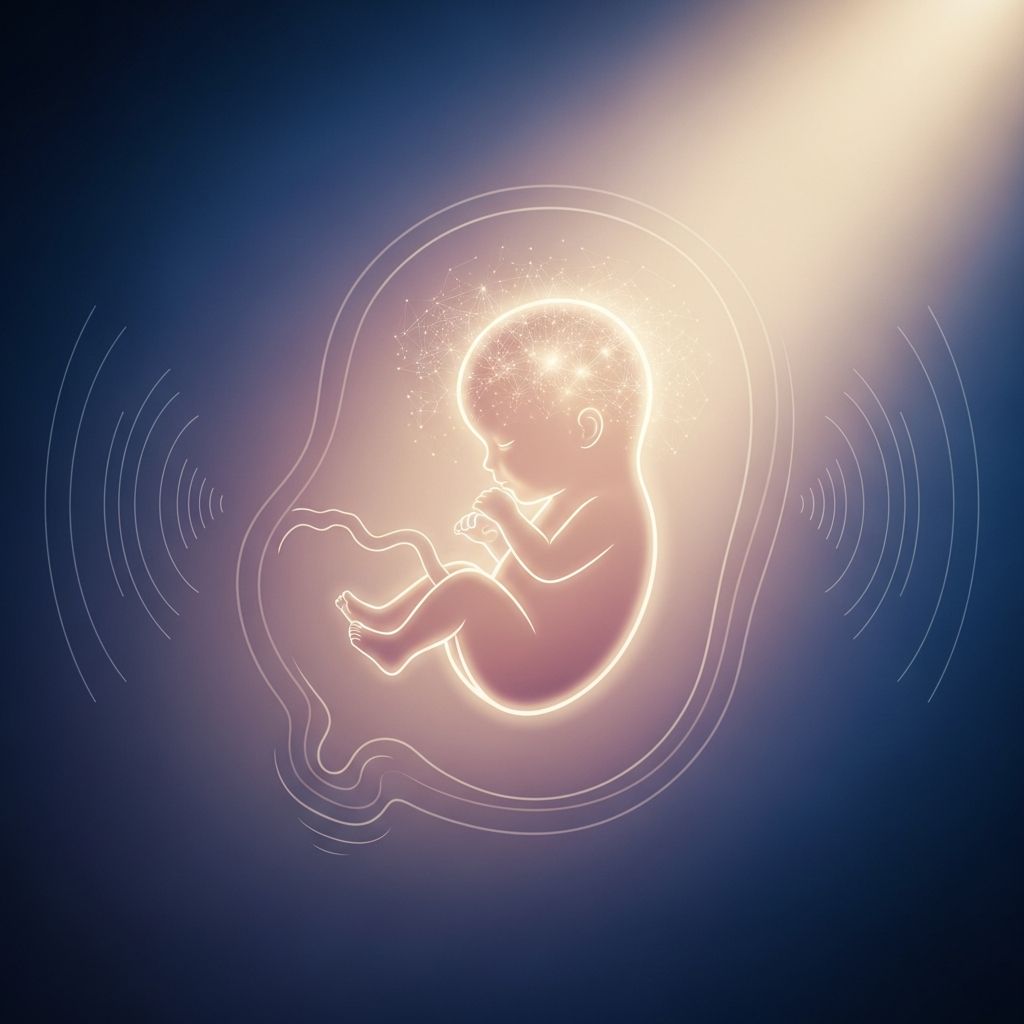
Unborn babies display increasing levels of responsiveness throughout pregnancy, evolving from basic reflexes to complex interactions with their environment. This prenatal alertness lays the foundation for newborn behaviors and cognitive growth.
Early Foundations of Fetal Sensory Development
From the second trimester, fetuses begin processing sensory inputs, marking the onset of awareness. Hearing emerges around 18 weeks, allowing babies to detect maternal heartbeat and external noises. By 24 weeks, visual responses develop as light penetrates the uterine wall, prompting subtle movements.
- Hearing milestones: Fetuses turn toward familiar voices, distinguishing mother’s speech patterns.
- Tactile sensitivity: Touch responses to amniotic fluid flow and maternal movements.
- Light perception: Eye movements and heart rate changes in response to brightness.
These early senses foster bonding, as regular stimuli like music or talking strengthen neural pathways.
Progression of Fetal Movement Patterns
Fetal movements evolve from jerky twitches at 7-8 weeks to purposeful actions by the third trimester. Quiet periods alternate with active phases, mirroring postnatal sleep-wake cycles. Ultrasonography reveals breathing-like motions and hand-to-face contacts, indicating self-awareness.
| Gestational Age | Movement Type | Alertness Indicator |
|---|---|---|
| 8-12 weeks | Spontaneous twitches | Basic reflex activity |
| 20-24 weeks | Coordinated stretches | Response to sound |
| 28+ weeks | Rhythmic sucking | Habituation to stimuli |
Such patterns suggest fetuses cycle through alertness states similar to newborns, preparing for extrauterine life.
Understanding Newborn Alertness States Post-Birth
At birth, babies exhibit six distinct states of consciousness, directly linked to prenatal development. Recognizing these helps parents respond effectively to cues.
- Deep Sleep: Still body, regular breathing, unresponsive to mild stimuli; ideal for rest and growth hormone release.
- Light Sleep: Eye movements under lids, twitches, irregular breathing; REM phase supports brain differentiation.
- Drowsy: Glazed eyes opening/closing, smooth movements; transitional, arousable with gentle stimulation.
- Quiet Alert: Bright eyes, minimal motion, focused gaze; prime time for interaction, learning, and feeding.
- Active Alert: Increased activity, responsive but distractible; signals potential needs like hunger, risks overstimulation.
- Crying: Erratic movements, loud cries; indicates overload, soothed by swaddling or holding.
These states cycle every 30-50 minutes, varying by individual maturity.
Bridging Prenatal and Postnatal Awareness
Prenatal stimuli influence newborn states. Fetuses exposed to melodies show preference post-birth, calming in quiet alert phases. Maternal stress can elevate fetal heart rates, mimicking active alert transitions. Expectant parents can enhance this by daily voice exposure and gentle music, promoting smoother state shifts after delivery.
Research confirms fetuses after 24 weeks display consciousness signs, mainly in sleep-like states but responsive to touch and sound. This continuity underscores the womb as a preparatory environment.
Practical Tips for Stimulating Healthy Fetal Alertness
Encourage balanced responsiveness without overload:
- Play soft music daily; observe kicks as engagement signs.
- Talk or sing directly to belly; note heart rate accelerations via monitors.
- Gently massage abdomen; track movement responses.
- Avoid loud environments; protect from excessive noise.
- Monitor patterns; consult providers if reduced after 28 weeks.
These activities support neurodevelopment, easing the birth-to-newborn transition.
Potential Influences on Fetal and Newborn States
Factors like maternal nutrition, activity, and health modulate alertness. Adequate iron and omega-3s promote stable cycles. Preterm infants show less distinct states until 34-36 weeks equivalent.
Overstimulation risks include prolonged active alert leading to crying; balance with quiet periods.
Frequently Asked Questions
When does a fetus first show alertness?
Around 24 weeks, with behavioral signs like hand-to-face touching and sound responses.
What is the best state for newborn playtime?
Quiet alert: baby is calm, eyes bright, optimally absorbing stimuli.
How can I tell my newborn’s alertness state?
Observe eyes, movements, breathing: still and bright-eyed is quiet alert; fidgety is active alert.
Do prenatal stimuli affect newborn behavior?
Yes, familiar voices and music soothe babies, aiding state regulation.
Is crying always a bad sign in newborns?
No, it’s state 6 indicating needs or overload; responsive soothing helps transition back.
Long-Term Implications of Early Awareness
Strong prenatal sensory exposure correlates with advanced newborn responsiveness, potentially boosting language and social skills. Tracking states empowers parents, fostering secure attachments. Consult pediatricians for atypical patterns, ensuring optimal development.
References
- States of Alertness for Newborns — Centre for Perinatal Psychology, Dr. Bronwyn Leigh. Accessed 2026. https://www.centreforperinatalpsychology.com.au/states-of-alertness/
- A Newborn’s 6 States of Consciousness — Birthways Inc. Accessed 2026. https://birthwaysinc.com/a-newborns-6-states-of-consciousness-and-why-theyre-important/
- States of Consciousness in Newborns — American Academy of Pediatrics, HealthyChildren.org. 2022-01-10. https://www.healthychildren.org/English/ages-stages/baby/Pages/States-of-Consciousness-in-Newborns.aspx
- Newborn Sleep Patterns — Children’s Hospital of Philadelphia. Accessed 2026. https://www.chop.edu/pages/newborn-sleep-patterns
- States of Newborn Alertness: Best Time to Play — Pathways.org. Accessed 2026. https://pathways.org/the-best-time-to-play-with-baby
- Interacting with Your Baby: States of Arousal — The Royal Women’s Hospital. Accessed 2026. https://thewomens.r.worldssl.net/images/uploads/fact-sheets/Interacting-with-your-baby-States-of-arousal.pdf
- The Awakening of the Newborn Human Infant — PMC, National Library of Medicine. 2023-05-15. https://pmc.ncbi.nlm.nih.gov/articles/PMC11976129/