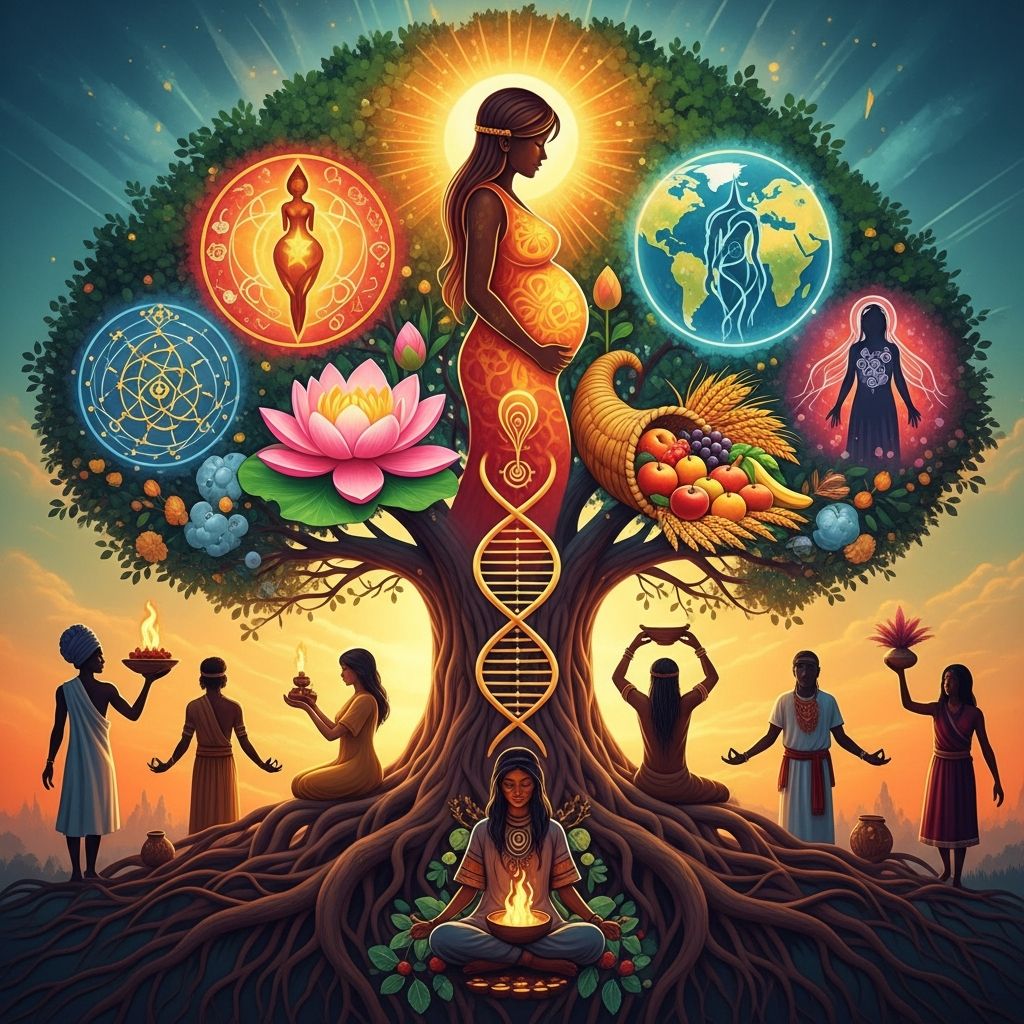
Understanding Fertility Customs Across the World
Throughout human history, societies have developed elaborate systems of belief and practice surrounding fertility and conception. These traditions reflect deep cultural values about family, spirituality, and the continuity of life itself. From sacred monuments to religious festivals, communities have created meaningful ways to honor the desire for children and the miracle of new life. These customs often blend religious devotion, folk wisdom, and practical knowledge passed down through generations, creating a rich tapestry of human experience that transcends geographical boundaries.
Spiritual Sites Dedicated to Fertility Enhancement
Many cultures have identified specific locations they believe possess supernatural power to aid conception. These sacred spaces become pilgrimage destinations where hopeful individuals seek blessings and spiritual intervention. The reverence placed upon these sites demonstrates how fertility concerns have motivated people to create enduring cultural landmarks.
The Miracle Chair of Naples
Located in Naples, Italy, the Miracle Chair represents one of Europe’s most significant fertility pilgrimage sites. The chair belonged to Saint Maria Francesca of the Five Wounds of Jesus, a Catholic saint canonized in recognition of her spiritual connection to women experiencing conception difficulties. The saint was officially recognized as the patroness of women struggling with infertility, establishing a lasting spiritual framework around this sacred object.
The chair now resides in a modest apartment within the neighborhood where the saint lived during her earthly life. The walls surrounding the chair display countless birth announcements and photographs of newborns born to families who visited this sacred space. Women from across the globe arrive at this location to sit in the chair while nuns who maintain the residence bless them and perform ritualistic gestures over their abdomens. This practice continues to draw devoted pilgrims seeking spiritual intervention for their conception aspirations.
The Bronze Monument of Victor Noir
Paris, France houses an unusual fertility monument in Père Lachaise Cemetery: the bronze statue of Victor Noir, a 19th-century political journalist. Despite a life marked by controversy and ending in a fatal political duel in 1870, Noir’s statue has become one of Europe’s most visited fertility talismans. The specific legend associated with this sculpture prescribes a particular sequence of actions believed to enhance fertility and sexual vitality.
According to local tradition, women seeking fertility benefits must kiss the statue’s lips, place a flower inside its bronze top hat, and rub the sculpted lower body area. This combination of actions supposedly activates the monument’s fertility-granting properties. The statue shows visible signs of the thousands of pilgrims who have conducted these rituals, with certain areas polished smooth by countless hands and lips. This Paris landmark demonstrates how secular historical figures can become incorporated into spiritual fertility narratives.
Phallic Symbolism in Fertility Expression
Across multiple cultures and geographical regions, phallic imagery holds prominent symbolic significance in fertility traditions. This universal symbolism reflects fundamental human understanding of reproductive biology combined with spiritual and magical thinking. Phallic representations appear in ancient monuments, modern festivals, and sacred shrines worldwide.
The Cerne Abbas Giant
On a hillside in Dorset, England, a massive chalk figure carved into the landscape depicts an exaggerated male form with prominent anatomical features. This primitive artistic representation, known as the Cerne Abbas Giant, has become legendary as a fertility-enhancing location. Local tradition claims that women who sleep overnight on the giant’s body will experience increased fertility and conception success.
The monument’s origins remain mysterious, adding to its mystique and spiritual appeal. Whether created in ancient times or medieval periods, the figure has persisted as a landmark where fertility-seeking individuals make pilgrimages. The surrounding countryside reportedly experiences robust birth rates, contributing to the legend’s credibility within local communities. The giant represents how landscape-scale artistic creation can become embedded in cultural fertility practices.
Bangkok’s Tuptim Shrine
In Bangkok, Thailand, a fertility shrine dedicated to Chao Mae Tuptim attracts visitors seeking reproductive blessings. The shrine’s convenient location near a hotel emphasizes the practical aspects of modern fertility pilgrimage tourism. The shrine honors a tree spirit believed to grant fertility and good fortune to those who make appropriate offerings.
Tradition prescribes offering phallic-shaped objects to the shrine’s presiding spirit. These offerings, left by hopeful visitors, accumulate around the sacred space as physical manifestations of desire and devotion. The shrine demonstrates how contemporary tourism and religious practice interweave, creating hybrid experiences where spiritual seeking meets recreational travel.
Seasonal Festivals Celebrating Reproductive Vitality
Many cultures mark specific times of year with festivals that explicitly address fertility, sexuality, and the continuation of life. These celebrations combine religious observance, social gathering, and ritualistic elements designed to promote conception and ensure community prosperity.
Hungary’s Easter Water Ritual
In Holloko, Hungary, the Monday following Easter brings forth an ancient fertility tradition with documented roots extending back to the second century. The Watering of the Girls festival combines pre-Christian cleansing traditions with seasonal celebration. Young women dress in traditional ceremonial clothing and gather in community spaces where men shower them with buckets of water.
This practice originated as a purification ritual specifically targeting women of marriageable age. The water blessing supposedly transfers fertility properties to the recipients, enhancing their reproductive capacity and marriage prospects. The ritual persists in various Eastern European communities, maintaining continuity with pre-Christian religious practices while adapting to contemporary cultural contexts. The festival demonstrates how pagan traditions survived Christianization by being recontextualized within Easter observances.
Japan’s Spring Penis Festival
Every spring, the Kanamara Matsuri festival in Japan celebrates fertility, sexuality, and protection from venereal disease through elaborate public ceremony. The festival originated among courtesans seeking divine protection, but has evolved into a community-wide celebration attracting diverse participants. A giant pink phallus parades through local streets, creating a visually striking procession that normalizes discussion of sexuality and reproduction.
The festival combines religious devotion with theatrical celebration, allowing participants to simultaneously acknowledge fertility’s spiritual dimensions while enjoying festive social engagement. Modern iterations attract international visitors seeking cultural experiences, transforming the festival into a cross-cultural encounter around shared human concerns regarding reproduction and sexual health. The festival demonstrates how societies balance reverence for fertility with humor and public celebration.
Healing Practices and Fertility Enhancement
Beyond sacred sites and festivals, various cultures developed physical and therapeutic practices believed to optimize fertility. These approaches combine anatomical understanding with spiritual belief systems, creating holistic approaches to conception support.
Maya Abdominal Massage Traditions
In Latin America, the Maya people developed an abdominal massage technique specifically designed to enhance fertility outcomes. This traditional healing practice focuses on uterine alignment and optimization of lymphatic and blood circulation to reproductive organs. The practice reflects sophisticated understanding of body systems combined with spiritual concepts viewing the uterus as the center of female vitality.
Practitioners work to realign internal organs, believing that uterine displacement contributes to conception difficulties. The treatment encompasses both physical manipulation and spiritual intention, treating the body holistically rather than addressing symptoms in isolation. This approach continues attracting modern practitioners and clients seeking alternatives to conventional fertility medicine, demonstrating the enduring relevance of traditional medical knowledge systems.
Traditional Chinese Fertility Foods
Chinese medical traditions incorporated specific foods into fertility-enhancement protocols. Bird’s nest soup, made from the hardened saliva of cave-dwelling swiftlets, represents one of the most celebrated traditional conception-supporting foods. Consumed for thousands of years as an expensive delicacy, this substance supposedly impregnates women through nutritional and energetic properties.
The high cost of acquiring authentic bird’s nest soup limited historical access to wealthy families, creating status associations with the remedy. Modern adaptations include incorporating the ingredient into beverages and dietary supplements designed for Western markets, democratizing access to this traditional substance. The practice demonstrates how cultural fertility traditions adapt to contemporary commerce while maintaining connection to historical practices.
Comparative Overview of Global Fertility Approaches
| Region | Primary Tradition | Method | Cultural Context |
|---|---|---|---|
| Italy | Miracle Chair | Sitting and blessing | Catholic religious devotion |
| France | Victor Noir’s Statue | Kissing and touching | Secular spiritual practice |
| England | Cerne Abbas Giant | Sleeping on monument | Landscape-based ritual |
| Hungary | Water Blessing | Ritual water dousing | Pre-Christian seasonal celebration |
| Japan | Kanamara Matsuri | Festival procession | Community-wide celebration |
| Thailand | Tuptim Shrine | Phallic offerings | Spirit veneration practice |
| Latin America | Maya Massage | Physical therapy | Traditional medicine system |
| China | Bird’s Nest Soup | Dietary consumption | Traditional nutritional medicine |
Common Threads in Diverse Fertility Traditions
Despite vast geographical separation and distinct cultural histories, fertility traditions worldwide share recognizable patterns. These commonalities suggest fundamental human responses to reproductive concerns and spiritual worldviews.
- Use of physical monuments and sacred spaces as focal points for spiritual practice and pilgrimage
- Integration of phallic or anatomical symbolism representing reproductive function and vitality
- Seasonal timing aligned with agricultural cycles and spiritual calendars
- Community participation and collective ritual observance strengthening social bonds
- Transmission through generations maintaining cultural continuity and identity
- Adaptation to contemporary contexts while preserving historical elements and meanings
- Combination of physical, spiritual, and psychological dimensions addressing fertility holistically
Modern Significance of Ancient Fertility Traditions
Contemporary practitioners and visitors continue engaging with fertility traditions for diverse reasons. Some maintain religious or cultural connections to ancestral practices. Others approach these traditions seeking psychological comfort during fertility challenges. Modern tourism has transformed many sites into destinations attracting international visitors interested in cultural exploration rather than personal fertility concerns.
The persistence of these traditions despite scientific advancement in reproductive medicine suggests that fertility concerns extend beyond biological dimensions. The rituals address psychological, spiritual, and social aspects of human reproductive experience that medical technology cannot fully satisfy. This enduring engagement demonstrates how cultural practices maintain relevance by meeting multifaceted human needs.
Frequently Asked Questions
Q: Do these fertility traditions actually work scientifically?
A: Scientific evidence does not support direct causation between fertility rituals and conception success. However, psychological benefits including stress reduction, community support, and spiritual comfort may indirectly support fertility by promoting overall wellbeing.
Q: Are these fertility practices still actively used today?
A: Yes, many traditions continue attracting pilgrims and participants. However, engagement levels vary by location and cultural context. Some practices maintain strong community participation while others attract primarily tourists and cultural enthusiasts.
Q: Can visitors to these sites participate in fertility rituals?
A: Most sites welcome visitors of all backgrounds. However, respectful engagement with local customs and religious practices remains important. Some locations may have specific protocols or times designated for ritual participation.
Q: How have these traditions changed with modern medicine?
A: Modern fertility medicine has transformed how many people approach conception challenges. However, traditional practices persist by complementing medical treatment rather than replacing it, addressing psychological and spiritual dimensions alongside biological interventions.
Q: Why do phallic symbols appear so frequently in fertility traditions?
A: Phallic imagery represents fundamental reproductive biology and male generative power. Across cultures, this symbolism creates direct connection between ritual objects and desired reproductive outcomes through sympathetic magic principles.
Conclusion: Celebrating Human Fertility Across Cultures
Global fertility traditions reveal how societies creatively address universal human concerns regarding reproduction, family continuation, and spiritual meaning. From Italy’s sacred chair to Japan’s celebrated festival, these practices demonstrate remarkable cultural diversity combined with underlying commonalities. These traditions persist because they serve multifaceted functions: maintaining cultural identity, providing community connection, supporting psychological wellbeing, and expressing spiritual beliefs about life’s most fundamental processes.
References
- Fertility rite — Wikipedia. Accessed February 2026. https://en.wikipedia.org/wiki/Fertility_rite
- Performative Rituals for Conception and Childbirth in England, 900-1500 — National Center for Biotechnology Information (NCBI). 2015. https://pmc.ncbi.nlm.nih.gov/articles/PMC4696514/
- 8 Fertility Rites And Rituals From Around the World — Fatherly. Accessed February 2026. https://www.fatherly.com/life/8-fertility-rites-rituals-around-world
- Curious Cultural Fertility Practices and Traditions Around The World — Cincinnati Birth Center. Accessed February 2026. https://www.cincinnatibirthcenter.com/blog/cultural-fertility-practices-and-traditions-around-the-world
- Fertility Customs around the World — Fertility Center LV. Accessed February 2026. https://fertilitycenterlv.com/blog/pregnancy/fertility-customs-around-the-world/