The female reproductive system is a group of organs that work together to allow a person to have periods, possibly become pregnant in the future, and produce important hormones. For many parents, explaining these topics can feel awkward, but clear information helps kids and teens feel safe, confident, and prepared.
Why This Topic Matters for Parents
When young people understand how their bodies work, they are better able to notice problems, ask for help, and make healthy decisions. Learning about the reproductive system should not be a single big talk, but a series of small, honest conversations over time.
- Accurate information reduces fear and embarrassment about normal body changes.
- Body awareness helps kids respect themselves and set healthy boundaries.
- Early education builds a foundation for later discussions about periods, sexuality, and safety.
Big Picture: What the Reproductive System Does
The female reproductive system has three main jobs: producing eggs, making hormones, and creating the right environment for a pregnancy to begin and grow. Not everyone will choose to have children, but these organs still affect overall health throughout life.
- Egg production: The ovaries store and release tiny cells called eggs.
- Hormone production: Hormones influence periods, growth, mood, bones, and more.
- Pregnancy support: The uterus and related structures can support the growth of a baby.
Main Parts of the Female Reproductive System
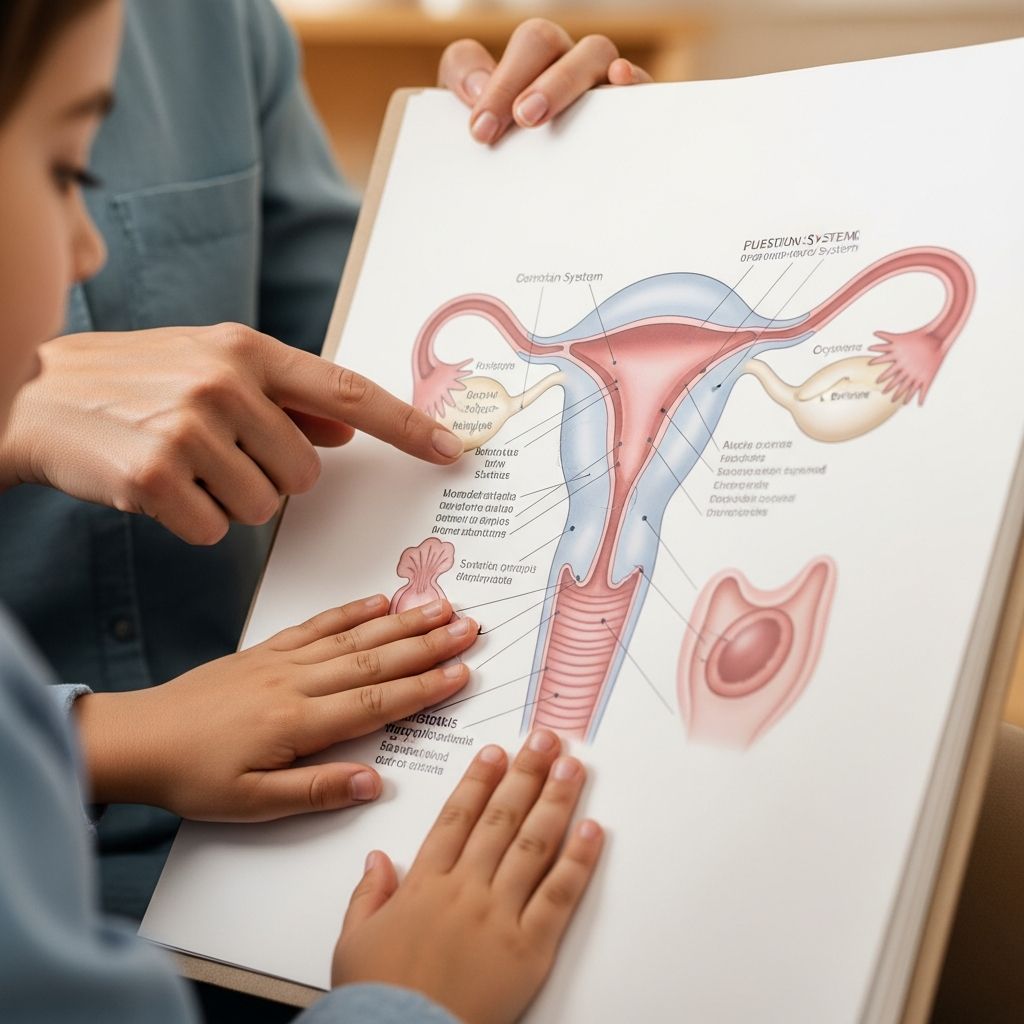
It helps to separate the organs into those mostly inside the body and those on the outside. Teaching kids the correct names supports body confidence and safety.
Internal Organs (Inside the Body)
- Ovaries: Two small organs, usually one on each side of the uterus, that hold all the eggs a person will ever have and make hormones like estrogen and progesterone.
- Fallopian tubes: Narrow tubes that connect each ovary to the uterus; this is where an egg may meet sperm for fertilization.
- Uterus: A muscular, hollow organ where a pregnancy can grow; its lining also thickens and sheds during the menstrual cycle.
- Cervix: The lower, narrow part of the uterus that opens into the vagina; it helps control what enters and leaves the uterus.
- Vagina: A stretchy canal that connects the cervix to the outside of the body.
External Genitals (Outside the Body)
The external area is often called the vulva. Many people casually use the word “vagina” for everything, but teaching the word “vulva” helps kids be more precise and confident when they talk about their health.
- Labia majora: The outer folds of skin that protect the more delicate inner areas.
- Labia minora: The inner folds that surround the vaginal and urethral openings.
- Clitoris: A sensitive structure involved in sexual pleasure; it has many nerve endings.
- Vaginal opening: The entrance to the vagina.
- Urethral opening: The small opening where urine comes out; separate from the vagina.
Anatomy Overview Table
| Part | Location | Main Role |
|---|---|---|
| Ovaries | Inside pelvis, on each side of uterus | Store eggs and make hormones |
| Fallopian tubes | Between ovaries and uterus | Carry egg toward uterus; usual site of fertilization |
| Uterus | Central pelvic area | Holds a pregnancy; sheds lining during a period |
| Cervix | Lower end of uterus | Opens into vagina; lets menstrual blood out and sperm in |
| Vagina | Canal from cervix to outside | Pathway for menstrual flow, birth, and sexual intercourse |
| Vulva | Outside genital area | Protects inner organs; includes labia, clitoris, and openings |
How the Menstrual Cycle Works
One of the most visible signs that the reproductive system is active is the menstrual cycle, often called a “period.” This monthly cycle is controlled by hormones and usually appears several years after puberty starts.
Key Phases Explained Simply
- Building phase: The uterus lining thickens to prepare a soft, nutrient-rich layer in case a pregnancy begins.
- Egg release: Around the middle of the cycle, an ovary usually releases one egg; this is called ovulation.
- Waiting period: The released egg travels through a fallopian tube and may meet sperm.
- Shedding: If pregnancy does not occur, the thick lining breaks down and leaves the body as menstrual blood and tissue.
What Kids and Teens Often Notice
Cycles vary a lot, especially in the first few years after periods begin. It is normal for cycles to be shorter, longer, or irregular when the body is still adjusting.
- Mild cramping or aching in the lower belly.
- Spotting or light flow at first, then heavier bleeding for a day or two, then lighter again.
- Changes in mood, energy, or appetite before a period starts.
Puberty and Body Changes in Girls
Puberty is the time when a child’s body begins to mature into an adult body. For many girls and people assigned female at birth, these changes start between late elementary and early middle school years, but “normal” covers a wide range.
- Breast development is often one of the first changes.
- Pubic and underarm hair begins to grow.
- Body odor becomes stronger as sweat glands become more active.
- Growth spurts and weight redistribution change body shape, often with wider hips.
- Vaginal discharge may appear before the first period, which is usually normal lubrication.
Fertilization and Pregnancy Basics
Older kids and teens often ask how pregnancy starts. Parents can answer clearly without going into more detail than a child’s age and maturity level requires. The core idea is that pregnancy happens when an egg and a sperm join and the resulting cell successfully attaches in the uterus.
- Each month, an ovary usually releases one egg.
- If sperm are present in the reproductive tract, one may join with the egg in a fallopian tube.
- The fertilized egg may then move into the uterus and attach to the lining, starting a pregnancy.
- If it does not attach, the lining breaks down and is shed during a period.
Normal Vaginal Discharge and Hygiene
Vaginal discharge is a common source of questions and worry for young people. Explaining what is normal helps them notice when something may be wrong.
- Clear or white discharge without a strong odor is often normal and helps keep the vagina clean.
- Discharge can change throughout the cycle, becoming thicker or more slippery at different times.
- Strong odors, itching, burning, or unusual color may signal an infection and should be checked by a healthcare professional.
Basic Hygiene Tips
- Wash the external vulva area gently with warm water; harsh soaps or fragrances are usually unnecessary and may irritate skin.
- Wipe from front to back after using the toilet to reduce the chance of infection.
- Change pads, tampons, or period underwear regularly during menstruation.
- Choose breathable underwear and change daily.
Supporting Emotional Health Around Periods
Periods are not just a physical event. They can bring emotional ups and downs, especially during the first few years. Young people may feel embarrassed, worried, or excited about this new stage.
- Normalize talking about periods as a regular body function, not something dirty or shameful.
- Help your child prepare a small period kit with pads, spare underwear, and wipes.
- Encourage tracking cycles on a calendar or app, once periods become more regular.
- Reassure them that accidents happen and can be handled calmly.
Common Concerns Parents Notice
Parents often wonder which symptoms are normal and which may need a medical visit. When in doubt, checking in with a healthcare provider is always appropriate.
- Very painful periods: Some cramping is common, but pain that interferes with school or activities should be discussed with a doctor.
- Very heavy bleeding: Soaking through a pad or tampon every hour for several hours may be a sign of a problem.
- No period by mid-teen years: If puberty signs are present but there is still no period by around age 15 or so, a medical evaluation can help.
- Sudden change in cycles: Sudden, long-lasting changes in timing, flow, or pain also deserve attention.
Creating a Healthy Home Conversation
How adults react to questions about bodies shapes how kids feel about themselves. Calm, honest answers make it more likely that children will come back when they are confused or scared.
- Avoid teasing, joking, or shaming about body changes.
- Use correct words like “vulva,” “vagina,” “uterus,” and “ovary.”
- Admit when you do not know an answer and suggest looking it up together from a trusted health source.
- Emphasize that everyone’s timing is unique; there is no single “right” age for each change.
Safety and Respect for the Body
Teaching about the reproductive system naturally leads to conversations about safety and consent. Children and teens need clear messages that their bodies belong to them and that they can speak up if anything feels wrong.
- Explain that certain body parts are private and should only be seen or touched for health reasons, like by a parent or doctor, and only with permission.
- Teach kids that they can always tell a trusted adult if they feel uncomfortable, even if someone told them to keep it a secret.
- Model asking for consent in everyday situations, such as hugs, to reinforce respect for boundaries.
Frequently Asked Questions (FAQs)
1. At what age do periods usually start?
Most people with a female reproductive system get their first period between ages 9 and 15. Starting earlier or later can still be normal, especially if other puberty changes have started.
2. How long does a period last?
Many periods last between 3 and 7 days. In the first few years, timing and flow can be irregular as the body adjusts.
3. Is it normal for periods to hurt?
Mild to moderate cramping is common, especially in the lower belly or back. Over-the-counter pain relief, heating pads, light exercise, and rest can help, but severe pain should be checked by a healthcare provider.
4. Can a person get pregnant the first time they have sex?
Yes. If ovulation has begun and sperm enter the reproductive tract, pregnancy can happen even the first time someone has vaginal intercourse. This is one reason why accurate information and guidance are important before teens become sexually active.
5. What if my child feels embarrassed talking about this?
Embarrassment is very common. Short, calm conversations, books or articles written for their age, and reassurance that these topics are normal can slowly make it easier for them to ask questions.
6. How can I tell if discharge is normal or a problem?
Normal discharge is usually clear or white and does not cause itching, burning, or strong odor. If your child notices thick, clumpy, greenish, gray, or foul-smelling discharge, or has discomfort, a medical checkup is a good idea.
7. Do all girls develop in the same way?
No. Height, breast size, body shape, and the timing of periods vary widely. Comparing to friends or images online can be misleading, so it helps to remind kids that each body has its own timeline.
Key Takeaways for Parents
- The female reproductive system is complex, but kids do not need every detail at once; start simple and add more information as they grow.
- Using correct terms and answering questions honestly builds trust and confidence.
- Watching for changes in periods, pain, or discharge helps you catch possible problems early.
- Most of all, a calm, respectful approach teaches children that their bodies are valuable and deserve care.