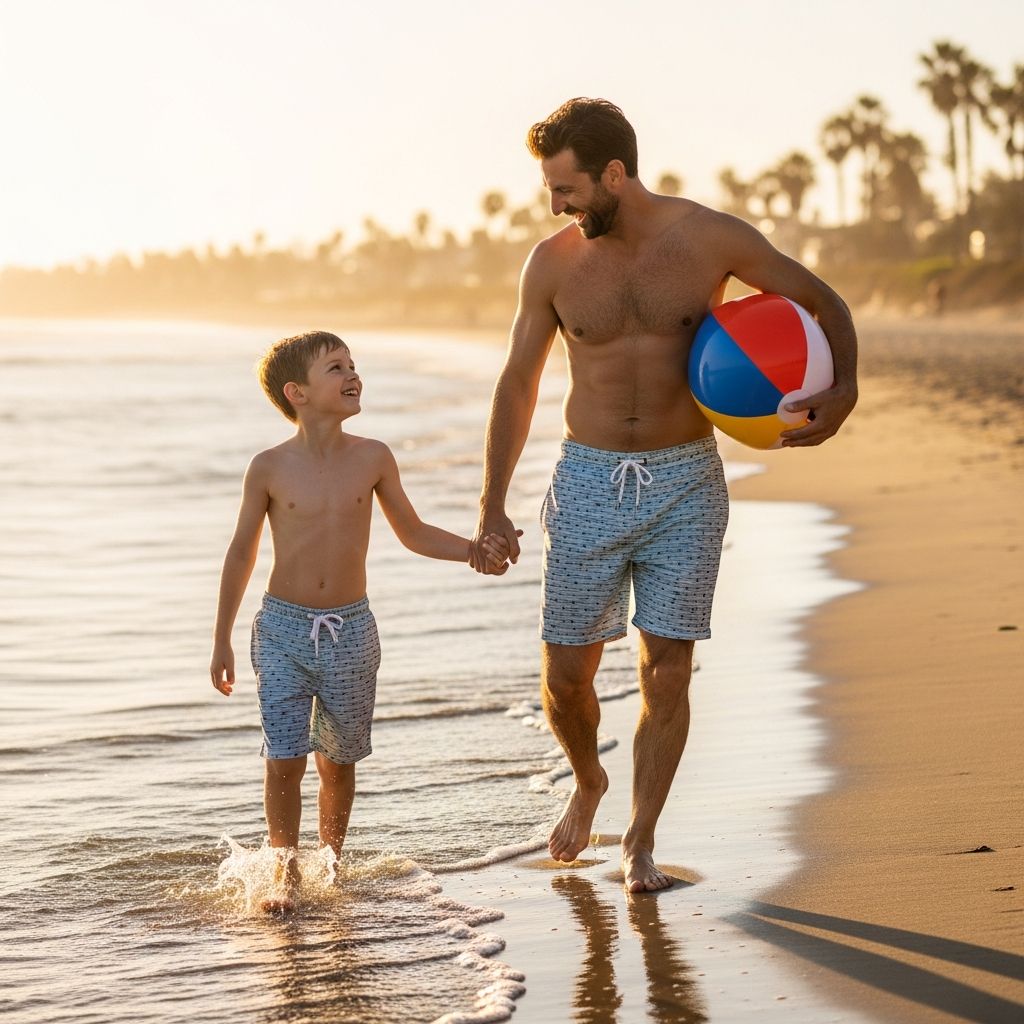
Coordinated father–son swim trunks have become a favorite way to celebrate family time at the beach or pool. Matching patterns and colors not only look great in photos, they also turn ordinary swim days into playful, shared experiences that kids remember for years.
This guide walks you through how to choose father–son matching swim trunks that balance style, comfort, sun protection, and practicality—without overspending or sacrificing durability.
Why Matching Swim Trunks Are So Popular
Father–son matching swimwear taps into both fashion trends and emotional connection. Coordinated looks show up frequently in lifestyle media and social feeds, reflecting a wider interest in family-centered experiences and visual storytelling.
- Shared identity: Wearing the same pattern can help younger kids feel more connected and confident when they are with a parent.
- Easy visibility: Matching colors make it simpler to spot each other in busy pools or crowded beaches, which supports attentive supervision, though it never replaces proper water safety.
- Built-in celebration: Coordinating trunks are often given for Father’s Day, birthdays, and vacations as an experience-based gift with ongoing use.
- Photo-ready: Families frequently plan matching outfits for travel albums and holiday cards because they visually signal closeness and fun.
Key Factors When Choosing Father–Son Swim Trunks
Before getting into colors and cute prints, focus on the fundamentals. Good swim trunks should be safe, comfortable, and appropriate for your plans.
1. Fit and Comfort for Dads
Well-fitting trunks help adults stay comfortable during active play and long days in the sun.
- Length: Mid-thigh to just above the knee works for most body types, offering coverage without restricting movement.
- Waistband: An elastic waistband with a drawstring lets you adjust the fit after swimming or sitting.
- Liner: A soft, breathable liner helps prevent chafing and supports comfort during bending, lifting, and swimming.
- Pockets: Mesh-lined pockets that drain quickly are handy for keys or small items but should not balloon with water.
2. Fit and Comfort for Kids
For children, the goal is unrestricted play and secure coverage.
- Adjustability: Look for trunks with a functional drawstring or adjustable waistband so they do not slip when wet.
- Freedom of movement: A slightly looser cut with soft fabrics lets kids run, squat, dig, and jump without pinching.
- Fabric feel: Children often tolerate swim time longer when the fabric is not scratchy or stiff against their skin.
- Age-appropriate length: Younger kids may do best with mid-thigh trunks or swim shorts paired with a rash guard.
3. Fabric and Performance
Modern swim trunks usually rely on synthetic fibers that dry quickly and stretch as needed.
| Fabric Type | Main Benefits | Considerations |
|---|---|---|
| Polyester | Durable, holds color, and dries quickly. | Can feel less soft unless blended or brushed. |
| Nylon | Lightweight, smooth feel, and fast-drying. | May be slightly less resistant to long-term chlorine exposure. |
| Spandex blends | Provides stretch and ease of movement. | Requires gentle care; avoid very high heat when drying. |
Whichever fabric you choose, rinse suits with clean water after swimming to remove chlorine or salt and extend their life.
4. Sun Protection and Skin Safety
Because water and reflective sand can intensify UV exposure, parents increasingly look for swimwear that does more than just cover skin. Many brands now offer fabrics with labeled UPF (Ultraviolet Protection Factor), which indicates how much UV radiation can penetrate the material.
- UPF 50+ blocks about 98% of UV rays that reach the fabric, significantly reducing exposure to both UVA and UVB radiation.
- Denser, darker fabrics usually offer more protection than thin, light-colored materials, although dyes and special finishes can also improve UPF.
- Rash guards and swim shirts provide coverage for shoulders, upper arms, and backs of the neck—areas that often burn quickly in children and adults.
Professional health organizations emphasize that sun-protective clothing works best when combined with broad-spectrum sunscreen, shade, and limiting midday exposure.
Style Choices: Prints, Colors, and Themes
Once you have the practical details sorted, choosing the look becomes the fun part. Matching does not have to mean identical from head to toe—you can coordinate in several ways.
Matching vs. Coordinated Looks
- Exact match: Both dad and child wear the same pattern and color. This is the most striking for photos.
- Color family: Use the same color palette but slightly different patterns (for example, navy palm leaves for dad and blue stripes for the child).
- Subtle reference: Dad’s trunks may feature a more understated design while the child’s version uses bolder motifs from the same collection.
Popular Design Motifs
Father–son sets often feature lighthearted themes that children recognize and adults still enjoy wearing.
- Marine life: Turtles, fish, and waves are common motifs in family swim collections, offering both color and a holiday feel.
- Tropical patterns: Palms, florals, and sunset tones convey vacation energy and look good in travel photos.
- Geometric prints: Stripes, checks, and abstract shapes are easy for adults to wear while still feeling playful.
- Classic solids: A single bold color on both trunks is a simple way to match without busy prints.
Choosing Flattering Colors
When you are styling multiple people in the same frame, color choices matter more.
- Deep blues and greens are widely flattering and work well with many skin tones.
- High-contrast neon or bright shades can help kids stand out in the water but may fade more quickly with heavy chlorine exposure.
- Soft pastels and neutrals feel calm and timeless in photos, especially for beach portraits at sunrise or sunset.
Planning Around Activities
Your family’s typical water activities should guide which trunks you select.
For Active Beach Days
If you expect lots of running, sports, and wave-jumping, prioritize secure trunks that stay in place and let everyone move freely.
- Look for drawstrings that tie securely and do not easily loosen.
- Opt for trunks with moderate stretch so fabric does not restrict squatting, climbing, or lifting kids.
- Avoid overly long, heavy board shorts that might feel cumbersome when wet.
For Resort Pools and Lounging
On more relaxed days by the pool, you can emphasize style slightly more than performance.
- Mid-length tailored trunks can look polished in photos and casual resort settings.
- Coordinating shirts, hats, or slides can round out the father–son look for walking to and from the pool.
- Consider packs or sets that include both trunks and rash guards for flexible styling.
For Travel and Vacations
When packing for a trip, durability and quick-drying features matter.
- Quick-drying fabrics help if you need to re-wear trunks later the same day.
- Neutral or versatile prints allow trunks to pair with several shirts or cover-ups.
- Lightweight designs take up less suitcase space and dry faster in hotel bathrooms.
Budgeting and Building a Mini Collection
You do not have to spend a lot to enjoy coordinated outfits; a little planning can stretch your budget.
- Choose one hero set: Invest in a single high-quality matching pair for special occasions and photos.
- Supplement with basics: Alternate patterned trunks with simple solid-color pieces already in your closet.
- Size up for kids carefully: Going too large may cause chafing and slipping; a modest size up with adjustable waistbands can still extend wear.
- Watch for off-season deals: Swimwear often goes on sale outside peak summer months in many regions.
Practical Care Tips to Make Trunks Last
Good care helps father–son swim trunks keep their color, elasticity, and print throughout multiple seasons.
- Rinse in fresh water soon after swimming to remove salt, sand, or chlorine.
- Wash with mild detergent in cool water and avoid harsh bleach, which can damage fibers and colors.
- Air-dry in the shade rather than using high-heat dryers, which can shorten fabric life and affect elastic components.
- Do not store damp trunks in closed bags for long periods; excess moisture can lead to odor and material degradation.
Making the Most of Matching Moments
Once you have selected your matching trunks, there are several simple ways to highlight the experience for your child.
- Let kids help choose: Involving children in picking colors or prints can increase excitement and pride in wearing the trunks.
- Create small rituals: Maybe matching suits come out on the first day of vacation or for special weekend swims.
- Document memories: Take a quick photo each year in your matching trunks; over time it becomes a visual record of growth and changing tastes.
- Pair with water safety talks: Use the excitement of new trunks as a moment to review pool rules and safe behavior around water.
Frequently Asked Questions (FAQs)
Q: How many matching sets should a father and son own?
A: Most families are well-served by one special matching set plus one or two additional non-matching trunks for each person. A single coordinated set is enough for photos and celebrations, while extra trunks cover longer vacations or frequent swimming.
Q: Are UPF swim trunks still necessary if we use sunscreen?
A: Sunscreen is important, but organizations such as the American Academy of Dermatology highlight clothing as a key part of a complete sun protection strategy. UPF-rated fabrics add another barrier and help protect areas that might be missed or under-applied with sunscreen.
Q: What if dad and child have different comfort preferences?
A: Matching does not have to mean identical cuts. One person can wear longer board-style trunks while the other chooses a slightly shorter style in the same print or color family. Coordinated colors or motifs still achieve a unified look.
Q: How early can children start wearing matching swim trunks?
A: Many brands offer infant and toddler sizes that align with adult designs. What matters most is that the child’s trunks fit securely at the waist, do not restrict leg movement, and are paired with appropriate sun protection, such as hats and rash guards.
Q: Do matching swim trunks help with safety at the pool or beach?
A: Matching outfits can make it easier to quickly recognize family members in a crowd, but they are not a substitute for active supervision or swimming ability. Water safety experts consistently stress constant, focused adult attention and teaching children how to swim as the most important safety measures.
References
- Drowning Prevention — Centers for Disease Control and Prevention. 2024-04-15. https://www.cdc.gov/drowning/index.html
- Public Pool Safety — U.S. Consumer Product Safety Commission. 2023-05-01. https://www.cpsc.gov/Safety-Education/Safety-Education-Centers/pool-safety
- Choosing the Right Swimwear Fabric — North Carolina State University, Wilson College of Textiles. 2021-07-10. https://textiles.ncsu.edu/news/2021/07/swimwear-fabrics/
- Care Tips for Swimwear — University of Georgia Extension. 2020-06-18. https://extension.uga.edu/publications/detail.html?number=C1040
- Sun-Protection and Clothing — American Academy of Dermatology. 2024-03-05. https://www.aad.org/public/everyday-care/sun-protection
- Sun Safety for Kids — American Academy of Pediatrics / HealthyChildren.org. 2023-05-15. https://www.healthychildren.org/English/safety-prevention/at-play/Pages/Sun-Safety.aspx