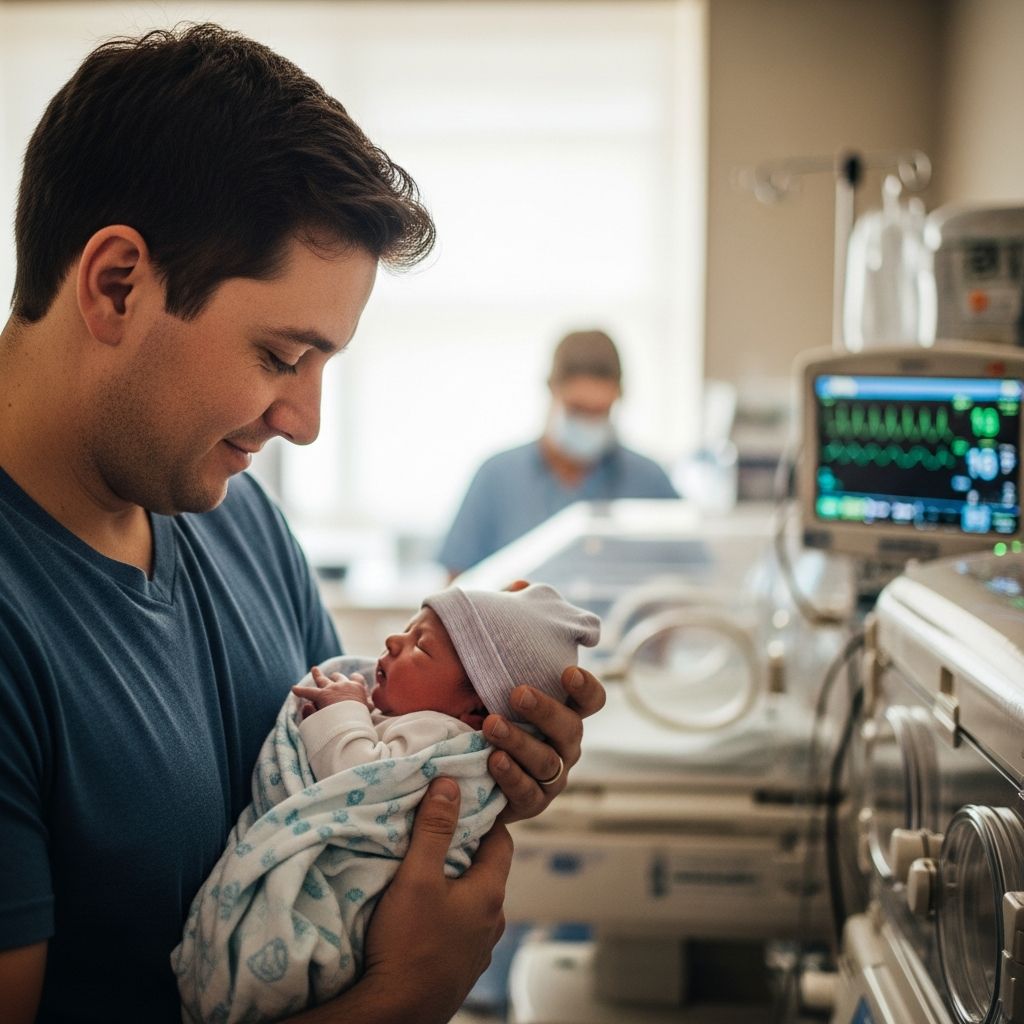
Neonatal Intensive Care Units (NICUs) represent a critical lifeline for premature and critically ill newborns, yet the traditional model often sidelines parents, treating them as observers rather than essential team members. Emerging evidence from rigorous studies demonstrates that positioning parents as primary caregivers transforms this dynamic, yielding superior medical and emotional results for infants and families alike. This approach, commonly known as Family Integrated Care (FiCare), empowers parents through education, hands-on participation, and collaboration with medical staff, fostering resilience and attachment during a vulnerable period.
Understanding the NICU Parental Experience
Admission to the NICU triggers profound emotional turmoil for parents, marked by anxiety, role distortion, and separation from their infant. Mothers and fathers frequently report heightened stress levels, with qualitative data revealing feelings of helplessness amid beeping monitors and clinical routines. A scoping review of 27 studies, including randomized controlled trials (RCTs), underscores that NICU stays disrupt natural bonding, potentially leading to long-term mental health challenges like postpartum depression.
Factors exacerbating this include limited visitation due to infection controls, sleep deprivation from hospital logistics, and the overwhelming medical jargon. Yet, research shows parents average presence four days per week and holding sessions two to three days, with variations based on demographics such as maternal age, marital status, and support networks. Employed, married Caucasian mothers with fewer children and breastfeeding commitments exhibit higher involvement rates.
Core Principles of Family-Integrated Care Models
FiCare redefines NICU protocols by integrating families into daily care routines, including feeding, diapering, and monitoring vital signs under staff guidance. Pioneered through global RCTs, this model minimizes parent-infant separation, positioning parents as non-clinical team members who participate in rounds and decision-making.
- Skin-to-Skin Contact (Kangaroo Care): Direct physical touch stabilizes infant heart rates, regulates temperature, and enhances neurodevelopment.
- Parental Education Modules: Tailored programs on developmental cues and handling techniques build self-efficacy.
- Multidisciplinary Rounds: Daily briefings ensure parents grasp progress and contribute insights.
- Supportive Environment: Private spaces and flexible visiting hours encourage sustained presence.
Complementary frameworks like the Newborn Individualized Developmental Care and Assessment Program (NIDCAP) emphasize individualized assessments, further amplifying parental roles in cue-based care.
Proven Medical Benefits for Newborns
Infants under family-centered models exhibit tangible health gains. Data from parent-led interventions reveal accelerated weight gain, shorter hospital stays, and elevated breastfeeding initiation rates—critical for preterm nutrition.
| Outcome Measure | Traditional NICU Care | FiCare/Parent-Led Care | Statistical Significance |
|---|---|---|---|
| Weight Gain | Baseline | Significantly Higher | p < 0.05 |
| Breastfeeding Rates | Lower Initiation | Higher Success | Observed in RCTs |
| Length of Stay | Standard Duration | Reduced | Reported in implementations |
| Neurobehavioral Scores | Average Reflexes | Improved at Discharge | p=0.02 for holding |
Skin-to-skin care correlates with superior reflex maturity at term (p=0.02) and enhanced gross motor skills at 4-5 years (p=0.02). Facilitated tucking and breastfeeding further mitigate pain and stress, optimizing brain maturation.
Emotional and Psychological Gains for Parents
Parental mental health flourishes under FiCare. Consistent caregiving reduces depression incidence in the first postpartum year, with mothers reporting diminished anxiety and bolstered confidence. Qualitative insights highlight restored role perception, from bystander to advocate, fostering empowerment.
Interventions like digital platforms (e.g., apps for updates and skill-building) yield higher self-efficacy scores (estimate 1.84, p=0.014) and satisfaction (estimate 2.14, p=0.03). Social networks connecting families to professionals enhance hope and cohesion, particularly for mothers.
- Lower stress and fewer role alterations.
- Increased competence at discharge.
- Stronger family bonds and adaptation.
Real-World Implementations and Success Stories
Hospitals adopting FiCare report systemic efficiencies. South Shore Health’s program, led by neonatologist Zuzanka Kubicka, MD, demonstrated reduced parental stress, improved team communication, and newborn thriving metrics. Parents valued round participation, gaining discharge readiness.
The Neonatal Nurse Navigator Program (NNNP) and similar initiatives promote collaboration, yielding emotional uplift and skill acquisition. Global pilots confirm scalability, with benefits persisting post-discharge.
Overcoming Barriers to Parental Involvement
Despite merits, hurdles persist: work commitments, travel distances, language barriers, and cultural stigmas. Socioeconomic disparities affect participation, with supported families faring better. Solutions include flexible scheduling, telehealth bridges, and culturally sensitive training.
Staff resistance to role shifts requires education on safety protocols. Evidence affirms parent-led care under supervision matches or exceeds nurse-only outcomes without added risks.
Long-Term Developmental Impacts
Beyond NICU walls, early parental engagement lays attachment foundations, crucial for cognitive and emotional growth. Held infants display less asymmetry (p=0.04) and refined motor abilities years later, underscoring investment returns.
FiCare mitigates suboptimal parenting risks, optimizing sensory inputs vital for survival. Longitudinal tracking reveals sustained breastfeeding and growth advantages.
Strategies for Hospitals to Adopt FiCare
- Staff Training: Workshops on coaching parents in evidence-based techniques.
- Infrastructure Upgrades: Kangaroo chairs, family zones, and 24/7 access.
- Evaluation Metrics: Track self-efficacy via validated scales pre/post-intervention.
- Policy Advocacy: Paid parental leave extensions for NICU families.
- Tech Integration: Apps for real-time updates and virtual support.
Frequently Asked Questions (FAQs)
What is Family Integrated Care (FiCare)?
FiCare positions parents as primary caregivers in the NICU, supported by staff education and participation in care routines, rounds, and bonding activities.
Is it safe for parents to handle fragile NICU babies?
Yes, under trained supervision; studies show no increased risks and better infant stability via skin-to-skin and holding.
How does FiCare affect breastfeeding?
It significantly boosts initiation and continuation rates by enabling hands-on practice and skin-to-skin hormonal triggers.
Can fathers participate equally?
Absolutely; while mothers often lead due to physiology, inclusive programs enhance paternal confidence and involvement.
What if parents can’t visit daily?
Hybrid models with video calls, recorded sessions, and extended family proxies maintain benefits.
Embracing family-centered paradigms heralds a brighter era for NICU care, where empowered parents propel healthier trajectories for their little ones.
References
- Improving Parents’ Emotional Well‐Being in NICU: A Scoping Review — Wiley Online Library / Various Authors. 2024. https://pmc.ncbi.nlm.nih.gov/articles/PMC12672214/
- The Power of Family Integrated Care in the NICU — GE HealthCare Clinical View. 2023. https://clinicalview.gehealthcare.com/article/power-family-integrated-care-nicu
- Parent Participation in the Neonatal Intensive Care Unit — PMC / NIH. 2018-02-28. https://pmc.ncbi.nlm.nih.gov/articles/PMC5856604/
- Parents as the Primary Caregivers for Their Infant in the NICU — American Academy of Pediatrics NeoReviews. 2014-11-01. https://publications.aap.org/neoreviews/article/15/11/e472/91542/Parents-as-the-Primary-Caregivers-for-Their-Infant
- Making a Difference in the Lives of NICU Babies and Their Caregivers — South Shore Health. 2023. https://www.southshorehealth.org/about-us/news-media/news/family-integrated-care-program-making-difference-lives-nicu-babies-and