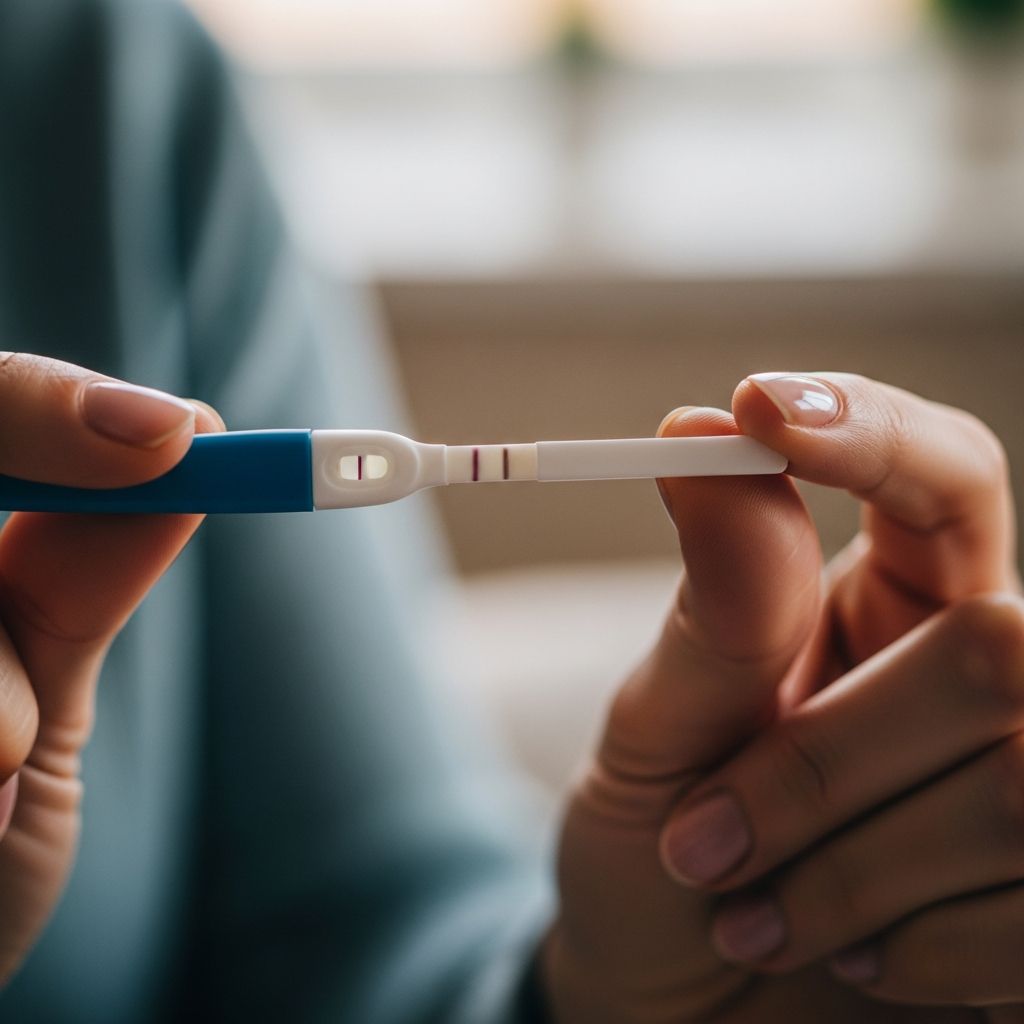
Seeing a positive line on a home pregnancy test can instantly change how you see your future. For some people it feels like a dream come true; for others, it may trigger panic or fear. But what happens when that positive result turns out not to be a lasting pregnancy or not a pregnancy at all? That confusing situation is often called a false positive pregnancy test, and it is far more emotionally complicated than a simple “test error.”
This guide walks through how home pregnancy tests work, why a test might show a positive result when you are not actually pregnant, how to reduce the chances of a misleading result, and what to do—both medically and emotionally—if your test seems to have lied to you.
How Home Pregnancy Tests Actually Work
Most modern home pregnancy tests look for a hormone called human chorionic gonadotropin (hCG) in your urine. This hormone is produced after a fertilized egg implants into the lining of the uterus. As hCG levels rise, the test’s chemicals react and create lines, symbols, or words like “pregnant” on the display.
- Typical urine tests can detect pregnancy around the time of a missed period, sometimes a few days earlier, depending on sensitivity.
- The more concentrated your urine (for example, first thing in the morning), the easier it is for the test to detect hCG.
Even though packaging often advertises accuracy “over 99%,” that number usually assumes perfect use under ideal conditions. Real life is messier, and that is where misleading results can appear.
False Positive vs. Real but Early Pregnancy Loss
Not every “false positive” means the test was wrong. In many cases, the test was correct in detecting hCG, but the pregnancy did not continue. From the outside, it can look like the test lied: you had a positive result, then bleeding, then your provider tells you that you are not pregnant.
Two important ideas help explain this:
- True false positive: The test shows pregnancy, but there was never a pregnancy, and hCG came from another source (like medication or a rare medical condition).
- Very early pregnancy loss (often called a chemical pregnancy): A fertilized egg briefly implanted and produced enough hCG to register on a test, but the pregnancy ended so early that no gestational sac or embryo could be seen on ultrasound.
Both experiences are emotionally real, even if they are medically different. Knowing the distinction can help you have clearer conversations with your healthcare provider.
Common Reasons for a Positive Test That Does Not Last
Several situations can lead to a positive pregnancy test that does not result in a continuing pregnancy. Some involve very early losses; others are related to health conditions or medications.
Chemical Pregnancy (Very Early Loss)
A chemical pregnancy happens when an egg is fertilized and implants just long enough to trigger hCG production, but stops developing soon afterward. To the person taking the test, it often looks like this:
- A faint positive test around or just before an expected period.
- Bleeding that arrives a few days to a week later, sometimes a bit heavier or crampier than usual.
This kind of loss is extremely common and often only discovered because early testing is now so widely available. Although the pregnancy ends very early, the hopes and feelings that came with that positive line are still valid and can be intense.
Ectopic Pregnancy
An ectopic pregnancy occurs when a fertilized egg implants outside the uterus, most often in a fallopian tube. The body still produces hCG, so a urine test can look positive, but the pregnancy cannot grow safely.
- Warning signs can include one-sided abdominal pain, shoulder pain, lightheadedness, or unusual bleeding.
- Ectopic pregnancy is a medical emergency; anyone with a positive test and concerning pain or heavy bleeding should seek immediate care.
Molar Pregnancy
A molar pregnancy involves abnormal growth of tissue in the uterus instead of a typical embryo and placenta. hCG levels are often higher than normal for the stage of pregnancy, leading to strong positive test results.
- Symptoms can include severe nausea, unusually fast-growing uterus, or very high hCG levels on blood tests.
- This condition requires medical follow-up and treatment; it does not result in a healthy baby.
Other Causes of False Positive Pregnancy Tests
Beyond early pregnancy losses and abnormal pregnancies, there are several other reasons a test might show positive even when there is no ongoing pregnancy.
Recent Pregnancy, Miscarriage, or Birth
After a pregnancy ends—whether through birth, miscarriage, or abortion—the body needs time to clear hCG from the bloodstream and urine. That process can take several weeks, sometimes longer if hCG levels were very high.
- If you test too soon after a pregnancy ends, leftover hCG may still be detectable and cause a positive result.
- Follow-up blood tests with your provider can help confirm whether hCG is trending down as expected.
Certain Medications Containing hCG
Some fertility treatments and injections use hCG to trigger ovulation or support the early luteal phase. Because home tests do not distinguish between hCG from medication and hCG from pregnancy, testing too soon after these treatments can yield a false positive.
- Ask your fertility specialist how long you should wait after an hCG injection before using a home pregnancy test.
- Over-the-counter products marketed for weight loss or performance enhancement that claim to contain hCG can also interfere with testing.
Hormone-Related Conditions and Menopause
Some ovarian cysts, tumors, and hormone-related conditions can produce or mimic hCG in the body. In people approaching menopause or already postmenopausal, hormone changes may occasionally cause low but detectable levels of hCG.
- In these situations, blood tests and further evaluation by a healthcare professional are important for figuring out why hCG is present.
- Although rare, certain cancers can also affect hCG levels and may first be noticed through unexpected test results.
When the Problem Is the Test Itself
Even when there is nothing unusual happening medically, the test can still be misleading if it is expired, used incorrectly, or interpreted at the wrong time. Many unexpected positives come down to simple testing errors.
Common User Mistakes
- Using a test past its expiration date.
- Not following the timing instructions (reading too early or too late).
- Using very diluted urine after drinking a lot of fluids.
- Not saturating the test strip long enough or over-saturating it.
Evaporation lines are another common source of confusion. After urine dries on the test strip, a faint colorless or grayish line may appear where the positive line would be. This is not a true positive; it is simply residue from the drying process. That is why manufacturers stress reading results only within a specific time window.
Defective or Damaged Tests
Like any manufactured product, test kits can occasionally be faulty. Damage from moisture, improper storage, or a manufacturing issue can interfere with the chemical reaction needed for an accurate result.
- If the control line or symbol fails to appear, the test cannot be trusted and should be discarded.
- When results look odd or inconsistent, using a test from a different box or brand and confirming with a healthcare provider is a good next step.
At a Glance: Why a Pregnancy Test Might Show Positive
| Reason | What Is Happening | Is There a Pregnancy? | What Usually Happens Next |
|---|---|---|---|
| Chemical pregnancy | Very early implantation followed by quick loss. | Briefly yes, then no ongoing pregnancy. | Bleeding similar to a period; hCG returns to zero over days or weeks. |
| Ectopic pregnancy | Implantation outside the uterus (often in a fallopian tube). | Yes, but not viable or safe | Requires urgent medical evaluation and treatment. |
| Molar pregnancy | Abnormal tissue grows in the uterus instead of a typical pregnancy. | No viable baby. | Medical treatment and monitoring of hCG levels. |
| Recent miscarriage, abortion, or birth | Remaining hCG after a pregnancy ends. | No new pregnancy. | hCG gradually drops; repeat testing and follow-up may be needed. |
| Fertility medications with hCG | Injected or ingested hCG shows up on tests. | Not necessarily; could be medication only. | Wait recommended number of days before testing again. |
| Hormone-related conditions or tumors | Non-pregnancy sources of hCG or similar substances. | Usually no pregnancy. | Further medical evaluation for underlying conditions. |
| Testing errors or faulty kits | Incorrect use, expired tests, or evaporation lines. | Unknown until retested correctly. | Repeat testing and confirm with a healthcare provider if uncertain. |
How to Get the Most Accurate Home Test Result
While no test can be perfect every time, a few habits greatly improve your chances of getting a clear answer.
Step-by-Step Tips for Testing
- Check the expiration date. Do not use a test that is expired, damaged, or has been stored in extreme temperatures.
- Use first-morning urine when possible. It is more concentrated, making hCG easier to detect.
- Follow the instructions exactly. Pay attention to how long to hold the strip in urine and how long to wait before reading.
- Set a timer. Read the result at the recommended time—not earlier, not later.
- Confirm with a second test. If you get an unexpected result, test again in a day or two with a new test from a different box.
If results remain confusing—such as faint lines that seem to come and go—contacting a healthcare provider for a blood test and evaluation can provide clearer answers.
When to Call a Healthcare Provider
Pregnancy testing is only the first step. There are times when you should move quickly from home tests to professional care.
- Any positive test combined with severe pain, dizziness, or heavy bleeding.
- A positive test that is followed by significant bleeding and cramping.
- Repeated faint positives that do not become stronger over several days.
- Positive tests when you have not had a period for many months or are already in menopause.
Your provider may order blood hCG tests over several days to see whether levels are rising, falling, or plateauing and may use ultrasound to look for a pregnancy in the uterus or other abnormalities. Having that data can clarify whether you experienced an early loss, an ectopic pregnancy, a molar pregnancy, or a different medical issue.
Emotional Impact of a False Positive Result
A false positive, or a positive that quickly turns into a loss, can feel like emotional whiplash. One moment you are mentally planning a nursery or rethinking your life plans; the next, you are told that the pregnancy is gone or was never truly there. Those feelings are real and deserve attention.
- People trying to conceive may feel grief, anger, or fear that a healthy pregnancy will never happen.
- Those who did not want to be pregnant might feel unexpected sadness or confusion when a positive result disappears.
Both reactions are normal. Talking with a trusted partner, friend, therapist, or support group can help process what happened. Some people also find it healing to mark the experience in a small way—through journaling, a ritual, or simply taking intentional time to rest.
Coping Strategies and Moving Forward
There is no single “right” way to cope after a confusing test result, but certain strategies can make the experience less isolating and overwhelming.
- Give yourself permission to feel. Grief, relief, anger, numbness, or a mix of all of them can show up.
- Ask questions at follow-up visits. Understanding what likely happened and your outlook for future pregnancies can ease anxiety.
- Consider a break from testing. If repeated early testing is causing constant stress, talk with your provider about waiting longer before testing in future cycles.
- Seek professional support. Counselors who specialize in fertility, pregnancy, or loss can be especially helpful.
Frequently Asked Questions
Can a pregnancy test be wrong if I see two lines?
Two lines usually mean the test detected hCG, but that hormone can come from an early pregnancy that ends quickly, from medication, or from a medical condition. Because of this, any positive home test—especially a faint line—should be treated as the start of a conversation with a healthcare provider rather than the final word.
How long after a miscarriage or birth can a test stay positive?
hCG levels fall at different speeds for different people, but it commonly takes several weeks for levels to return to non-pregnant ranges. During that time, urine tests may still show positive even though there is no longer a pregnancy, which is why follow-up care is important after any pregnancy ends.
Do birth control pills or most common medications cause false positives?
Most routine medications and hormonal birth control do not cause false positive pregnancy tests. The main exceptions are medications that specifically contain hCG, often used in fertility treatment. Always tell your provider what medications and supplements you are taking when discussing test results.
What if I keep getting very faint positives that never get darker?
Very faint lines that do not progress can indicate a chemical pregnancy, fluctuating low hCG levels, or sometimes just testing irregularities. The most reliable way to understand what is happening is a series of blood tests ordered by your provider to track whether hCG is rising, dropping, or remaining very low.
How soon after a positive home test should I see a doctor?
If you feel well and have no pain or heavy bleeding, many providers recommend scheduling a visit around 7–9 weeks after your last period so that an ultrasound can confirm the pregnancy. If you have any concerning symptoms—such as severe pain, dizziness, or soaking through pads with blood—seek medical care immediately, regardless of how early it is.
Key Takeaways
- Home pregnancy tests detect the hormone hCG, but a positive result does not always mean a continuing, healthy pregnancy.
- Early pregnancy loss, ectopic and molar pregnancies, recent miscarriage or birth, medications, medical conditions, and testing errors can all lead to confusing results.
- Using tests correctly, retesting after a short wait, and following up with a healthcare provider are the best ways to get clarity.
- Your emotional reaction to any positive or lost pregnancy result is valid and deserves compassion and support.