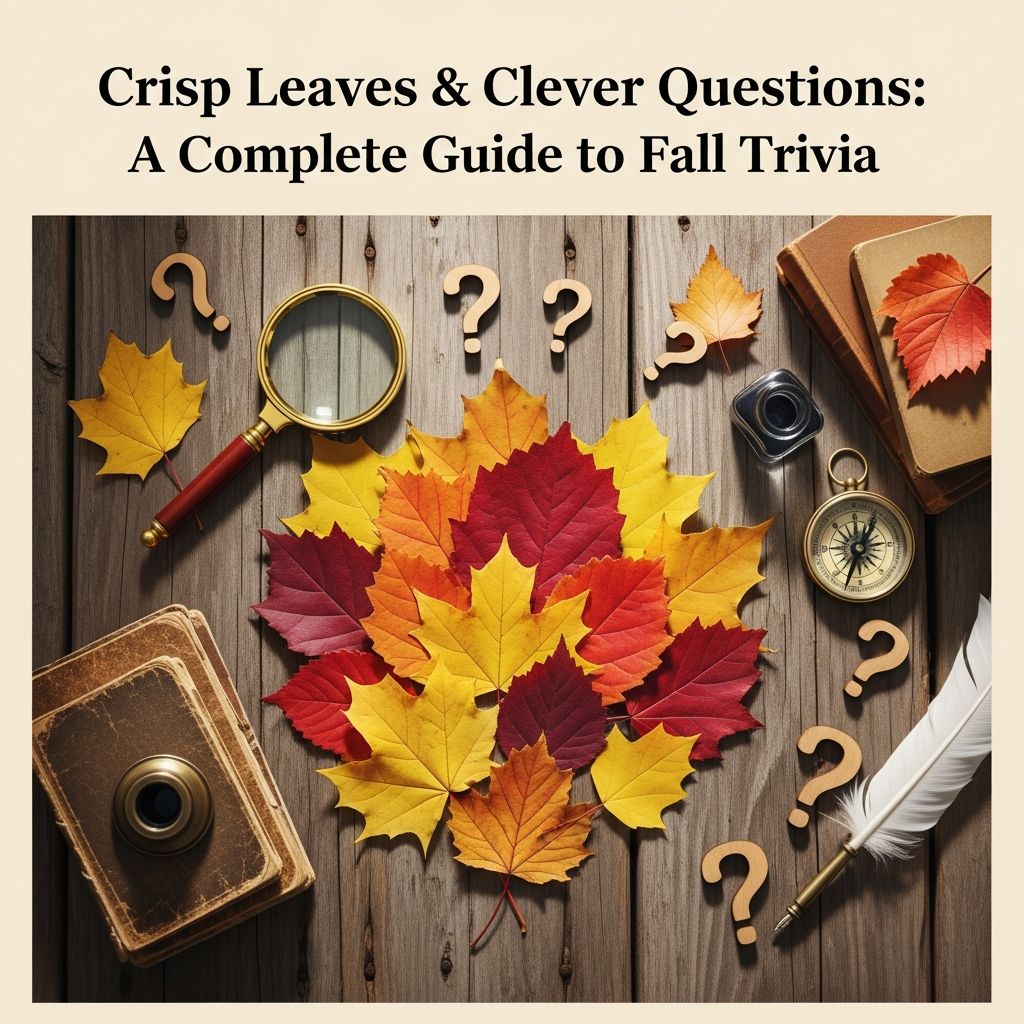
Autumn is more than cozy sweaters and pumpkin spice; it is a season rich with science, history, folklore, and quirky traditions that make it perfect for trivia games and quiz nights.
Why Fall Makes Perfect Trivia Material
Fall touches almost every part of life: the food we eat, the holidays we celebrate, the way the sky looks at dusk, and even how animals prepare for winter. That variety gives you endless inspiration for questions that are fun to answer and easy to customize for any age group.
When you build trivia around autumn, you naturally blend science (like leaf color changes), culture (such as holiday customs), and everyday life (from school routines to sports), so everyone at the table finds at least one category they can shine in.
Main Themes to Use in Fall Trivia
Instead of pulling random questions from all over the place, organize your fall trivia night around a few clear themes. This keeps the game feeling coherent and helps players know what to expect as each round begins.
- Nature & Science: Leaves, animal behavior, migration, daylight, weather, and the changing length of days.
- Harvest & Food: Pumpkins, apples, squash, spices, traditional autumn dishes, and farming traditions.
- Holidays & Traditions: Halloween, Thanksgiving, harvest festivals, school events, and cultural celebrations.
- Sports & Activities: American football, soccer, back-to-school events, fairs, hayrides, and corn mazes.
- History & Folklore: Legends behind jack-o’-lanterns, early harvest rituals, and stories explaining the seasons.
Core Fall Facts to Turn into Questions
Good trivia starts with solid facts presented in a playful way. This table gives you raw material you can reshape into your own questions and clues while keeping the content fresh and original.
| Topic | Fact Idea | Possible Question Style |
|---|---|---|
| Leaves | Many trees drop their leaves in fall to conserve water and energy over winter. | “Why do certain trees shed their leaves before winter?” |
| Daylight | Days get shorter and nights get longer as the hemisphere tilts away from the sun. | “What happens to daylight hours as autumn progresses?” |
| Harvest | Apples, pumpkins, and many grains are traditionally gathered in the fall. | “Which season is classic harvest time for pumpkins and apples?” |
| Animals | Many animals store food or migrate to cope with the coming cold. | “Name one strategy animals use in fall to prepare for winter.” |
| Weather | Cooler, drier air and bigger differences between day and night temperatures are common. | “How does typical autumn weather differ from summer weather?” |
| Holidays | Halloween and Thanksgiving are widely recognized fall holidays in North America. | “Which two major holidays anchor fall celebrations in the United States?” |
Creating Age-Appropriate Fall Trivia
The key to engaging trivia is asking questions that feel just challenging enough for the players in front of you. A question about the chemistry of leaf pigments might be perfect for teenagers or adults, but younger kids will respond better to simple observations about color or weather.
- For young kids: Focus on colors, simple seasonal changes, basic holiday customs, and familiar foods.
- For teens: Add in basic science, history of traditions, popular culture tied to fall movies, music, and sports.
- For adults: Mix in more detailed science, lesser-known historical facts, and tricky multiple-choice questions.
Sample Easy Fall Trivia Questions
Use these beginner-friendly questions as a warm-up round or for family game nights with younger children. They focus on everyday experiences of the season rather than obscure facts.
- Which season comes after summer and before winter?
- What do many trees do with their leaves in fall: grow more, change color, or drop them?
- What fruit is often used to make pies and cider in autumn?
- On which fall holiday do many children dress in costumes and go door to door for candy?
- What round, orange vegetable is often carved into lanterns in October?
Intermediate-Level Autumn Questions
Once players are warmed up, you can move into questions that require a bit more thought. These work well for mixed-age groups where kids and adults play together as teams.
- What is the scientific name for trees that lose their leaves each fall?
- Which sport is strongly associated with weekend gatherings and big televised games during fall in the United States?
- What is the name of the seasonal event when day and night are almost equal in length, marking the start of astronomical fall?
- In many countries, which month is most closely linked with the peak of fall foliage colors: January, May, or October?
- What type of maze, often found on farms in autumn, is cut into tall plants and explored for fun?
Challenging Questions for Trivia Enthusiasts
Advanced players enjoy questions that require reasoning, not just recall. Combine multiple ideas into a single clue, or ask about connections between science and culture.
- Which pigment dominates when the green color fades in leaves, revealing yellow and orange tones?
- Why do some regions attract tourists in fall specifically to view the changing colors of the landscape?
- How does the tilt of the Earth affect the angle at which sunlight hits a hemisphere during autumn?
- In agricultural communities, why has fall historically been seen as both the end of a cycle and a time of plenty?
- What is one way that traditional harvest festivals helped communities prepare emotionally and practically for winter?
Holiday-Themed Fall Trivia Ideas
Holidays provide ready-made material for a themed trivia round. You can focus on costumes, symbols, traditional meals, parades, or the origins of rituals that people might take for granted.
- Halloween round: Ask about classic costume themes, symbolic animals, common decorations, and the roots of trick-or-treating.
- Thanksgiving round: Focus on typical dishes, gratitude traditions, travel habits, televised events, and historical background.
- Harvest festivals: Include questions on lantern walks, bonfires, fairs, and local community celebrations from different cultures.
Designing a Fall Trivia Night Step by Step
You can turn a simple list of questions into a memorable event with just a bit of planning. Whether you are hosting at home, in a classroom, or in a virtual meeting, structure and pacing will keep everyone engaged.
- Choose your audience: Decide whether you are creating a family game, a classroom quiz, or a team-building exercise for adults.
- Pick 3–5 clear categories: For example, “Leaves & Weather,” “Harvest & Food,” “Halloween & Spooks,” “History & Legends,” and “Sports & School.”
- Write balanced questions: Include a mix of easy, medium, and hard questions in each category so no round feels too frustrating.
- Set a format: Decide on individual play, teams, or a mix, and choose whether to read questions aloud, display them on a screen, or print them out.
- Add visual or physical elements: Use real leaves, mini pumpkins, or printed images as props to accompany certain questions.
- Prepare a simple scoring system: One point per correct answer works well, with optional bonus questions worth double points near the end.
Ideas for Classroom and Team-Building Use
Fall trivia can double as a teaching tool or an icebreaker. Teachers can align questions with science or social studies topics, while managers can use seasonal questions to add personality to virtual meetings or retreats.
- Classroom use: Turn each category into a mini-lesson, then play a short quiz to reinforce key concepts about weather, plant life, or history.
- Team-building: Mix lighthearted personal questions (like favorite fall treat) with knowledge-based trivia to encourage conversation and connection.
SEO-Friendly FAQ About Fall Trivia
What is fall trivia?
Fall trivia is a collection of questions and answers focused on autumn topics such as changing leaves, seasonal foods, holidays, animal behavior, and weather. It can be used for parties, classrooms, family nights, or online quizzes to celebrate the season in a fun, informative way.
How do I write good fall trivia questions?
Start with clear facts about autumn, then turn them into short, focused questions that can be answered in a word, short phrase, or brief explanation. Aim for variety across categories and difficulty levels, and avoid overly obscure details to keep the game inclusive.
What topics work best for autumn-themed quiz nights?
The most popular topics include fall foliage, pumpkins and apples, Halloween customs, Thanksgiving foods, harvest traditions, school and sports activities, and basic science about weather and plant changes. Combining several themes in one event keeps the quiz interesting for repeat players.
How many questions do I need for a fall trivia game?
For a casual game night, 25 to 40 questions usually provide enough content for 45–60 minutes of play. If you are planning a longer event or a tournament-style game, you can expand to 60 or more questions by adding bonus rounds or themed lightning rounds.
Can fall trivia be educational as well as fun?
Yes, fall trivia is an effective way to teach concepts about seasons, ecology, history, and cultural traditions without feeling like a lecture. When participants discuss the answers, they naturally reinforce what they have learned and make personal connections to the material.
Seasonal Tips to Enhance Your Quiz Experience
Small touches can transform your trivia session into a full autumn experience. Use cozy lighting, warm colors, and themed backgrounds if you are playing online to immerse participants in the mood of the season.
- Offer seasonal snacks like apple slices, popcorn, or pumpkin-flavored treats during breaks between rounds.
- Play gentle fall-themed background music at a low volume to keep the atmosphere relaxed without distracting from the questions.
- Encourage players to wear scarves, flannel, or other autumn-inspired clothing to add a fun visual element.