Starting a new preschool year in the fall is the perfect time to build classroom community and help young children get to know their new friends and teacher. This fall-themed “getting to know you” lesson plan weaves together stories, songs, art, and play-based activities so preschoolers can feel safe, connected, and excited about learning.
Why a Fall “Getting to Know You” Theme Matters
The first days and weeks of school set the tone for the entire year. A carefully planned back-to-school lesson that focuses on relationships and routines helps children feel comfortable, reduces anxiety, and supports positive behavior.
- Helps children learn classmates’ names, interests, and personalities.
- Introduces classroom routines, expectations, and learning centers in a gentle, playful way.
- Connects to the fall season using leaves, apples, and other autumn symbols to keep activities engaging.
Lesson Overview and Objectives
This fall preschool lesson is designed for a half-day or full-day program and can be adapted for ages 3–5. You can use it as a stand-alone back-to-school day or stretch elements across the first week of school.
Primary Objectives
- Children will begin to learn and use classmates’ names.
- Children will share simple personal information (favorite color, food, or activity).
- Children will participate in whole-group activities, following 1–2 step directions.
- Children will explore fall-themed materials through art, literacy, and math centers.
- Children will practice basic social skills: taking turns, listening, and speaking in a group.
Suggested Schedule Snapshot
| Time | Activity | Focus Area |
|---|---|---|
| Arrival | Welcome, name tags, quiet table choices | Social-emotional, name recognition |
| 15–20 minutes | Circle time with a “new friend” fall story | Literacy, listening, community building |
| 20–30 minutes | Getting-to-know-you songs and name games | Oral language, memory, gross motor |
| 30–40 minutes | Learning centers (art, literacy, math, sensory) | Fine motor, early academics, social play |
| 10–15 minutes | Snack and social conversation | Self-help, language, routines |
| 10–15 minutes | Closing circle and reflection | Emotional expression, recall |
Materials and Preparation
Gathering and organizing materials ahead of time ensures a smooth first day. Keep things simple and visually appealing, with clear labels and consistent fall colors.
- Storybook about making a new friend or starting school (fall setting if possible).
- Name tags or name cards (leaf or apple shapes for fall flair).
- Chart paper, markers, and sticky notes for class charts.
- Construction paper in fall colors, glue sticks, safety scissors, crayons, and stickers.
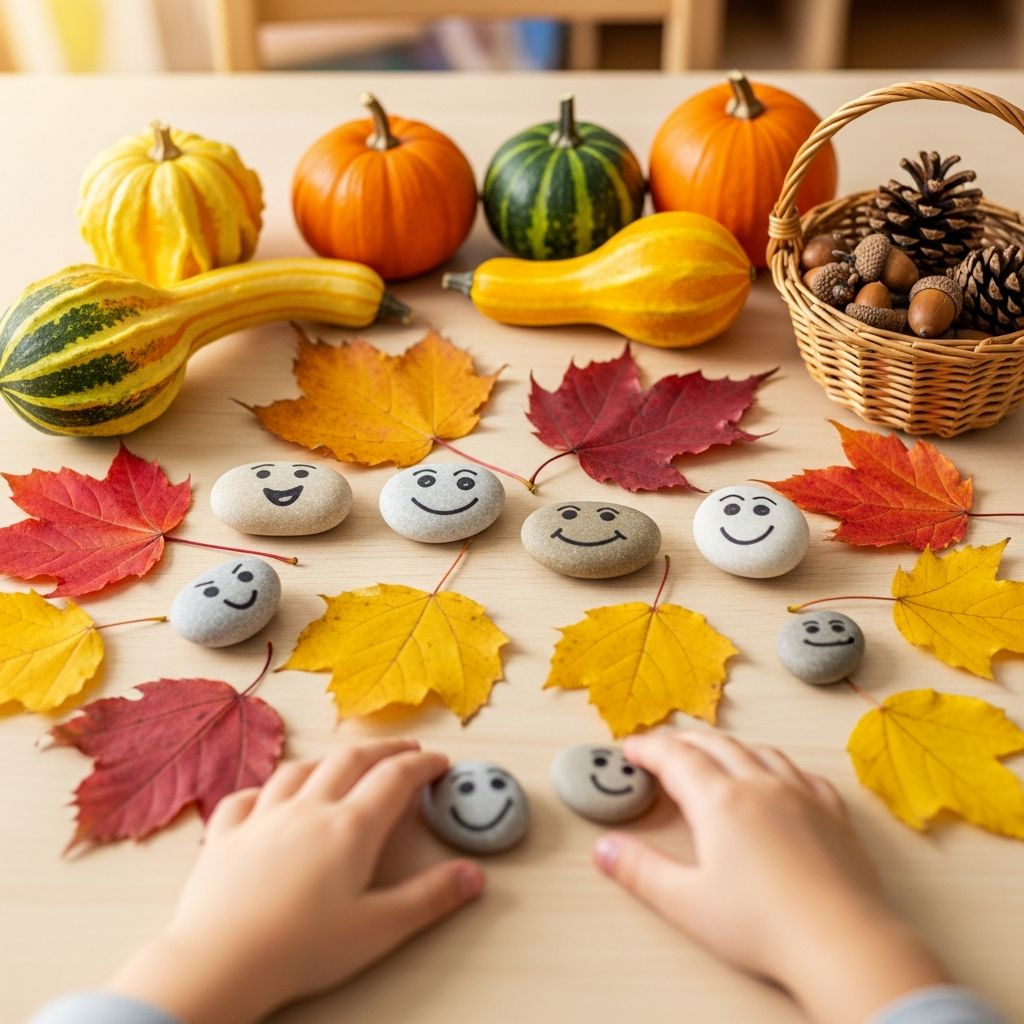
- Fall-themed manipulatives: mini pumpkins, leaves (real or silk), acorns, or apple counters.
- Music player for songs and movement games.
Circle Time: Story and Community Building
Begin with a warm, developmentally appropriate circle time that introduces the theme of getting to know new friends in a fall setting. Choose a story where a character starts school, meets a new friend, or feels nervous and then becomes more comfortable.
Circle Time Steps
- Greeting: Invite children to sit in a circle. Use a simple greeting such as “Good morning, friends” and model friendly eye contact and a smile.
- Name Introduction: Hold up your own name card and say your name slowly. Invite children to repeat it. Then pass a fall-shaped name card to each child and help them say, “My name is _____.”
- Read-Aloud: Introduce the story and briefly ask, “Have you ever felt nervous on the first day of school?” Keep the discussion short and positive before reading.
- Discussion: After reading, ask a few simple questions: “Who was the main character?” “How did they feel at the beginning?” “How did they feel at the end?” Connect these feelings to the children in your circle.
Getting-to-Know-You Songs and Games
Songs, chants, and simple movement games are a fun way to practice names and build group cohesion. Choose tunes children may already recognize and add fall-themed, name-based verses.
Name Game Ideas
- Pass the Pumpkin: Children sit in a circle and pass a small pumpkin while music plays. When the music stops, the child holding the pumpkin says their name and one favorite thing (e.g., “I like apples” or “I like jumping”).
- Leaf Name Toss: Toss a soft leaf beanbag from child to child, saying, “Hello, [child’s name]!” each time. Encourage peers to repeat each name.
- Movement Match: Each child chooses a simple motion (clap, stomp, spin). When you say their name, the group copies that child’s movement.
All About Me: Fall-Themed Art Project
An “All About Me” art activity gives children a concrete way to share who they are. For a fall twist, use leaf or apple shapes as the base for their self-portraits or interest collages.
Project Option 1: Leaf Self-Portrait
- Provide each child with a large paper leaf and a mirror (if available).
- Invite them to draw their face: eyes, nose, mouth, and hair using crayons or markers.
- Help them dictate a short sentence to write on the leaf, such as “My name is ___” or “I am ___ years old.”
- Display the leaves on a bulletin board labeled “Our Fall Friends” to reinforce names and community.
Project Option 2: Apple About Me Collage
- Cut large apple shapes from card stock.
- Offer magazines, colored paper, or simple picture cards showing toys, foods, and activities.
- Children glue pictures that show what they like on their apple and add their name at the top.
Learning Centers with a Social Focus
After group time, invite children to rotate through fall-themed centers. Each center includes a “getting to know you” element, encouraging children to talk, share, or compare information with peers.
Suggested Centers
| Center | Activity | Skills |
|---|---|---|
| Literacy | “Name leaf” matching: match name cards to pictures or photos of each child. | Name recognition, print awareness |
| Math | Sort and count fall manipulatives (leaves, acorns, tiny pumpkins) with a partner. | Sorting, counting, cooperative play |
| Art | Decorate a class “friendship tree” with handprint or thumbprint leaves labeled with names. | Fine motor, creativity, belonging |
| Sensory | Fall sensory bin with scoops and cups; invite children to share what they find. | Sensory exploration, language |
Social-Emotional Mini-Lessons
Use short, simple mini-lessons during transitions to highlight kindness, friendship, and emotional skills. These can be as brief as a two-minute reminder or a quick role-play scenario.
Mini-Lesson Ideas
- How to Join Play: Model a child asking, “Can I play too?” and demonstrate including others in block or dramatic play.
- Using Kind Words: Practice saying “please,” “thank you,” and “you can go first” using puppets or stuffed animals.
- Identifying Feelings: Show picture cards with children showing different emotions and ask, “How do you think they feel?” and “What could we do to help?”
Back-to-School Routines and Expectations
A “getting to know you” lesson naturally introduces classroom routines without overwhelming children. Embed expectations into each activity rather than giving a long list of rules.
Key Routines to Introduce
- How to sit on the rug (personal space, listening ears, quiet hands).
- How to choose and clean up a center using picture labels and simple songs.
- What to do during transitions: line up quietly, follow a visual cue, or freeze when the music stops.
Closing Circle and Reflection
End the lesson with a short closing circle to reflect on the day. This helps children transition to home while reinforcing the sense of community built throughout the lesson.
Closing Ideas
- Invite each child to share one thing they liked about the day or one new friend they remember by name.
- Sing a simple goodbye song mentioning the group (“Goodbye, friends” style songs work well).
- Review the class friendship tree or leaf self-portraits and say, “Look at all the friends in our class!”
Tips for Adapting the Lesson
Every classroom is different, so adjust this fall lesson plan to match your group size, schedule, and children’s needs. The key is to keep the focus on connection, not perfection.
Adaptation Suggestions
- For younger or less experienced groups: Shorten whole-group times, simplify art projects, and offer fewer centers.
- For older preschoolers: Add simple surveys (“Do you like apples or pumpkins?”) and make a class chart to discuss results.
- For mixed-age groups: Pair older children with younger peers for partner games to model language and social skills.
Sample “Getting to Know You” Question List
Use simple questions throughout the day to prompt conversation, build vocabulary, and help children discover what they have in common with classmates.
- What is your favorite color?
- Do you like apples, pumpkins, or both?
- What is your favorite thing to do outside in the fall?
- Do you have any pets at home?
- What is one thing that makes you feel happy?
SEO-Focused FAQ
What are good “getting to know you” activities for fall preschool?
Good fall preschool “getting to know you” activities include name games with pumpkins or leaves, a fall-themed read-aloud about making new friends, and simple art projects like leaf self-portraits or apple collages. These activities keep children engaged while they practice saying names, taking turns, and sharing personal preferences.
How do I create a fall preschool lesson plan for the first day?
To create a fall preschool lesson plan for the first day, start with clear objectives focused on relationships and routines. Plan a warm circle time, a short story, one or two name games, a simple fall-themed art activity, and time for free play in centers so children can explore the room at a relaxed pace.
How can I help shy preschoolers participate in “getting to know you” activities?
To support shy preschoolers, offer choices about how they participate and avoid putting them on the spot. Allow them to watch first, respond with gestures or pictures, and partner with a supportive peer or familiar adult until they are ready to speak in the group.
What materials do I need for a fall “All About Me” preschool project?
Basic materials for a fall “All About Me” preschool project include fall-colored construction paper, crayons or markers, glue sticks, scissors, and seasonal shapes like leaves or apples. Optional extras like stickers, photos from home, and simple picture cards can help children personalize their work.
How long should a fall back-to-school preschool lesson be?
A fall back-to-school preschool lesson can usually be completed within a morning block of 1.5 to 3 hours, depending on your program. Keep group times short, build in movement breaks, and use flexible transitions so the day feels calm, predictable, and welcoming for young children.