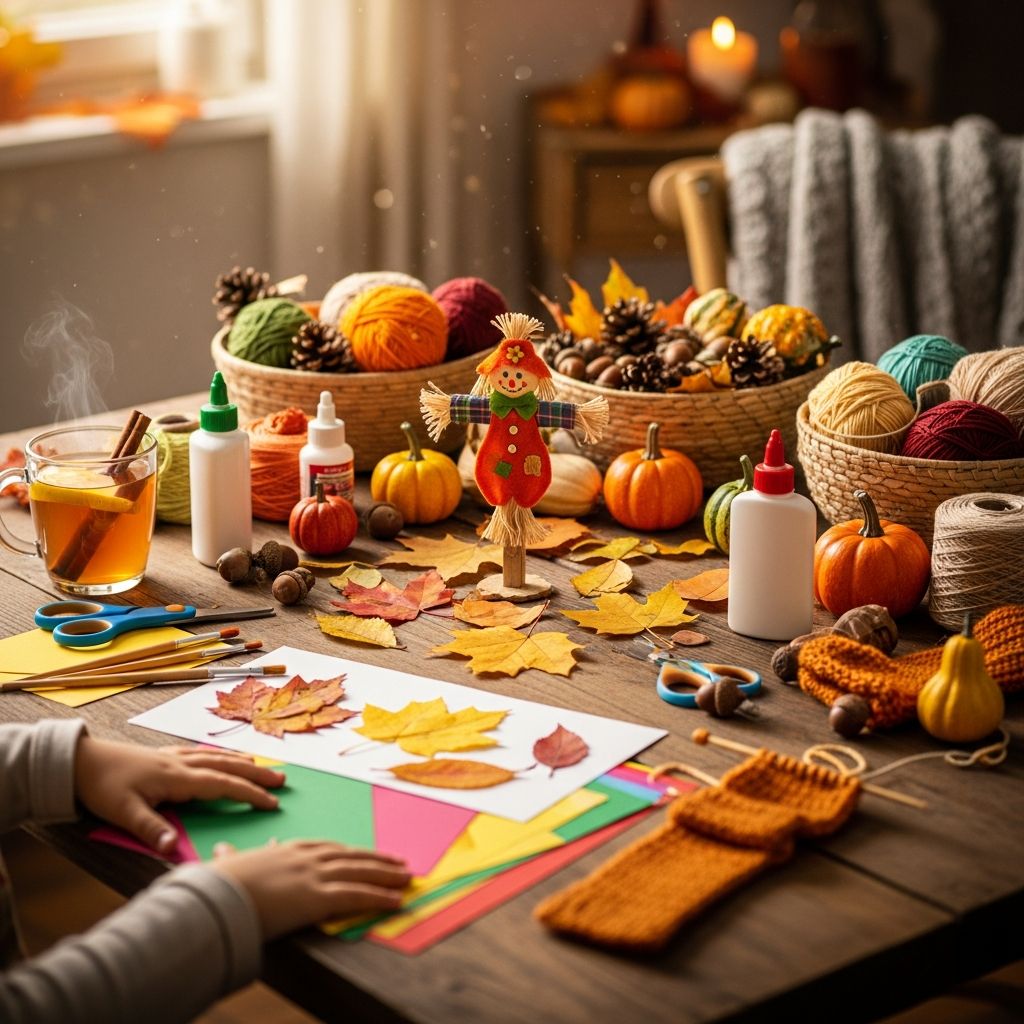
Autumn is the perfect season to slow down, pull out the craft box, and enjoy simple projects that kids can proudly display or gift to loved ones. As the weather cools and the leaves change color, creative activities help children connect with nature and build important skills like cutting, gluing, sorting, and storytelling.
Why Fall Is the Best Craft Season
Cooler days and earlier sunsets make indoor activities more appealing, while the outdoors offers endless free materials like leaves, pinecones, and twigs. Fall crafts create natural moments for kids to talk about colors, textures, and seasonal changes, all while working with their hands away from screens.
- Nature provides ready-made supplies such as leaves, seeds, and branches.
- Many projects can double as seasonal home decor, building kids’ confidence.
- Crafting together encourages family conversations and shared traditions.
Essential Fall Craft Supplies for Families
Before diving into specific projects, it helps to gather a flexible set of supplies that can be reused across many activities. Most of these are affordable and easy to store in a simple bin or basket.
| Category | Examples | Best For |
|---|---|---|
| Basic Tools | Child-safe scissors, glue sticks, liquid glue, tape | Cutting shapes, assembling collages, attaching natural items |
| Color Materials | Washable markers, crayons, colored pencils, watercolor paints | Decorating leaves, painting backgrounds, drawing details |
| Paper & Bases | Cardstock, construction paper, paper plates, cardboard scraps | Masks, wreaths, puppets, wall art |
| Nature Finds | Leaves, pinecones, acorns, seeds, twigs | Textured collages, printing, 3D decorations |
| Fun Extras | Googly eyes, yarn, felt scraps, buttons, ribbon | Adding personality to animals, garlands, and centerpieces |
Outdoor-Inspired Leaf Art Projects
Fallen leaves are the most iconic symbol of autumn, and they come in endless shapes and colors. Kids can turn a simple pile of leaves into a full afternoon of open-ended art that works well for mixed ages.
Leaf Character Collages
Instead of just pressing leaves, invite children to transform them into whimsical characters. This project uses simple drawing and gluing skills but opens the door to storytelling and creative play.
- Have kids choose a few favorite leaves of different shapes and sizes.
- Glue them onto cardstock as bodies, wings, skirts, or hair.
- Add drawn or glued-on faces, arms, hats, and accessories.
- Encourage children to name each character and invent a short story.
Simple Leaf Rubbings With a Twist
Leaf rubbings are a classic for a reason: they highlight veins and shapes that might be hard to see at first glance. Add a creative twist by turning the rubbing into a finished artwork rather than stopping at the outline.
- Place dry leaves under white paper and gently color over them with crayons.
- Outline the resulting shapes with marker to turn them into animals, balloons, or abstract patterns.
- Group several rubbings on one page to make a “forest” scene or a colorful poster.
Warm-Toned Paper Crafts for Little Hands
Paper crafts are ideal when working with toddlers and preschoolers because they are easy to prep and quick to clean up. Using fall colors such as red, orange, yellow, and brown instantly gives a seasonal feel, even if the shapes are simple.
Tear-and-Glue Autumn Trees
This project focuses on fine-motor skills by inviting kids to tear rather than cut. Tearing paper helps strengthen hand muscles and coordination while removing the frustration of precise cutting.
- Pre-draw a tree trunk on cardstock or cut one from brown paper and glue it down.
- Offer strips of red, orange, and yellow paper for kids to tear into small pieces.
- Have them glue the torn pieces around the top of the trunk to form a leafy canopy.
- Add a few pieces “falling” to the ground to show the change of season.
Paper Plate Harvest Faces
Paper plates make sturdy, low-cost bases for masks, faces, and seasonal characters. Children can experiment with symmetry, expression, and color while designing their own friendly fall figures.
- Give each child a paper plate and invite them to choose a character: scarecrow, pumpkin, woodland animal, or entirely imaginary creature.
- Use construction paper pieces, yarn, and markers to build features like eyes, noses, hats, and hair.
- Add a craft stick to the bottom so kids can hold the plate like a mask during pretend play.
Nature-Rich Centerpieces Kids Can Help Make
Kids enjoy seeing their work on the family table or mantle, and fall centerpieces offer a chance to blend creativity with responsibility. These projects encourage children to help decorate for gatherings, holidays, or ordinary weeknights.
Jar Lanterns With Autumn Glow
Glass or plastic jars become cozy lanterns when decorated with tissue paper and filled with flameless candles. This craft is especially charming on dark evenings and can be personalized for each child.
- Cover the outside of a clean jar with glue, then layer on tissue paper squares in fall shades.
- Press down any wrinkles gently; the slight texture actually looks especially warm when lit.
- Place a battery-operated tea light inside and display it on a windowsill or table.
Mini Forest in a Tray
A shallow tray or box can become a tiny “forest floor” filled with items collected on a nature walk. This project is as much about arranging and storytelling as it is about crafting.
- Line a tray with brown paper or fabric and invite kids to arrange leaves, pinecones, stones, and twigs.
- Add small toy animals, handmade paper mushrooms, or cardboard houses.
- Encourage children to rearrange the scene over several days, adding new finds from each walk.
Fun With Textures: Yarn, Felt, and Fabric
Adding soft materials like yarn and felt makes fall crafts extra cozy and sensory-rich. These supplies are ideal for slightly older kids who can handle wrapping, tying, and layering.
Yarn-Wrapped Leaf Shapes
Cardboard leaf silhouettes wrapped in yarn create ornaments that can hang in windows, on doorknobs, or from a simple branch display. The repetitive wrapping motion is calming for many children.
- Cut leaf shapes from thin cardboard and punch a small hole at the top for hanging.
- Offer yarn in warm colors and show kids how to wrap it around the cardboard, overlapping until the shape is mostly covered.
- Tie off the yarn and add a loop so each leaf can be hung as part of a seasonal garland.
Felt Forest Friends
Simple animal shapes cut from felt can become puppets, magnets, or ornaments. This activity encourages kids to notice woodland creatures that are especially active in autumn.
- Prepare basic shapes for owls, foxes, squirrels, or hedgehogs, or let older children design their own.
- Use fabric glue to attach smaller felt pieces for eyes, ears, and bellies.
- Finish by adding a magnet, craft stick, or ribbon loop depending on how you plan to use them.
Age-Appropriate Craft Ideas at a Glance
Different ages have different attention spans and skill levels. Use the table below to quickly match a project type to the approximate age group in your home or classroom.
| Age Group | Suggested Projects | Adult Involvement |
|---|---|---|
| Toddlers (1–3) | Tear-and-glue trees, finger-paint leaves, large paper plate faces | High: prep shapes, supervise closely, help with glue |
| Preschool (3–5) | Leaf rubbings, basic lantern jars, simple collages | Moderate: model techniques, manage mess, assist with cutting |
| Early Elementary (6–8) | Yarn-wrapped shapes, felt animals, detailed character collages | Medium-low: mostly independent with occasional guidance |
| Older Kids (9+) | Complex centerpieces, multi-step garlands, collaborative displays | Low: offer planning help and safety reminders |
Tips for Low-Stress Fall Craft Sessions
- Limit each session to one or two main projects, especially with younger children.
- Lay down newspaper or an old tablecloth so cleanup is quick.
- Offer simple choices (two or three colors, a small set of tools) instead of a full bin of every supply at once.
- Celebrate the process more than the finished product by commenting on effort, experimentation, and problem-solving.
Frequently Asked Questions About Fall Crafts for Kids
How can I keep fall crafts budget-friendly?
Start by using what you already own: scrap paper, grocery boxes, old magazines, and fabric snippets can all be transformed into seasonal projects. Pair these with free outdoor items like leaves and pinecones so you only need to purchase a few basics such as glue and crayons.
What if my child loses interest halfway through a project?
It is completely normal for kids to move on quickly, especially when they are tired or overwhelmed. Offer smaller, shorter activities and let them return to more detailed crafts in stages, turning a single project into several short, low-pressure sessions.
How do I handle kids at different skill levels?
Choose one theme—for example, “leaves” or “woodland animals”—and then adjust the difficulty. Younger children can tear paper or glue pre-cut shapes, while older kids draw details, add writing, or help design the layout of a shared display.
Are there mess-free fall crafts?
While some mess is part of the fun, many projects can be nearly mess-free when using stickers, pre-cut shapes, and glue sticks instead of paint. Dry materials such as yarn, leaves, and paper make it easier to craft at the kitchen table or even on a blanket outdoors.
How can we display finished fall crafts?
Consider creating a temporary “autumn gallery” on a wall, door, or bulletin board where kids can rotate their work throughout the season. Three-dimensional pieces, such as lanterns and centerpieces, can live on shelves or the dining table and become part of everyday family life.
Inviting Kids Into the Season Through Creativity
Fall crafts are more than just busywork; they are a way for children to notice the world changing around them and to feel that they have a role in decorating and celebrating the season. With a few basic supplies and a willingness to embrace imperfect, joyful creations, families can turn crisp days and colorful leaves into memories that last well beyond autumn.