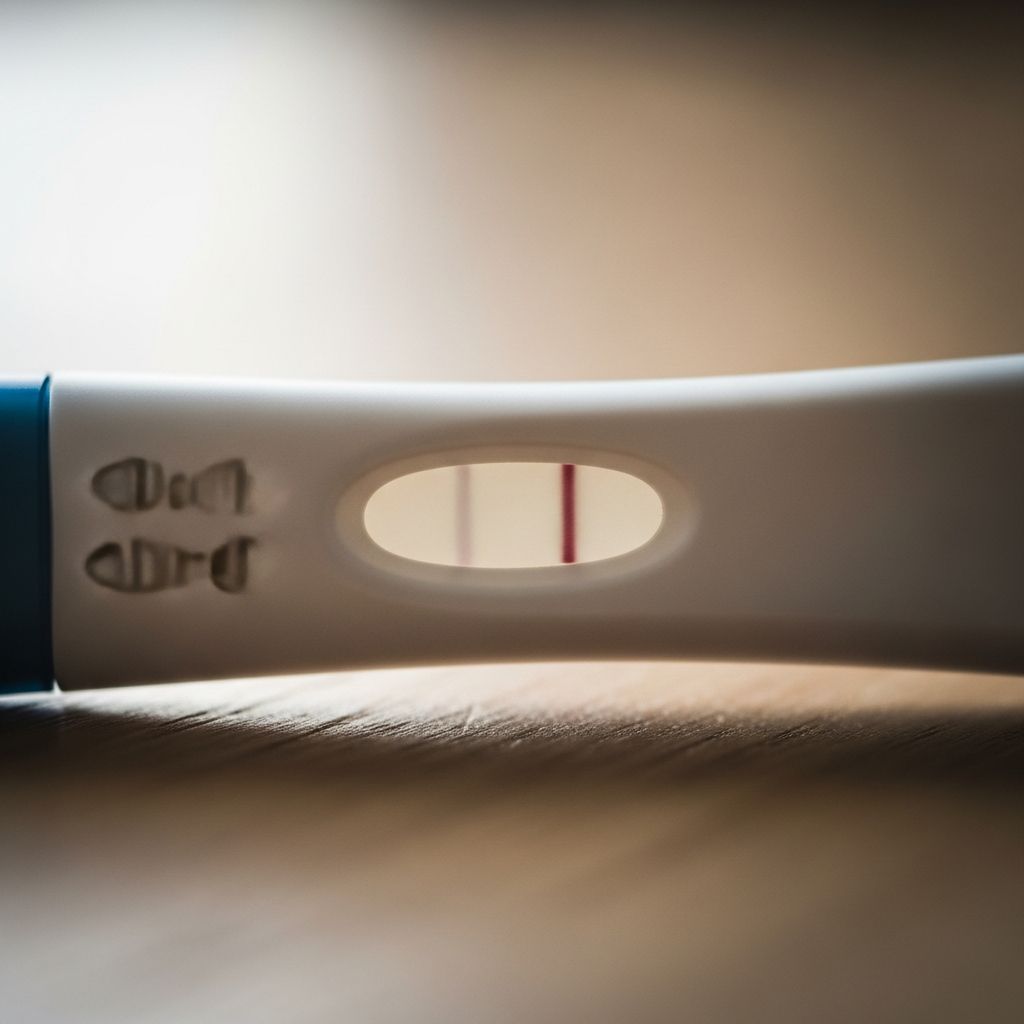
Seeing a faint line on a pregnancy test can spark a mix of excitement and uncertainty. These tests detect human chorionic gonadotropin (hCG), the hormone produced after implantation, but line intensity varies based on several factors. Understanding these helps clarify if you’re pregnant or if something else is at play.
How Pregnancy Tests Work and Detect hCG
At-home pregnancy tests use urine to identify hCG, which rises after a fertilized egg implants in the uterus. The test strip has a control line that always appears to confirm the test functions, and a test line that shows only if hCG is present. The test line’s darkness reflects hCG concentration: darker means higher levels, often later in early pregnancy.
hCG doubles roughly every 48-72 hours in a viable pregnancy, so early tests may show faint lines because levels are low. Tests vary in sensitivity; some detect as little as 10 mIU/mL, others need 25 mIU/mL or more.
Reasons for a Faint Positive Line
A faint but visible test line within the recommended reading time (usually 3-10 minutes) typically means pregnancy. Here’s why it might appear lighter:
- Early Testing: Before or just after a missed period, hCG is minimal, leading to faint results. Retest in 2-3 days for darker lines as levels rise.
- Diluted Urine: Excessive fluids lower hCG concentration. Morning urine is most concentrated, ideal for accuracy.
- Test Sensitivity and Brand Variations: Switching brands can cause perceived changes; stick to one for consistency.
- Low hCG Production: Some pregnancies start with slower hCG rises, still normal if doubling occurs.
| Factor | Impact on Line | Solution |
|---|---|---|
| Timing | Faint early on | Wait 48 hours, retest |
| Urine Concentration | Lighter with dilution | Use first morning urine |
| Test Brand | Inconsistent results | Use same brand |
| hCG Levels | Faint if low | Monitor over days |
Distinguishing Faint Positives from Evaporation Lines
Evaporation lines are colorless or grayish marks appearing after the reading window when urine dries. They aren’t true positives and result from test dye residue. Faint positives are colored (pink/blue, per test type) and appear within time limits.
- Check within 3-10 minutes.
- Color indicates hCG; no color is evaporation.
- Indent lines are blank spaces, not results.
If unsure, have someone else view it or use a digital test showing ‘Pregnant’ or ‘Not Pregnant’.
What If Lines Get Lighter Over Time?
Initially darker lines fading suggest dropping hCG, possibly indicating miscarriage or chemical pregnancy (loss before 5 weeks). Chemical pregnancies occur in up to 25% of pregnancies, often before full awareness.
Other causes: continued dilution or testing errors. Consistent conditions (same time, brand) with lightening warrants medical follow-up for blood hCG tests, which quantify levels precisely.
Steps to Ensure Accurate Pregnancy Test Results
Maximize reliability with these practices:
- Use first morning urine.
- Follow instructions exactly, including timing.
- Avoid excessive drinking beforehand.
- Read in proper light; set a timer.
- Retest if invalid (no control line).
Digitals reduce interpretation issues. For symptoms like bleeding post-positive, seek care immediately.
When to Consult a Healthcare Professional
Contact a doctor if:
- Lines lighten despite proper testing.
- Bleeding, cramping, or pain occurs after positive.
- No period but negative tests.
- History of miscarriage or fertility issues.
Blood tests confirm hCG quantitatively; ultrasounds verify viability around 6-7 weeks. Early prenatal care supports healthy outcomes.
Frequently Asked Questions About Faint Pregnancy Test Lines
Does any faint line mean pregnant?
Yes, if colored and within time window, it detects hCG, indicating pregnancy—even faint.
Why is my line lighter than yesterday?
Likely diluted urine or dropping hCG. Retest morning urine; consult doctor if persists.
Can medications cause faint lines?
Fertility drugs with hCG may; others rarely affect. Inform provider of meds.
How soon after faint positive should I retest?
48-72 hours, as hCG doubles then.
Is a faint line after miscarriage normal?
Residual hCG can linger days/weeks, causing faint positives. Blood tests track decline.
Advanced Testing Options for Clarity
Beyond strips, quantitative blood tests measure exact hCG, useful for monitoring. Early ultrasounds detect heartbeat from 5-6 weeks. Apps tracking cycles aid timing.
Understanding hCG dynamics empowers informed decisions. While home tests are 99% accurate when used correctly, professional input resolves doubts.
References
- Why Is My Pregnancy Test Line Getting Lighter? — Inito Blogs. 2023-06-15. https://blog.inito.com/pregnancy-test-line-getting-lighter/
- Why would my pregnancy test lines be getting lighter? — Proov. 2024-02-20. https://proovtest.com/blogs/blog/why-pregnancy-test-lines-get-lighter
- What’s The Meaning of A Faint Line On A Pregnancy Test? — Needed. 2023-11-10. https://thisisneeded.com/blogs/fertility/whats-the-meaning-of-a-faint-line-on-a-pregnancy-test
- Faint line on a pregnancy test — what does it mean? — Flo Health. 2025-01-05. https://flo.health/getting-pregnant/trying-to-conceive/pregnancy-tests/faint-line-pregnancy-test
- Meaning of Faint Line on a Pregnancy Test — Clearblue. 2024-09-12. https://www.clearblue.com/pregnancy-tests/faint-line
- Faint Line on a Pregnancy Test: What Does It Mean? — Natural Cycles. 2024-03-28. https://www.naturalcycles.com/cyclematters/faint-line-on-a-pregnancy-test
- Decoding Pregnancy Test Results: Evaporation, Indent, and Faint — Mira Care. 2023-12-01. https://shop.miracare.com/blogs/resources/evaporation-line-on-a-pregnancy-test-positive-or-negative