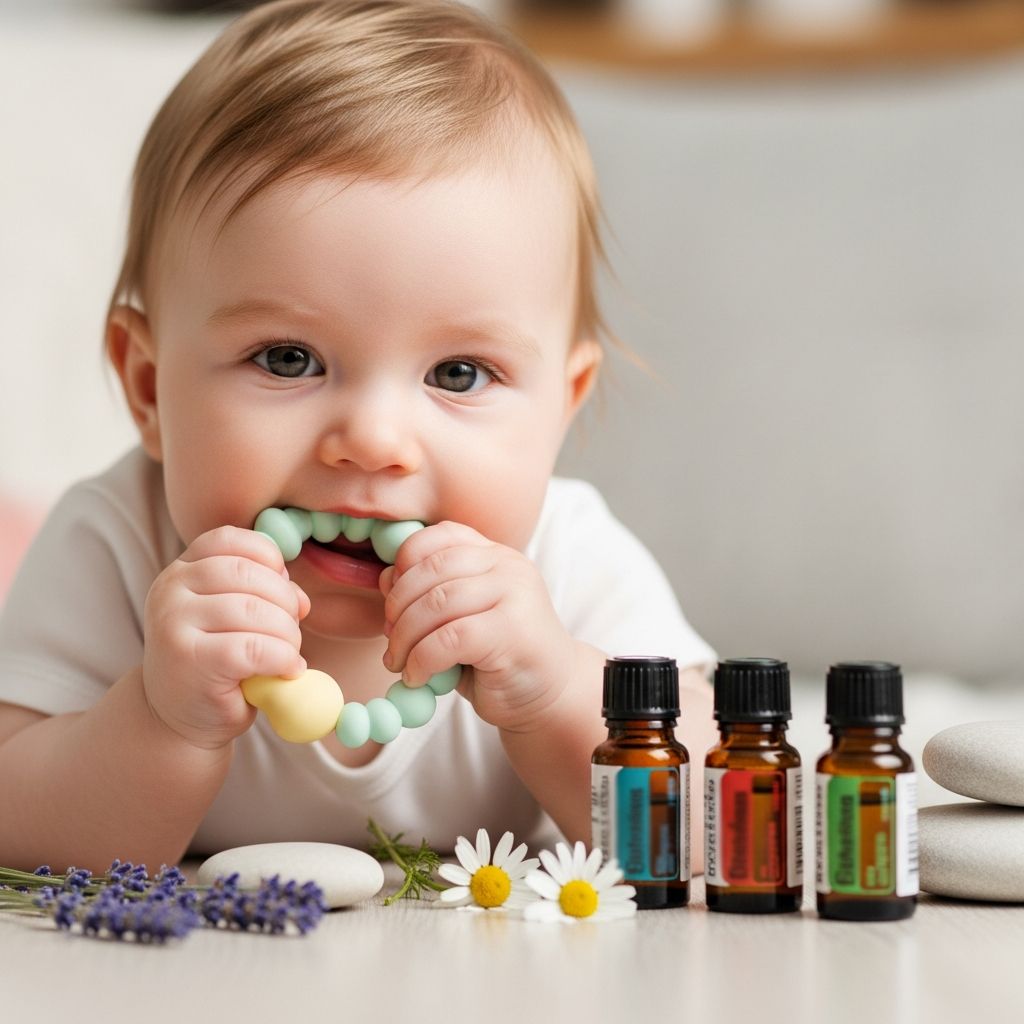
Understanding Teething and Natural Relief
Teething is a normal developmental stage for infants, but it can cause significant discomfort, irritability, and sleepless nights for both babies and parents. While over-the-counter remedies exist, many parents seek natural alternatives to soothe their little ones. Essential oils, when used correctly, can offer gentle relief for teething symptoms. However, safety is paramount, as babies have sensitive skin and developing immune systems .
Top Essential Oils for Teething
Not all essential oils are safe for infants. The following oils are widely recognized for their gentle properties and potential to ease teething discomfort:
- Chamomile Oil: Known for its calming and anti-inflammatory effects, chamomile oil is considered one of the safest options for babies. It can help reduce gum swelling and promote relaxation .
- Lavender Oil: Lavender is renowned for its soothing aroma and mild pain-relieving properties. When properly diluted, it can help calm a fussy teething baby and support better sleep .
- Copaiba Oil: Copaiba oil has anti-inflammatory and analgesic properties, making it a potential choice for pain relief. However, it should be used with caution and only after consulting a healthcare provider, especially for infants under six months .
- Clove Oil: Clove oil is a potent analgesic, but it must be highly diluted and used sparingly. It is generally not recommended for babies under two years old due to its strength .
How to Use Essential Oils Safely
Essential oils are highly concentrated and should never be applied directly to a baby’s skin or ingested. Always follow these guidelines:
- Dilute essential oils with a carrier oil such as coconut or almond oil. A typical dilution for babies is 1 drop of essential oil per 2 ounces of carrier oil .
- Perform a patch test on a small area of skin before full application to check for allergic reactions.
- Apply the diluted oil to the jawline or cheeks, not directly on the gums, to minimize risk of ingestion.
- Never use essential oils on infants under six months old without consulting a pediatrician .
- Avoid diffusing essential oils in rooms where babies sleep, as inhalation can be risky for young children .
Alternative Teething Relief Methods
While essential oils can be helpful, there are other safe and effective ways to comfort a teething baby:
- Use a clean, damp washcloth chilled in the refrigerator for gentle gum massage .
- Offer a teething ring or toy that has been cooled (not frozen) to numb sore gums.
- Provide cold foods such as chilled fruit (for older infants) to soothe gums.
- Apply gentle pressure with a clean finger or wet gauze to the gums for two minutes at a time .
Essential Oil Teething Blend Recipe
For parents who prefer a homemade remedy, here is a simple and safe teething blend:
- 2 tablespoons virgin coconut oil (carrier oil)
- 1 drop chamomile essential oil
- 1 drop lavender essential oil
Mix the oils thoroughly and store in a small glass jar. Apply a small amount to the baby’s jawline or cheeks as needed, ensuring the oil is well-diluted and patch-tested first .
Precautions and When to Seek Help
Always consult a pediatrician before introducing essential oils to your baby’s routine, especially if your child has allergies, skin sensitivities, or underlying health conditions. Discontinue use immediately if you notice any adverse reactions such as redness, rash, or difficulty breathing .
FAQs About Essential Oils for Teething
- Are essential oils safe for babies? When properly diluted and used with caution, certain essential oils like chamomile and lavender are considered safe for babies over six months old. Always consult a healthcare provider first .
- Can I use clove oil for my baby’s teething pain? Clove oil is very potent and should only be used for children over two years old, and always in a highly diluted form. It is not recommended for infants .
- What should I do if my baby has a reaction to essential oils? Stop using the oil immediately and consult a pediatrician. Watch for signs of allergic reactions or respiratory distress .
- Can I diffuse essential oils for my baby? Diffusing essential oils in a baby’s room is not recommended due to the risk of respiratory irritation. Topical application with proper dilution is safer .
- Are there safer alternatives to essential oils for teething? Yes, chilled teething rings, gentle gum massage, and cold foods are safe and effective alternatives for teething relief .
Summary Table: Essential Oils for Teething
| Oil | Benefits | Age Recommendation | Precautions |
|---|---|---|---|
| Chamomile | Calming, anti-inflammatory | 6 months+ | Dilute, patch test, avoid ingestion |
| Lavender | Soothing, mild pain relief | 6 months+ | Dilute, patch test, avoid ingestion |
| Copaiba | Anti-inflammatory, pain relief | 6 months+, consult doctor | Dilute, avoid ingestion, consult pediatrician |
| Clove | Analgesic, antiseptic | 2 years+, highly diluted | Not for infants, avoid ingestion |
Using essential oils for teething can be a gentle way to comfort your baby, but safety and proper usage are essential. Always prioritize your baby’s health and consult a healthcare professional before starting any new remedy .