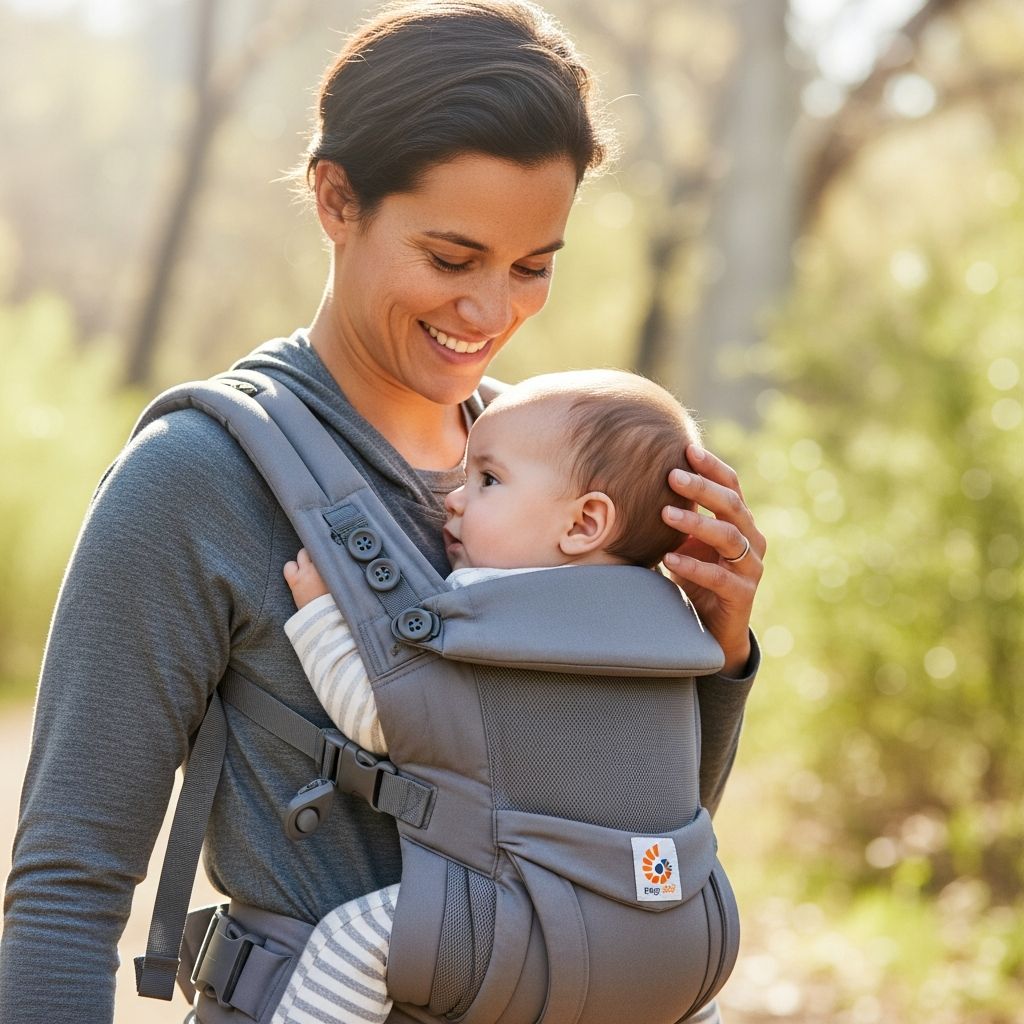
Babywearing can turn long days with a newborn or toddler into more manageable, more connected moments, and structured carriers like the Ergo 360 exist to make that possible without destroying your back.
Why Babywearing Changes Daily Life
Carrying a baby in your arms feels sweet for a few minutes, but over a full day it becomes physically exhausting and limits what you can do with your hands. A supportive baby carrier shares that load between your shoulders and hips, allowing you to move more freely while staying close to your child.
Modern soft-structured carriers, including models similar to the Ergo 360, focus on ergonomic positioning: the baby’s knees sit higher than the hips in a natural “M” shape while your spine is supported by wide straps and a firm waistband. This design reduces pressure points and makes longer walks, chores, and outings more realistic with a baby in tow.
Core Benefits of a Structured Baby Carrier
A carrier like the Ergo 360 is built for real life: school runs, grocery lines, airport security, and those fussy hours before bedtime. The goal is to keep your baby protected and supported while your body remains as comfortable as possible.
- Hands-free freedom: Cook, work on a laptop at the kitchen counter, or hold an older sibling’s hand without juggling a baby in your arms.
- Closer bonding: Your baby hears your heartbeat, feels your body warmth, and experiences your movements, which can be soothing and reassuring.
- On-the-go feeding options: Many parents find it possible to nurse or bottle-feed discreetly in a carrier once they practice the positioning and strap adjustments.
- Support for naps: The snug fit and gentle motion often help babies fall asleep while you keep moving, instead of being stuck in a chair for every nap.
- Less gear to drag around: When a carrier fits well and feels easy to use, you may leave the stroller at home for quick errands and crowded spaces.
Key Features to Look For in Carriers Like the Ergo 360
Different structured carriers share a lot of similar design ideas, but small details can dramatically change how they feel during daily wear. Before buying or registering for a carrier, pay attention to how the features line up with your body and your routine.
Comfort for the Wearer
- Wide, padded shoulder straps: Thicker straps spread the weight of your baby across a larger area so your shoulders don’t ache quickly.
- Lumbar or waist support: A firm waistband that wraps low around your hips can relieve stress from your lower back, especially in the postpartum period.
- Adjustable fit: Multiple points of adjustment allow different caregivers to use the same carrier and help you refine the fit over time.
- Breathable fabrics: Cotton and mesh options matter if you live in a hot climate or tend to overheat easily while wearing your baby.
Support and Safety for Baby
- Ergonomic seat: Baby’s knees should be higher than the hips with thighs supported from knee to knee, rather than dangling straight down.
- Head and neck support: Newborns and younger infants need a secure panel or adjustable headrest until they develop strong neck control.
- Secure buckles and sturdy stitching: Quality hardware and reinforced seams add peace of mind with everyday wear.
- Multiple carry positions: Inward-facing for newborns, outward-facing for curious older babies, plus hip and back options for flexibility as your child grows.
Everyday Convenience Details
- Detachable pouch or pocket: Perfect for stashing keys, a phone, or a pacifier so you can skip a purse on short outings.
- Integrated hood or panel: Helpful for shade, wind, light rain, or privacy while feeding.
- Machine-washable materials: Babies spit up and blow out diapers; being able to toss the carrier into the wash is a non-negotiable feature for many families.
How the Ergo-Style Multi-Position Carrier Fits into Your Day
Instead of thinking of the carrier as “baby gear,” consider it clothing you wear often, like a favorite jacket or pair of shoes. The more comfortably it fits, the more naturally you reach for it.
Below is an example of how a typical day might look if you build babywearing into your routine with a carrier similar to the Ergo 360.
| Time of Day | Activity | Preferred Carry Position | Goal |
|---|---|---|---|
| Early morning | Preparing breakfast and coffee while baby is fussy | Front inward-facing | Calm baby and keep hands free to cook safely |
| Late morning | Short walk around the block or park | Front inward-facing or outward-facing (for older baby) | Fresh air for both of you and gentle movement for naps |
| Afternoon | Quick grocery trip or errands | Front inward-facing | Navigate aisles and checkout without hauling a stroller |
| Evening | Arsenic hour fussiness before bedtime | Front inward-facing or back carry | Provide closeness, gentle bouncing, and movement |
Step-by-Step: Getting a Safe and Comfortable Fit
The first few times you put on a structured carrier, it may feel like wrestling with straps, clips, and a wiggly baby. With practice and a consistent routine, the process becomes much smoother.
1. Set Up the Waistband
- Position the waistband low and snug across your hips or slightly above, not around your natural waist where it can strain your lower back.
- Fasten the buckle or Velcro, then gently tighten until it feels firm but not restrictive; it should not slide down when you move.
- Check that the carrier panel hangs centered in front of your body without twisting.
2. Place Baby Safely in the Seat
- Hold your baby against your chest in the desired position (usually facing inward for younger babies).
- Guide baby’s legs gently into the carrier so that the fabric supports the thighs from knee to knee.
- Ensure the seat creates a natural, wide-legged squat with baby’s knees slightly higher than the hips.
3. Adjust Shoulder Straps and Back Buckle
- Pull the carrier panel up over baby’s back with one hand while you slip one arm through a shoulder strap.
- Slip the other arm through the second strap, keeping one hand on baby until everything is secure.
- Locate and clip the chest or back buckle behind your shoulders; then tighten the straps evenly to bring baby close to your body.
4. Final Safety Checks
- Baby’s face should be visible and clear of fabric, with the chin off the chest and airways unobstructed.
- When you look down, you should be able to kiss the top of baby’s head without straining.
- The carrier should feel snug, not loose; if baby slumps or shifts significantly when you move, tighten the straps.
Pros and Cons of Using an Ergo-Style Carrier
No baby product is perfect, and carriers are no exception. Understanding both the upsides and limitations helps you use your carrier more effectively and decide whether you might need a second style (like a wrap or ring sling) for certain situations.
| Advantages | Limitations |
|---|---|
|
|
Practical Tips for Everyday Use
Once you are confident with basic safety and fit, the carrier becomes a practical tool you use almost without thinking. A few extra habits will help you get the most out of a design like the Ergo 360.
- Start with short wear times: Build up gradually so your shoulders, back, and core adjust to the new posture.
- Dress in layers: Remember that the carrier and your body heat count as an extra layer for your baby.
- Keep essentials accessible: Use pockets, a small belt bag, or the detachable pouch if your carrier includes one.
- Re-check fit after naps: Babies can slump a little after falling asleep, so gently re-tighten straps if needed.
- Practice transitions at home: Taking baby out of the carrier and laying them down takes practice; experimenting when you are not rushed makes it easier later.
Safety and Comfort Guidelines for Parents and Baby
Babywearing is safest when you routinely check a few key points: airway, posture, and support. Keeping these basics in mind allows you to enjoy the closeness without constantly worrying about something going wrong.
- Airway: Baby’s nose and mouth must stay clear; keep fabrics away from the face and check frequently.
- Posture: Avoid a curled “C” shape where the chin presses onto the chest, especially for younger infants.
- Temperature: Regularly feel baby’s neck and belly to ensure they are warm but not sweaty or overheated.
- Movement: Be mindful of your activities; avoid vigorous bending at the waist, high-impact exercise, or cooking near hot surfaces with baby worn in front.
- Age-appropriate positions: Outward-facing and back carries should only be used once your baby has strong, consistent head and neck control.
FAQs About Using an Ergo 360-Style Baby Carrier
How long can I wear my baby at a time?
There is no single time limit that fits every family, but most parents find shorter, frequent sessions more comfortable than a single long stretch. Pay attention to your own body as well as your baby’s cues; if either of you feels uncomfortable, take a break, stretch, and adjust the straps before continuing.
When can my baby face outward?
Outward-facing positions are usually recommended for babies who have strong, steady head and neck control and can sit in the carrier without slumping. Many caregivers begin experimenting with this around the middle of the first year, but readiness depends on the child, not just age.
Is a structured carrier safe for baby’s hips?
Carriers with a wide, supportive seat that allows the legs to form an “M” shape are designed to encourage healthy hip alignment. Always follow the height, weight, and position guidelines in your carrier’s manual and make sure baby’s thighs, not just the crotch, are supported.
Can I breastfeed in the carrier?
Many parents successfully nurse in structured carriers by slightly loosening the straps and lowering the baby to breast level while maintaining support. It takes practice and patience, so it helps to try it first at home, in comfortable clothes, and without time pressure.
Do I still need a stroller if I use a carrier?
A lot of families like having both, using the carrier for quick trips, stairs, and crowded places and relying on the stroller for longer outings or when they want extra storage. Your personal lifestyle, local terrain, and how your body feels after birth will influence the balance between the two.
Final Thoughts: Making Babywearing Work for You
The right structured carrier, whether it is an Ergo 360 or a similar multi-position design, should feel like an everyday tool rather than a piece of specialty equipment you only use on rare occasions. When it fits well and aligns with your routine, it can ease the transition into parenthood by keeping your baby close while you stay mobile and capable.
Try to think of babywearing as something flexible and customizable: adjust the straps, swap positions, and experiment with different clothing layers until you find a setup that feels good for both of you. When used consistently and safely, a good carrier can transform everything from grocery shopping to evening fussiness into moments of connection instead of stress.