Enzymes serve as the body’s microscopic workhorses, facilitating trillions of chemical reactions daily to sustain life. These specialized proteins lower the energy barriers of reactions, enabling processes like breaking down food, generating energy, and repairing cells to occur at speeds compatible with human physiology.
The Fundamental Role of Enzymes in Cellular Function
At the core of every cell, enzymes orchestrate biochemical transformations that keep organisms alive. Without them, reactions vital for survival—such as converting nutrients into usable energy—would proceed too slowly to support life. Each cell houses thousands of these catalysts, each tailored to specific tasks, from unwinding DNA strands during cell division to dismantling toxins in the liver.
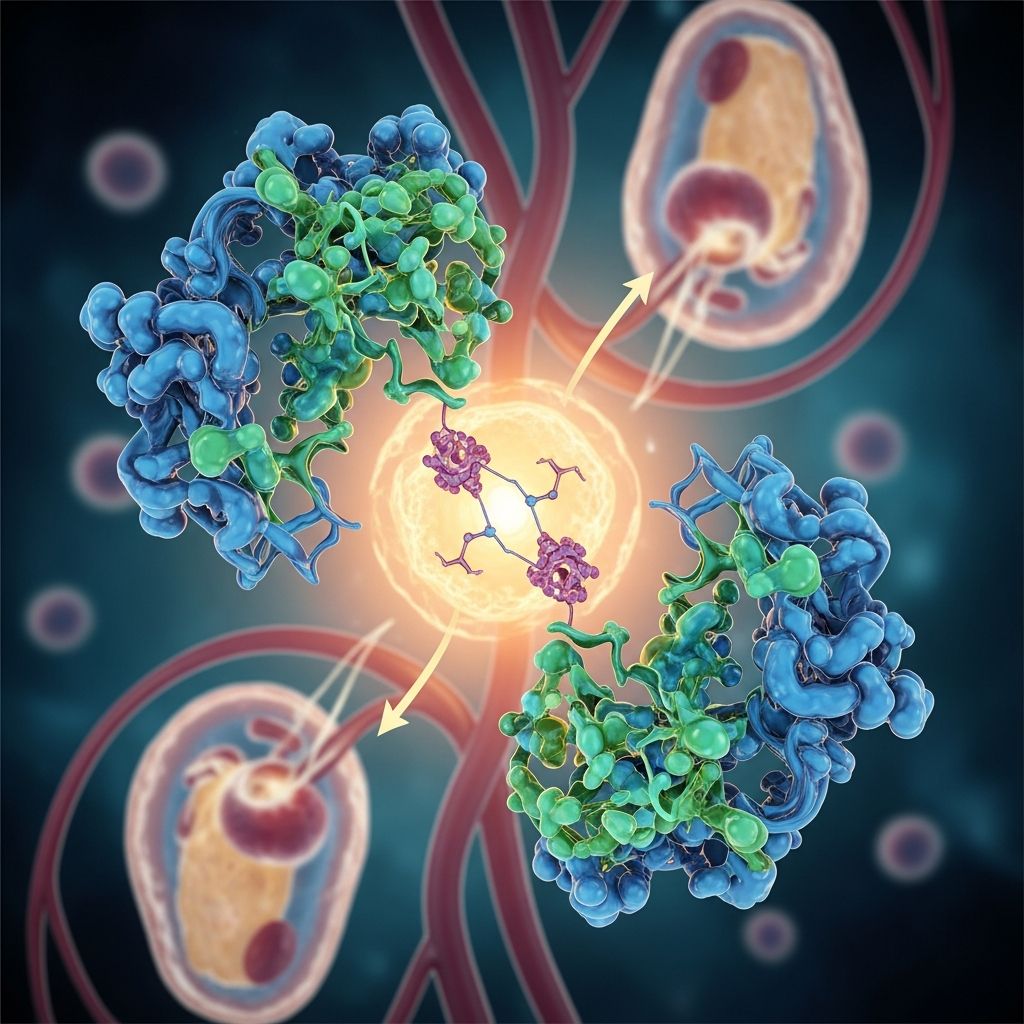
Enzymes achieve this by binding to substrate molecules at their active sites, forming temporary enzyme-substrate complexes that stabilize transition states and accelerate reactions. Crucially, enzymes emerge unchanged, ready to catalyze again, making them remarkably efficient.
How Enzymes Accelerate Biochemical Reactions
Imagine a chemical reaction as a mountain pass: the activation energy is the peak that reactants must climb. Enzymes provide a tunnel through this barrier, drastically reducing the energy needed and speeding up the process. This “lock-and-key” mechanism, where the enzyme’s active site perfectly matches the substrate, ensures precision and prevents wasteful side reactions.
Optimal performance depends on environmental factors. Most enzymes thrive at body temperature (around 37°C) and specific pH levels—stomach enzymes favor acidity (pH 2), while intestinal ones prefer alkalinity (pH 8). Deviations, like fever or acidosis, can impair function, highlighting their sensitivity.
Enzymes in Digestion: Breaking Down Nutrients
Digestion relies heavily on enzymes to convert complex foods into absorbable units. In the mouth, salivary amylase initiates starch breakdown into sugars. Stomach pepsin tackles proteins, while pancreatic enzymes like trypsin, lipase, and additional amylase finalize the job in the small intestine.
| Enzyme | Location | Function |
|---|---|---|
| Amylase | Mouth & Pancreas | Starches to sugars |
| Pepsin | Stomach | Proteins to peptides |
| Trypsin | Small Intestine | Peptides to amino acids |
| Lipase | Pancreas/Small Intestine | Fats to fatty acids & glycerol |
| Lactase | Small Intestine | Lactose to glucose & galactose |
Deficiencies, such as lactase insufficiency, lead to lactose intolerance, causing bloating and discomfort as undigested sugars ferment in the gut.
Metabolic Mastery: Enzymes in Energy Production
Metabolism hinges on enzymes to extract energy from glucose and fats. In glycolysis, enzymes like glucokinase phosphorylate glucose for processing. The liver’s glucose-6-phosphatase reverses this during fasting, releasing glucose into the blood.
Glycogen breakdown in muscles involves phosphorylase kinase and glycogen phosphorylase, fueling contractions. Gluconeogenesis, the synthesis of new glucose, employs multiple enzymes to build sugars from non-carbohydrate precursors, preventing hypoglycemia.
Enzymes in Genetic Processes and Cell Division
DNA replication demands precision enzymes. Helicase unwinds the double helix, while DNA polymerase assembles new strands from nucleotides. These ensure genetic fidelity during cell growth and repair.
Nucleases like deoxyribonuclease and ribonuclease degrade damaged DNA/RNA, maintaining genomic integrity. Disruptions here contribute to mutations and diseases like cancer.
Liver Enzymes: Detoxification and Beyond
The liver deploys cytochrome P450 enzymes and others to neutralize toxins, drugs, and alcohol. Aspartate aminotransaminase (AST) and alanine aminotransaminase (ALT) convert amino acids into energy or urea, with elevated blood levels signaling liver damage.
These enzymes also synthesize blood proteins and regulate cholesterol, underscoring the liver’s enzymatic versatility.
Muscle and Nerve Function Powered by Enzymes
Muscle energy comes from creatine kinase (CK), which regenerates ATP via phosphocreatine. Contraction relies on myosin ATPase hydrolyzing ATP.
In nerves, acetylcholinesterase terminates signals by breaking down acetylcholine, preventing overstimulation. Deficiencies link to myasthenia gravis.
Classifying Enzymes by Function
Enzymes fall into six classes based on reaction types:
- Oxidoreductases: Transfer electrons (e.g., dehydrogenases).
- Transferases: Move functional groups (e.g., kinases).
- Hydrolases: Cleave with water (e.g., proteases, lipases).
- Lyases: Break bonds without water.
- Ligases: Join molecules using ATP.
- Isomerases: Rearrange isomers.
This taxonomy aids in understanding their diverse roles.
Cofactors and Coenzymes: Enzymatic Partners
Many enzymes require non-protein helpers. Inorganic cofactors like zinc enhance activity, while organic coenzymes—often B-vitamins—participate directly. For instance, B-vitamins support energy production and neurotransmitter synthesis.
Deficiencies in these lead to conditions like beriberi (thiamine) or pellagra (niacin), impairing enzymatic function.
Enzyme Deficiencies and Health Implications
Genetic mutations or nutrient lacks cause disorders. Phenylketonuria (PKU) from phenylalanine hydroxylase deficiency leads to toxic buildup, treatable by diet. Cystic fibrosis impairs pancreatic enzymes, hindering digestion.
Lactase non-persistence affects 65% globally, mostly adults. Monitoring blood enzymes like CK or AST diagnoses muscle/liver issues.
Therapeutic Uses and Supplements
Lab-made enzymes treat conditions: thrombolytics dissolve clots, DNase clears lung mucus in cystic fibrosis. Supplements aid digestion in enzyme-deficient individuals, though evidence varies.
Enzyme replacement therapy (ERT) manages lysosomal storage diseases.
Frequently Asked Questions About Enzymes
What happens if enzymes don’t work properly?
Impaired enzymes slow reactions, causing toxic accumulations, energy deficits, or cell damage, leading to metabolic disorders or organ failure.
Can diet influence enzyme activity?
Yes, B-vitamins and minerals as coenzymes are vital; deficiencies impair function, while balanced nutrition supports production.
Are enzyme supplements safe for children?
Under medical guidance, yes for diagnosed deficiencies; consult pediatricians to avoid interactions.
How do doctors test enzyme levels?
Blood tests measure serum enzymes like ALT/AST for liver health or CK for muscle injury.
Do enzymes play a role in aging?
Declining enzyme efficiency contributes to metabolic slowdowns; antioxidants may protect them.
References
- Enzymes: Function, definition, and examples — Medical News Today. 2023-08-15. https://www.medicalnewstoday.com/articles/319704
- Physiol Text Ch 3 Enzymes — San Diego Miramar College. 2023-05-01. https://sdmiramar.edu/sites/default/files/2023-05/Physiol%20Text%20Ch%203%20Enzymes.pdf
- Enzymes — Physiopedia. 2024-01-10. https://www.physio-pedia.com/Enzymes
- Enzymes — Nemours KidsHealth. 2023-11-20. https://kidshealth.org/en/parents/enzymes.html
- Biochemistry, Proteins Enzymes — NCBI Bookshelf / StatPearls. 2023-07-04. https://www.ncbi.nlm.nih.gov/books/NBK554481/