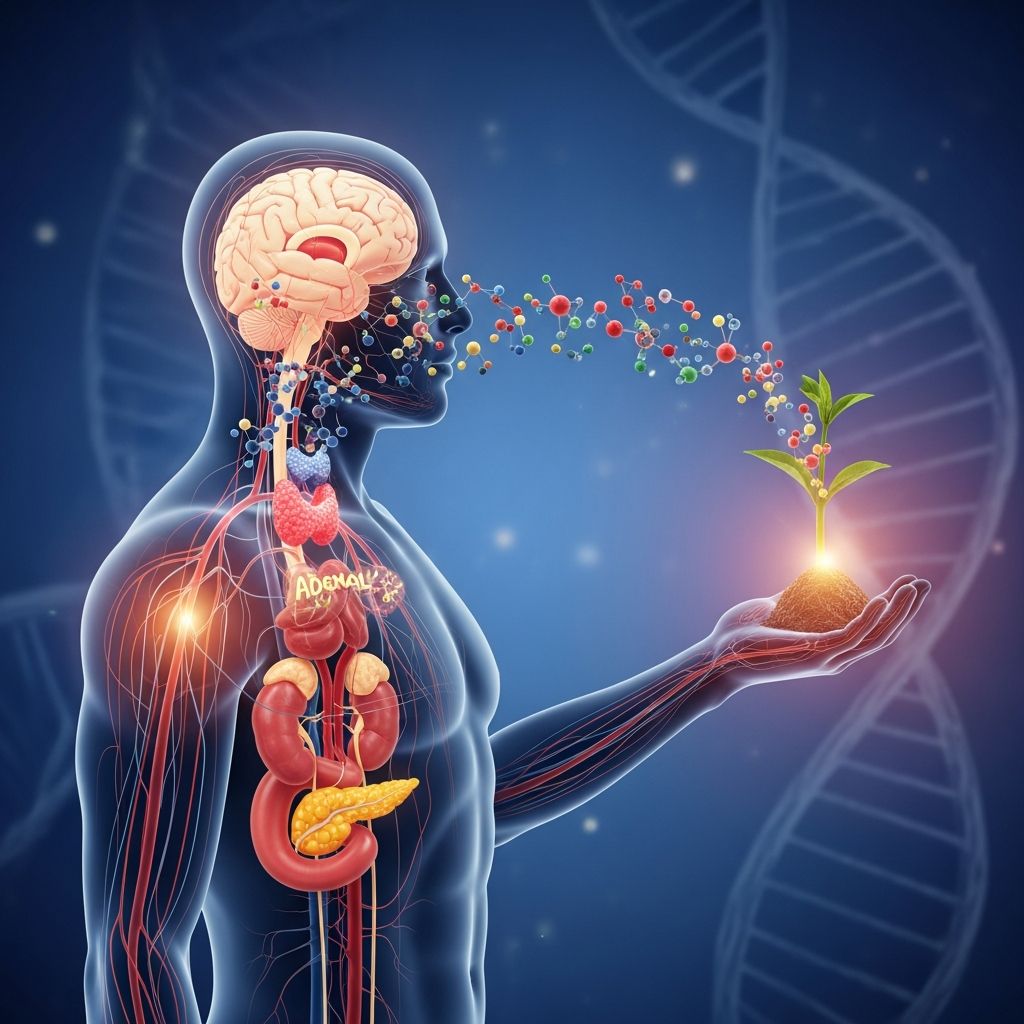
Your body has a secret communication network that works day and night without you noticing. This network is called the endocrine system, and it uses special chemical messengers called hormones to help you grow, stay healthy, and react to the world around you.
What Is the Endocrine System?
The endocrine system is a group of glands and hormone-making cells found all over your body. These glands send hormones into your bloodstream, and the blood carries them to organs and tissues that need instructions.
Think of it like this:
- Glands = tiny hormone factories
- Hormones = messages that tell body parts what to do and when to do it
- Bloodstream = delivery service for the messages
Because hormones travel through the blood, they can affect many parts of the body at once and help keep everything working together in balance, a state called homeostasis.
Hormones: Your Body’s Chemical Messages
Hormones are powerful, even though you cannot see or feel them directly. They control many important jobs, including:
- Growth – how tall you get and how your bones and muscles develop
- Metabolism – how your body uses food for energy
- Puberty – changes that turn a child’s body into an adult body
- Stress response – how your body reacts to fear, danger, or big emotions
- Blood sugar – how much sugar is in your blood at any time
- Sleep-wake cycles – when you feel sleepy or wide awake
- Body temperature and water balance – keeping you from getting too hot, too cold, or too dried out
Even a tiny change in hormone levels can make a big difference, which is why the endocrine system has careful “feedback” controls that help keep hormone levels just right.
Meet the Major Endocrine Glands
Each gland has its own special job, but they also work together as a team. Here are some of the main members of the endocrine system team.
| Gland | Where It Is | Main Roles |
|---|---|---|
| Hypothalamus | Deep in the brain | Links the brain and endocrine system; helps control temperature, hunger, thirst, and sleep |
| Pituitary gland | Base of the brain | “Master” gland; sends hormones that control growth and many other glands |
| Pineal gland | Middle of the brain | Makes melatonin, which helps set your daily sleep-wake rhythm |
| Thyroid | Front of the neck | Controls how fast your body uses energy and supports brain and body growth |
| Parathyroid glands | Four tiny glands behind the thyroid | Regulate calcium and phosphorus levels that keep bones and teeth strong |
| Thymus | Upper chest, behind the breastbone | Helps the immune system develop infection-fighting T cells during childhood |
| Adrenal glands | On top of each kidney | Produce stress hormones and help control blood pressure, salt balance, and part of puberty |
| Pancreas | Behind the stomach | Makes insulin and other hormones that control blood sugar and help digestion |
| Ovaries (in girls) | Lower belly | Make estrogen and progesterone, which guide puberty and the menstrual cycle |
| Testes (in boys) | Scrotum | Make testosterone, which drives male puberty and helps build muscle and bone |
How Glands Talk to Each Other
The endocrine system is not a group of glands working alone; it is more like a chain of command.
- The brain notices what is happening inside and outside your body.
- The hypothalamus sends tiny “releasing” hormones to the pituitary gland.
- The pituitary gland then sends hormones to other glands, telling them to speed up or slow down.
- Target glands (like the thyroid or adrenal glands) release their own hormones into the blood.
- When the job is done, hormone levels rise and signal the brain and pituitary to ease off, a control loop called negative feedback.
This feedback system helps prevent hormone levels from going too high or too low for long.
Why the Endocrine System Matters for Kids
Because kids are still growing and changing, the endocrine system is especially important. Its hormones affect:
- Height and body shape – growth hormone from the pituitary and thyroid hormones help bones and muscles lengthen and strengthen.
- Brain development – thyroid hormone is crucial for normal brain and nervous system development in early life.
- Bone strength – parathyroid hormone and vitamin D help move calcium into bones.
- Puberty timing – hormones from the brain, pituitary, ovaries, and testes start and guide puberty.
- Energy levels – thyroid and adrenal hormones help decide how awake, active, or tired you feel.
How Hormones Help You Handle Stress
Have you ever felt your heart race when you are scared or excited? Your endocrine system plays a big role in that feeling.
- The adrenal glands release hormones like adrenaline (epinephrine) and cortisol when your body thinks there is a challenge or danger.
- These hormones can:
- make your heart beat faster
- send more blood to your muscles
- raise your blood sugar so you have quick energy
- When the stressful moment passes, hormone levels slowly return to normal.
This reaction is sometimes called the “fight-or-flight” response, and it is one of the ways your endocrine and nervous systems work together.
Balancing Blood Sugar: The Pancreas at Work
Your cells need sugar (glucose) from food to make energy, but they cannot use it well without help. That help comes from hormones in the pancreas.
- Insulin lowers blood sugar by helping sugar move from the blood into cells.
- Glucagon does the opposite— it raises blood sugar by telling the liver to release stored sugar.
When insulin does not work correctly or when the pancreas does not make enough of it, a person can develop diabetes, a common endocrine disease where blood sugar levels stay too high.
Keeping a Healthy Endocrine System
Most of the time, your endocrine system quietly does its job without any help. But there are simple habits that support hormone health:
- Eat a varied, nutritious diet with fruits, vegetables, whole grains, and protein to give your glands the building blocks they need.
- Get regular physical activity to help control blood sugar, strengthen bones, and support a healthy weight.
- Sleep enough each night so hormones that control growth, appetite, and stress can follow their natural daily rhythms.
- Manage stress with calming activities, deep breathing, talking to someone you trust, or hobbies you enjoy.
- Visit your healthcare provider for regular checkups, especially during growth spurts and puberty.
When Hormones Get Out of Balance
Sometimes glands make too much or too little hormone. When that happens, a child might feel different in noticeable ways.
Examples include:
- Thyroid problems
Too much thyroid hormone can cause weight loss, fast heartbeat, nervousness, and trouble sleeping. Too little can cause tiredness, feeling cold, weight gain, and dry skin. - Growth hormone issues
Too little growth hormone can make a child grow more slowly than expected, while too much can cause a child to grow unusually tall. - Adrenal disorders
Abnormal adrenal hormone levels can affect blood pressure, energy, and how the body handles stress. - Puberty timing concerns
When puberty starts very early or very late, doctors sometimes check endocrine glands and hormone levels.
Endocrine specialists, called endocrinologists, use blood tests and other exams to figure out what is going on and how to treat it.
Simple Signs It’s Time to Talk to a Doctor
Only a healthcare professional can diagnose hormone problems, but it helps to pay attention to changes like:
- Growing much faster or slower than most kids the same age
- Feeling tired all the time, even with enough sleep
- Being very thirsty and needing to pee a lot
- Sudden big weight changes without trying
- Puberty changes starting very early or not starting when expected
These signs can have many causes, not only hormone issues, so checking in with a healthcare provider is the best next step.
Frequently Asked Questions About the Endocrine System
Can I feel my hormones working?
You cannot feel hormones moving in your blood, but you can feel their effects. For example, feeling sleepy at night, hungry before meals, or nervous before a big test are all times when hormones are helping your body respond.
Do all glands in the body belong to the endocrine system?
No. Some glands make substances that leave the body, like sweat or saliva, and these belong to different systems. Endocrine glands make hormones that go into the blood and act inside the body.
Does the endocrine system work with other body systems?Yes. The endocrine system works very closely with the nervous system, as well as with the digestive, immune, and reproductive systems. Together they control growth, energy use, and how your body reacts to the world.
Q: Are hormone problems common in kids?
Some hormone conditions, like type 1 diabetes or some thyroid disorders, do occur in children, but they are less common than everyday illnesses like colds. When they are found, there are treatments and ways to manage them, often with the help of a pediatric endocrinologist.
Can food or exercise change my hormones?
Healthy eating and regular exercise support normal hormone function and can influence hormones related to blood sugar, stress, and growth. However, they do not replace medical treatment when a gland is not working properly.
References
- Endocrine System: What It Is, Function, Organs & Diseases — Cleveland Clinic. 2022-08-11. https://my.clevelandclinic.org/health/body/21201-endocrine-system
- Anatomy of the Endocrine System in Children — The Children’s Hospital of Philadelphia. 2023-04-10. https://www.chop.edu/conditions-diseases/anatomy-endocrine-system-children
- Anatomy of the Endocrine System in Children — Phoenix Children’s Hospital. 2021-06-15. https://phoenixchildrens.org/specialties-conditions/anatomy-endocrine-system-children
- Pediatric Endocrine — University of Texas Medical Branch (UTMB). 2018-09-01. https://www.utmb.edu/pedi_ed/CoreV2/Endocrine/Endocrine_print.html
- Endocrine System — Golisano Children’s Hospital, University of Rochester Medical Center. 2020-03-02. https://www.urmc.rochester.edu/childrens-hospital/endocrinology/endocrine-system.aspx
- Endocrine System – Kids — Britannica Kids. 2019-01-01. https://kids.britannica.com/kids/article/endocrine-system/399442