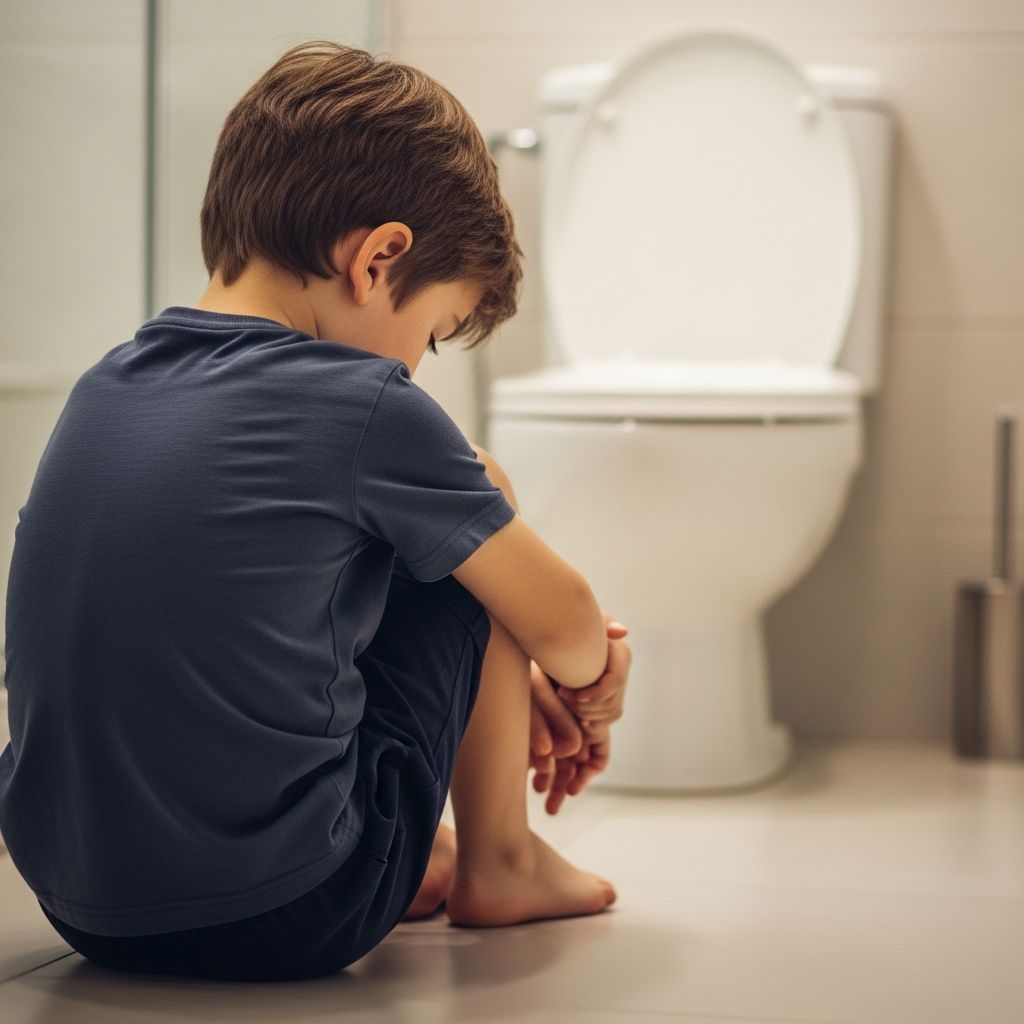
Encopresis, commonly known as fecal soiling, is a condition where toilet-trained children involuntarily pass stool in inappropriate places, such as their underwear. This issue primarily arises from chronic constipation, where hard stool buildup leads to liquid stool leakage around it.
Defining Encopresis and Its Prevalence
Encopresis occurs in children typically aged four and older who have mastered basic toilet training but face ongoing bowel control challenges. It manifests as unintentional soiling due to impacted stool in the rectum and colon, often mistaken for diarrhea. Affecting about 1-3% of school-aged children, it is more common in boys and can persist if untreated, leading to physical discomfort and emotional distress.
The condition divides into retentive (90-95% of cases, linked to constipation) and non-retentive types, the latter rarer and tied to psychological or neurological factors. Early recognition is crucial, as untreated cases stretch the bowel, desensitizing it to normal signals.
Recognizing the Signs of Encopresis
Parents often notice subtle cues before full-blown soiling. Key symptoms include:
- Leakage of loose or liquid stool into underwear, resembling diarrhea.
- Infrequent, hard bowel movements that may clog toilets.
- Avoidance behaviors like hiding, leg crossing, or dancing to hold stool.
- Abdominal pain, reduced appetite, and bedwetting or urinary issues.
- Anal irritation from scratching or rubbing.
These signs indicate bowel overload, where the rectum loses sensation, allowing overflow without awareness. Children may hide soiled clothes or withdraw socially, signaling deeper embarrassment.
How Constipation Leads to Soiling
Chronic constipation is the root in most cases. Stool hardens in the colon due to low fiber, dehydration, or withholding from pain, creating a cycle: pain leads to avoidance, worsening impaction. The colon stretches (megacolon), weakening muscles and nerves, so liquid stool bypasses the blockage, causing accidents.
This retentive process enlarges the rectum, dulling the urge to defecate. Over time, children soil without feeling the need, perpetuating the issue.
Beyond Constipation: Other Contributing Factors
While constipation dominates, other triggers exist. Medical conditions like hypothyroidism, Hirschsprung’s disease, or spinal issues can impede bowel function. Psychological stressors—new siblings, school starts, or coercive toilet training—prompt withholding.
| Factor Type | Examples | Impact on Bowel Control |
|---|---|---|
| Physical | Low-fiber diet, dehydration | Hardens stool, promotes impaction |
| Medical | Hirschsprung’s, diabetes | Alters motility or sensation |
| Emotional | Family changes, stress | Increases withholding behaviors |
Non-retentive encopresis, without constipation, often links to behavioral fears or trauma, though less common.
Physical Health Impacts of Untreated Encopresis
Beyond soiling, impaction causes belly pain, appetite loss, and growth issues. Girls risk recurrent UTIs from fecal contamination. Stretched bowels heighten obstruction risks, and chronic leakage irritates skin, leading to infections.
Associated enuresis occurs as full bowels press on the bladder. Prompt intervention prevents escalation to serious complications like fecalomas (hardened masses).
Emotional and Social Toll on Children
Soiling erodes self-esteem; children feel shame, avoiding school, friends, or sleepovers. Peer teasing amplifies isolation, fostering anxiety or depression. Parents may react with frustration, worsening family dynamics.
Primary encopresis (never fully trained) differs from secondary (regression after continence), both demanding empathetic support to rebuild confidence.
Diagnosis: Steps to Confirm Encopresis
Pediatricians diagnose via history, physical exam (abdominal/rectal palpation), and sometimes X-rays to assess impaction. Symptoms like soiling without illness, painful BMs, or blood on paper prompt GI referral.
Rule out organic causes with tests for allergies, thyroid, or spinal issues if red flags like poor growth appear.
Treatment Strategies: A Comprehensive Approach
Treatment targets disimpaction, maintenance, and behavior. Steps include:
- Cleanup Phase: Laxatives like polyethylene glycol soften and clear impaction over days/weeks.
- Maintenance: Daily stool softeners prevent re-accumulation; high-fiber diet (fruits, veggies, whole grains) and hydration aid regularity.
- Behavioral: Toilet sits post-meals (10-15 min) retrain bowels; reward charts build habits without pressure.
Success rates exceed 80% with 3-6 months adherence, though relapses occur in 20-30%. Multidisciplinary care (GI, psychology) addresses emotional layers.
Role of Diet and Lifestyle in Prevention
Preventive nutrition emphasizes fiber (age +5-10g daily) from pears, beans, oats; limit dairy if constipating. Exercise stimulates motility; routine bathroom access avoids withholding.
Positive reinforcement during training prevents fear-based retention.
When to Seek Professional Help
Consult if soiling persists post-training, with pain, blood, or weight loss. Early intervention shortens duration, reducing scars.
Frequently Asked Questions About Encopresis
Is encopresis just laziness or bad behavior?
No, it’s a physiological issue from constipation; punishment worsens withholding.
How long does treatment take?
Weeks for cleanup, months for maintenance; consistency is key.
Can encopresis resolve on its own?
Rarely; intervention prevents chronicity.
Does diet alone fix it?
Supports but laxatives often needed initially.
Will my child outgrow encopresis?
Many do with treatment, but untreated cases linger into adolescence.
Encopresis, though distressing, responds well to structured care, restoring normalcy and confidence.
References
- Pediatric Encopresis Symptoms, Causes, Treatment — Shriners Children’s. Accessed 2026. https://www.shrinerschildrens.org/en/pediatric-care/encopresis
- Encopresis — Children’s Hospital of Philadelphia (CHOP). Accessed 2026. https://www.chop.edu/conditions-diseases/encopresis
- Encopresis — University of Rochester Medical Center. Accessed 2026. https://www.urmc.rochester.edu/childrens-hospital/gastroenterology/conditions/encopresis.aspx
- Encopresis in Children | Causes, Diagnosis & Treatment — Cincinnati Children’s Hospital. Accessed 2026. https://www.cincinnatichildrens.org/health/e/encopresis
- Encopresis – Symptoms & causes — Mayo Clinic. 2023-10-05. https://www.mayoclinic.org/diseases-conditions/encopresis/symptoms-causes/syc-20354494
- Fact Sheet: Encopresis in Children and Adolescents — Society of Pediatric Psychology. Accessed 2026. https://pedpsych.org/fact_sheets/encopresis/