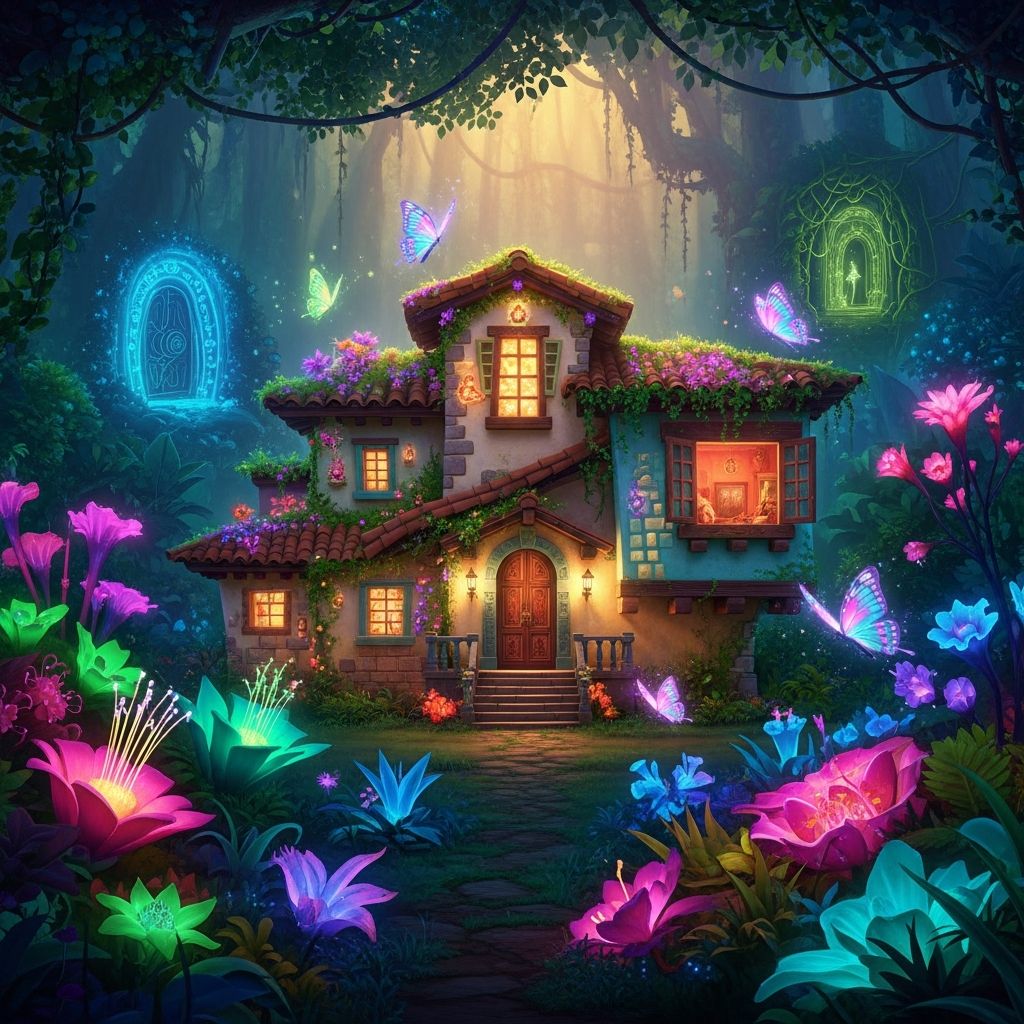
Disney’s Encanto has enchanted audiences worldwide with its vibrant portrayal of a magical Colombian family, exploring themes of heritage, pressure, and unity. Released as the studio’s 60th animated feature, the film masterfully weaves magical realism with authentic cultural elements, creating a story that resonates deeply across generations. This article delves into the film’s creation process, character developments, symbolic motifs, and lasting impact, offering fresh perspectives on why Encanto continues to captivate families.
The Roots of Magic: Origins and Inspirations
The concept of Encanto draws heavily from Latin American literary traditions, particularly magical realism pioneered by Colombian Nobel laureate Gabriel García Márquez. This genre blends fantastical elements with everyday life, mirroring the Madrigal family’s enchanted existence within their isolated valley. The title itself refers to a natural site imbued with mystical allure, a notion deeply embedded in Colombian folklore where such places hold spiritual significance.
Early development shifted the story’s focus to emphasize female leadership, reflecting real Colombian family dynamics where matriarchs often guide households. Initial sketches positioned Mirabel’s father, Agustín, as the discoverer of the Encanto, but creators pivoted to center Abuela Alma as the family’s pillar after research revealed the prominence of women in Colombian society. This change infused the narrative with authenticity and empowered its protagonist, Mirabel, Disney’s first Latina heroine.
The film’s setting evolved from broader Latin American influences to a distinctly Colombian aesthetic. Production teams immersed themselves in the country’s diverse regions, from the coffee triangle’s lush valleys to the wax palm-filled highlands, ensuring visual accuracy. This commitment extended to music, incorporating cumbia, vallenato, and reggaeton rhythms that pulse through the soundtrack, making songs like “We Don’t Talk About Bruno” instant global hits.
Evolution of Characters: From Sketches to Screen
Encanto’s characters underwent significant transformations during production, adapting to deepen emotional layers and cultural fidelity. Mirabel, originally named Beatriz, started as a quest-driven adventurer seeking her own gift. Early versions had her embarking on a journey post-door ceremony, but the final script reframed her arc around familial validation rather than personal acquisition of magic, highlighting internal growth over external powers.
Bruno’s portrayal shifted dramatically. Once a younger figure closer to Mirabel’s age and named Oscar (changed due to common real-life namesakes), he became the reclusive prophet burdened by foresight. His tower, marked by an hourglass door symbolizing time’s sands, underscores his curse-like ability. Subtle background appearances in “We Don’t Talk About Bruno”—like during the wedding verse or Dolores’ rap—hint at his lingering presence, rewarding attentive viewers.
- Mirabel’s Glasses: Beyond style, they represent her unique perspective, with “Mira” meaning “look” or “sight” in Spanish, emphasizing her role in seeing family truths.
- Antonio’s Wardrobe: Begins in white as a ‘blank canvas’ pre-gift, evolving to feature animal motifs post-ceremony, inspired by Wayuu indigenous textiles.
- Camilo’s Shift: From an angry teen to a laid-back shapeshifter, his chameleon-embroidered poncho reflects his powers.
Other family members like Luisa, whose “Surface Pressure” reveals cracking under expectations (foreshadowing house fissures), and Isabela, with scrapped suitors like city-dweller Bubo, showcase iterative storytelling to balance humor, heart, and conflict.
Visual Storytelling: Symbols and Hidden Details
Encanto excels in subtle visual cues that enrich its narrative. Butterflies flutter ubiquitously, symbolizing transformation—yellow ones nod to García Márquez’s One Hundred Years of Solitude, while Mirabel’s colorful variants highlight her individuality. They appear on her embroidery, in transitions, and culminate in the finale, signifying familial renewal.
Opposing doors pit Abuela’s traditional room against Mirabel’s at the casita’s foundation, visually representing their ideological clash and ultimate harmony. Cracks foreshadow the magic’s fragility, first noticed by Mirabel and echoed in Luisa’s song lyrics about personal strain.
| Symbol | Meaning | Examples in Film |
|---|---|---|
| Hourglass | Bruno’s foresight | Poncho, tower door |
| Butterflies | Change & magic | Mirabel’s clothes, ‘Two Oruguitas’ |
| Cracks | Family pressure | Luisa’s song, casita walls |
| White Outfit | Ungifted state | Antonio pre-ceremony |
Alan’s Tudyk voices multiple characters, including toucans, adding whimsical continuity. The casita’s expressive tiles and doors react to emotions, a folkloric Colombian home trait anthropomorphized for charm.
Musical Magic: Lin-Manuel Miranda’s Soundtrack
Lin-Manuel Miranda crafted a score fusing Colombian genres with Broadway flair. “Dos Oruguitas,” meaning ‘two little caterpillars,’ ties to butterfly motifs, earning Oscar nods. Each song reveals character depths: Dolores’ super-hearing whispers in her rap, Pepa’s mood-altering weather colors her animation.
The infectious “We Don’t Talk About Bruno” ironically spotlights him, with swirling visions and ensemble dynamics making it a viral sensation. Miranda drew from real Colombian artists, ensuring linguistic accuracy—Spanish lines preserve cultural nuances for non-speakers.
Cultural Celebration: Colombia on Display
Encanto spotlights Colombia’s biodiversity and traditions without stereotyping. Wax palms, coffee plants, and jaguars populate scenes accurately. Costumes blend everyday Colombian wear with magical icons: Isabela’s cactus flowers symbolize perfectionism, Julieta’s arepa-healing draws from maternal healer archetypes.
Food like arepas and buñuelos grounds the magic in reality. The film’s research trips informed details like Antonio’s animal communication, echoing indigenous beliefs in nature’s voices.
Production Journey: Challenges and Triumphs
Spanning years, Encanto compressed a 100-year multi-generational saga into one, adjusting ages for focus. COVID delays heightened stakes, yet it became Disney’s biggest animated streaming hit. Directors Jared Bush and Byron Howard, with Charise Castro Smith, prioritized diverse voices, hiring Colombian consultants.
Voice cast features Stephanie Beatriz (Mirabel), María Cecilia Botero (Abuela), and John Leguizamo (Bruno), infusing authenticity. Early rumors of a Brazilian setting were debunked, cementing Colombia’s spotlight.
Encanto’s Legacy: Impact and Accolades
Encanto sparked global Colombian pride, boosting tourism and music charts. It grossed over $250 million, won Oscars for Best Animated Feature (2022), and inspired parks attractions. Themes of imperfect families resonate universally, proving magic lies in bonds, not gifts.
Merchandise, from dolls to soundtracks, thrives, while fan theories explore post-film lives, like Bruno’s return.
Frequently Asked Questions
What inspired Encanto’s story?
It’s rooted in Colombian magical realism, like Gabriel García Márquez’s works, blending fantasy with family dynamics and cultural traditions.
Why doesn’t Mirabel have a gift?
Her ‘gift’ is empathy and perspective, enabling her to unite the family and restore the magic.
Who is Bruno, and why was he hidden?
Uncle Bruno sees the future but hides after visions caused family rifts; he never left, staying to protect them.
What do butterflies represent?
Transformation, magic, and change, appearing throughout to symbolize the family’s evolution.
Is Encanto based on a true story?
No, but it’s deeply inspired by Colombian culture, folklore, and real family structures researched by creators.
References
- 107 Encanto Facts You Should Know — Channel Frederator (YouTube). 2022-01-15. https://www.youtube.com/watch?v=F0j6Dk6fmEg
- Top 10 Small Details in Disney’s Encanto You Missed — WatchMojo. 2022-02-01. https://www.watchmojo.com/articles/top-10-small-details-in-disney-s-encanto-you-missed
- 10 Facts You May Not Know About Encanto — Celebrations Press. 2022-02-28. https://celebrationspress.com/2022/02/28/10-facts-you-may-not-know-about-encanto/
- 5 Magical Facts About Encanto — D23 (Disney). 2021-11-24. https://d23.com/d23-video/5-magical-facts-about-encanto/
- Encanto: 10 Things You Didn’t Know — CBR. 2021-11-01. https://www.cbr.com/encanto-disney-movie-trivia-facts/