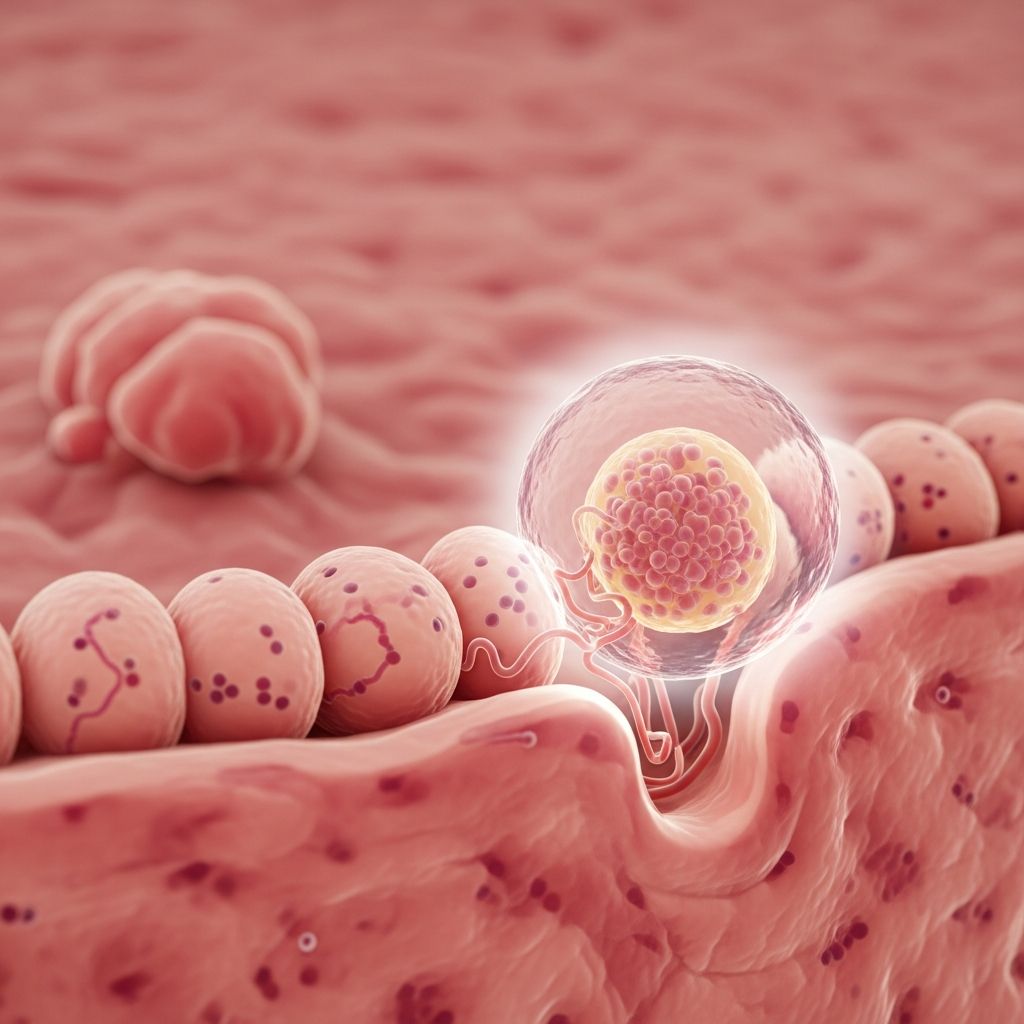
Understanding Embryo Implantation in Early Pregnancy
Embryo implantation represents one of the most critical biological processes in human reproduction. This phenomenon occurs when a developing embryo embeds itself into the wall of the uterus, establishing the foundation for fetal growth and pregnancy continuation. The process, while remarkable in its complexity, operates on a precise biological schedule that begins immediately after fertilization takes place.
For many individuals trying to conceive, understanding what happens during implantation and recognizing the subtle signs that accompany it can provide valuable insights into whether pregnancy has been successfully established. The journey from ovulation to implantation involves multiple coordinated stages, each essential for pregnancy viability.
The Fertilization-to-Implantation Journey
Before implantation can occur, fertilization must take place. When an egg and sperm meet in the fallopian tube, they form a single cell that immediately begins dividing. This initial stage represents the beginning of cellular development that will eventually lead to a full human organism.
Once fertilization occurs, the developing cluster of cells starts its migration toward the uterus. This journey typically takes approximately one week to complete. During this time, the cell mass continues dividing, gradually transforming from a simple two-cell structure into a more complex ball of hundreds of cells. By the time it reaches the uterus, this cellular structure is known as a blastocyst—a hollow sphere of cells with an inner mass that will become the embryo and an outer layer that contributes to placental development.
Timeline: When Does Implantation Actually Occur?
The timing of implantation varies among individuals, making it impossible to pinpoint an exact day for every person. However, medical professionals have established reliable average ranges based on extensive clinical observation.
Days After Ovulation
When measured from the moment of ovulation, implantation typically occurs between 8 and 10 days afterward. However, this window is not absolute. In some cases, implantation may begin as early as day 6 after ovulation, while in others it may not occur until day 12. This natural variation reflects the unique biological rhythms of different individuals.
Days After Fertilization
Counting from the point of conception—when sperm penetrates the egg—implantation generally happens 6 to 10 days later. A critical detail to remember is that fertilization doesn’t occur at the exact moment of ovulation. There exists a 12 to 24-hour window during which fertilization can happen after ovulation occurs. Additionally, sperm can survive in the reproductive tract for up to five days before ovulation even takes place. This biological reality means that the total time from sexual intercourse to implantation can span anywhere from 6 to 15 days, depending on when in the menstrual cycle intercourse occurred.
Position in the Menstrual Cycle
Using a standard 28-day menstrual cycle as reference, implantation typically occurs between cycle days 20 and 24. However, many individuals experience cycle variations, which means these numbers may shift earlier or later depending on personal cycle length and ovulation timing. Some people experience implantation as early as cycle day 20, while others may not see it occur until day 26 or beyond.
The Implantation Process: What Actually Happens
Implantation is not an instantaneous event but rather a progressive process that unfolds over several days. Understanding the sequential stages of implantation provides insight into why timing varies and how pregnancy becomes established.
The Adhesion Stage
The first phase of implantation involves adhesion, which is precisely what the term suggests: the blastocyst makes contact with and adheres to the uterine lining. This attachment is not random but occurs in the area most conducive to pregnancy development. At this stage, specialized proteins on the blastocyst surface interact with receptors on the uterine wall, initiating a biochemical dialogue between the developing embryo and maternal tissue. The success of adhesion is crucial because failures at this stage represent one significant cause of early pregnancy loss.
The Invasion Stage
Once adhesion succeeds, the blastocyst begins the invasion phase. During this stage, the cellular mass actively penetrates deeper into the uterine lining, creating intimate contact between embryonic tissue and maternal blood supply. This invasion is not destructive but rather a carefully orchestrated process where the blastocyst’s outer layer, called the trophoblast, breaks down the protective zona pellucida and burrows progressively into the endometrium—the inner lining of the uterus.
As the blastocyst invades the uterine wall, it establishes vascular connections that will eventually develop into the placenta. These specialized networks of blood vessels form the vital bridge through which the developing embryo will receive oxygen, nutrients, and other essential substances from the mother’s bloodstream. The completion of invasion marks the official success of implantation.
How Long Does Implantation Take?
The entire implantation process typically spans several days rather than occurring in a single moment. Most sources indicate that implantation unfolds over a period of roughly 3 to 5 days, beginning approximately 6 days after fertilization and continuing as the blastocyst progressively embeds itself deeper into the uterine wall. This gradual process allows the maternal body to accommodate the pregnancy while simultaneously allowing the developing embryo to establish the physiological connections necessary for continued development.
Recognizable Signs and Symptoms of Implantation
While not all individuals experience noticeable symptoms during implantation, some may observe physical changes that correlate with this critical event. It’s important to note that these signs are subtle and can easily be confused with other conditions or the approach of menstruation.
Implantation Bleeding
One of the earliest and most distinctive indicators of implantation is light bleeding or spotting, sometimes called implantation bleeding. This occurs in approximately 25-40% of pregnant individuals. The bleeding, if it happens, typically appears brownish-red in color and should not contain clots. The volume is notably lighter than a normal menstrual period, and the bleeding pattern differs significantly—it may appear for a day or two but does not progress into sustained bleeding as occurs with menstruation.
This bleeding happens because as the blastocyst burrows into the uterine lining, it may disturb small blood vessels, causing minor bleeding. The timing typically coincides with when a person might expect their period to begin, which can create confusion about whether pregnancy has been established.
Cramping and Discomfort
Some individuals report mild cramping in the lower abdomen or lower back during the implantation period. These cramps are generally much milder than menstrual cramps and localized to specific areas. The sensation results from the uterine tissue responding to the blastocyst’s presence and the hormonal changes accompanying implantation.
Secondary Symptoms
Most other symptoms associated with early pregnancy typically do not manifest until after implantation has completed and the blastocyst has begun producing human chorionic gonadotropin (hCG), the pregnancy hormone. These delayed symptoms include breast tenderness, nausea, fatigue, and food aversions. Because hCG production begins after implantation and builds gradually, these symptoms usually emerge several days after implantation is complete, which can be 7 to 14 days after fertilization.
The Critical Role of hCG in Confirming Implantation
Human chorionic gonadotropin represents the biochemical signature of pregnancy. Once the blastocyst successfully implants, its cells begin producing this hormone, which serves multiple purposes: it maintains the corpus luteum, prevents menstruation, and nourishes the developing pregnancy. Progesterone levels simultaneously rise, further preparing the uterine environment for pregnancy continuation.
From a practical perspective, hCG production is why pregnancy tests work. A pregnancy test detects hCG in urine or blood. However, hCG requires time to accumulate to detectable levels. At least 2-3 days after implantation begins, hCG concentrations may reach thresholds where home pregnancy tests can detect them. This is why testing too early frequently results in false negatives—the pregnancy may be genuinely present but hCG levels remain too low for detection.
Important Considerations and Potential Complications
While implantation typically proceeds without problems, several complications can arise that warrant medical attention:
Late Implantation
When implantation occurs more than 12 days after ovulation, it is classified as late implantation. Medical research has associated late implantation with increased risks of early pregnancy loss. Late implantation may indicate underlying biological factors that compromise pregnancy viability, though each situation is unique.
Ectopic Pregnancy
An ectopic pregnancy develops when a fertilized egg implants and grows outside the main uterine cavity. Most commonly, ectopic implantation occurs in the fallopian tubes, but it can also happen in the ovary, in scar tissue from previous cesarean sections, or in the cervix. Ectopic pregnancies cannot progress to viable term because the implantation location cannot support fetal development. These pregnancies require medical intervention and are potentially life-threatening without prompt diagnosis and treatment.
Tracking Implantation: Practical Considerations
One challenge in tracking implantation and pregnancy weeks is that the exact timing varies significantly among individuals. Medical professionals traditionally count pregnancy from the first day of the last menstrual period rather than from the actual date of conception, which is typically unknown until after the fact. This standard dating method can make pregnancy week calculations confusing because the true start date of pregnancy remains uncertain until implantation confirms it.
For those attempting to track implantation or predict testing timing, understanding personal cycle characteristics becomes valuable. Keeping records of menstrual cycle length and ovulation timing (through observation, ovulation predictors, or other tracking methods) provides the foundation for predicting when implantation might occur and when pregnancy tests might become reliable.
After Implantation: The Next Developmental Phases
Once implantation completes successfully, the embryo begins its rapid developmental journey. The yolk sac forms, providing initial nutrient support while the placenta develops. The blastocyst now enters what is officially called the embryonic stage. By nine weeks after fertilization, the embryo becomes a fetus—a developmental milestone that represents increasing complexity and organizational advancement.
Frequently Asked Questions About Implantation
Q: Can I feel implantation happening?
A: Most people cannot feel implantation occurring. Any sensations experienced are typically mild and easily confused with other conditions. The process occurs at a microscopic level and most of the significant biological changes happen without producing noticeable physical sensations.
Q: How early can I test for pregnancy after implantation?
A: Testing too early is a common cause of false negatives. Waiting until at least 10-14 days after ovulation or 7-10 days after estimated conception provides better accuracy. Testing on the first day of a missed period offers the most reliable results for home pregnancy tests.
Q: Does implantation always cause bleeding?
A: No. Implantation bleeding occurs in a minority of pregnancies. Its absence does not indicate a problem; many successful pregnancies proceed without any implantation bleeding whatsoever.
Q: What should I do if I think implantation is occurring?
A: If attempting to conceive, maintain healthy practices including proper nutrition, adequate sleep, and stress management. Avoid smoking, excessive alcohol, and unnecessary medications. Medical consultation becomes important if you have concerns about pregnancy or experience severe pain or heavy bleeding.
Q: Can implantation fail?
A: Yes. If the blastocyst fails to adhere properly to the uterine lining or if the uterine environment is not adequately prepared, implantation may not succeed. Failed implantation typically results in pregnancy loss, often before a person realizes they were pregnant.
References
- When Does Implantation Occur? Symptoms and Timeline — The Bump (Mayo Clinic). 2024. https://www.thebump.com/a/when-does-implantation-occur
- Implantation Symptoms, Signs, and Timeline — Babylist. 2024. https://www.babylist.com/hello-baby/implantation
- Fertilization vs Implantation: The Breakdown of Both & When They Occur — Proov. 2024. https://proovtest.com/blogs/blog/fertilization-vs-implantation-breakdown
- Implantation During Pregnancy: Symptoms, Timeline, and Testing — Medical News Today. 2024. https://www.medicalnewstoday.com/articles/implantation-symptoms
- Pregnancy: Timeline of Development — Mayo Clinic. 2024. https://www.mayoclinic.org/healthy-lifestyle/pregnancy-week-by-week/in-depth/prenatal-care/art-20045302
- Conception: How It Works — UCSF Health. 2024. https://www.ucsfhealth.org/education/conception-how-it-works
- Conception: Fertilization, Process & When It Happens — Cleveland Clinic. 2024. https://my.clevelandclinic.org/health/articles/11585-conception