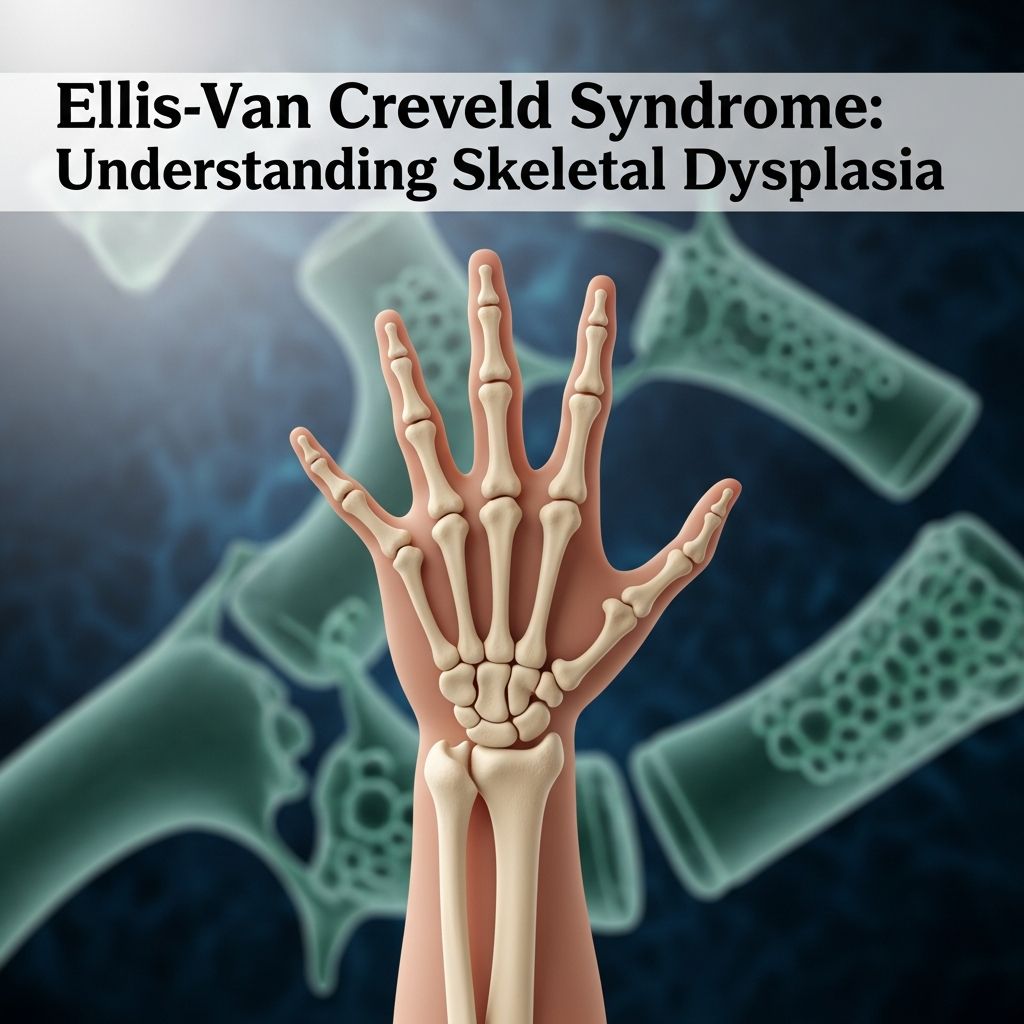
Understanding Ellis-Van Creveld Syndrome and Skeletal Dysplasia
Ellis-Van Creveld syndrome represents a complex inherited condition that fundamentally affects how the skeletal system develops and functions in affected individuals. Classified as a type of skeletal dysplasia, this rare genetic disorder impacts not only bone and cartilage growth but also creates challenges affecting multiple organ systems throughout the body. The condition was first documented in medical literature during 1940 when physicians Richard W. Ellis and Simon van Creveld identified its distinctive characteristics and named it chondroectodermal dysplasia, reflecting the involvement of cartilage, bone, and ectodermal tissues including hair, teeth, gums, and nails.
The significance of understanding Ellis-Van Creveld syndrome extends beyond academic interest. For families navigating a diagnosis, comprehensive knowledge about the condition’s manifestations, inheritance patterns, and available management strategies proves invaluable. While the condition presents substantial medical challenges, particularly regarding cardiac and respiratory complications, many individuals with Ellis-Van Creveld syndrome achieve meaningful quality of life when supported by coordinated medical care and appropriate interventions.
Key Physical Characteristics and Growth Patterns
Ellis-Van Creveld syndrome creates a distinctive pattern of physical characteristics that often becomes apparent during infancy and childhood. The most prominent feature involves significant growth restriction, resulting in individuals achieving adult heights substantially below average stature, typically less than 4 feet 10 inches (145 centimeters). This growth limitation reflects a broader disruption in skeletal development affecting both the trunk and extremities.
The extremities demonstrate particularly pronounced shortening, with affected individuals exhibiting disproportionately short arms and legs relative to their torso. The shortening follows a specific pattern, with the forearm and lower leg segments showing more dramatic reduction compared to the upper arm and thigh. This mesomelic pattern of dwarfism creates the characteristic appearance associated with the condition.
Beyond stature, the skeletal system exhibits multiple additional abnormalities. The chest cavity becomes narrow and confined due to shortened ribs, creating potential complications for lung expansion and breathing capacity. Structural changes also affect the wrist bones, where fusion between the hamate and capitate bones occurs. The knees frequently develop an inward-curving appearance known as knock-knees, further contributing to the distinctive physical presentation.
Extremity-Specific Manifestations
Extra digits, or polydactyly, represent one of the most recognizable features of Ellis-Van Creveld syndrome. This manifestation appears universally in affected individuals, with additional fingers present in virtually all cases and additional toes occurring in approximately one-third of patients. The extra digits demonstrate variable positioning and size, sometimes requiring surgical consideration.
The fingernails and toenails undergo significant developmental abnormalities, appearing unusually small and sometimes displaying dystrophic characteristics. These nail changes extend beyond cosmetic concerns, sometimes reflecting broader ectodermal dysplasia affecting skin and appendage development throughout the body. Hair texture and quality may also demonstrate variations consistent with ectodermal involvement.
Dental and Oral Complications
Dental manifestations frequently create particular challenges for individuals with Ellis-Van Creveld syndrome. Some affected individuals develop teeth present at birth, a phenomenon called neonatal teeth, rather than following the typical eruption schedule. When teeth do emerge, they often appear small and may develop irregularly, with conical-shaped incisor teeth creating characteristic dental morphology.
Beyond structural irregularities, affected individuals demonstrate increased susceptibility to dental cavities and periodonities. Dental hygiene management becomes particularly important given these predispositions. Oral mucosa abnormalities, including alterations to the frenum (the tissue connecting the lip to the gum), may also occur. Regular dental monitoring and preventive care constitute essential components of comprehensive health management for individuals with this condition.
Cardiovascular Involvement and Heart Defects
Cardiac manifestations represent among the most clinically significant aspects of Ellis-Van Creveld syndrome. More than half of affected individuals develop congenital heart defects, with the most common abnormality involving an opening between the upper heart chambers—an atrial septal defect that may progress to a common atrium configuration. This particular cardiac malformation occurs in approximately 60% of affected individuals.
Beyond atrial septal defects, other cardiac abnormalities have been documented in affected populations. These include ventricular septal defects, where the wall between lower heart chambers contains an abnormal opening, and patent ductus arteriosus, where a fetal blood vessel fails to close properly after birth. The severity and type of cardiac involvement vary significantly among affected individuals.
The cardiac complications associated with Ellis-Van Creveld syndrome contribute to mortality risk, particularly during infancy. Approximately half of affected individuals experience cardiopulmonary complications that prove fatal by 18 months of age. For those surviving infancy, continued cardiac monitoring remains essential throughout life. Advances in pediatric cardiology and surgical techniques have progressively improved outcomes for many affected individuals, allowing for greater survival rates and improved long-term function when defects are identified and managed appropriately.
Respiratory System Challenges
The narrow chest cavity created by shortened ribs directly impacts respiratory function in Ellis-Van Creveld syndrome. The constrained thoracic space limits lung expansion capacity, potentially creating breathing difficulties and compromising oxygen exchange efficiency. Some affected individuals develop underdeveloped lungs (pulmonary hypoplasia), further reducing respiratory capability.
Respiratory complications interact with cardiac challenges, creating compounded physiological stress. Individuals with both cardiac defects and respiratory limitations face greater oxygen demand and reduced supply, significantly complicating overall health management. This interplay between cardiac and respiratory systems explains the heightened mortality risk during infancy and the importance of comprehensive multisystem monitoring throughout life.
Genetic Foundation and Inheritance Patterns
Ellis-Van Creveld syndrome follows an autosomal recessive inheritance pattern, meaning that an affected individual must inherit disease-causing genetic variants from both parents. Parents carrying a single variant remain unaffected but function as carriers, with each child of two carrier parents facing a 25% probability of inheriting the condition.
The primary genetic variants occur within the EVC gene located on chromosome 4, specifically on the short arm at position 4p16. A secondary gene called EVC2 (also referenced as Limbin) located near the EVC gene in a head-to-head configuration also causes Ellis-Van Creveld syndrome when mutated. Additional genetic variants in other genes including DYNC2LI1, GLI1, WDR35, DYNC2H1, PRKACA, PRKACB, and SMO contribute to disease causation in some affected individuals.
The molecular mechanisms through which these genetic variants cause disease remain incompletely understood. Current research suggests that Ellis-Van Creveld syndrome belongs to an emerging class of disorders called ciliopathies, where dysfunction in cellular structures called primary cilia disrupts critical developmental signaling pathways. Primary cilia, present throughout the body in most cell types, perform essential roles in cellular communication and development. Dysfunction in these structures creates the multi-system manifestations characteristic of Ellis-Van Creveld syndrome.
Certain isolated populations demonstrate higher incidence of Ellis-Van Creveld syndrome due to founder effects. Among the Amish community and inhabitants of small islands, the condition appears with increased frequency reflecting limited genetic diversity and concentration of inherited variants within these populations.
Associated Medical Conditions and Secondary Manifestations
Beyond the primary skeletal and cardiac features, Ellis-Van Creveld syndrome frequently involves additional organ systems. Urinary tract abnormalities occur in a subset of affected individuals, including kidney anomalies and variations in ureteral structure. Some males develop undescended testicles (cryptorchidism) or abnormalities in the positioning of the urethral opening.
Pelvic girdle abnormalities and spinal variations have been documented in some cases. Growth restrictions extend beyond stature to include intrauterine growth delay visible on prenatal imaging. The oral frenum (tissue connecting lip to gum) may demonstrate abnormal development, and thin vermilion borders of the lips occur in some affected individuals.
Intellectual and developmental concerns do not typically accompany Ellis-Van Creveld syndrome. Motor development and cognitive abilities generally proceed normally, with intellectual disability representing an uncommon manifestation. This preservation of cognitive function provides an important point of optimism for affected individuals and families navigating the condition’s physical challenges.
Diagnostic Approaches and Identification Methods
Clinical diagnosis of Ellis-Van Creveld syndrome typically begins with recognition of characteristic physical features. Short stature noted at birth or early infancy, combined with obvious skeletal abnormalities such as short limbs, narrow chest, and extra digits, raises clinical suspicion. Prenatal diagnosis has become increasingly possible through advanced imaging techniques including obstetric ultrasound, which can identify extra fingers or toes, cardiac structural abnormalities, narrow chest configuration, and short limb measurements during pregnancy.
Definitive diagnosis requires molecular genetic testing to identify disease-causing variants in EVC, EVC2, or other causative genes. This genetic confirmation becomes particularly important for distinguishing Ellis-Van Creveld syndrome from other skeletal dysplasias with overlapping clinical features. Genetic testing provides families with precise diagnostic information supporting genetic counseling and informed decision-making regarding family planning.
Imaging studies including X-rays of the skeletal system provide additional diagnostic support by revealing characteristic bone abnormalities, rib shortening, and vertebral variations. Cardiac evaluation through echocardiography identifies structural heart defects and assesses cardiac function. Collaborative evaluation involving pediatricians, geneticists, cardiologists, and orthopedic specialists ensures comprehensive assessment and accurate diagnosis.
Management and Treatment Considerations
While Ellis-Van Creveld syndrome lacks curative interventions, comprehensive medical management addresses individual manifestations and optimizes quality of life. Cardiac defects often require surgical correction, particularly when atrial septal defects or other significant structural abnormalities compromise heart function. Timing of cardiac surgery involves careful consideration of overall health status, growth, and symptom severity.
Respiratory support may include oxygen therapy when pulmonary hypoplasia or cardiac defects compromise oxygen exchange. Some individuals benefit from sleep studies and supplemental oxygen during sleep when hypoxemia occurs. As individuals age, pulmonary function testing guides respiratory management decisions.
Orthopedic considerations address mobility and function. Extra digits may be surgically removed when they interfere with hand or foot function. Knee alignment issues require periodic assessment, with surgical intervention considered when knock-knees significantly impair walking or create pain. Wrist bracing or surgery may address functional limitations from carpal bone fusion.
Dental care demands specialized attention. Regular dental examinations, professional cleanings, fluoride supplementation, and aggressive cavity prevention strategies address the increased caries risk. Some individuals require orthodontic intervention to address dental crowding and misalignment.
Growth monitoring remains essential throughout childhood and adolescence. While Ellis-Van Creveld syndrome causes inherent growth limitations, ensuring optimal nutrition and addressing any secondary factors that impair growth supports best achievable outcomes. Hormone replacement therapy remains controversial and requires careful individual assessment.
Multidisciplinary care coordination involving pediatricians, cardiologists, pulmonologists, orthopedic surgeons, dentists, and geneticists ensures comprehensive attention to the varied medical needs associated with this complex condition. Regular monitoring and proactive intervention address emerging complications, maximizing health outcomes and quality of life.
Prognosis and Long-Term Outcomes
Mortality risk predominantly concentrates during infancy, with approximately half of affected individuals experiencing fatal cardiopulmonary complications by 18 months of age. This sobering statistic underscores the critical importance of early cardiac identification and management. For individuals surviving infancy with appropriate cardiac and respiratory care, survival into adulthood and beyond becomes achievable.
Long-term quality of life depends significantly on the severity of cardiac involvement, respiratory capacity, and effectiveness of medical management. Individuals with mild cardiac defects and minimal respiratory compromise generally achieve better long-term outcomes compared to those with severe cardiac disease or significant pulmonary hypoplasia. Preserving cognitive and intellectual function allows affected individuals to pursue education, meaningful work, and independent living arrangements when physical limitations permit.
Modern advances in pediatric cardiac surgery, respiratory support, and orthopedic management have progressively improved outcomes for Ellis-Van Creveld syndrome. Individuals born in recent decades benefit from more sophisticated diagnostic capabilities, earlier intervention, and refined surgical techniques compared to earlier generations, creating improved survival and quality-of-life prospects.
Living with Ellis-Van Creveld Syndrome: Practical Considerations
Families managing Ellis-Van Creveld syndrome navigate numerous practical challenges beyond medical management. Adaptive equipment including specialized furniture, reaching devices, and mobility aids addresses mobility limitations created by short stature and skeletal abnormalities. School environments benefit from physical accommodations and individualized education plans recognizing that despite physical limitations, cognitive abilities remain intact.
Emotional and psychological support proves essential for affected individuals and families. Peer support groups, counseling, and resources addressing body image concerns and developmental challenges help individuals develop resilience and positive self-identity. Many individuals with Ellis-Van Creveld syndrome successfully navigate adolescence, adulthood, and meaningful social relationships despite physical differences.
Employment considerations require thoughtful career planning recognizing both limitations and preserved abilities. Many adults with Ellis-Van Creveld syndrome engage in productive work and meaningful contributions to their communities, with job accommodations and flexibility enabling success in appropriate roles.
Genetic Counseling and Family Planning
Families with Ellis-Van Creveld syndrome benefit significantly from genetic counseling. Parents of affected children receive detailed explanation of autosomal recessive inheritance, with each child of two carrier parents facing 25% recurrence risk. This information guides decisions regarding future pregnancies and family planning. Carrier testing of relatives becomes available once the specific variants in an affected family member are identified.
Prenatal diagnosis through amniocentesis or chorionic villus sampling enables families to identify affected fetuses during future pregnancies, supporting informed decision-making. Preimplantation genetic diagnosis offers another reproductive option for some families pursuing assisted reproductive technology.
Frequently Asked Questions
Does Ellis-Van Creveld syndrome affect intellectual development?
No, Ellis-Van Creveld syndrome does not affect thinking and learning abilities. Affected individuals typically develop normal intelligence and cognitive function, though physical limitations may require educational accommodations.
Can Ellis-Van Creveld syndrome be detected before birth?
Yes, prenatal ultrasound can detect characteristic features including extra digits, cardiac defects, short limbs, and narrow chest. Definitive diagnosis requires genetic testing, which can be performed on prenatal samples.
What percentage of individuals with Ellis-Van Creveld syndrome develop heart defects?
More than 50% of affected individuals develop congenital heart defects, with atrial septal defects being the most common, occurring in approximately 60% of those with cardiac involvement.
How is Ellis-Van Creveld syndrome inherited?
Ellis-Van Creveld syndrome follows autosomal recessive inheritance. An affected individual inherits disease-causing variants from both parents. Children of two carrier parents have a 25% chance of inheriting the condition.
What genes cause Ellis-Van Creveld syndrome?
Mutations primarily occur in the EVC and EVC2 genes. Additional genes including DYNC2LI1, GLI1, WDR35, and others can also cause the condition in some affected individuals.
What is the life expectancy for someone with Ellis-Van Creveld syndrome?
Approximately half of affected individuals experience fatal cardiopulmonary complications by 18 months of age. For those surviving infancy with appropriate medical management, longer-term survival becomes possible, though prognosis varies based on severity of cardiac and respiratory involvement.
Are there specific treatments available for Ellis-Van Creveld syndrome?
No cure exists, but management focuses on addressing individual manifestations. Cardiac surgery corrects heart defects, respiratory support addresses breathing challenges, dental care manages increased cavity risk, and orthopedic interventions address mobility concerns.
Can individuals with Ellis-Van Creveld syndrome attend regular school?
Yes, since cognitive abilities remain normal, affected children can typically attend regular schools with physical accommodations and individualized education plans addressing mobility and accessibility needs.
References
- Ellis–Van Creveld syndrome — Wikipedia. Retrieved from https://en.wikipedia.org/wiki/Ellis–Van_Creveld_syndrome
- Ellis-Van Creveld Syndrome – Symptoms, Causes, Treatment — National Organization for Rare Disorders (NORD). Retrieved from https://rarediseases.org/rare-diseases/ellis-van-creveld-syndrome/
- Ellis-Van Creveld Syndrome — Montefiore Einstein New York Center for Rare Diseases. Retrieved from https://montefioreeinstein.org/new-york-center-for-rare-diseases/conditions/bone-growth-disorders/ellis-van-creveld-syndrome
- Ellis-Van Creveld Dysplasia — Nemours KidsHealth. Retrieved from https://kidshealth.org/en/parents/ellis-dysplasia.html
- Ellis-van Creveld Dysplasia Causes & Symptoms — Nemours. Retrieved from https://www.nemours.org/services/ellis-van-creveld-dysplasia/about-ellis-van-creveld-dysplasia.html
- Ellis-van creveld syndrome — Genetic and Rare Diseases Information Center (GARD). 2023. Retrieved from https://rarediseases.info.nih.gov/diseases/1301/ellis-van-creveld-syndrome