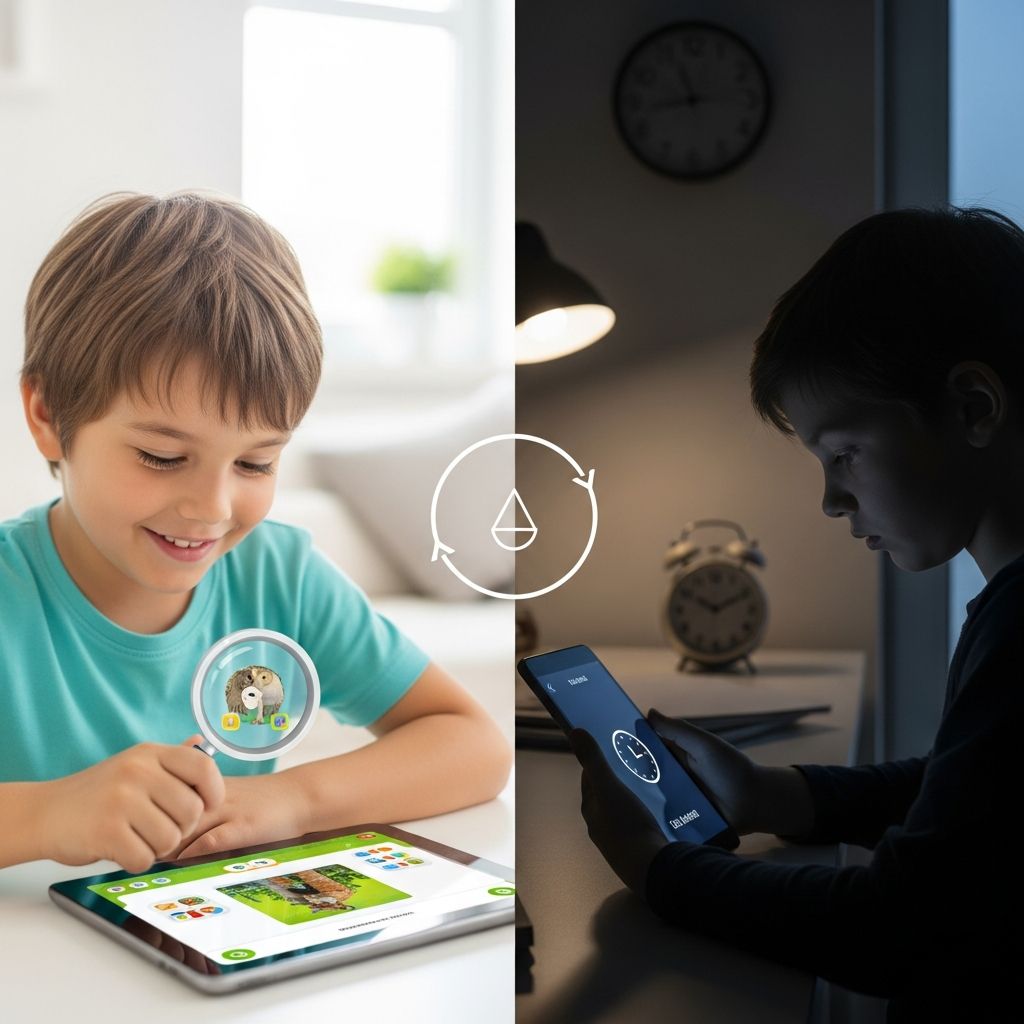
Electronic devices are woven into children’s everyday lives, from tablets and smartphones to gaming consoles and smart TVs. Used thoughtfully, these tools can support learning, creativity, and connection. Used without limits, they can interfere with sleep, behavior, mental health, and family relationships.
What Counts as an Electronic Device for Kids?
Before setting rules, it helps to be clear about what “devices” actually include for children. Today, even toys can have screens, Wi-Fi, and built-in apps.
- Smartphones and tablets used for games, videos, messaging, and school apps.
- Computers and laptops for homework, streaming, and social interaction.
- Video game consoles, handheld gaming devices, and VR headsets.
- Smart TVs and streaming devices that provide on-demand content.
- Connected toys and wearables, such as smartwatches or talking dolls.
Each device has different levels of interactivity, distractions, and potential exposure to ads, in-app purchases, and online communities, so parents need to think about both time and type of use.
Positive Impacts of Electronic Devices on Children
Although screens often get blamed for a range of problems, digital tools also offer real benefits when used in age-appropriate, guided ways. Many children use technology to explore interests, practice skills, and stay in touch with others.
- Educational content: Quality apps, videos, and games can reinforce math, reading, science, and language learning, especially when parents engage alongside their children.
- Access to information: Older children can research school topics, explore hobbies, and learn new skills (like coding, drawing, or music) with tutorials and interactive lessons.
- Digital creativity: Creative tools allow kids to draw, compose music, animate, record videos, or design simple games, turning devices into platforms for expression instead of passive consumption.
- Communication and connection: Messaging, video chat, and family group apps can help children maintain relationships with distant relatives and friends, especially in blended or long-distance families.
- Assistive and special-needs support: For some children with learning differences or disabilities, technology can provide text-to-speech, visual schedules, communication boards, and tailored learning tools.
The key is that benefits arise when screens are used deliberately—often with adult guidance, clear goals, and limits—rather than as constant background noise or a default form of entertainment.
Negative Impacts and Potential Risks
Concerns about children and gadgets are not just about how long they use them, but also what they do on them and what replaces offline experiences. Heavy or unsupervised use can introduce a range of challenges.
- Sleep disruption: Late-night screen time, especially on phones and tablets close to the face, can delay bedtime and reduce sleep quality, which affects mood, focus, and school performance.
- Reduced physical activity: Time spent on devices often crowds out active play, outdoor time, and sports, increasing the risk of sedentary habits and related health concerns.
- Attention and behavior issues: Constant switching between apps, notifications, and fast-paced content can make it harder for some children to stay focused on slower, real-world tasks.
- Social and emotional challenges: Overreliance on devices can limit practice with face-to-face communication, empathy, and conflict resolution, especially when screens replace family conversations.
- Exposure to inappropriate content: Without filters and supervision, children may encounter violence, explicit material, disturbing content, or harmful messages.
- Online risks: As kids get older, risks expand to cyberbullying, excessive social media comparison, oversharing personal information, and contact with strangers.
Not every child will experience all of these problems, but parents should watch for patterns, such as mood shifts after gaming, conflict over turning devices off, or declining performance in school and other areas of life.
Key Areas of Impact on Child Development
Electronic devices can influence several dimensions of a child’s growth. Thinking in terms of specific areas makes it easier to notice both positive and negative effects and adjust family rules.
| Area | Potential Benefits | Potential Risks |
|---|---|---|
| Cognitive and learning | Reinforces skills, introduces new concepts, supports problem-solving through interactive apps and games. | May reduce attention span if content is fast-paced or if multitasking becomes constant. |
| Language and communication | Exposure to new vocabulary, stories, and languages; access to audiobooks and educational videos. | Less real-life conversation time; possible delays if screens replace talking, reading, and play with adults. |
| Social and emotional | Tools to stay in touch with family and friends; opportunities for support communities and shared interests. | Risk of social comparison, cyberbullying, isolation, and dependence on online validation. |
| Physical health | Active games and fitness apps can encourage movement for some children. | Eye strain, poor posture, and reduced physical activity due to long periods of sitting and staring at screens. |
| Creativity and play | Digital drawing, music, video creation, building games, and coding platforms foster creativity. | Less unstructured, imaginative offline play if screens dominate free time. |
Parents can use this kind of breakdown to ask, “What is my child gaining from this device right now, and what might they be losing or missing?” and then adjust expectations accordingly.
Recommended Screen Time by Age (Guideline Examples)
Health and child-development organizations often publish suggested daily limits and patterns for screen use. These are guidelines, not rigid rules, and should be adapted to each child’s needs, maturity, and circumstances.
- Toddlers and preschoolers: Limited, high-quality content with adult co-viewing, plenty of offline play, reading, and physical activity should remain the foundation of the day.
- Early elementary school children: Some supervised recreational screen time can be combined with educational use, but screens should not crowd out homework, sleep, active play, or family interaction.
- Older children and preteens: More independence is appropriate, yet clear daily limits, device-free times, and parental awareness of what they do online remain crucial.
- Teens: Collaborative rule-setting can work well, focusing on balance, responsibilities, online safety, and emotional well-being, rather than only raw hourly counts.
Instead of focusing only on the clock, many families find it more useful to ask whether essential needs—sleep, movement, school, chores, and in-person connections—are consistently met before screens are used for leisure.
Signs of Unhealthy Screen Use in Children
Not all technology use is harmful. Problems tend to show up when device use crowds out other important activities or becomes a source of ongoing conflict and distress.
- Frequent tantrums, irritability, or mood swings when asked to put a device away.
- Declining grades, unfinished homework, or loss of interest in previous hobbies.
- Withdrawing from friends or family to spend more time alone with screens.
- Difficulty falling asleep, staying asleep, or waking up on time due to late-night use.
- Lying about or hiding screen time, apps, or online interactions.
When several of these patterns appear together, it can be a signal to step back, reassess routines, and openly discuss healthier habits with the child, and if needed, seek professional guidance.
Practical Strategies for Healthy Screen Habits
Rules work best when they are clear, consistent, and modeled by adults. Children are more likely to respect limits if they see parents also setting boundaries with their own devices.
- Create a family media plan: Collaboratively decide on where, when, and how devices can be used, writing it down and posting it where everyone can see it.
- Set device-free times: Protect key moments—meals, the hour before bedtime, and family outings—from screens.
- Designate screen-free spaces: Keep bedrooms, especially for younger children, and the dining table free from TVs, laptops, and phones.
- Use parental controls wisely: Filters, time limits, and kid profiles can reduce exposure to inappropriate content, but they work best paired with open communication.
- Encourage balance: Help children plan their day so that homework, chores, reading, and physical activity come before recreational screen time.
- Model mindful use: Show children what it looks like to put a phone away when someone is talking, close laptops at dinner, and take intentional breaks from screens.
When children are part of the rule-making process, they often feel more ownership and are more likely to follow the agreed-upon limits, even if they still test boundaries occasionally.
Choosing Quality Content and Apps
Not all screen time has the same impact. A slow educational program co-watched with a parent is very different from hours of fast, unsupervised scrolling.
- Look for age-appropriate ratings and reviews: Many app stores and review sites describe content, advertising, and in-app purchase practices to help parents decide.
- Prefer interactive, thoughtful content over passive consumption: Apps that invite creation, problem-solving, or conversation can be more beneficial than endless autoplay videos.
- Watch or play together when possible: Co-viewing allows parents to explain, ask questions, and connect what’s on the screen to real life.
- Be wary of persuasive design: Features such as streaks, loot boxes, endless scroll, and constant notifications can encourage overuse; talk openly about how these features work.
Parents can regularly review which apps or games their child uses most often and decide together which ones to keep, limit, or remove based on family values and the child’s reactions.
Balancing Online and Offline Life
Healthy technology use is less about perfection and more about balance. Children benefit when screens sit alongside many other forms of play, learning, and connection.
- Schedule daily outdoor or physical activities, even if brief, such as walks, bike rides, or playground time.
- Set aside device-free blocks for board games, reading aloud, arts and crafts, or simple conversation.
- Encourage kids to explore at least one hobby that does not involve a screen, such as music, sports, building, or nature exploration.
- Use technology to support offline interests, for example by watching a tutorial and then practicing the skill away from the device.
Over time, these routines help children feel that devices are one part of a rich life, not the center of it, and make it easier for them to self-regulate as they grow older.
Frequently Asked Questions (FAQs)
1. Is all screen time bad for children?
No. The impact of screen time depends on the child’s age, what they are doing on the device, how long they are using it, and what it replaces. Educational, creative, and socially meaningful uses, especially with adult involvement, are very different from hours of unsupervised, passive viewing.
2. How can parents set realistic limits without constant arguments?
Involving children in creating rules can reduce resistance. Parents can explain why limits matter, ask for the child’s input on schedules, and agree on clear consequences ahead of time. Consistency, calm enforcement, and noticing when children follow the rules are often more effective than spontaneous bans or angry lectures.
3. What should I do if my child gets very upset when devices are taken away?
Strong reactions can signal that screens have become too central or that transitions are difficult. Planning ahead, giving warnings before screen time ends, offering alternative activities, and gradually adjusting routines can help. If intense distress continues or interferes with daily life, consulting a pediatrician, counselor, or child psychologist is a reasonable next step.
4. Are educational apps enough to support my child’s development?
Educational apps can be helpful tools, but they are not a substitute for real-world experiences. Children also need unstructured play, hands-on exploration, physical activity, reading with caregivers, and opportunities to interact face-to-face with peers and adults.
5. How early should I start teaching my child about online safety?
Online safety conversations can begin as soon as a child starts using connected devices. At first, this may mean simple rules like only using devices in shared spaces and asking before clicking links. Over time, parents can expand to topics like privacy, passwords, sharing photos, kindness online, and what to do if something feels scary or confusing.
6. What if school requires a lot of screen use already?
When school demands significant screen time, families can focus on balancing the rest of the day. This might include prioritizing offline play after school, device-free meals, and a firm cutoff time before bed. Parents can also encourage short movement breaks during homework and communicate with teachers if digital workloads feel excessive for the child’s age.
Helping Children Build a Healthy Digital Future
Electronic devices and gadgets are not going away, and children will likely use them even more as they grow. The goal is not to ban technology but to help kids develop habits, judgment, and self-control that will serve them throughout life.
By setting thoughtful limits, choosing quality content, modeling mindful use, and keeping lines of communication open, families can harness the benefits of digital tools while protecting children from many common risks. Over time, children can become not just consumers of technology but responsible, creative, and resilient users of it.