Parents consistently search for natural ways to support their children’s health, particularly during cold and flu season. One supplement that has gained considerable attention in recent years is elderberry, a dark purple fruit derived from the elderberry plant. While marketed as an immune-boosting remedy, the actual scientific evidence surrounding its effectiveness in children remains more nuanced than popular wellness blogs suggest. Understanding what research truly demonstrates, coupled with practical safety information, helps parents make informed decisions about whether this supplement fits their family’s health routine.
The Nutritional Profile of Elderberries: What Makes Them Noteworthy
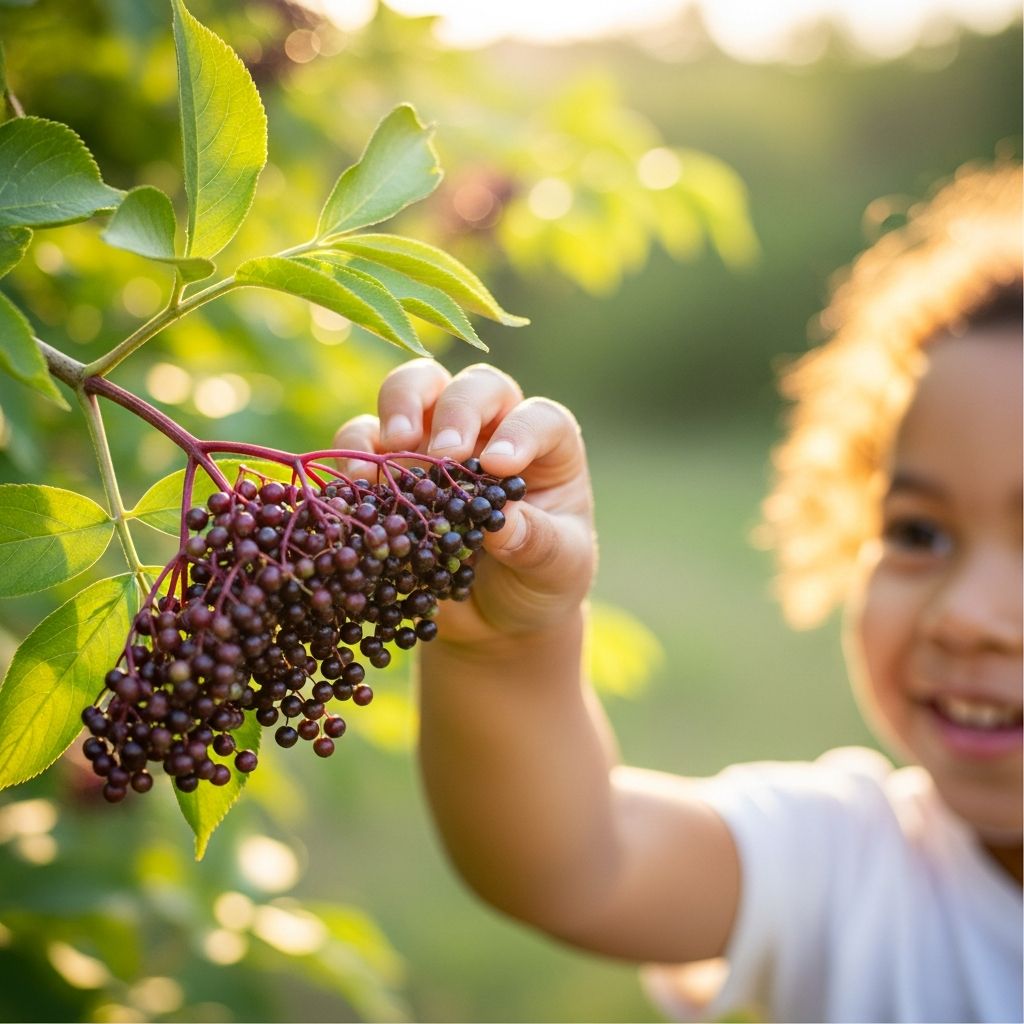
Elderberries contain several compounds that explain their traditional use and modern popularity. The fruit is particularly nutrient-dense, offering a range of vitamins, minerals, and phytonutrients that contribute to overall wellness. These bioactive components include:
- Vitamin C – A well-established immune supporter that functions as an antioxidant throughout the body
- Anthocyanins – Plant pigments responsible for the fruit’s deep color, known for their antiviral and anti-inflammatory properties
- Dietary fiber – Supports digestive health and promotes healthy gut function
- Flavonoids and polyphenols – Associated with broader immune modulation and cardiovascular support
- Potassium – Essential for cellular function and muscle health
The presence of these compounds, particularly anthocyanins and flavonoids, has prompted researchers to investigate whether consuming elderberries might offer protective benefits during respiratory illness. However, the presence of beneficial nutrients does not automatically translate to clinical effectiveness, especially in children.
What Does Current Research Actually Show About Elderberry Effectiveness?
The enthusiasm surrounding elderberry in popular media often exceeds what the scientific literature definitively supports. Several clinical trials have examined elderberry’s potential role in managing cold and flu symptoms, with mixed and limited results.
Key Research Findings and Their Limitations
One frequently cited study from 2004 found that elderberry reduced the duration of influenza by approximately four days when administered four times daily compared to placebo. Additionally, some research suggests that if taken early in the course of illness, elderberry may perform comparably to antiviral medications like Tamiflu. Meta-analyses of available studies have concluded that while elderberry may not prevent the development of colds altogether, it might influence the severity and duration of symptoms compared to placebo.
However, these findings come with significant caveats. The studies supporting elderberry benefits tend to be small in scale, low in quality, and inconsistent in their results. Many do not specifically include children as study participants. Notably, one of the few studies that did include children aged five and older found no substantial difference in the duration or severity of influenza symptoms. In fact, the elderberry group in that particular study experienced slightly longer illnesses.
Additional research on airline passengers found that while those taking elderberry supplements contracted respiratory infections at the same rate as those taking placebo, they appeared to recover somewhat faster. This nuance—that prevention may not be the strength, but recovery speed might be—is often lost in marketing messages.
How Elderberry Might Work Against Viral Infection
Understanding the proposed mechanism helps contextualize both the potential and limitations of elderberry as a supplement. Elderberry is high in antioxidants, which support immune function generally. The flavonoids and anthocyanins in elderberries are believed to have immune-modulating effects; theoretically, these compounds can attach to glycoproteins on virus surfaces and block them from entering and replicating within cells.
The broader principle is sound: antioxidants are indeed important for immune function. Yet this theoretical basis does not automatically mean that supplementing with antioxidants improves real-world clinical outcomes, particularly in children whose immune systems are still developing. The gap between how a substance works in laboratory conditions and how it performs in actual patient populations remains significant and often overlooked.
Forms and Delivery Methods for Children
Elderberry supplements for children are available in several formats, each with different considerations:
| Form | Characteristics | Age Suitability | Considerations |
|---|---|---|---|
| Gummies | Chewable, often fruit-flavored, appealing to children | 2 years and older | May contain added sugars or artificial ingredients; verify quality |
| Syrup | Liquid form, easy to dose, sometimes mixed with other ingredients | Variable by brand | Check ingredient labels for added sugars and other supplements |
| Lozenges | Dissolve in mouth, portable option | Typically 4+ years | May contain honey; avoid for children under one year |
| Capsules | Concentrated extract, standard dosing | Older children who can swallow pills | Less palatable for young children |
Pediatric formulations are typically less concentrated than adult versions, as children’s biological systems are more sensitive to supplementation. Manufacturers also often design these products to appeal to children’s taste preferences, recognizing that a supplement sitting unused on the shelf provides no benefit.
Safety Considerations and Important Warnings
While elderberry is generally considered safe when properly processed, several safety considerations warrant attention before giving it to children.
Raw Elderberries Are Toxic
Raw or uncooked black elderberries should never be given to children. The plant contains compounds that can cause nausea, diarrhea, and vomiting. Only processed elderberry products—whether syrups, extracts, or properly prepared supplements—are appropriate for consumption.
Age and Medical Condition Restrictions
Current evidence suggests elderberry extract is possibly safe in children five years of age and older when taken for up to three days. Safety data for younger children is insufficient. Additionally, elderberry should not be used in children with certain medical conditions, including those who are immunocompromised or have autoimmune diseases. The immune-modulating effects that might help otherwise healthy children could be problematic for those with compromised or dysregulated immune systems.
Supplement Interactions
Many commercial elderberry products contain additional ingredients such as echinacea, probiotics, or various vitamins. Before starting your child on any elderberry supplement, review the complete ingredient list and discuss it with your pediatrician, as interactions or sensitivities to other components may exist.
Role Within a Broader Immune Support Strategy
Even proponents of elderberry acknowledge that it should not function as a substitute for established immune health practices. Elderberry products should be part of a broader immune support routine, not a replacement for vaccines, adequate rest, proper hydration, and good hygiene practices. In fact, vaccination remains far more effective than any supplement for preventing influenza and other vaccine-preventable illnesses.
When considering whether to include elderberry in your child’s regimen, view it as a potential complement to fundamentals rather than a primary intervention. Ensuring your child receives adequate sleep, eats a balanced diet rich in fruits and vegetables, stays physically active, and maintains proper hand hygiene will always provide more substantial immune support than any supplement alone.
Practical Implementation and Dosing Guidance
If you decide, in consultation with your pediatrician, that elderberry might be appropriate for your child, several practical considerations apply. Products marketed for children typically come with age-appropriate dosing recommendations printed on the label. However, these recommendations may vary significantly between brands, making comparison shopping worthwhile.
Some parents use elderberry preventatively during cold and flu season, while others choose to administer it only when symptoms first appear. Research suggesting potential benefits has primarily focused on early intervention, with some studies indicating that timing matters—taking it within the first 24 to 48 hours of symptom onset may offer more benefit than waiting several days.
Quality varies considerably among commercial products. Selecting supplements from manufacturers who prioritize transparency about sourcing and manufacturing processes, provide third-party testing documentation, and avoid excessive added sugars or artificial ingredients will yield better products than bargain options with unclear sourcing.
What Pediatric Experts Actually Recommend
Professional pediatric organizations and individual pediatricians have shown considerable caution regarding elderberry, reflecting the limited and mixed evidence. Some pediatricians decline to recommend it due to insufficient safety and efficacy data specific to children. Others may view it as a low-risk option that some families wish to try, provided it does not replace evidence-based interventions and appropriate medical care.
The consensus among medical professionals is clear: elderberry is not a cure-all, and its use should occur only with pediatric guidance, particularly for children with existing health conditions. Before starting your child on elderberry or any supplement, a conversation with your pediatrician is essential.
Distinguishing Between Marketing Claims and Scientific Evidence
The gap between how elderberry is promoted in the wellness industry and what research actually demonstrates is substantial. Marketing often emphasizes traditional uses spanning centuries, suggests the supplement works nearly as well as prescription medications, and presents limited research as more conclusive than it actually is.
The reality is more measured: elderberry contains beneficial nutrients and compounds worthy of scientific study, but current evidence does not support its use as a primary cold or flu treatment in children. The studies that do exist suggest at best a modest effect on symptom duration in some populations—not the dramatic benefits implied by product advertisements.
Frequently Asked Questions
Q: Can I give my two-year-old elderberry supplements?
A: Some gummy formulations are marketed for children as young as two years, though research supporting safety and efficacy at this age is extremely limited. Consult your pediatrician before giving any supplement to a child under five.
Q: Will elderberry prevent my child from catching colds or flu?
A: No. Research does not support elderberry as a preventive measure for colds, though some studies suggest it might slightly shorten recovery time if the child does become ill.
Q: Can I make elderberry syrup at home?
A: Homemade syrups can be made, but commercial products undergo standardization and quality control that homemade versions may lack. If preparing at home, ensure you use properly dried berries, never raw ones, and follow tested recipes carefully.
Q: Are there any side effects?
A: When properly processed and taken as directed, elderberry is generally well-tolerated. However, raw elderberries cause gastrointestinal distress. Always review ingredient lists for potential allergens or sensitivities.
Q: Should elderberry replace vaccinations?
A: Absolutely not. Vaccines are far more effective at preventing influenza and other illnesses. Elderberry, if used at all, should complement—never replace—vaccination and other evidence-based preventive measures.
References
- Why Your Child May Benefit From Elderberry for Kids — Llama Naturals. Accessed January 2026. https://www.llamanaturals.com/blogs/the-herd/elderberry-for-kids
- Elderberries and Kids — Hello Pediatrics. Accessed January 2026. https://hellopediatrics.com/elderberries-and-kids/
- Elderberry for kids: worth it? — The Pediatrician Mom. Accessed January 2026. https://www.thepediatricianmom.com/blog/elderberry-in-kids
- What you should know about elderberry remedies — Children’s Mercy. January 2021. https://www.childrensmercy.org/parent-ish/2021/01/elderberry/
- Elderberry: Usefulness and Safety — National Center for Complementary and Integrative Health (NCCIH), National Institutes of Health. Accessed January 2026. https://www.nccih.nih.gov/health/elderberry
- Elderberry – Uses, Side Effects, and More — WebMD. Accessed January 2026. https://www.webmd.com/vitamins/ai/ingredientmono-434/elderberry