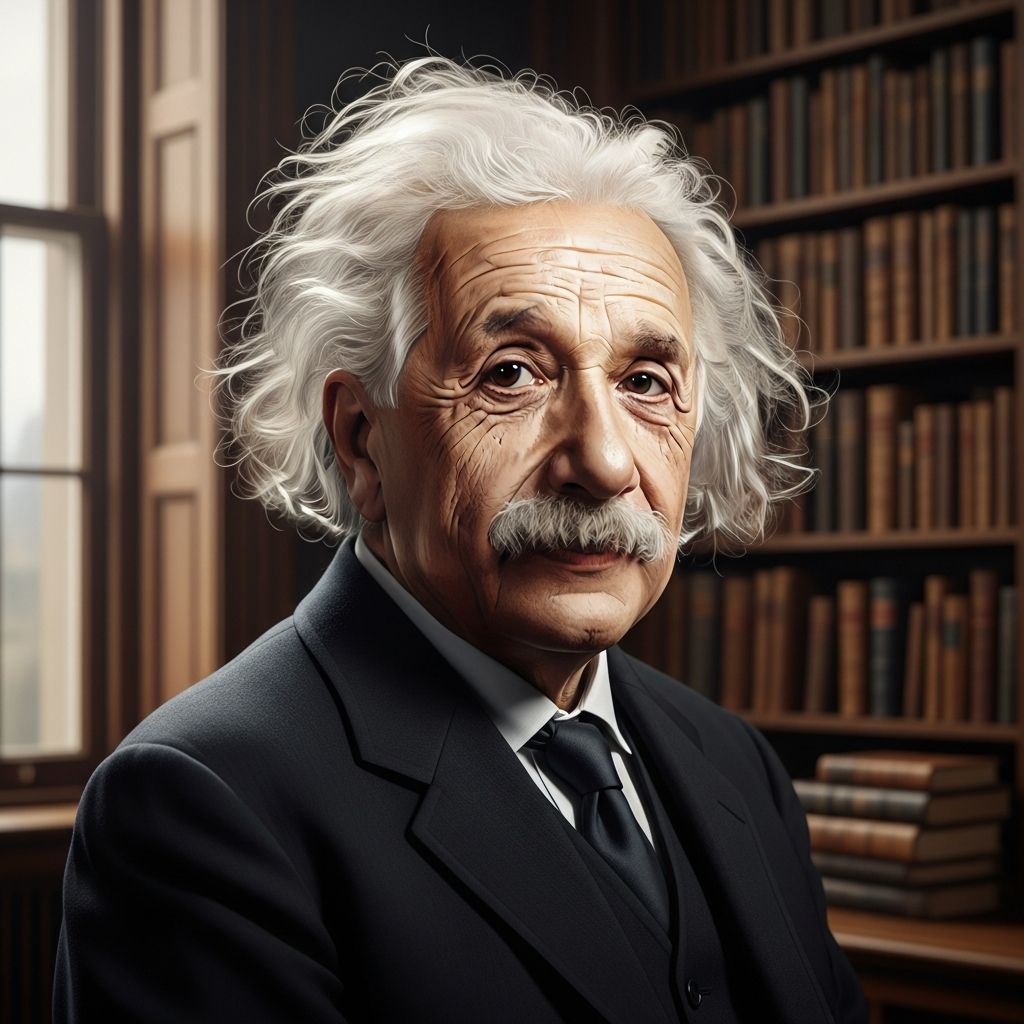
Albert Einstein was not only a revolutionary physicist; he was also a thoughtful observer of human nature, learning, and society. Known for his theories of relativity and his famous equation E = mc2, he spent as much time thinking about imagination, curiosity, and responsibility as he did about space and time.
Drawing from his recorded words, letters, and public talks, this article explores what Einstein’s most insightful quotes can teach us about how to think, learn, work, and raise the next generation.
Einstein in Brief: Why His Words Matter
Before diving into specific themes, it helps to understand who Einstein was and why his reflections carry weight beyond physics.
- Pioneering physicist: Einstein developed the special and general theories of relativity and reshaped how science understands space, time, gravity, and energy.
- Nobel Prize winner: In 1921, he received the Nobel Prize in Physics for explaining the photoelectric effect, a key step in quantum theory.
- Prolific thinker: He authored hundreds of scientific and non-scientific papers, including essays on education, pacifism, and social responsibility.
- Public intellectual: Einstein used his fame to speak about war, nuclear weapons, civil liberties, and the role of science in society.
Because he combined groundbreaking scientific insight with moral reflection, his quotes often bridge logic and wisdom, making them powerful guides for everyday life.
Curiosity and the Art of Asking Questions
Einstein repeatedly emphasized that the habit of questioning is more important than the accumulation of facts. His quotes on curiosity remind us that genuine learning starts with wonder, not with memorization.
What Curiosity Meant to Einstein
Einstein’s own life illustrates this principle. As a child, he was captivated by a simple compass and became obsessed with understanding the invisible forces that moved the needle—a fascination that later blossomed into deep questions about gravity and space-time.
- Curiosity over compliance: He resisted rote schooling and preferred independent exploration.
- Questions over quick answers: He believed that living with unanswered questions is better than clinging to false certainty.
- Wonder as fuel: Awe at nature’s order drove his scientific breakthroughs.
How to Practice Einstein-Style Curiosity
Inspired by his outlook, here are ways to bring more constructive curiosity into daily life:
- Turn statements into questions: Instead of saying, “This is hard,” ask, “What part of this am I not understanding yet?”
- Follow your confusion: Pay attention to moments when something does not make sense; that is often where real learning begins.
- Model curiosity for kids: Let children see you look things up, test ideas, and admit when you do not know.
Intelligence, Imagination, and the Limits of IQ
Einstein challenged the narrow idea of intelligence as test scores or raw processing power. His quotes reveal a broader vision that celebrates imagination and creativity alongside logic.
Einstein’s Broader View of Intelligence
Although he was a brilliant mathematician, Einstein often downplayed the importance of sheer mental speed. He valued the capacity to see connections and imagine possibilities more than the ability to repeat facts.
| Traditional View of Intelligence | Einstein-Inspired View |
|---|---|
| High test scores and quick recall | Ability to connect ideas and see patterns |
| Rote problem-solving | Creative and original problem framing |
| Speed as a sign of brilliance | Depth and persistence as signs of real insight |
Imagination as a Scientific Tool
Einstein’s most groundbreaking ideas came from what he called “thought experiments”—vivid mental scenarios such as imagining riding alongside a beam of light or watching clocks in different gravitational fields.
- Thought experiments: He mentally tested impossible situations long before equations were written down.
- Visual thinking: Rather than only manipulating symbols, he pictured physical situations in detail.
- Playfulness: He treated ideas like toys, turning them over and recombining them in unexpected ways.
For modern readers, his perspective suggests that nurturing imagination—through reading, art, tinkering, and daydreaming—is not a distraction from serious work but a vital ingredient of it.
Learning, School, and the Purpose of Education
Einstein’s quotes about education are often sharply critical of rigid schooling. He insisted that the real aim of education is to cultivate independent thinkers, not obedient test-takers.
Einstein’s Own School Experience
As a student, Einstein clashed with strict teachers and disliked authoritarian classrooms. He preferred self-directed study and flourished later in environments that gave him intellectual freedom.
- He struggled with drill-based teaching and rigid discipline.
- He thrived when allowed to explore mathematics and physics on his own terms.
- His later writings argue that curiosity withers under fear and excessive pressure.
Education as Cultivating Independent Minds
From his perspective, a good education should:
- Encourage questioning: Students should be able to challenge assumptions respectfully.
- Promote intrinsic motivation: Learning should be driven by interest, not just grades or praise.
- Value depth over coverage: Understanding a few ideas deeply is better than skimming many.
Parents, teachers, and mentors can use this lens to evaluate whether a learning environment is helping children become curious, self-directed adults or merely training them to comply.
Work, Persistence, and the Role of Failure
Einstein’s quotes often challenge the myth of the effortless genius. He described himself as “passionately curious” rather than extraordinarily gifted and emphasized persistence, patience, and the ability to learn from mistakes.
Failure as a Pathway to Discovery
Einstein’s career included many wrong turns and unfinished projects, including his decades-long, ultimately unsuccessful attempt to create a unified field theory.
- His “miracle year” in 1905 followed years of working as a patent clerk while developing ideas in his spare time.
- His later unfulfilled search for a single theory of everything did not diminish his earlier achievements.
- He saw mistakes as unavoidable side-effects of pushing into unknown territory.
Practical Takeaways on Effort and Resilience
From Einstein’s attitude toward work, we can draw some durable principles:
- Normalize struggle: Difficulty is not a sign you lack talent; it is a sign you are doing something non-trivial.
- Protect deep work: Einstein guarded long stretches of uninterrupted time for thinking and calculation.
- Detach identity from outcomes: See each project as an experiment, not a verdict on your worth.
Ethics, Responsibility, and the Power of Science
Einstein’s quotes on ethics and responsibility are deeply shaped by the political upheavals of the 20th century. As a Jewish scientist who left Germany when the Nazi regime came to power, and later as someone whose work was connected to the development of nuclear weapons, he felt a strong obligation to speak about the moral use of scientific knowledge.
From Relativity to Responsibility
Einstein’s work on mass–energy equivalence (E = mc2) helped make nuclear energy theoretically possible. When it became clear that this knowledge could be used for destructive purposes, he advocated for international cooperation and controls on nuclear weapons.
- He co-signed a famous letter urging the United States government to explore nuclear research during World War II, concerned about Nazi Germany doing the same.
- After the war, he supported disarmament and global governance to reduce the chance of nuclear catastrophe.
- He argued that scientific progress must be guided by ethical reflection, not left to politics alone.
What His Moral Reflections Mean Today
Applied to contemporary life, Einstein’s stance suggests that:
- Technical skill without ethical thinking is dangerous, whether in physics, AI, or finance.
- Individuals have a duty to understand the broader consequences of their work.
- Global problems like climate change or nuclear risk require cooperation that transcends national interests.
Family, Childhood, and Nurturing Young Minds
Einstein’s recorded comments about children and family life show a deep belief in the importance of emotional security and intellectual freedom. While history remembers him for abstract equations, many of his quotes speak directly to parents and caregivers.
Creating a Climate of Trust and Play
Einstein believed that children learn best when they feel safe to experiment, make mistakes, and explore. His emphasis on curiosity and imagination naturally extends to how adults interact with kids.
- Less fear, more play: Reprimands and constant pressure to perform can crush natural curiosity.
- Conversation over commands: He favored reasoning with children and inviting them into shared discovery.
- Respect for individuality: Each child’s interests and tempo of learning should be honored.
Practical Ideas for Parents Inspired by Einstein
his perspective suggests several concrete approaches:
- Provide open-ended toys and tools—blocks, art supplies, basic science kits—rather than only outcome-driven activities.
- Ask children what they notice or wonder about instead of simply telling them facts.
- Celebrate process (“You kept trying different ways”) more than results (“You got an A”).
Humility, Humor, and the Person Behind the Legend
Einstein’s quotes are often laced with self-deprecating humor. Despite his fame, he tended to minimize his own importance and poke fun at the myth of the genius scientist.
Einstein’s Quiet Lifestyle
Though globally recognized, Einstein preferred simple routines: walking, sailing, playing the violin, and engaging in long conversations with friends and colleagues.
- He rarely chased wealth or luxury, valuing time to think above status symbols.
- He maintained that his insights were built on the work of many others before him.
- He joked about his absent-mindedness and his famous wild hair, undermining the pedestal others placed him on.
Why His Humility Matters
His attitude offers a counterweight to a culture that often equates visibility with value:
- Genuine achievement does not require constant self-promotion.
- The most interesting lives may look ordinary from the outside.
- Humor about one’s own flaws can coexist with serious commitment to meaningful work.
Einstein’s Wisdom in Everyday Decisions
Einstein’s quotes are not only for classrooms or laboratories; they can guide daily choices about how we spend time, what we value, and how we relate to others.
Applying Einstein-Inspired Principles
- When choosing a career: Consider roles that invite curiosity, autonomy, and problem-solving, rather than only high pay.
- When facing a tough problem: Step back and reframe the question, just as Einstein used thought experiments.
- When raising or teaching children: Protect time for play, questions, and exploration without constant evaluation.
- When using technology or scientific tools: Ask how they affect human dignity, privacy, and the planet.
Frequently Asked Questions (FAQs)
Q: Did Einstein really struggle in school?
Einstein did well in subjects he cared about, such as mathematics and physics, but he disliked rigid, authoritarian teaching and sometimes clashed with teachers. Biographers note that his reputation as a poor student is exaggerated, yet his frustration with traditional schooling was real and influenced his later views on education.
Q: Was Einstein against memorization and exams?
Einstein criticized education systems that emphasized rote memorization over understanding. He believed that exams and strict grading can stifle curiosity if they become the main focus. He preferred teaching methods that encourage independent thinking, creativity, and genuine interest in the subject.
Q: How did Einstein balance science and ethics?
Einstein saw scientific knowledge as powerful but morally neutral; its impact depends on how humans choose to use it. After recognizing the potential of nuclear energy implied by his work on mass–energy equivalence, he advocated for arms control, international cooperation, and responsible use of scientific discoveries.
Q: What can parents learn from Einstein’s outlook?
Parents can draw from Einstein’s emphasis on curiosity, imagination, and emotional security. Providing a home environment with open conversation, opportunities for free play, and respect for a child’s individual interests aligns closely with the spirit of his reflections on learning and growth.
Q: Are all Einstein quotes authentic?
No. Many sayings are incorrectly attributed to Einstein or loosely paraphrased over time. To verify authenticity, historians rely on his letters, speeches, and published essays preserved in reputable archives and scholarly collections.
References
- Biography — AlbertEinstein.com. 2023-01-01. https://www.alberteinstein.com/biography/
- Albert Einstein Achievements — Bibliotheca Alexandrina. 2005-01-01. https://www.bibalex.org/Einstein2005/Achievements.htm
- Albert Einstein — Encyclopaedia Britannica. 2024-01-01. https://www.britannica.com/biography/Albert-Einstein
- Albert Einstein – Nobel Prize Winners – Biography — Biography.com. 2023-05-10. https://www.biography.com/scientists/albert-einstein
- Albert Einstein — Einstein Papers Project / Wikipedia primary compilation. 2024-01-15. https://en.wikipedia.org/wiki/Albert_Einstein