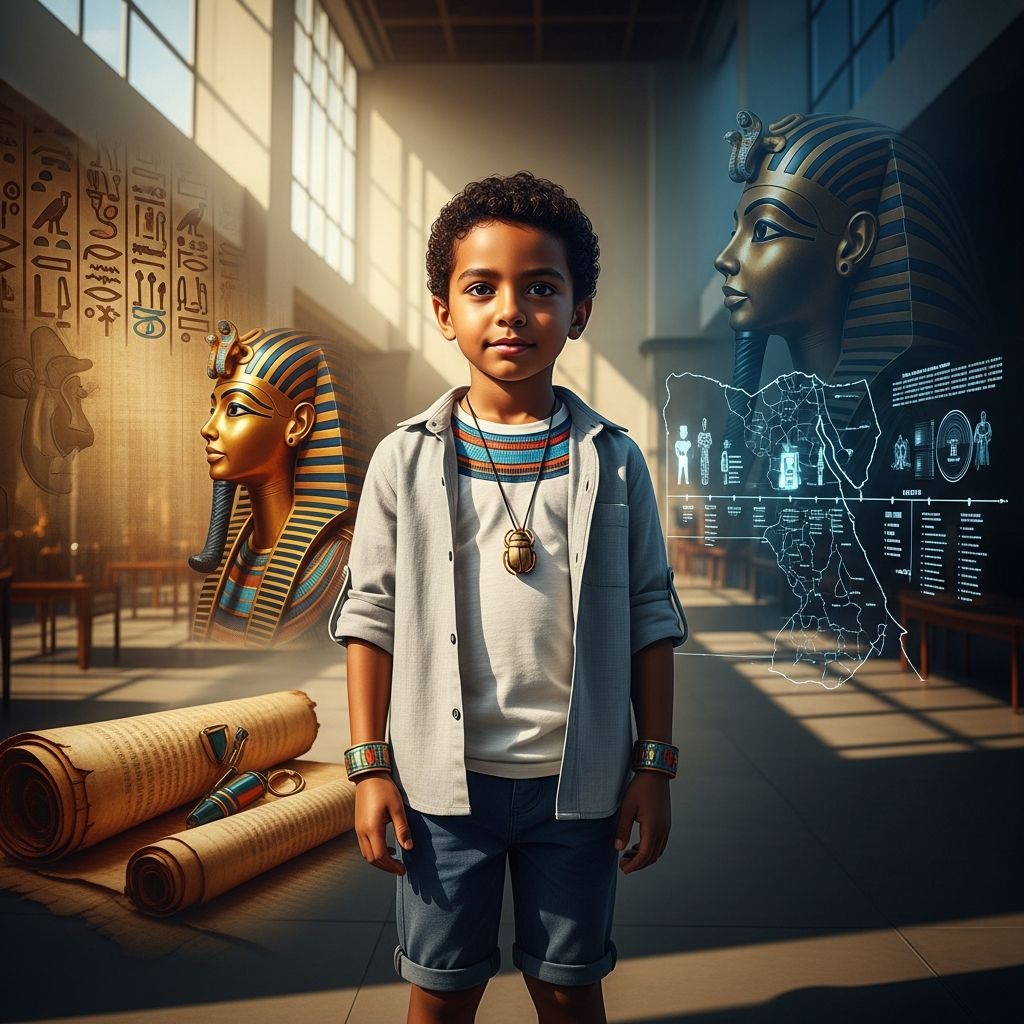
Egyptian boy names stand at the crossroads of ancient pharaonic heritage, Arabic and Islamic traditions, Coptic Christian history, and modern North African culture. They offer parents powerful choices that feel rich in meaning, global in appeal, and deeply rooted in one of the world’s oldest civilizations.
Why Choose an Egyptian Boy Name?
Egypt is synonymous with pyramids, sacred rivers, and legendary rulers, and its names reflect this long legacy of strength, wisdom, faith, and resilience. Choosing an Egyptian boy name can honor family roots, celebrate African and Middle Eastern culture, or simply bring a timeless, story-filled name into the modern world.
- Deep history: Many names trace back to ancient deities, royal dynasties, or early religious leaders.
- Rich meanings: Common themes include courage, faith, justice, wisdom, and light.
- Modern usability: A growing number of Egyptian names sound familiar or easy to pronounce in many languages, making them ideal for multicultural families.
Main Types of Egyptian Boy Names
Because Egypt has layered cultures and languages over thousands of years, Egyptian boy names come from several distinct but overlapping traditions. Understanding these categories makes it easier to narrow down the style that best fits your family.
- Ancient Egyptian and pharaonic names: Names linked to gods, kings, and symbolic concepts from the Nile Valley’s earliest civilizations.
- Arabic and Islamic names: The majority of modern Egyptian boy names follow Arabic and Islamic naming traditions.
- Coptic and Christian names: Influenced by early Christianity and the Coptic Church, often with Biblical roots.
- Place- and nature-inspired names: Names drawn from cities, landmarks, and natural elements like the Nile or the sun.
Ancient-Inspired Egyptian Boy Names
If you love the mystique of hieroglyphs, pyramids, and temple ruins, ancient-style Egyptian names can be especially appealing. These names often carry bold meanings tied to kingship, divinity, or cosmic forces.
Below is a sample of ancient-inspired boy names that can still work for modern children, either as first names or as meaningful middle names.
| Name | Approximate Meaning | Association |
|---|---|---|
| Ramses | “Born of Ra” or “son of the sun god” | Popular name of several powerful pharaohs |
| Osiris | Linked to power, rebirth, and the afterlife | Major deity of the underworld and renewal |
| Horus | Often interpreted as “falcon” or “sky” | Falcon-headed god of kingship and protection |
| Thoth | Associated with wisdom and writing | God of knowledge and the moon |
| Khufu | Connected with protection or strength | Pharaoh credited with the Great Pyramid at Giza |
| Amun | “The hidden one” or mysterious power | One of the chief gods of ancient Egypt |
| Set | Linked to storms, power, and chaos | God associated with the desert and thunder |
These names are strong and dramatic, making them excellent choices for parents drawn to mythological or heroic themes. When using a bolder name like Osiris or Set, many families choose a softer middle name to balance the full name.
Arabic and Islamic Names Popular in Egypt
In modern Egypt, most boys receive names of Arabic origin, many of which appear in the Quran or Islamic history. These names emphasize virtues such as generosity, piety, and courage, and they are widely recognized across the Middle East and beyond.
- Mohamed / Muhammad: One of the most common Egyptian boy names, honoring the Prophet of Islam.
- Ahmed / Ahmad: Typically interpreted as “highly praised” or “praiseworthy,” carrying a strong spiritual connotation.
- Ibrahim: The Arabic form of Abraham, associated with faith and fatherhood.
- Omar / Umar: Meaning “long-lived” or “flourishing,” linked with leadership and justice.
- Karim: Meaning “generous” or “noble,” often chosen to inspire kindness and dignity.
- Khaled: Meaning “eternal” or “immortal,” symbolizing lasting impact and resilience.
These names are especially practical for families who want a name that is recognizable across the Arabic-speaking world and accepted in both religious and secular environments.
Coptic and Christian Egyptian Boy Names
Egypt is also home to one of the world’s oldest Christian communities, and Coptic Christian families often choose names with Biblical or Greek roots. Many of these names will sound familiar to English speakers while still reflecting Egyptian identity.
- Mark / Marcos: Popular among Coptic Christians, linked to Saint Mark, who is traditionally associated with the founding of the Coptic Church.
- George / Girgis: A beloved saint’s name, often chosen to symbolize bravery and faith.
- Anton / Antonios: Drawn from early Christian monastic traditions in Egypt, linked to spiritual strength.
- Mina: A unisex name in some contexts, widely used for boys in Coptic families and associated with devotion.
These names work especially well for families looking to honor Egypt’s Christian heritage while choosing names that fit comfortably in Western countries.
Place and Nature Names from Egypt
For parents who want something distinctive but instantly evocative of Egypt, place names and nature-themed names can be a beautiful option. Many of these names have a modern, travel-inspired vibe while still carrying a strong link to history.
- Cairo: Named after Egypt’s bustling capital; feels bold and modern as a first name.
- Giza: A nod to the iconic pyramids; short, memorable, and unique.
- Luxor: Inspired by the ancient city filled with temples and monuments.
- Nile: A nature name linked to the river that made Egyptian civilization possible.
- Ra: A compact, striking choice referencing the ancient sun god and the sun’s life-giving power.
These names are especially appealing in international settings, where their links to famous locations and natural wonders can spark curiosity and conversation.
Gentle and Virtue-Themed Egyptian Boy Names
Not every name has to sound like a pharaoh or warrior. Many Egyptian and Arabic-origin names highlight gentle virtues and positive character traits, perfect for parents who prefer softer sounds and meanings.
- Lateef / Latif: Means “kind,” “gentle,” or “pleasant,” emphasizing compassion.
- Salem: Relates to peace and safety, often understood as “safe” or “peaceful.”
- Shakir: Means “thankful” or “grateful,” encouraging an attitude of appreciation.
- Fahim: Conveys intelligence and understanding, ideal for parents who value wisdom.
- Masoud / Masuda: Refers to happiness and good fortune, symbolizing a joyful life.
Virtue names can be powerful blessings, subtly expressing the hopes you carry for your son’s personality and future character.
Strong and Heroic Egyptian Boy Names
If you envision a name that sounds fearless and confident, Egyptian culture offers many choices that signal bravery, leadership, and strength. These names often have sharp consonants and bold meanings, giving them a commanding presence.
- Bassel: Commonly interpreted as “brave,” “valiant,” or “royal in courage.”
- Jabari: Widely used across Africa, often meaning “brave” or “fearless.”
- Akil: Means “wise” or “intelligent,” pairing mental strength with leadership.
- Donkor: Often associated with humility and perseverance, a quiet form of strength.
- Youssef / Yusuf: The Arabic form of Joseph, linked to resilience, patience, and integrity.
Names like these resonate with parents who want to instill a sense of courage and determination while still choosing names that work across cultures and languages.
Balancing Tradition and Modern Style
Many Egyptian families combine a familiar religious or family name with a more modern or global-sounding middle name. This allows a child to honor their heritage while still having a name that fits seamlessly in schools and workplaces abroad.
- Example combinations (for inspiration only):
- Mohamed Karim – A classic religious first name paired with a virtue-based middle name.
- Omar Nile – A traditional Arabic given name with a nature-inspired nod to Egypt.
- Ibrahim Luxor – A prophetic name balanced with a location-based middle name.
- Ramses Ali – A pharaonic first name softened by a very common Arabic middle name.
When building combinations, think about rhythm, how easily the full name can be pronounced, and which parts you expect people to use day-to-day.
Tips for Choosing the Right Egyptian Boy Name
Naming a child can feel both exciting and overwhelming, especially when you’re drawing from such a rich cultural tradition. A simple, thoughtful process can make the decision clearer.
- Clarify your priorities. Decide what matters most: meaning, sound, religious significance, family tradition, or uniqueness.
- Check pronunciation in key languages. Say the name out loud in the languages your child will grow up with, and consider potential nicknames.
- Understand the full meaning. Look up the name’s origins, historical associations, and cultural weight so there are no surprises later.
- Consider initials and spelling. Make sure the initials don’t accidentally spell something unwanted, and choose a spelling you’re comfortable explaining.
- Say it with your surname. Combine first, middle, and last names to test the flow; a short surname often pairs well with longer first names like Abdelrahman or Tutankhamun, while long surnames may suit shorter names like Ra or Amr.
Sample Egyptian Boy Name Ideas by Style
If you’re still narrowing down possibilities, this quick-reference list can help spark ideas. Treat these as starting points to inspire your own combinations.
Short and Modern-Sounding
- Amr – Compact, strong, and easy to pronounce in many languages.
- Mo – A friendly, casual nickname that can stand alone or shorten Mohamed.
- Ra – Striking and minimal, perfect for parents who love bold simplicity.
- Nour – Meaning “light,” a gentle but modern-feeling choice.
Classic and Traditional
- Ahmed – A time-honored favorite with spiritual depth.
- Ibrahim – A respectful prophetic name with a calm, serious tone.
- Hassan – Often understood as “handsome” or “good,” familiar across many cultures.
- Yahya – Typically linked to the prophet John, with a lyrical sound.
Bold and Mythic
- Ramses – Royal and unforgettable, ideal as a first or middle name.
- Osiris – Mythic and mysterious, great for parents who love legendary names.
- Sobek – Rugged and powerful, associated with the Nile’s crocodile god.
- Set / Seth – Short, strong, and rooted in ancient storytelling.
Frequently Asked Questions About Egyptian Boy Names
Are Egyptian boy names only for families with Egyptian heritage?
No. While many parents choose Egyptian names to honor their ancestry, families from all backgrounds can appreciate the beauty, meaning, and history behind these names. As with any cultural name, learning how to pronounce and use it respectfully is important.
Do Egyptian parents usually give their children multiple names?
It is common in Egypt and many other Arab-majority countries for a child to have a given name followed by one or more family names that trace lineage. In other countries, Egyptian names are often shortened to a first and last name for simplicity, with an optional middle name.
How can I be sure I’m pronouncing an Egyptian or Arabic name correctly?
Listening to native speakers is the best guide. You can ask Egyptian friends or community members, consult recordings online, or speak with religious or cultural leaders who use these names regularly. Once you learn the correct pronunciation, practice saying it aloud until it feels natural.
Are ancient Egyptian god names appropriate for everyday use?
Attitudes differ. Some families love mythological names like Horus or Thoth and treat them as bold, symbolic choices. Others prefer to keep divine names as middle names or choose more neutral options out of religious caution or cultural sensitivity.
Can Egyptian boy names work in Western schools and workplaces?
Yes. Many names such as Omar, Karim, Youssef, and Amir are already familiar in English-speaking countries. If you choose a rarer name, you can help teachers and peers by providing a simple pronunciation guide and explaining the meaning, which can become a positive conversation starter.
Bringing a Piece of Egypt Into Your Son’s Name
Whether you gravitate toward the grandeur of pharaohs, the serenity of virtue-based names, or the fresh feel of location-inspired choices, Egyptian boy names offer a rare blend of history, spirituality, and style. The right name can quietly carry stories of the Nile, the desert, and the stars into your child’s everyday life.
Take time to reflect on which elements of Egypt’s heritage speak to your heart most strongly, explore meanings carefully, and choose a name that feels both meaningful and wearable. In doing so, you give your son not just a label, but a lifelong connection to one of humanity’s most enduring cultures.