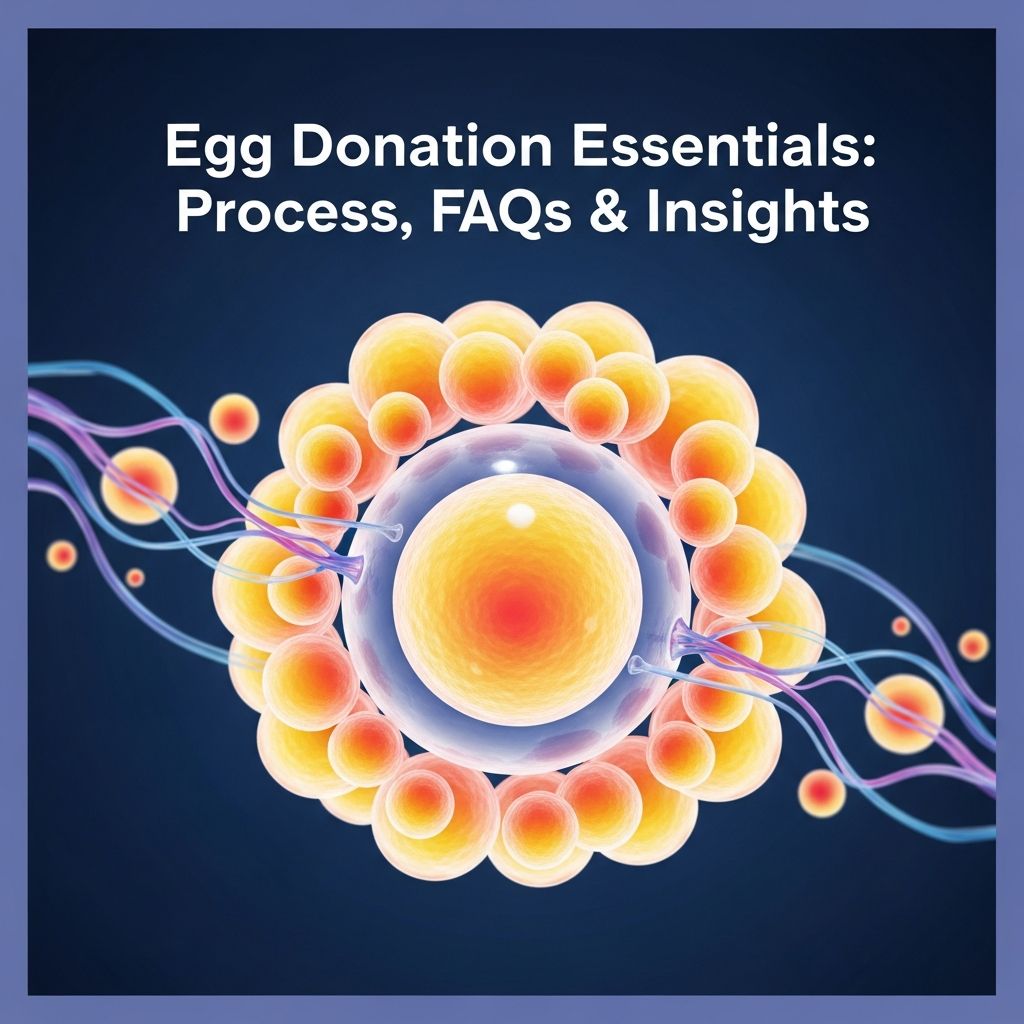
Egg donation enables individuals or couples facing infertility to build families using eggs from healthy donors combined with IVF techniques. This process involves rigorous screening, hormonal preparation, and a minor surgical retrieval, offering hope to recipients unable to produce viable eggs.
Understanding the Role of Egg Donation in Family Building
Egg donation has become a cornerstone of assisted reproductive technology, particularly for women with diminished ovarian reserve, premature ovarian failure, or those past typical childbearing age. Donated eggs are fertilized in a lab with sperm from a partner or donor, and resulting embryos are transferred to the recipient’s uterus. Success rates often exceed 50% per cycle in top clinics, significantly higher than standard IVF with older eggs.
Recipients include heterosexual couples, same-sex male couples, single parents, and postmenopausal women. Donors, typically young women aged 21-33, undergo extensive health checks to ensure egg quality and minimize risks. The procedure synchronizes donor and recipient cycles for optimal timing.
Qualifying as an Egg Donor: Key Criteria and Screening
Aspiring donors must meet strict standards to protect both themselves and recipients. Common requirements include:
- Age 21-33 years, as younger donors yield higher-quality eggs.
- BMI between 19-29.9 for hormonal balance and procedure safety.
- Non-smoker, no recreational drugs, and no recent tattoos or piercings to reduce infection risks.
- Good physical and mental health, with comprehensive family medical history review.
- U.S. residency, English proficiency, and ability to commit to 2-4 months per cycle.
Screening begins with an application and phone interview, followed by in-clinic evaluations: physical exams, blood tests for infectious diseases and hormones, genetic screening, ultrasounds, and psychological counseling. This multi-step process, often spanning weeks, ensures only top candidates proceed. About 10-20% of applicants qualify due to these rigorous standards.
Step-by-Step Breakdown of the Egg Donation Journey
The donation cycle typically lasts 4-6 weeks once matched with a recipient. Here’s the phased approach:
Initial Preparation and Cycle Synchronization
Donors start with birth control pills to align cycles with the recipient, suppressing natural ovulation. After 2-3 weeks, daily self-injections begin: follicle-stimulating hormone (FSH) for 8-14 days to grow multiple follicles (aiming for 10-20 eggs), plus estrogen and progesterone support.
Monitoring and Stimulation Phase
Clinic visits every 2-3 days include transvaginal ultrasounds to track follicle growth (10-20mm ideal) and blood tests for estrogen levels. Adjustments to meds prevent ovarian hyperstimulation syndrome (OHSS), a potential side effect. Donors report bloating, mood swings, or mild discomfort from shots.
Egg Retrieval Procedure
Once mature, a trigger shot (hCG or Lupron) is given 36 hours before retrieval. Under light sedation, a needle guided by ultrasound aspirates eggs through the vaginal wall—a 20-30 minute outpatient procedure. Donors recover in 2-3 hours, often driving home same day. 9-18 eggs are typical yields.
Post-Retrieval and Fertilization
Eggs are immediately fertilized via IVF (standard insemination or ICSI). Embryos develop 3-5 days before fresh transfer to the recipient or freezing. Donors resume normal activities within days, with follow-up to confirm recovery.
Recipient Experience: From Matching to Embryo Transfer
Recipients select donors via profiles (anonymous or known) based on traits like ethnicity, education, and health. After matching, their uterus prepares with estrogen and progesterone. On retrieval day, sperm fertilizes eggs; embryos transfer 3-5 days later. Pregnancy tests follow two weeks post-transfer. Frozen cycles offer flexibility without synchronization.
| Aspect | Donor Role | Recipient Role |
|---|---|---|
| Medications | Stimulation injections (10-14 days) | Uterine lining prep (estrogen/progesterone) |
| Monitoring | 6-10 clinic visits | Fewer visits, bloodwork |
| Procedure Day | Sedated retrieval (30 min) | Sperm provision or embryo transfer |
| Timeline | 4-6 weeks per cycle | Sync + 2-week wait |
Compensation, Legalities, and Repeated Donations
Donors receive $5,000-$10,000 per cycle as compensation for time, discomfort, and commitment—not payment for eggs, per FDA guidelines. Checks are issued post-retrieval, taxable as income. Partial pay covers cancellations.
Legal contracts ensure donors relinquish all parental rights; children have no claim on donors. Anonymous donations protect identities, though some clinics allow future contact. Donors can repeat up to 6 times if healthy, with state limits varying.
Potential Risks and Side Effects for Donors
While generally safe, risks include:
- OHSS: Fluid buildup causing abdominal pain (1-5% severe cases); monitored closely.
- Injection site reactions, bloating, mood changes from hormones.
- Retrieval risks: bleeding, infection (<0.5%), anesthesia effects.
- Long-term: No proven fertility impact, but multiple cycles warrant caution.
Psychological screening addresses emotional aspects; many donors report fulfillment outweighing temporary side effects.
Success Rates and Outcomes
Live birth rates reach 50-70% per transfer with donor eggs, far surpassing age-related IVF declines. Factors: donor youth, embryo quality, recipient health. Multiple cycles boost cumulative success to 80-90%.
Frequently Asked Questions About Egg Donation
Can I choose my recipient or remain anonymous?
Yes, agencies match based on preferences; anonymity is standard but semi-open options exist.
How long is the full commitment?
Screening: 1-2 months; active cycle: 4-6 weeks; total 2-4 months.
Will donating affect my future fertility?
No evidence links donation to infertility; ovaries retain reserves.
Can men or same-sex couples use donor eggs?
Absolutely, via gestational surrogacy post-IVF.
What if the cycle is canceled?
Partial compensation covers time; rescheduling is common.
Are there travel requirements?
Most done locally; some programs reimburse travel.
Do I need to take time off work?
Only retrieval day; monitoring fits schedules.
What’s the emotional impact like?
Counseling helps; most feel empowered by helping others conceive.
Why Consider Egg Donation?
For donors, it’s altruistic with fair pay; for recipients, a proven path to parenthood. Advances in screening and cryopreservation continue improving safety and efficacy. Consult fertility specialists for personalized advice.
References
- Egg Donation Process at our Egg Donor Clinic — Egg Donor America. Accessed 2026. https://www.eggdonoramerica.com/become-egg-donor/the-donation-process
- Egg Donation Process for Recipients — UCSF Health. Accessed 2026. https://www.ucsfhealth.org/health-articles/egg-donation-process-for-recipients
- Egg Donation Procedure — CCRM Fertility. Accessed 2026. https://www.ccrmivf.com/egg-freezing/donate-your-eggs/the-procedure/
- Egg Donation Fact Sheet — American Society for Reproductive Medicine (ReproductiveFacts.org). Accessed 2026. https://www.reproductivefacts.org/news-and-publications/fact-sheets-and-infographics/egg-donation/
- Egg Donation (for the donor) — Yale Medicine. Accessed 2026. https://www.yalemedicine.org/conditions/egg-donation-donor