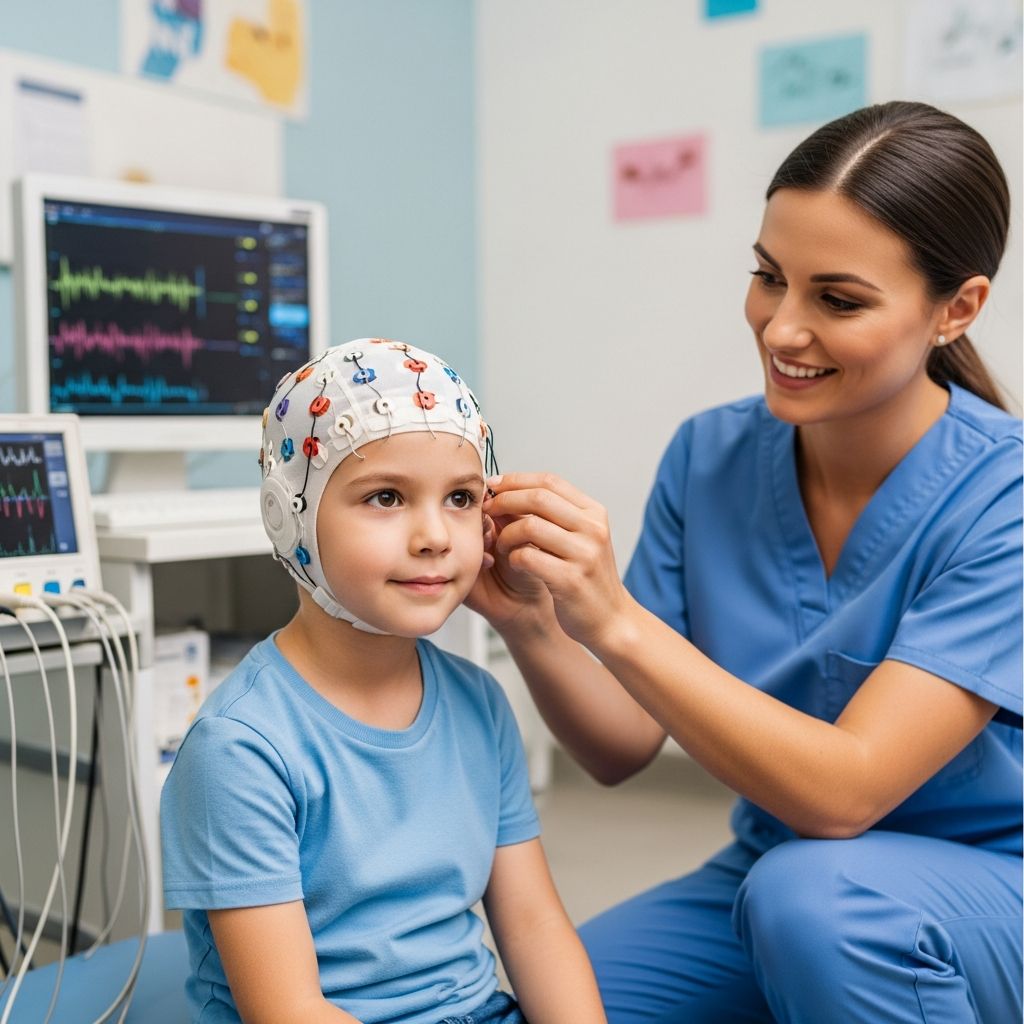
An electroencephalogram, usually called an EEG, is a common test that records the brain’s electrical activity using small sensors placed on the scalp. It is painless, does not send electricity into the body, and helps doctors understand how a child’s brain is working, especially if there are seizures, unusual spells, or changes in behavior.
What Is an EEG and What Does It Measure?
The brain constantly produces tiny electrical signals as nerve cells communicate with each other. An EEG picks up these signals from the surface of the head and displays them as wave patterns that specialists can study. Different patterns can suggest typical brain function or possible problems, such as a seizure tendency or effects from an injury or illness.
- The test uses small metal discs or sensors, called electrodes, placed on the scalp.
- These electrodes only record activity; they do not cause shocks or pain.
- The recorded signals are shown on a screen as wavy lines that change over time.
Why a Child Might Need an EEG
Doctors order EEGs for many reasons related to how a child is moving, behaving, or responding. The test is one tool among others, such as blood work or brain imaging, and results are interpreted together with a child’s medical history and examination.
- Suspected seizures or epilepsy: Episodes of staring, shaking, collapsing, or confusion may prompt an EEG.
- Unusual spells: Brief events like sudden limpness, repeated eye fluttering, or periods of unresponsiveness may be evaluated.
- Sleep-related concerns: Difficulty falling or staying asleep, night events, or suspected sleep disorders can lead to specialized EEGs done during sleep.
- Developmental or behavior changes: Regressions, new learning problems, or sudden shifts in behavior sometimes warrant checking brain activity.
- Monitoring after injury or serious illness: EEGs may help assess the brain after head trauma, infections affecting the brain, or other critical conditions.
Types of EEG Studies for Kids
EEG studies can be short or long and may take place in different settings depending on the questions the medical team is trying to answer. Parents can ask which type is being recommended and why.
| Type of EEG | Where It’s Done | Typical Duration | When It’s Used |
|---|---|---|---|
| Routine EEG | Clinic or hospital EEG lab | About 20–60 minutes | First look at possible seizures, spells, or unusual behaviors |
| Sleep-deprived EEG | Clinic or hospital | Similar to routine, but done when the child is tired or sleeping | When brain activity during drowsiness or sleep may reveal patterns not seen when fully awake |
| Video EEG monitoring | Hospital or specialized monitoring unit | Several hours to several days | Captures both brain waves and video of behaviors to link events with EEG changes |
| Ambulatory EEG | At home with portable recorder | 1–3 days in many cases | Records everyday activity and sleep at home when spells occur infrequently in clinic |
How to Prepare Your Child for an EEG
Good preparation helps the test go smoothly and reduces anxiety for both child and parent. Small steps the day before and the day of the EEG can make a big difference in comfort and cooperation.
- Discuss the test in simple terms: Explain that stickers or small buttons will be placed on the head to “listen” to the brain.
- Wash the hair the night before: Use shampoo only, no conditioner, oils, or hair products that can prevent electrodes from sticking well.
- Avoid braids or tight styles: Simple, loose hair makes it easier for staff to reach the scalp.
- Follow food and sleep instructions: Some studies require staying up later or waking up early, while others may need a regular sleep schedule.
- Bring comfort items: A favorite toy, blanket, or book can help a child stay calm and still.
- Share medication lists: Tell the medical team about all medicines and supplements; do not stop any medication without clear instructions.
What Happens During the EEG Appointment
Most children are nervous about unfamiliar environments and equipment. Knowing the basic steps allows parents to prepare and reassure them. Staff members are trained to work with kids and often use play, stories, or distractions.
- Check-in and questions: On arrival, parents review the child’s medical history, describe the episodes of concern, and sign consent forms.
- Measuring and marking: The technologist measures the child’s head and marks locations where electrodes will be placed to ensure consistent spacing.
- Cleaning the scalp: A mild scrub is used to clean small areas of the scalp so the electrodes make good contact.
- Placing the electrodes: Sensors are gently attached with paste or adhesive and connected by thin wires to the recording machine.
- Recording phase: The child is asked to relax, lie still, and sometimes open and close the eyes, look at flashing lights, or take deep breaths as directed.
- Completion and cleanup: Once recording is finished, the electrodes are removed and the paste is wiped away; hair may feel sticky until washed at home.
How Children Typically Feel During the Test
EEGs are painless, but they ask a lot from children: staying still, tolerating sticky paste, and managing boredom. Emotional support and distraction help reduce discomfort. Parents often remain in the room, which can be reassuring.
- Children might feel mild tugging or coolness on the scalp when the skin is cleaned and electrodes are applied.
- Flashing lights or deep breathing exercises can feel strange; staff explain each step before it happens.
- Young children may become restless; breaks or soothing activities such as stories or music can help.
Special Parts of the EEG: Lights, Breathing, and Sleep
Some EEGs include specific activities that help the brain show patterns that might not appear during quiet rest. These are usually brief and supervised closely.
- Flashing lights (photic stimulation): The child looks at a light that blinks at different speeds while brain waves are recorded.
- Deep breathing (hyperventilation): The child is asked to breathe deeply for a short time, often for several minutes.
- Sleep recording: For some tests, the child is allowed or encouraged to fall asleep during the recording, especially if sleep-related seizures are suspected.
These parts of the study may briefly increase the chance of a seizure in a child who already has a seizure tendency. The team is prepared to respond quickly and keep the child safe if that happens.
Safety, Risks, and Limitations
Parents often worry about whether an EEG will hurt or cause long-term problems. The good news is that it is considered a very safe test with minimal physical risk. Understanding what it can and cannot do helps set realistic expectations.
- No electrical current enters the body: Electrodes only detect signals; they do not send electricity into the head.
- Skin irritation is usually mild: Some children have temporary redness or soreness from the adhesive or cleaning paste.
- Seizure triggering is uncommon: If a seizure occurs during testing, the child is closely monitored and treated if necessary, and the event can provide valuable diagnostic information.
- Normal EEGs do not rule out seizures: A child may still have epilepsy even if one EEG looks typical, because abnormal patterns may not appear during a short recording.
- Abnormal EEGs are not always epilepsy: Some irregularities can occur in children without seizure disorders, so the neurologist interprets them in context.
Understanding EEG Results
After the test, a specialist trained in reading EEGs reviews the recordings, often in combination with any video that was taken. Parents typically receive results from the child’s neurologist or referring doctor, not immediately from the technologist.
- Normal pattern: Brain waves fall within the expected range for the child’s age and state (awake or asleep). This does not guarantee that seizures will never occur, but it is reassuring.
- Epileptiform changes: Spikes or sharp waves suggest a tendency for seizures, even if no event occurred during the test.
- Generalized vs. focal findings: Changes appearing across the whole brain differ from those localized to one region, and this can guide diagnosis and treatment choices.
- Background slowing or other abnormalities: Patterns may suggest effects of injury, infections, metabolic issues, or other brain conditions.
Families should feel comfortable asking for explanations in plain language. Visual printouts or images of the EEG may be shown, but the emphasis is usually on what the patterns mean for the child’s daily life and treatment plan.
EEG and Your Child’s Treatment Plan
EEG findings often influence, but do not solely determine, treatment decisions. Doctors use them alongside physical exams, imaging, and reports from parents and teachers. The same child may have more than one EEG over time as symptoms change or treatment progresses.
- Results can support starting, adjusting, or stopping seizure medications.
- Long-term video EEG may be used to plan epilepsy surgery if medicine does not control seizures.
- In some cases, reassuring results help avoid unnecessary treatments and focus attention on other causes of symptoms.
Practical Tips for Parents on Test Day
Being organized and calm can help children feel more secure. A few practical strategies can simplify the day and improve the quality of the recording.
- Arrive early to allow time for parking, check-in, and bathroom breaks.
- Dress the child in comfortable clothes with a shirt that can easily be changed if paste gets on it.
- Bring snacks and drinks if allowed, especially for longer studies.
- Pack quiet activities such as books, coloring, or downloaded shows to help keep the child still.
- If a sleep-deprived EEG is planned, make bedtime adjustments the night before exactly as instructed.
Frequently Asked Questions About EEGs in Children
Does an EEG hurt?
No. The test is painless. The child may feel some scalp rubbing, cool gel, or gentle pulling when electrodes are removed, but there are no needles or shocks involved.
Will my child be put to sleep?
Most EEGs are done while the child is awake, though some include natural sleep. In select cases, mild sedation may be considered if a child cannot tolerate or cooperate with the procedure; this is discussed in detail with parents beforehand.
How long until we get results?
Timing varies by clinic. Some families hear back within a few days, while complex studies may take longer because the specialist reviews many minutes or hours of recording.
Can we wash the paste out right away?
Yes. Once the test is finished, parents can usually wash the child’s hair at home with regular shampoo to remove any remaining paste or markings on the scalp.
What if my child has a seizure during the EEG?
If a seizure happens, the team is trained to keep the child safe and provide care as needed. Although it can be scary, recording a typical seizure during the EEG often provides very valuable information for diagnosis and treatment.
Will one EEG be enough?
Sometimes a single study answers the main questions, but in other cases a neurologist may recommend repeat or longer EEGs if symptoms change, if the first test is inconclusive, or when monitoring responses to treatment.
Key Takeaways for Parents
- An EEG is a safe, noninvasive test that records brain activity through sensors on the scalp.
- It helps doctors investigate seizures, unusual spells, sleep problems, and other changes in a child’s behavior or development.
- Good preparation, clear explanations, and comforting items can greatly improve a child’s experience during the test.
- Results are interpreted by specialists and used alongside other information to guide treatment decisions.
When questions arise before or after the study, parents should speak openly with the child’s healthcare team. A clear understanding of what the EEG can show—and what it cannot—helps families make thoughtful choices about care.