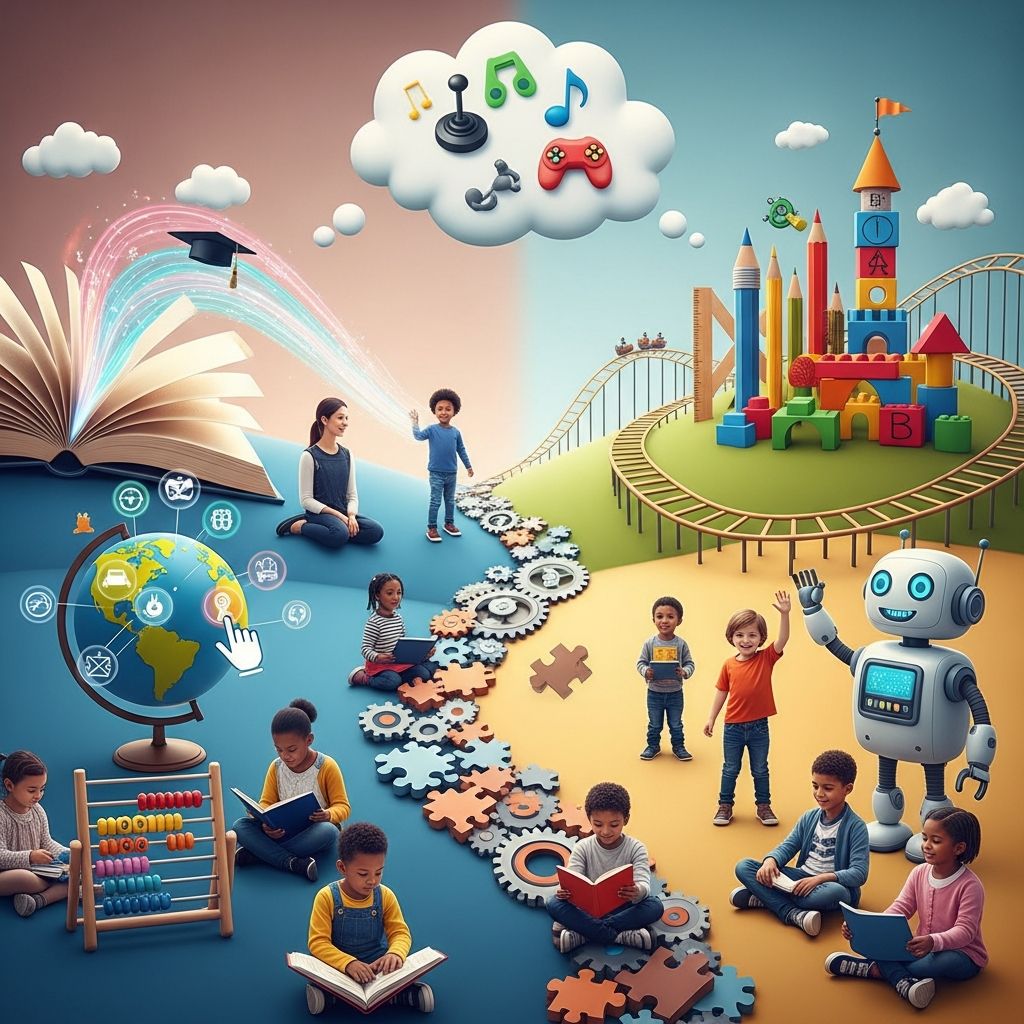
Edutainment represents a dynamic fusion of education and entertainment, creating experiences that captivate while imparting knowledge. This approach leverages games, stories, and interactive elements to make learning memorable and enjoyable for diverse audiences.
The Essence of Edutainment in Modern Education
At its core, edutainment reimagines traditional teaching by incorporating playful mechanics into instructional content. Rather than passive lectures, learners engage actively, solving puzzles or navigating narratives that reveal key concepts. This method draws from psychological principles where enjoyment triggers dopamine release, enhancing focus and memory consolidation.
Historically, elements of edutainment appear in folktales and ancient plays used to convey moral lessons. Today, digital tools amplify its reach, from mobile apps to virtual reality simulations, adapting to individual paces and preferences.
Why Edutainment Captivates Learners of All Ages
Edutainment’s appeal spans generations because it aligns with natural human inclinations toward play and exploration. For children, it turns abstract ideas like fractions into adventure quests. Adults use it for skill-building in corporate settings, such as compliance modules disguised as missions.
- Universal Accessibility: No age barriers; preschoolers to retirees benefit equally.
- Personalization: Adaptive algorithms tailor difficulty, ensuring steady progress.
- Emotional Connection: Stories foster empathy and deeper understanding.
Proven Advantages for Cognitive and Skill Development
Research highlights edutainment’s superiority in key learning metrics. Learners show up to 40% better retention compared to rote methods, as interactive formats reinforce neural pathways through repetition and application.
Key benefits include:
- Increased engagement via gamification, reducing dropout rates in online courses.
- Enhanced critical thinking from decision-based scenarios.
- Boosted creativity through open-ended challenges.
- Improved social skills in multiplayer educational games.
| Traditional Learning | Edutainment Approach | Outcome Improvement |
|---|---|---|
| Lectures and textbooks | Interactive games and VR | 40% higher retention |
| Passive note-taking | Story-driven quests | Greater motivation |
| Repetitive drills | Adaptive challenges | Better problem-solving |
Practical Applications Across Educational Stages
Early Childhood: Building Foundations Through Play
For young children, edutainment introduces basics like colors, shapes, and literacy via animated characters and songs. Apps with touch-based interactions encourage fine motor skills alongside phonics recognition, making screen time productive.
School-Age: Reinforcing Academics with Adventure
Middle schoolers tackle math and science through simulated labs or historical role-playing games. These tools contextualize facts, helping students grasp physics via virtual experiments or geography through exploratory maps.
Teen and Adult Learning: Professional and Lifelong Growth
High schoolers prepare for exams with quiz battles, while professionals engage in scenario-based training. Medical trainees practice surgeries in virtual environments, minimizing real-world risks.
Real-World Examples That Demonstrate Impact
Duolingo exemplifies language acquisition via streak rewards and competitive leagues, sustaining daily practice. Khan Academy Kids uses whimsical worlds to teach reading, blending videos with mini-games.
- Prodigy Math: Role-playing game where battling monsters requires solving equations.
- Osmo: Tangible toys paired with iPads for hands-on geometry and coding.
- Corporate Tools: Platforms like Groove Jones offer VR safety drills for industries.
Challenges and Solutions in Edutainment Design
While powerful, edutainment risks superficial learning if games prioritize fun over content. Over-reliance on screens may hinder social development, and accessibility issues exclude some users.
Solutions involve balanced design:
- Align games tightly with curriculum objectives.
- Incorporate offline elements like board games.
- Ensure inclusive features, such as voice controls for diverse abilities.
Empowering Parents and Educators with Implementation Tips
Parents can integrate edutainment by selecting age-appropriate apps and setting time limits. Discuss game outcomes to reinforce lessons verbally. Educators should blend it with traditional methods, using tools for review rather than replacement.
- Assess learner needs and choose targeted platforms.
- Monitor progress via built-in analytics.
- Foster group play for collaborative learning.
- Encourage reflection post-session.
Frequently Asked Questions
What exactly is edutainment?
Edutainment is content that combines educational goals with entertaining formats like games, videos, and interactive media to make learning engaging and effective.
Does edutainment work for all subjects?
Yes, from STEM to humanities; it adapts to any topic by embedding concepts in narratives or challenges, proven effective across disciplines.
Is edutainment suitable only for kids?
No, adults use it extensively in professional training, language apps, and skill-building, supporting lifelong education.
Can edutainment replace traditional teaching?
It complements rather than replaces, enhancing engagement when integrated thoughtfully into broader curricula.
How do I know if an edutainment tool is effective?
Look for evidence-based design, progress tracking, and alignment with learning standards; user reviews and studies provide further validation.
References
- Edutainment: Definition, Benefits, and Best Ideas — ER Workshop. 2023-05-15. https://erworkshop.com/home/what-is-edutainment-best-edutainment-ideas-indestroom/
- Edutainment: Definition, Pros and Cons, and Examples — Smowl.net. 2024-02-20. https://smowl.net/en/blog/edutainment-definition-examples/
- What Is Edutainment and Why It Matters Today — Terra Team Up. 2025-11-25. https://terrateamup.com/2025/11/25/what-is-edutainment-modern-learning/
- What Is Edutainment: Why Is It an Effective Learning Method — NTC Corporate. 2023-08-10. https://ntccorporate.com/blog/what-is-edutainment/
- Edutainment: What Do You Want to Know? — Fundación ProFuturo. 2024-01-12. https://profuturo.education/en/observatory/trends/edutainment-que-quieres-saber/