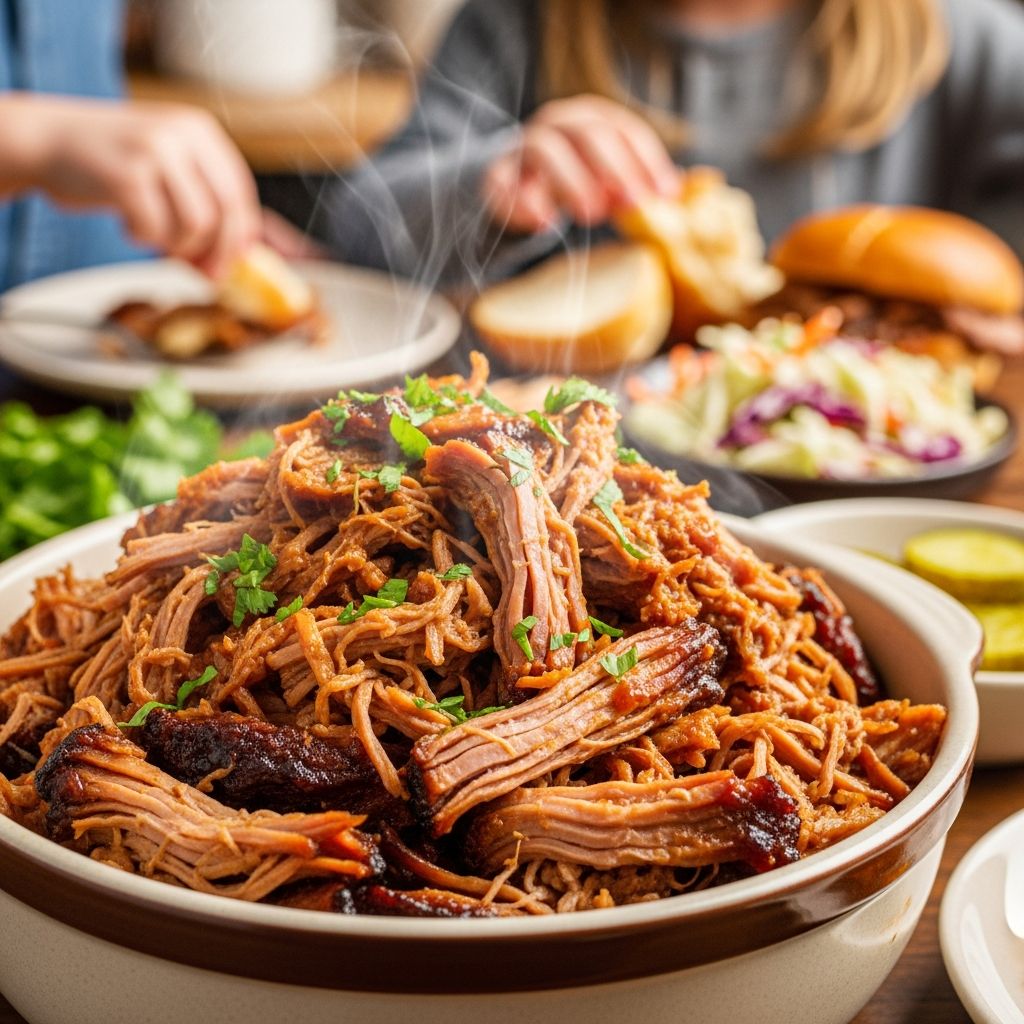
Slow-cooker pulled pork is the kind of recipe that quietly works in the background while you live your life. You spend a few minutes in the morning seasoning the meat, press a button, and hours later dinner practically serves itself. It is forgiving, budget-friendly, and endlessly adaptable, which makes it ideal for families, busy professionals, and anyone who wants a reliable crowd-pleaser without hovering over the stove.
This guide walks through a family-oriented version of slow-cooker pulled pork, including how to choose the right cut of meat, how to season it simply, and how to turn it into meals that appeal to toddlers, teens, and adults alike. You will also find tips for freezing leftovers, scaling up for parties, and troubleshooting common slow-cooker worries.
Why Slow-Cooker Pulled Pork Belongs in Your Rotation
Pulled pork is more than a sandwich filling; it is a flexible base for bowls, tacos, wraps, and lunchboxes. When you make a big batch in the slow cooker, you lock in moisture and flavor, while freeing your oven and stovetop for other tasks or leaving them off entirely on a hot day.
- Low-effort, high payoff: The active work happens at the beginning; the rest of the time is hands-off.
- Family-friendly flavor: The recipe starts mild, so you can add barbecue sauce, hot sauce, or slaw at the table to suit different palates.
- Built-in leftovers: One pot of pulled pork can become several different dinners during the week.
Choosing the Right Cut of Pork
The key to tender, shreddable pulled pork is using a cut with enough fat and connective tissue to stay moist through long, slow cooking. Lean chops and tenderloin dry out easily; instead, look for cuts from the shoulder area.
| Cut of pork | Also called | Pros | Things to know |
|---|---|---|---|
| Pork shoulder | Pork butt, Boston butt | Rich flavor, well-marbled, shreds beautifully | Often sold with a fat cap; you can trim lightly if you prefer |
| Pork picnic shoulder | Picnic roast | Budget-friendly, great for big batches | May have skin or bone; slightly more trimming and shredding work |
| Boneless pork shoulder roast | Boneless butt roast | Easy to fit in the slow cooker and simple to carve | Tends to cook slightly faster than bone-in of the same weight |
For a typical family, a 3 to 4 pound boneless shoulder works well. It comfortably feeds 4 to 6 people for dinner with extra left over for lunches or another simple meal. If your slow cooker is on the smaller side, cut the roast into a few large chunks so the lid closes fully and the heat circulates properly.
Simple, Flexible Ingredient List
This recipe keeps the ingredients straightforward and pantry-friendly. Think of the seasonings as a starting point: once you are comfortable, you can swap in your favorite spices or sauces. The only true essentials are the pork, some salt, and a modest amount of liquid.
Core ingredients
- 3–4 pounds pork shoulder (boneless or bone-in)
- 1–2 teaspoons fine salt (start on the lower end for younger kids)
- 1 teaspoon black pepper
- 1–2 teaspoons smoked or sweet paprika
- 1 teaspoon garlic powder or 3–4 fresh garlic cloves, minced
- 1 teaspoon onion powder (optional but helpful for depth of flavor)
- 1/2–1 cup liquid: low-sodium broth, water, apple juice, or a mix
Optional flavor boosters
- 1 onion, sliced, layered under the pork for sweetness
- 2 tablespoons brown sugar or honey for a subtle caramel note
- 2 tablespoons apple cider vinegar for brightness
- 1–2 teaspoons chili powder or ground cumin for a gentle smoky kick
- Barbecue sauce, to stir in at the end or serve on the side
Using a mild base recipe makes it easier to serve small children or spice-averse family members. Those who like bold flavors can always add extra sauce or hot sauce at the table.
Step-by-Step: Slow-Cooker Pulled Pork
The method is designed to fit into a busy morning. You can assemble everything right after breakfast, set the slow cooker to low, and come home to a house that smells like someone has been cooking all day.
- Prep the pork: Pat the pork dry with paper towels. Trim away thick, hard pieces of fat from the outside, but leave some marbling to keep the meat moist.
- Mix the rub: In a small bowl, stir together the salt, pepper, paprika, garlic powder, onion powder, and any optional spices you like.
- Season generously: Rub the spice mixture all over the pork, pressing it into any nooks and crannies. If you have a few extra minutes, you can season it the night before and refrigerate, but this is optional.
- Layer the slow cooker: If using onions, spread them on the bottom of the slow cooker. Place the seasoned pork on top.
- Add liquid: Pour your chosen liquid around the pork, not directly on top, to avoid washing off the spices. You only need enough to cover the bottom by about 1/4–1/2 inch.
- Cover and cook: Put on the lid and cook on low for 8–10 hours, or on high for about 4–5 hours. The exact cooking time depends on your slow cooker and the thickness of the roast.
- Check for doneness: The pork is finished when it pulls apart easily with two forks. If it resists shredding, give it another 30–60 minutes and try again.
- Shred the meat: Transfer the pork to a cutting board or large bowl. Remove any large pieces of fat and discard. Use two forks to pull the meat into bite-sized shreds.
- Moisten and flavor: Spoon some of the cooking juices over the shredded pork to keep it juicy. Stir in a modest amount of barbecue sauce if you want a saucier result, or serve the sauce at the table.
If you plan to freeze a portion, you may prefer to leave it plain and add sauces later, which allows you to turn the same batch of meat into different flavor profiles on different nights.
Serving Ideas for the Whole Family
Once you have a bowl of warm pulled pork, you can turn it into multiple types of meals without extra cooking. This is especially helpful when you are feeding people with different tastes or appetites.
Easy weeknight serving options
- Classic sandwiches: Pile pulled pork on soft buns with coleslaw, sliced pickles, and barbecue sauce.
- Rice or grain bowls: Serve over rice, quinoa, or farro with steamed vegetables, corn, and avocado.
- Tacos and wraps: Fill tortillas with pulled pork, shredded lettuce, cheese, and salsa.
- Baked potato topping: Add a scoop of hot pulled pork to a baked potato with a little cheese and green onion.
Kid-friendly tweaks
- Serve plain pulled pork alongside simple sides like buttered noodles, rice, or roasted carrots.
- Make small sliders using dinner rolls, letting kids add their own barbecue sauce.
- Offer toppings in small bowls (cheese, mild salsa, chopped cucumbers) so picky eaters can customize their plates.
Make-Ahead, Freezing, and Reheating Tips
Slow-cooker pulled pork is friendly to meal prep and freezer cooking. Handling leftovers safely and reheating them gently helps keep the meat tender rather than dry or stringy.
- Refrigeration: Cool leftovers, then store in an airtight container with some cooking liquid for up to 3–4 days.
- Freezing: Portion the pork into freezer bags or containers, again with a bit of liquid, and freeze for up to 2–3 months.
- Reheating on the stove: Warm gently over low heat in a covered pan with a splash of water or broth, stirring occasionally.
- Microwave option: Reheat small portions loosely covered, pausing to stir so they heat evenly and adding more liquid if needed.
Labeling containers with the date and approximate number of servings makes it easier to pull together quick dinners later in the month. You can even freeze individual servings for easy work lunches.
Nutrition and Budget Considerations
Pork shoulder is a relatively economical cut that stretches into several meals. When you serve it with plenty of vegetables, whole grains, and lighter sides, it can fit comfortably into a balanced weekly menu. Controlling the amount of added sugar and sauce keeps the overall dish from feeling too heavy.
- Pair with colorful vegetables—like slaw, roasted broccoli, or a simple salad—to add fiber and freshness.
- Use whole-grain buns or tortillas when possible to make meals more filling.
- Serve smaller amounts of pork alongside generous vegetable sides if you want to keep portions moderate.
Common Variations to Try
Once you are comfortable with the basic method, you can change the flavor profile without changing the cooking technique. Here are a few easy ideas to keep things interesting while still pleasing the family.
| Style | Key additions | Serving suggestions |
|---|---|---|
| Smoky barbecue | Extra smoked paprika, a splash of liquid smoke, and your favorite barbecue sauce | Sandwiches with slaw and pickles |
| Citrus-garlic | Orange or lime juice, plenty of garlic, a pinch of cumin | Tacos with cabbage, salsa, and avocado |
| Sweet and tangy | Apple juice or pineapple juice, a little brown sugar, and vinegar | Rice bowls with roasted vegetables |
| Herb-focused | Dry Italian herbs, garlic, and onion | Served with roasted potatoes and green beans |
To keep things manageable for kids, you can divide the shredded meat into two bowls: leave one portion simple and season the other more boldly. This approach also works well when you are cooking for guests with different tastes.
Slow-Cooker Pulled Pork FAQs
Can I cook the pork on high instead of low?
Yes, you can cook pulled pork on high if you are short on time. The meat will still become tender, but low-and-slow cooking usually gives a slightly juicier, more evenly cooked result. If you choose the high setting, start checking for doneness around the four-hour mark and cook until it shreds easily with two forks.
How do I know when the pork is fully cooked?
The most reliable sign that the pork is done is texture, not just time. When you insert two forks into the meat and pull them in opposite directions, the pork should fall apart without much resistance. If you prefer to use a thermometer, the internal temperature should be at least 190–195°F, which is higher than the minimum safe temperature but necessary for tender pulled pork.
Can I start with frozen pork?
For food safety and even cooking, it is best to thaw the pork in the refrigerator before putting it into the slow cooker. Starting with frozen meat can keep the pork in the unsafe temperature zone for too long, and it may cook unevenly. If you forgot to thaw it, use a cold-water bath to speed up defrosting before you begin.
Is it okay to lift the lid while it cooks?
Opening the lid occasionally to check progress will not ruin the recipe, but keep it to a minimum. Each time you remove the lid, you let out heat and extend the cooking time. If you are tempted to peek often, set a timer to remind yourself to wait a couple of hours between checks.
What should I do with the extra cooking liquid?
The liquid at the bottom of the slow cooker is packed with flavor. After you shred the pork, you can skim off excess fat from the surface and then spoon some of the juices back over the meat to keep it moist. Any remaining liquid can be cooled and saved to moisten leftovers or to flavor soups and stews later in the week.
Can I make this recipe the night before?
Yes. You can season the pork, place it in the slow-cooker insert with the onions and liquid, cover it, and refrigerate overnight. The next morning, take the insert out of the fridge while you get ready, then place it into the slow-cooker base and start cooking. Just be sure your manufacturer’s instructions allow for this, and avoid placing a very cold ceramic insert directly into a hot base.
What sides go well with pulled pork?
Classic sides include coleslaw, baked beans, corn on the cob, and potato salad. For a lighter spread, you can serve it with green salads, steamed vegetables, roasted sweet potatoes, or simple brown rice. Mixing heavier and lighter sides helps the meal feel satisfying without being overwhelming.
Bringing It All Together
Slow-cooker pulled pork is the rare dinner that feels like comfort food but fits easily into everyday life. With a small investment of time in the morning, you set yourself up for a relaxed evening and a table full of flexible, customizable plates. Once you get used to the basic technique, you can vary the seasonings, sauces, and sides to match whatever your family is craving that week.
Whether you are feeding toddlers who want everything separate on the plate, teenagers who can demolish a stack of sandwiches, or guests who appreciate a hearty buffet, this simple pulled pork delivers. Make it once, take notes on how your household likes it best, and you will have a dependable go-to meal that works in every season.