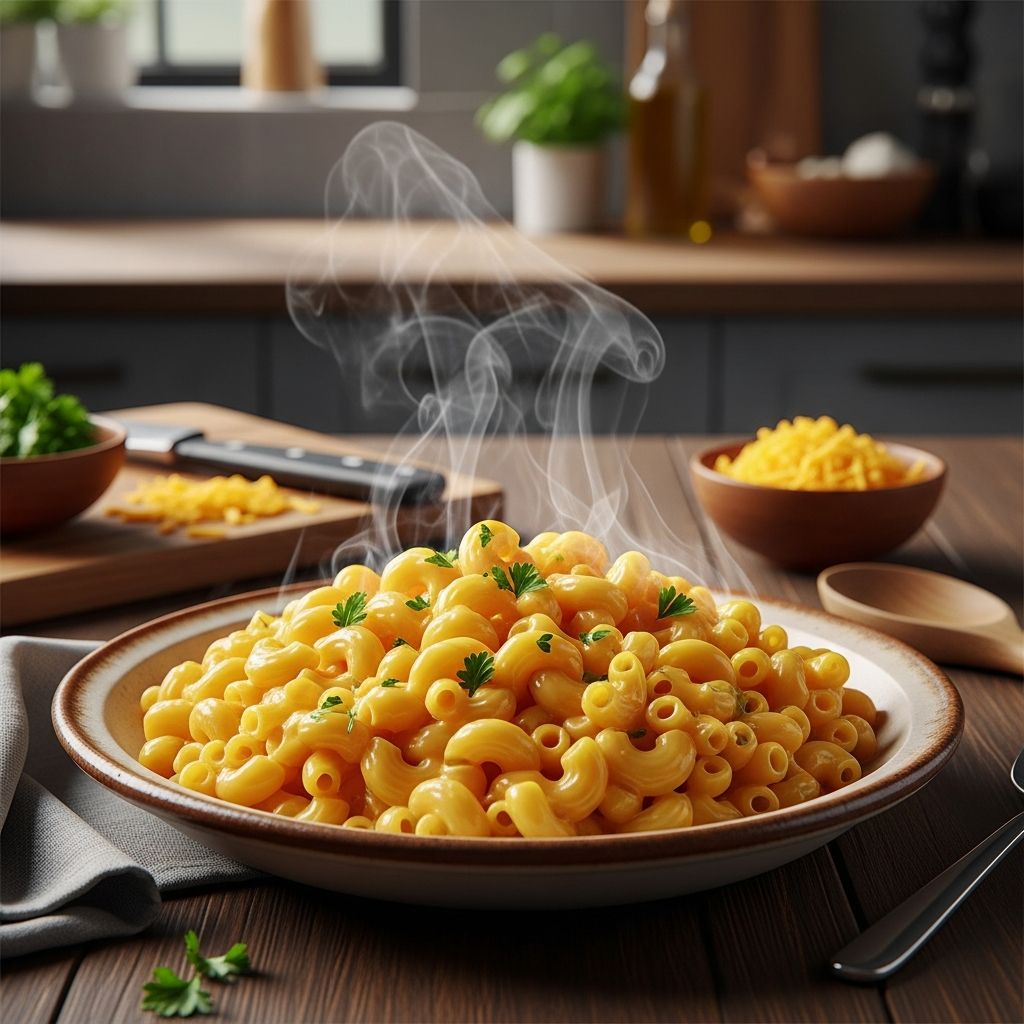
Macaroni and cheese does not have to come from a box to be fast, creamy, and kid-approved. With a few pantry staples and about 20 minutes, you can cook a homemade version that feels like comfort food but fits into a busy weeknight.
This guide walks you through an easy stovetop method, time-saving tricks, and simple upgrades so you can skip the powdered cheese and still get dinner on the table fast.
Why Make Mac and Cheese From Scratch?
Boxed macaroni is convenient, but a quick homemade version can be just as fast while giving you more control over ingredients, flavor, and nutrition.
- Better ingredients: You choose the type of pasta, cheese, and milk instead of relying on powdered mixes or preservatives.
- Customizable flavor: Adjust salt, spices, and cheese to suit toddlers, picky eaters, or adults who like bolder tastes.
- More flexibility: Stir in vegetables or protein you already have, turning a side dish into a full meal.
- Same speed: Simple stovetop recipes can be cooked in roughly the same time it takes to boil pasta for a boxed version.
Homemade macaroni and cheese is still a calorie-dense comfort dish, especially when made with whole milk, butter, and full-fat cheese. Using smaller portions along with vegetables and lean protein can help balance the meal.
Essential Ingredients for Fast Mac and Cheese
You do not need specialty cheeses or complicated techniques to get a smooth, creamy sauce. These core ingredients are likely already in your kitchen.
Pasta Choices
Any short pasta with curves or hollows will hold onto the cheese sauce well.
- Elbow macaroni
- Small shells
- Cavatappi or spirals
- Mini penne or rigatoni
Cook pasta to al dente (firm to the bite) so it keeps its shape once coated in hot sauce.
Cheese That Melts Smoothly
Good melting cheese is the heart of the recipe. For quick, reliable results:
- Sharp cheddar: Classic flavor and good melt.
- Monterey Jack or Colby Jack: Extra creamy and mild; great for kids.
- Gruyère or Swiss-style cheeses: Add deeper, nutty flavor if you like a more grown-up taste.
Grate cheese from a block rather than using pre-shredded cheese, which often contains anti-caking agents that can make sauces grainy.
Milk and Optional Cream
The liquid you choose affects both taste and texture:
- Whole milk: A good balance of richness and convenience.
- 2% milk: Slightly lighter but still creamy if you use enough cheese.
- Half-and-half or evaporated milk: For extra-luxurious sauce if you are not counting calories.
Low-fat dairy can work but may produce a thinner sauce; you can compensate by slightly increasing the cheese or using a small amount of starch to thicken.
Fats, Thickeners, and Seasoning
To create a smooth sauce quickly, you need a fat, a thickener, and simple seasonings.
- Butter or oil: Butter gives the most flavor and supports a classic roux-based sauce.
- Flour or cornstarch: Used in small amounts to stabilize and thicken the cheese sauce.
- Salt and pepper: Essential to avoid blandness.
- Optional extras: A pinch of dry mustard, garlic powder, paprika, or nutmeg for more depth.
Core Method: One-Pot Stovetop Mac and Cheese
This basic technique keeps everything on the stovetop and uses one main pot plus a small pan for the sauce. You can adapt it to match the time and ingredients you have.
Step-by-Step Overview
- Boil the pasta. Cook in salted water until just al dente, then drain.
- Start a quick roux. Melt butter, whisk in flour, and cook briefly.
- Add milk. Whisk constantly until slightly thickened.
- Turn off the heat and add cheese. Stir until fully melted and smooth.
- Combine with pasta. Toss drained pasta with the sauce and adjust seasoning.
| Task | Time (minutes) |
|---|---|
| Boil water | 5–10 |
| Cook pasta | 7–9 |
| Prepare sauce (overlapping with pasta cooking) | 6–8 |
| Combine & season | 2–3 |
Tips for a Smooth, Non-Gritty Sauce
- Warm the milk slightly before adding for fewer lumps.
- Cook the roux just until it smells nutty; do not let it brown deeply for this dish.
- Remove the pan from the heat before stirring in cheese to reduce the chance of curdling or separation.
- Add cheese in small handfuls, stirring well between additions.
Time-Saving Tricks for Busy Nights
When you are cooking with small children underfoot or squeezing dinner into a short break, small shortcuts make a big difference.
Prep Ahead Strategies
- Pre-grate cheese: Shred cheese in the morning or on the weekend and store in an airtight container in the fridge.
- Measure dry ingredients: Keep a small jar with your usual amount of flour and seasonings ready to dump into the pan.
- Batch cook pasta: Cook extra pasta, toss with a little oil, and refrigerate. Reheat in hot sauce for an even faster meal.
Make the Dish More Filling With Minimal Extra Work
To turn your macaroni into a complete one-pot meal, stir in ready-to-use ingredients right before serving.
- Frozen vegetables: Peas, corn, or mixed vegetables can be added while the sauce is hot; they thaw quickly.
- Leftover chicken or turkey: Dice and stir through the hot pasta.
- Canned beans: Rinse and add for extra fiber and protein.
Adding vegetables and beans can improve overall fiber and nutrient content while slightly diluting the dish’s saturated fat per serving.
Family-Friendly Variations
You can adapt a basic macaroni and cheese template to match different ages, tastes, and dietary needs in your household.
Milder Versions for Young Kids
- Use a half-and-half blend of cheddar and a very mild cheese like Monterey Jack.
- Skip spicy ingredients such as chili flakes or strong mustard.
- Serve vegetables on the side the first time so kids can learn to love the pasta before you mix things together.
Extra-Flavorful Versions for Adults
- Stir in a small amount of crumbled blue cheese, smoked Gouda, or Gruyère.
- Add caramelized onions or sautéed mushrooms.
- Top with toasted breadcrumbs, then briefly broil for a crunchy finish.
Different cheeses such as Gruyère, aged cheddar, or blue cheese bring distinct flavors due to their fat content and the way they are aged, which can elevate a simple dish into a more complex meal.
Vegetable-Packed Twists
- Broccoli mac: Add small broccoli florets to the pasta pot in the last 3–4 minutes of boiling.
- Carrot or squash puree: Stir a few spoonfuls of cooked, blended carrot or butternut squash into the sauce for sweetness and color.
- Spinach stir-in: Fold in chopped baby spinach just before serving; the residual heat will wilt it.
Blending vegetables into sauces is a common strategy recommended in family nutrition education to gently increase children’s exposure to new flavors without causing resistance.
Health-Conscious Adjustments
Mac and cheese is naturally rich, but small tweaks can lighten it without losing its appeal.
Ingredient Swaps
- Use 2% milk instead of whole milk and keep butter portions modest.
- Choose whole-grain pasta for more fiber and a lower glycemic impact.
- Mix strong-flavored cheese (like sharp cheddar) with a smaller total quantity so you can use less overall.
Balancing the Plate
- Pair mac and cheese with a big salad, steamed vegetables, or sliced raw veggies.
- Serve smaller pasta portions alongside lean protein such as grilled chicken, fish, or beans.
- Reserve very rich, heavy versions (loaded with cream and multiple cheeses) for occasional treats rather than everyday meals.
Dietary guidelines generally encourage limiting saturated fat and sodium while increasing vegetables, whole grains, and lean protein, all of which can be incorporated into how you serve mac and cheese.
Storage, Reheating, and Freezing
Leftover macaroni and cheese can be a useful make-ahead option if handled safely.
Refrigerating Leftovers
- Cool leftovers quickly and refrigerate within two hours of cooking.
- Store in a shallow, airtight container to help it cool and reheat more evenly.
- Eat refrigerated leftovers within 3–4 days.
Reheating Without Drying Out
- Stovetop: Add a splash of milk, cover, and reheat gently over low heat while stirring.
- Microwave: Stir in a spoonful of milk, cover loosely, and heat in short bursts, stirring between each burst.
- Oven: Transfer to a baking dish, cover with foil, add a little milk, and bake at low heat until warmed through.
Adding a small amount of liquid during reheating helps restore moisture to the starch in the pasta and the cheese sauce, which tends to firm up when chilled.
Freezing Tips
- For best texture, slightly undercook the pasta before freezing.
- Cool completely, portion into freezer-safe containers, and label with the date.
- Reheat from frozen in the oven or after thawing overnight in the refrigerator, again adding a bit of milk if dry.
Frequently Asked Questions (FAQs)
Can I make mac and cheese without flour?
Yes. You can thicken the sauce by reducing milk longer over low heat, using a small amount of cornstarch mixed with cold milk, or making a cheese sauce directly in the hot pasta pot by stirring cheese and milk into drained pasta over low heat.
Why did my cheese sauce turn grainy?
Grainy texture often happens when cheese is heated at too high a temperature or added to boiling liquid. Remove the pan from heat, then add cheese gradually while stirring, and avoid pre-shredded cheese with stabilizers for the smoothest result.
What is the best cheese for kids who dislike strong flavors?
Mild cheddar, Colby Jack, or Monterey Jack tend to be creamy and not too sharp. You can start with mostly mild cheeses and gradually add small amounts of sharper cheese as children get used to the flavor.
Can I keep mac and cheese warm for a party?
You can transfer the finished dish to a slow cooker set on warm, adding a splash of milk and stirring occasionally. Avoid leaving it at room temperature for more than two hours to reduce food safety risks.
How can I make this dish more budget-friendly?
Use store-brand pasta and cheese, buy cheese in larger blocks to grate yourself, and stretch the dish with inexpensive ingredients like frozen vegetables or beans. These additions reduce the cost per serving and improve the meal’s nutrition.
References
- Dietary Guidelines for Americans, 2020–2025 — U.S. Department of Health and Human Services & U.S. Department of Agriculture. 2020-12-29. https://www.dietaryguidelines.gov
- Healthful Eating for a Healthy Weight — Centers for Disease Control and Prevention. 2022-06-03. https://www.cdc.gov/healthyweight/healthy_eating
- Cheese: Chemistry, Physics and Microbiology (3rd ed.) — Fox PF et al., Academic Press. 2004-01-01. https://doi.org/10.1016/B978-012263652-3/50002-9
- Thickening Agents for Sauces and Soups — University of Georgia Cooperative Extension. 2019-04-15. https://extension.uga.edu
- Strategies to Promote Healthy Eating Among Children — Harvard T.H. Chan School of Public Health. 2021-09-10. https://www.hsph.harvard.edu/nutritionsource/healthy-eating-for-kids
- Leftovers and Food Safety — U.S. Department of Agriculture Food Safety and Inspection Service. 2020-06-01. https://www.fsis.usda.gov/food-safety/safe-food-handling-and-preparation/food-safety-basics/leftovers-and-food-safety