Homemade Halloween costumes do not need to be complicated, expensive, or stressful. With a few household items and a bit of imagination, any parent can create fun, photo-worthy looks for babies, toddlers, kids, and even themselves.
Why DIY Halloween Costumes Are Worth the Effort
Store-bought costumes are convenient, but homemade outfits often become the ones everyone remembers. They reflect your child’s personality, your family’s inside jokes, and the season of life you are in right now. A simple costume made on the living room floor can feel far more special than the most elaborate outfit from a rack.
- DIY costumes can be tailored to your child’s comfort level, favorite colors, and sensory needs.
- Using items you already own saves money and keeps last-minute costumes possible.
- Children love helping with small, age-appropriate tasks, turning costume prep into a shared activity instead of another chore.
Planning Your Costume: A Simple Three-Step Approach
Before diving into glue guns and face paints, a quick plan keeps the process manageable. Think in three stages: decide on a theme, shop your home, then fill in any gaps with low-cost supplies.
- Pick a theme based on your real life. Start with something you or your child already loves: favorite foods, beloved books, a hobby, or a family routine (like coffee and donuts, or bedtime stories).
- Shop your closets and cupboards. Look at basic clothing (solid-color shirts, leggings, hoodies), cardboard boxes, felt scraps, paper plates, and old costume accessories before buying anything new.
- Choose one focal element. A striking hat, oversized prop, or bold color pattern can carry a costume, even when the rest is very simple.
Baby-Friendly Costumes: Comfort Comes First
For babies, the costume should feel like regular soft clothing with a playful twist. The goal is to avoid scratchy seams, tight bands, and anything that interferes with diaper changes or naps.
Key principles for baby costumes
- Use a soft onesie or sleeper as the base and build decorations on top with felt or fabric that does not shed.
- Keep hats and headbands optional so they can be removed quickly if the baby protests.
- Skip small beads, loose buttons, or long strings that could become choking or strangulation hazards.
Example baby costume ideas
The ideas below are intentionally simple and flexible. Swap colors and details to match what you already own.
- Sleepy Moon: Dress baby in pale yellow or cream pajamas. Cut a crescent moon and a few stars from felt and lightly stitch or fabric-glue them onto the chest. Add a soft knit cap if tolerated.
- Garden Gnome: Start with a solid-color bodysuit and footed pants. Create a soft triangular hat from felt and a detachable felt “beard” sewn to a wide collar that rests on the shoulders instead of tying around the neck.
- Little Cloud: Use a white onesie and attach clusters of soft batting or fleece in a few spots, leaving plenty of blank fabric so the outfit still moves and breathes.
Easy Toddler and Preschool Costumes
Toddlers want to move, run, and climb, so their costumes should be durable but not heavy or restrictive. Aim for outfits that slip over regular play clothes and can handle playgrounds and car seats.
No-Sew Animal Costumes
Animal themes are classic and endlessly adaptable. Most can be made from a hoodie, leggings, and a few felt pieces.
- Cozy Cat: Black or gray hoodie and pants, felt ears glued to a headband, a yarn or stuffed-fabric tail pinned to the back, and a small triangle of felt as a nose attached with skin-safe adhesive.
- Friendly Fox: Orange or rust-colored top, white felt chest patch, pointed felt ears on a headband, and a tail made from an old scarf or sock stuffed with fabric scraps.
- Gentle Dinosaur: Green hoodie and pants with felt triangles glued along the spine and hood to form soft, flexible spikes.
Simple Object Costumes
Everyday objects make delightful costumes, especially for preschoolers who love recognizing things from real life. The charm comes from exaggerating shape or color.
- Crayon or Marker: Dress your child in a single bright color. Add a matching paper or felt cone hat and a simple paper label around the torso with the color name written in bold letters.
- Traffic Light: Use a long black shirt or tunic and attach three large felt circles in red, yellow, and green down the front.
- Bubble Bath: White shirt and leggings, clear or white balloons partially inflated and attached around the torso, plus a shower cap or toy rubber duck taped to a headband.
Grade-School Kids: Let Them Co-Design
Older kids often have big ideas and strong preferences. Turn that energy into collaboration: have them sketch their vision or choose colors, then work together to find a realistic version that fits your time and budget.
DIY Character-Inspired Looks
Instead of copying a character costume exactly, aim for a “hint” or “inspired by” look. Combine everyday clothes with a few symbolic accessories so your child can re-wear most of the pieces later.
- Build costumes from jeans, sneakers, and graphic tees that your child already owns, then add one or two homemade props.
- Use capes, vests, and belts to suggest fantasy or adventure themes without delicate or restrictive pieces.
- Invite your child to help paint cardboard props like shields, spell books, or gadget belts.
STEM and Book-Themed Costumes
Costumes inspired by scientists, inventors, or favorite story characters can be both fun and subtly educational.
- Inventor or Scientist: Oversized white shirt as a lab coat, goggles (or clear safety glasses), and a clipboard with doodled “experiments.”
- Book Explorer: Neutral clothing, a homemade cardboard backpack, and paper “pages” taped to the costume featuring simple drawings from favorite stories.
- Space Traveler: Silver or gray clothes, foil-covered cardboard panels taped as “controls,” and a paper helmet band with drawn-on buttons and antennae.
Low-Effort Costumes for Busy Parents
Parents often end up as last-minute additions to group photos. A few quick ideas can help adults participate without a full crafting session. These costumes focus on items you are likely to own already.
- Tourist: Loud shirt, camera around the neck, sunglasses, and a folded map printed from the computer.
- Bookworm: Neutral outfit, oversized glasses, a small stack of paperback books tied with ribbon, and paper “bookmarks” sticking from pockets.
- Weather Report: Blue or gray clothes with paper clouds, raindrops, or suns taped on; carry a small umbrella with hand-drawn icons hanging from string.
Quick Costume Add-Ons
If you prefer to stay almost in regular clothing, add one bold piece that signals a playful theme.
- Felt crowns or tiaras for royalty themes.
- Paper badges, ID tags, or “Hello, my costume is…” labels.
- Matching scarves, striped socks, or suspenders for simple group looks.
Family and Sibling Group Themes
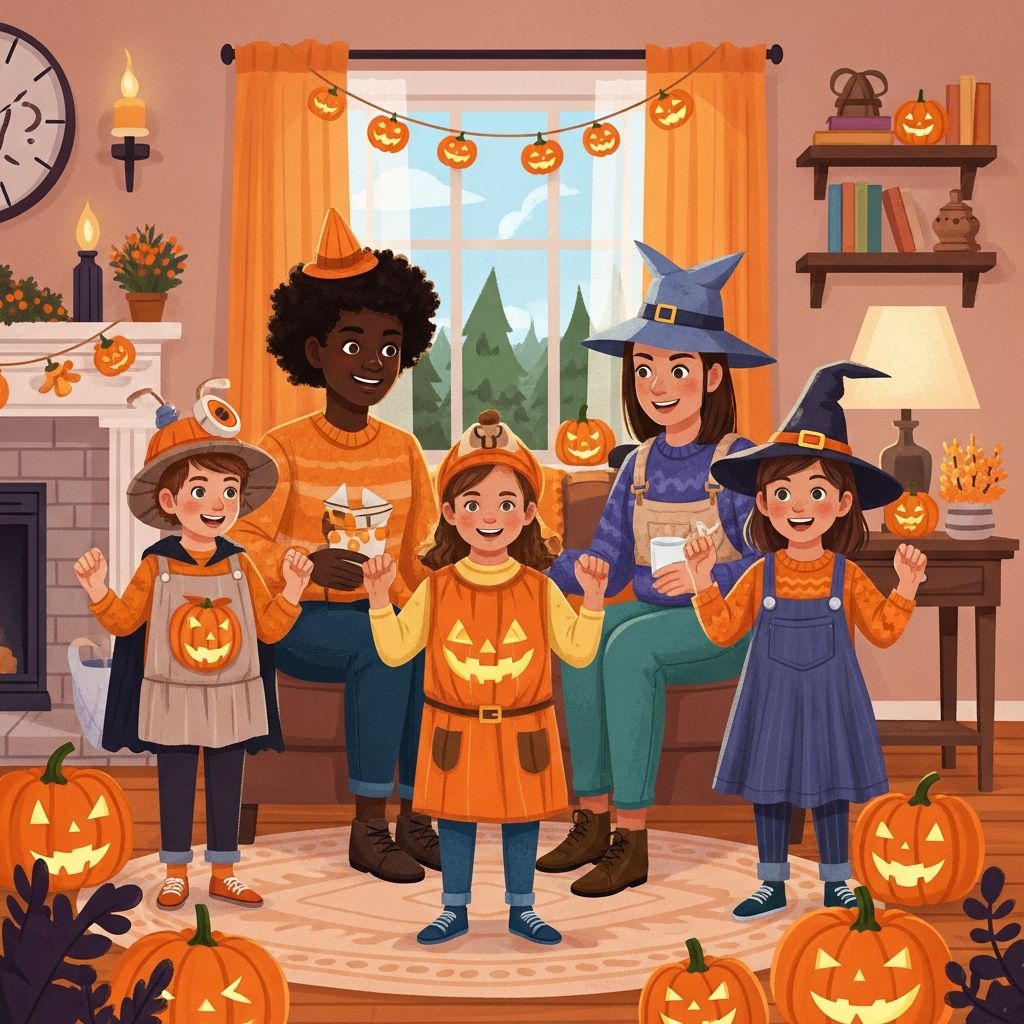
Coordinated family costumes can be elaborate, but they do not have to be. A loose theme—like colors, foods, or roles—keeps everyone connected while allowing each person to stay comfortable and age-appropriate.
| Theme | Baby Idea | Kid Idea | Adult Idea |
|---|---|---|---|
| Breakfast | Baby as a tiny blueberry (blue onesie with felt circles) | Child as a stack of pancakes (tan shirt with felt “butter” square) | Parent as a coffee cup (brown top, paper or felt sleeve with a drawn logo) |
| Weather | Baby cloud (soft white outfit with a few fleece puffs) | Child as a rainbow or lightning bolt (colorful stripes or yellow zigzags) | Parent as the sun or storm (yellow or gray clothes with paper shapes) |
| Storytime | Baby as a bookmark (simple strip-like tunic over pajamas) | Child as a book cover (cardboard panels with drawn title) | Parent as the storyteller (cardigan, mug, and prop “story” notebook) |
When planning a theme, decide who needs the simplest costume—often the baby or the parent doing most of the logistics—and build the rest of the group around that person’s comfort.
Safety Tips for Homemade Costumes
Creativity is important, but safety should always come first, especially when costumes include small parts, face paint, or accessories near the eyes.
- Choose flame-resistant base layers when possible, and keep long capes or fabric away from open flames and candles.
- Ensure your child can walk and climb without tripping; test costumes on stairs and in doorways before the big night.
- Use reflective tape, glow sticks, or light-up accessories if children will be out after dark.
- Check that masks and hats do not block vision or hearing, and avoid tight elastic around the neck or under the chin.
Budget and Time-Saving Strategies
Homemade does not automatically mean time-consuming. A few smart shortcuts keep the process enjoyable, even during a busy school or work week.
- Limit yourself to one new purchase per costume—everything else must come from home or be borrowed.
- Focus on costumes that build on pajamas, leggings, or hoodies your children already love wearing.
- Use fabric glue, safety pins, or double-sided tape when you want to avoid sewing.
- Prep in stages: one day for gathering materials, one day for cutting shapes, and a final short session for assembling.
Frequently Asked Questions About DIY Halloween Costumes
How far in advance should I start making a costume?
For simple no-sew costumes, starting one week ahead is usually enough. Begin by choosing the idea and setting aside base clothing, then finish details in one or two short sessions so the project never feels overwhelming.
What if my child changes their mind at the last minute?
Choose costumes that can shift themes easily with small changes. For example, a green hoodie and pants could become a dinosaur, dragon, or forest sprite depending on which felt pieces and accessories you add on the final day.
Are store-bought accessories okay with a homemade costume?
Absolutely. Combining a simple homemade base with one purchased accessory—like wings, a hat, or a toy tool—can strike the perfect balance between convenience and creativity.
How can I make costumes comfortable for kids with sensory sensitivities?
Use familiar fabrics such as well-worn cotton shirts or tagless leggings and avoid stiff tulle, scratchy sequins, or tight headbands. If face paint is uncomfortable, rely on hats, hoods, or chest decorations to communicate the costume idea instead.
What should I do with the costume after Halloween?
Many costumes can move directly into the dress-up box for year-round pretend play. You can also save especially meaningful pieces, like a first Halloween hat or a homemade cape, in a small memory box or pass them along to friends with younger children.
Bringing It All Together
A successful homemade Halloween costume does not require advanced crafting skills. It simply needs a comfortable base, one or two memorable details, and a willingness to work with what you already have around the house. When parents approach costumes as playful experiments rather than perfection projects, Halloween becomes less about pressure and more about connection, creativity, and shared stories.