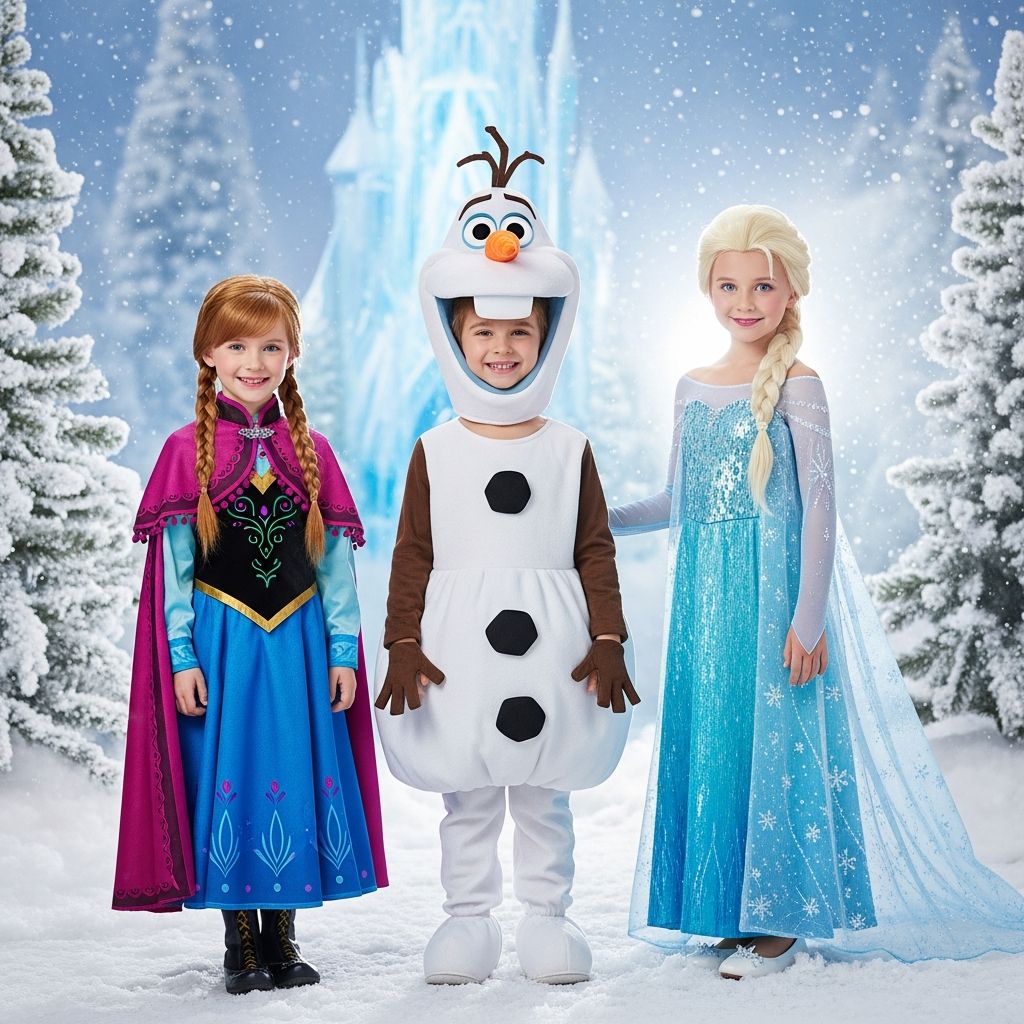
Disney’s Frozen has turned countless living rooms into Arendelle, and for many children, dressing up as Olaf, Anna, or Elsa is part of everyday play, not just Halloween. This guide walks you through kid-friendly, practical ways to build costumes inspired by the movie using pieces you may already own, simple DIY touches, and a focus on comfort and safety.
Why Frozen Characters Make Great Dress-Up Choices
Characters like Olaf, Anna, and Elsa are especially appealing to children because they’re colorful, easy to recognize, and represent traits many kids admire: bravery, kindness, and the power of imagination. Dress-up isn’t only fun; it also supports pretend play, storytelling, and social skills development, which many child development experts highlight as important for early learning.
- Olaf is silly, loyal, and full of optimism.
- Anna is adventurous, warm-hearted, and determined.
- Elsa represents creativity, self-acceptance, and calm strength.
Each character offers a different style, color palette, and vibe, which can help you match a costume to your child’s personality and comfort level.
Planning Your Frozen Dress-Up: Store-Bought vs DIY
Before jumping into specific characters, it helps to decide how much time, money, and crafting energy you want to invest. Both ready-made and homemade approaches can look great in photos and, more importantly, feel magical to your child.
| Approach | Pros | Considerations |
|---|---|---|
| Store-bought costume | Faster; detailed designs; often includes accessories like capes or tiaras. | May use less breathable fabrics; check sizing and comfort; can be pricier. |
| Simple DIY | Uses clothes you already have; easy to wash; highly customizable. | Requires basic crafting time; fewer “official” details. |
| Hybrid (store + DIY) | Combine a base dress or shirt with homemade capes, crowns, or props. | Need to coordinate colors and styles so the outfit feels cohesive. |
For many families, a hybrid plan works well: one key purchased piece (like an Elsa dress or Anna cape) plus comfy leggings, T-shirts, or handmade accessories.
Olaf for Kids: Cozy Snowman-Inspired Outfits
Olaf’s design is simple—white body, black buttons, a carrot nose—so he’s ideal for low-stress DIY costumes and toddler-friendly outfits.
Essential Olaf Color Palette & Shapes
- Base color: white (shirt, dress, or romper).
- Details: black circles (buttons, eyes) and brown for twig arms.
- Highlight feature: orange carrot nose.
Easy Olaf Outfit Ideas
Use what your child will happily wear all day rather than focusing on movie accuracy. Comfortable, layered clothing supports safe movement and play.
- Comfy Olaf play-clothes: white T-shirt or sweatshirt, white leggings or joggers, felt or fabric circles for buttons.
- Olaf dress-up tee: draw, stencil, or fabric-paint Olaf’s buttons and a simple face onto a plain white tee.
- Headband or hat: attach felt eyes and a soft carrot nose to a knit hat or headband so the face stays put without makeup.
Parent-Friendly Olaf Tips
- Choose soft, breathable fabrics for the base layer, such as cotton, to reduce overheating and skin irritation.
- Swap face paint for removable accessories, especially for younger kids who rub their eyes often.
- Keep arms free—consider printing stick arms on the shirt instead of adding bulky attachments.
Anna-Inspired Looks: Capes, Layers, and Bold Colors
Anna’s costumes are instantly recognizable because of their rich jewel tones, layered skirts, and warm cape. You can capture the spirit of her outfit using color blocking and a few strategic details even without complex sewing.
Key Elements of an Anna Costume
- Colors: deep blues, purples, magenta, and black accents.
- Silhouette: long or knee-length skirt, fitted or semi-fitted top, and a cape or shawl.
- Hair: braids (with or without ribbons) complete the look.
Simple Anna Outfit Combinations
These combinations can be adapted to whatever your child already owns:
- Everyday Anna
- Dark blue or navy skirt or leggings.
- Black or dark top (long sleeve if you want a winter look).
- Bright scarf or shawl in magenta or purple to mimic a cape.
- Cape-Centered Anna
- Any comfortable base outfit in blue + black tones.
- A homemade felt cape with a contrasting border or pom-pom trim.
- Optional: add simple decorative shapes with fabric markers or felt.
By concentrating detail on the cape, you can keep the rest of the outfit simple and washable while still clearly signaling “Anna” in photos and pretend play.
Anna Costume Comfort and Safety Notes
- Long skirts can be trip hazards for younger children; consider knee-length or high-low hems.
- Capes should break away easily or be attached with soft closures rather than tight knots to avoid choking risks during active play.
- Use lightweight fabrics if your child will wear the costume indoors for long periods, to reduce overheating.
Elsa-Inspired Outfits: Sparkles, Ice Blues, and Capes
Elsa is often the star of Frozen dress-up sessions. The signature elements are a cool-toned color palette, sparkling or shimmery accents, and a dramatic cape or train. Whether you choose a classic ice-blue gown or a simpler school-friendly outfit, the magic is in the details.
Recognizable Elsa Features
- Color palette: icy blues, teal, white, and silver.
- Textures: sequins, glitter, or iridescent fabrics suggest ice and snow.
- Hair: side braid or ponytail; a sparkly clip or tiara helps complete the look.
Low-Stress Elsa Outfit Ideas
- Casual Elsa
- Light blue T-shirt or tunic.
- White or silver leggings.
- Sheer cape made from tulle or an old scarf attached with snaps or Velcro.
- Party Elsa
- Sparkly blue dress (store-bought or from a previous holiday).
- Glittery shoes or simple flats with a removable clip-on snowflake.
- Plastic or fabric tiara instead of metal for safer play.
Managing Glitter and Fabrics
While children love glitter, it can be messy and irritating if not handled carefully. Fabric-based or sealed glitter is usually more practical than loose glitter.
- Choose integrated glitter fabrics rather than loose glitter that flakes off.
- Wash costume pieces inside out in a garment bag if possible to protect delicate trims.
- Skip scratchy sequins on areas that touch sensitive skin, such as necklines and underarms.
Building Costumes from Everyday Clothing
One of the easiest ways to keep Frozen dress-up accessible is to build looks from clothes that your child can also wear to school or playdates. This keeps the budget reasonable and increases how often the items are used.
Color-First Strategy
Instead of obsessing over exact movie designs, think in terms of color + key accessory:
- Olaf: white outfit + carrot nose element.
- Anna: blue bottoms + purple/magenta wrap + braids.
- Elsa: icy blue top + sparkly cape or hair accessory.
Children will often fill in the gaps with their imagination, especially when they’re already familiar with the characters’ personalities and stories.
Mix-and-Match Dress-Up Box
- Keep a small bin with neutral basics (solid-color leggings, plain long-sleeve tops).
- Add reusable accessories that work for multiple characters: capes, belts, hats, scarves, and headbands.
- Rotate items seasonally so costumes feel fresh without constant new purchases.
DIY Details That Make a Big Difference
You don’t need advanced sewing skills to elevate a simple Frozen-inspired outfit. A few easy DIY techniques can add personality and character-specific flair.
No-Sew or Low-Sew Ideas
- Fabric paint or markers: draw snowflakes, swirls, or simple floral shapes onto shirts or capes (follow product instructions for setting and washing).
- Felt appliqués: cut out hearts, snowflakes, or circles from felt and attach them with fabric glue.
- Clip-on embellishments: use safety-pin-backed bows or patches that can be removed before washing.
Easy Cape Construction
A cape often transforms an ordinary outfit into something cinematic. For many children, capes are the most exciting part of a costume.
- Use lightweight materials such as cotton blends or tulle for comfort and breathable layering.
- Create a simple gathered top edge and attach it to soft ribbon, then tie loosely or use Velcro for a quick-release closure.
- Let children help decorate the cape with stamps, pre-cut shapes, or stick-on gems for added ownership.
Comfort, Safety, and Sensory Considerations
Costumes are most successful when kids can move freely, see clearly, and feel comfortable. Poorly fitting outfits, restrictive masks, or irritating fabrics can quickly cut playtime short and raise safety concerns.
Fit and Mobility
- Ensure sleeves and pant legs are not too long to avoid tripping or catching on furniture.
- Choose shoes your child already walks well in instead of brand-new dress shoes.
- Encourage your child to test-run the costume by climbing stairs, sitting, and playing before events.
Vision and Breathing
- Avoid rigid masks that cover the entire face; opt for open-face headbands or hats instead.
- If using face paint, select products labeled for cosmetic use and avoid the eye and mouth areas as recommended by many pediatric dermatology guidelines.
- Keep scarves and capes away from the neck while your child is in playground equipment or riding toys.
Sensory-Friendly Adaptations
- For children sensitive to textures, choose tagless, soft cotton layers under any scratchy parts.
- Replace sequins with printed patterns for the same visual effect with less tactile stimulation.
- Let your child help choose fabrics so they can veto anything that feels uncomfortable.
Making It a Family or Group Frozen Theme
Frozen costumes become even more fun when siblings, parents, or friends join in. You can keep things simple without buying a full set of matching costumes.
- Pair one elaborate costume (like a detailed Elsa dress) with simpler supporting outfits for other characters.
- Adults can wear theme-colored clothing (blue scarves, purple hats, white tops) to evoke Arendelle without full costumes.
- Encourage kids to decide who plays which character, practicing turn-taking and negotiation.
Extending Play Beyond Halloween
Frozen-inspired pieces don’t have to live in storage for most of the year. Integrate them into everyday life to maximize their use and encourage creative play.
- Store costumes where kids can access them independently for daily pretend play.
- Use capes and accessories for storytime, sing-alongs, and birthday parties.
- Encourage children to invent original stories about Olaf, Anna, and Elsa, helping with language development and narrative skills.
Frequently Asked Questions (FAQs)
Q1: How can I make a Frozen-inspired costume if I don’t sew?
You can use plain T-shirts, leggings, and skirts in character colors and add details with fabric paint, felt shapes, and clip-on accessories. Capes made from no-sew fleece or tulle with simple ribbon ties are especially beginner-friendly.
Q2: What’s the easiest character to start with for toddlers?
Olaf is usually the simplest because you only need a white base outfit and a few black circles plus a carrot-themed accessory. Everything can be soft, flat, and comfortable, which suits toddlers who move a lot and dislike complicated outfits.
Q3: How do I keep my child from overheating in a heavy Elsa or Anna dress?
Use light, breathable layers underneath, skip extra petticoats, and choose capes made from thin materials. For indoor events, consider short-sleeve tops or shorter skirts in the same color palette instead of full-length, multi-layer costumes.
Q4: Are glitter and sequins safe for children’s costumes?
They can be safe when firmly attached and used away from the eyes and mouth, but loose glitter can cause irritation. Look for fabrics where the glitter is sealed in or use printed sparkles instead of textured ones, and check age recommendations on craft products.
Q5: How can I make a Frozen theme work on a small budget?
Shop your child’s closet first for solid-color basics, then add one or two stand-out elements like a DIY cape or headband. Thrift stores and clothing swaps are useful for finding base pieces in blues, whites, and purples that can be adapted with simple craft supplies.
References
- Pretend Play and Young Children’s Development — American Academy of Pediatrics. 2020-09-28. https://www.healthychildren.org/English/ages-stages/toddler/Pages/The-Magic-of-Play.aspx
- Guiding Principles for Early Learning — U.S. Department of Education & U.S. Department of Health and Human Services. 2017-01-01. https://www2.ed.gov/about/inits/ed/earlylearning/principles.html
- Halloween Safety — Centers for Disease Control and Prevention. 2022-10-25. https://www.cdc.gov/family/halloween/index.htm
- Fabric Painting: Tips and Techniques — University of Kentucky Cooperative Extension. 2015-06-01. https://fcs-hes.ca.uky.edu/sites/fcs-hes.ca.uky.edu/files/extension/ct-mb-142.pdf
- Face Painting and Temporary Tattoos — U.S. Food and Drug Administration. 2023-10-05. https://www.fda.gov/cosmetics/cosmetic-products/face-painting-and-temporary-tattoos