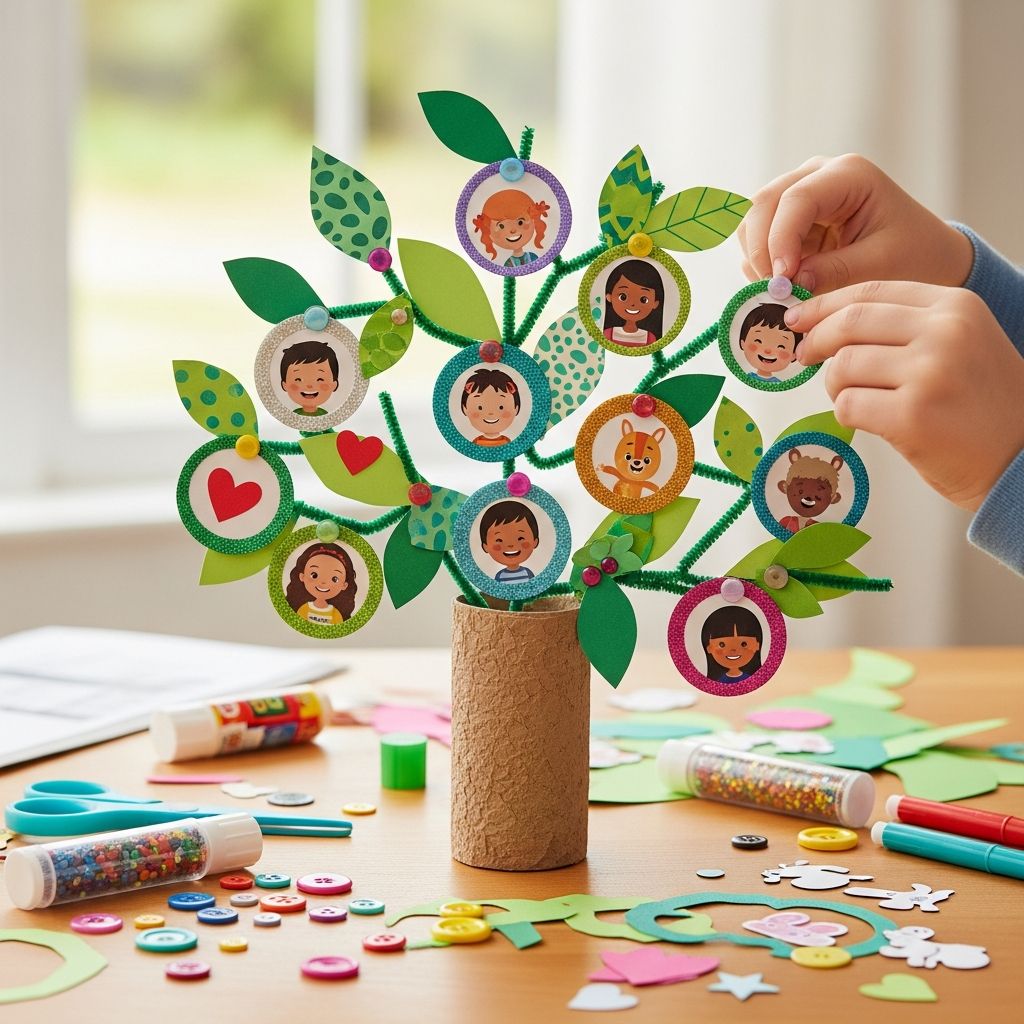
Building a family tree with children offers a delightful way to blend creativity, education, and family bonding. These projects help kids visualize their heritage, understand relationships, and develop fine motor skills through hands-on activities. Whether using everyday craft supplies or items from nature, these ideas transform abstract genealogy into tangible fun suitable for various ages.
Why Family Tree Projects Matter for Young Learners
Family tree crafts introduce children to their ancestry in an engaging manner. They encourage storytelling as kids place relatives on branches, sparking questions about grandparents’ lives or great-grandparents’ origins. Research from educational sources highlights how such activities enhance cognitive development, including sequencing events and categorizing relationships. Additionally, these projects promote emotional connections, boosting self-esteem by rooting children in their family history.
Perfect for rainy days or classroom settings, these crafts require minimal preparation and adapt to different skill levels. Younger toddlers enjoy simple placements, while older kids add details like birthdates or fun facts.
Interactive Felt Family Tree: A Movable Masterpiece
Create a reusable felt family tree that kids can rearrange endlessly. This project uses soft felt for the background, Velcro for attachment, and laminated photos for durability.
- Gather materials: Soft craft felt sheets (9×12 inches), stiff backing like chipboard or pellon, green and brown felt for tree elements, colorful felt circles, family photos, packing tape or laminator, fabric scissors, glue, and hook-side Velcro strips.
- Prepare the base: Glue soft green felt to the stiff backing. Trace and cut a tree trunk and leaves from brown and green felt, extending lines to sheet edges. Glue these permanently to the background.
- Make photo pieces: Print small family photos, laminate with tape, trim into circles, and glue onto matching colorful felt circles. Attach Velcro hooks to the backs.
- Add flair: Cut extras like flowers, suns, or birds from stiffened felt for sturdiness; affix Velcro to them too.
- Assemble and play: Trim edges, then let children stick and restick pieces on the tree, practicing family placement.
This design fosters imaginative play, as kids swap positions or invent stories. It takes about 90 minutes and withstands repeated use.
Nature-Inspired Leaf and Stick Family Tree
For an eco-friendly twist, construct a family tree from gathered natural elements. This tactile project connects kids to the outdoors even indoors.
- Collect supplies: Poster board or large paper, twigs and sticks, fresh leaves (various sizes), white galaxy marker or chalk pen, glue.
- Brainstorm family: List relatives on scrap paper, grouping by generations.
- Label leaves: Write names on leaves with the white pen; use larger ones for parents and smaller for extended family.
- Build structure: Glue twigs into a tree shape on the board. Attach leaf groups to branches, connecting with more sticks to show lineage.
- Personalize: Draw apples for pets, add drawn details, or label dates.
Emphasize no strict rules—let creativity guide the layout, making ‘branching off’ concepts intuitive. Ideal for kindergartners, it builds spatial reasoning and nature appreciation.
Handprint Trees: Personal Touches with Body Art
Handprint crafts turn kids’ bodies into the canvas, creating sentimental keepsakes. Mix paints for brown trunks and add family faces.
- Materials needed: Construction paper or printable tree template, washable paints (mix for brown), markers, optional collage bits like yarn for hair.
- Paint hands: Dip child’s hand in brown paint for trunk layers; spread fingers for branches. For toddlers, use ‘frozen’ cues to minimize smudges.
- Dry and decorate: Once dry, draw family faces on ‘leaves’ (fingerprints or cutouts). Add names and ages.
- Variations: Footprints for roots, collage faces, or seasonal themes like fall leaves.
These yield bedroom-worthy art, capturing growth stages. They teach color mixing and patience during drying.
Paper-Based Family Trees: Simple and Versatile
Use colored paper for quick, customizable trees. Great for classrooms or groups.
- Essentials: Colored construction paper, scissors, glue, markers, family photos or drawings.
- Design options: Fold paper accordion-style for branches; cut heart, star, or flower shapes as templates.
- Steps: Draw or trace tree outline, glue photo-backed shapes on branches, label with facts.
- Enhance: Add timelines or heritage symbols like flags.
Suitable for all ages, these develop scissor skills and artistic expression.
Comparing Family Tree Craft Ideas
| Project Type | Materials Cost | Age Suitability | Skill Developed | Durability |
|---|---|---|---|---|
| Felt Interactive | Medium | 2+ | Fine motor, matching | High (reusable) |
| Nature Leaf/Stick | Low | 4+ | Spatial, nature ID | Medium |
| Handprint Art | Low | 1+ | Creativity, body awareness | Low (display only) |
| Paper Crafts | Low | 3+ | Cutting, labeling | Medium |
This table helps select based on resources and goals.
Sensory and Sorting Extensions
Extend learning with sensory bins: Fill a box with tree-themed items (leaves, mini photos) for sorting by generation. Or create peek-a-boo flaps revealing family facts. These add multi-sensory layers.
Tips for Success Across All Projects
- Start simple: Focus on immediate family first.
- Adapt for ages: Pre-cut for young ones.
- Discuss as you craft: Share stories to deepen meaning.
- Display proudly: Hang or frame to encourage revisits.
- Safety first: Supervise scissors, glue; use non-toxic paints.
Frequently Asked Questions
What ages are best for family tree crafts?
Most suit ages 2-10, with adaptations: sensory play for toddlers, detailed labeling for school-age kids.
How do I involve distant relatives?
Gather photos digitally, print small, or draw portraits; interview for fun facts.
Can these be group activities?
Yes, perfect for classrooms or reunions—compare trees to find shared branches.
What if we lack photos?
Use drawings, magazine cutouts, or symbols representing traits.
How to preserve crafts?
Laminate paper ones; store felt flat; spray natural ones with sealant.
Benefits Beyond Fun: Educational Impact
These projects teach genealogy basics, like generations and lineage, aligning with school curricula. They build vocabulary (aunt, cousin) and empathy through shared histories. Studies from educational blogs note improved family communication.
Expand by researching online trees or visiting libraries for heritage books. Turn it annual, updating with new siblings or stories.
References
- Felt Family Tree – Interactive Activity for Kids — Family Locket. 2015-06-15. https://familylocket.com/felt-family-tree-interactive-activity-for-kids/
- Family Tree project ideas for Kids! – YouTube — YouTube Channel. 2023-05-10. https://www.youtube.com/watch?v=tvcXshqcVPQ
- Building the family tree – explorative learning activity with natural materials — Kara Carrero. 2018-09-20. https://karacarrero.com/natural-materials-family-tree-project/
- Family Tree Craft Activity Ideas for Kids — Four Cheeky Monkeys. 2016-04-12. http://fourcheekymonkeys.com/play-love-learn/family-tree-craft-activity/
- 9 Family Tree Activities for Kids — Buggy and Buddy. 2019-11-05. https://buggyandbuddy.com/9-family-tree-activities-for-kids/