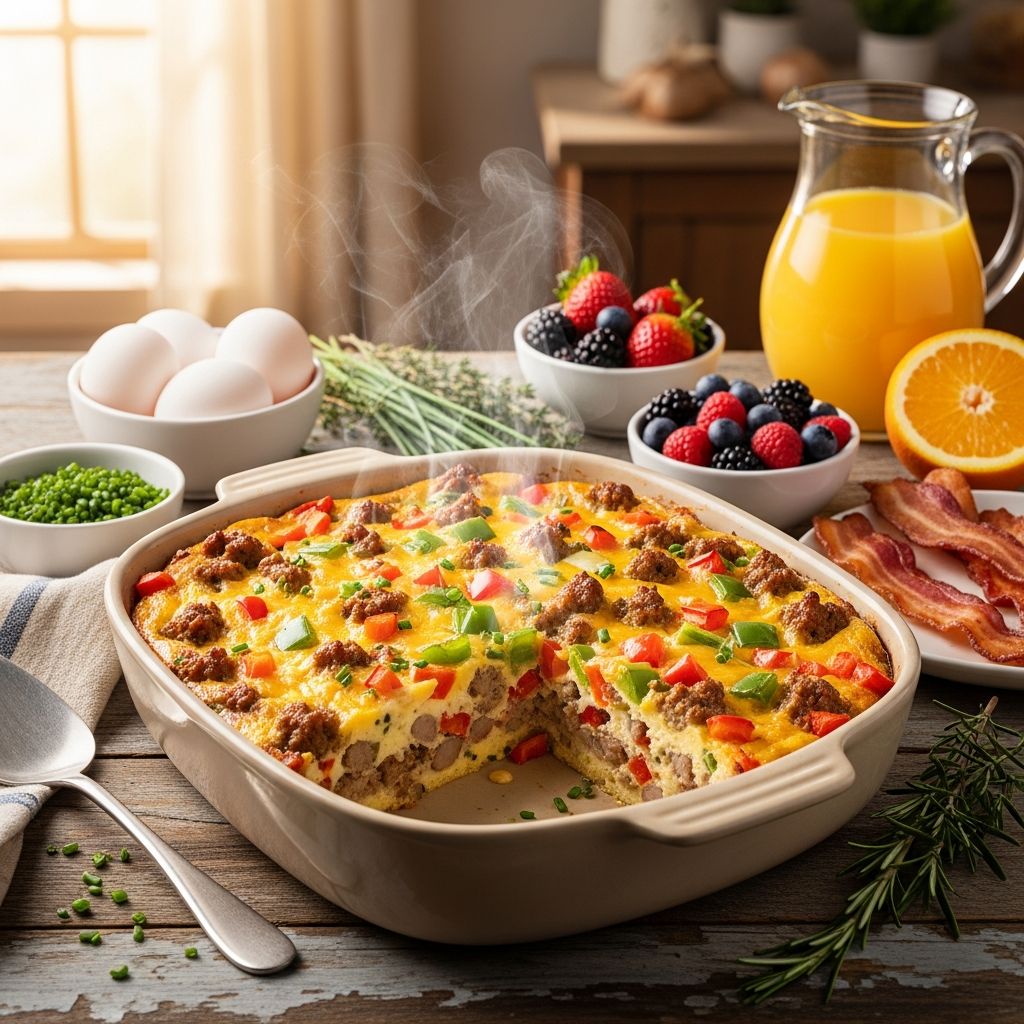
Breakfast casseroles are the secret weapon of busy families, transforming simple ingredients into a warm, satisfying meal that is ready when you are. Instead of juggling multiple pans and side dishes, you bake everything together in one dish and serve a crowd with minimal effort.
This guide walks through a flexible breakfast casserole concept built around eggs, bread or potatoes, and flavorful mix-ins like vegetables, cheese, and breakfast meats. You will learn a simple base formula, practical variations, time-saving tricks, and answers to common questions, so you can adapt the dish to your own household’s tastes and schedule.
Why Breakfast Casserole Belongs in Every Kitchen
A breakfast casserole is more than a recipe; it is a strategy for simpler mornings. You can assemble it the night before, slide it into the oven in the morning, and serve a complete meal with almost no hands-on time when everyone is hungry.
- Perfect for holidays, weekend brunches, sleepovers, and busy school days.
- Customizable for picky eaters, special diets, and changing seasons.
- Great for meal prep, since leftovers reheat well for several days.
Core Building Blocks of a Breakfast Casserole
Nearly every breakfast casserole follows the same basic pattern: a base for structure, an egg mixture to bind everything together, and flavorful extras for color and texture. Once you understand the pattern, you can create your own versions without needing a strict recipe.
The Base Layer
The base provides substance and helps the casserole hold its shape when sliced. Different bases create different textures and nutritional profiles.
- Bread cubes: Use day-old sandwich bread, whole-grain loaves, or crusty baguette for a soft, custardy texture.
- Potatoes: Choose shredded hash browns or diced potatoes for a heartier, more rustic casserole.
- Grain alternatives: Cooked quinoa, brown rice, or farro can be used for a higher-fiber, gluten-free-friendly base.
Egg and Dairy Mixture
The egg mixture is the glue that turns a pan of ingredients into a sliceable bake. The ratio of eggs to liquid affects how firm or custardy your casserole feels.
- Eggs: Typically 8–12 large eggs for a standard 9×13 inch pan.
- Liquid: Milk, half-and-half, or a non-dairy alternative for creaminess and moisture.
- Seasoning: Salt, pepper, herbs, and optional spices like smoked paprika or garlic powder.
Flavorful Mix-Ins
Mix-ins are where your casserole becomes uniquely yours. Combine colors, textures, and flavors so the final dish looks inviting and tastes balanced.
- Vegetables: Bell peppers, onions, spinach, mushrooms, tomatoes, broccoli, or zucchini.
- Proteins: Cooked sausage, bacon, ham, smoked turkey, or plant-based crumbles.
- Cheese: Cheddar, mozzarella, feta, goat cheese, or a dairy-free shredded cheese.
Sample Family Breakfast Casserole Formula
The following formula offers a flexible framework you can tweak based on your pantry and preferences. Quantities are approximate so you can easily scale up or down.
| Component | Suggested Amount (9×13 pan) | Examples |
|---|---|---|
| Eggs | 10–12 large | Whole eggs, or part whole eggs and part egg whites |
| Liquid | 1.5–2 cups | Milk, half-and-half, unsweetened almond milk, oat milk |
| Base | 4–5 cups | Bread cubes, hash browns, cooked diced potatoes, cooked grains |
| Vegetables | 2–3 cups (cooked or sautéed) | Bell peppers, onions, spinach, mushrooms, tomatoes, broccoli |
| Protein | 1–2 cups (cooked) | Crumpled sausage, chopped bacon, ham, tofu, lentils |
| Cheese | 1–2 cups, shredded or crumbled | Cheddar, mozzarella, Swiss, feta, goat cheese |
Step-by-Step: How to Assemble and Bake
Although you can mix and match ingredients, the general assembly technique stays fairly consistent. Following these steps will help you avoid soggy layers or uneven baking.
- Prepare the dish. Grease a 9×13 inch baking dish with butter, oil, or non-stick spray to prevent sticking and to make cleanup easier.
- Pre-cook the fillings. Sauté vegetables until they soften and release excess moisture, and fully cook any raw meat. This helps keep the casserole from becoming watery.
- Add the base. Spread bread cubes or potatoes evenly over the bottom of the dish, creating a single, mostly even layer.
- Layer vegetables and proteins. Sprinkle your cooked vegetables and proteins over the base, distributing everything so each bite has a bit of everything.
- Top with cheese. Add half or all of the cheese at this stage, depending on whether you want to reserve some for the last few minutes of baking.
- Whisk the egg mixture. In a large bowl, whisk eggs, liquid, and seasonings until smooth and slightly frothy.
- Pour and soak. Slowly pour the egg mixture over the layered ingredients, tilting the pan gently if needed to help it settle evenly.
- Chill or bake. Either bake immediately, or cover and refrigerate for several hours or overnight before baking.
- Bake until set. Bake at around 175–180°C (350–375°F) for 35–50 minutes, depending on thickness, until the center is just set and a knife comes out clean.
- Rest before serving. Let the casserole rest for 5–10 minutes after baking to firm up for easier slicing.
Flavor Variations for Different Eaters
Once you have a handle on the base method, experiment with flavors that match your family’s preferences. The same framework can lean classic, kid-friendly, or more sophisticated for brunch guests.
- Garden Veggie: Use spinach, tomatoes, onions, peppers, and a sprinkle of feta or goat cheese, with herbs like basil or oregano.
- Classic Ham and Cheese: Combine chopped ham, cheddar or Swiss cheese, and mild vegetables such as green onions or bell peppers.
- Southwest-Inspired: Add black beans, corn, peppers, onions, and a mix of cheddar and pepper jack, seasoned with cumin and chili powder.
- Protein-Packed: Include sausage or turkey, extra egg whites for added protein, and a moderate amount of cheese.
- Vegetarian Comfort: Focus on sautéed mushrooms, spinach, roasted peppers, and caramelized onions with a rich cheese like Gruyère.
Tips for Making It Kid-Friendly
Serving vegetables at breakfast can be surprisingly successful when tucked into a cozy, cheesy casserole. A few thoughtful tweaks make the dish more approachable for younger eaters and pickier palates.
- Use familiar flavors such as mild cheddar, ham, and bell peppers instead of very strong or spicy ingredients.
- Chop vegetables very small so they blend into the overall texture instead of standing out in big bites.
- Start with a simple version and gradually add one new vegetable or seasoning at a time.
Make-Ahead and Storage Strategies
One of the biggest advantages of breakfast casserole is its flexibility in timing. You can assemble it in advance, refrigerate or freeze portions, and reheat as needed throughout the week.
- Overnight prep: Assemble the uncooked casserole, cover tightly, and refrigerate for up to 24 hours before baking.
- Meal prep portions: Bake the casserole, cool completely, then cut into individual squares and refrigerate for 3–4 days.
- Freezing: Wrap baked and cooled portions or the entire casserole in freezer-safe packaging and freeze for up to about 2–3 months.
Reheating for Busy Mornings
Reheating correctly keeps leftovers moist and tasty. Heating too aggressively can cause the eggs to dry out or turn rubbery, so a gentle approach is best.
- Microwave: Place a slice on a microwave-safe plate, cover lightly, and heat in short bursts until warmed through.
- Oven: Arrange slices in a baking dish, cover with foil, and warm at a moderate temperature until heated.
- From frozen: For the best texture, thaw overnight in the refrigerator before reheating; if reheating from frozen, use a slightly lower oven temperature and allow extra time.
Nutrition Considerations and Lighter Swaps
Breakfast casseroles can be hearty and indulgent, but they can also be balanced and nutrient-dense with a few thoughtful choices. You can adjust fat, protein, and carbohydrate content to match your goals.
- Use part egg whites instead of all whole eggs to lower saturated fat while keeping protein high.
- Choose lean proteins, such as turkey sausage or diced chicken, instead of higher-fat meats.
- Emphasize vegetables and use whole-grain bread or a potato base for more fiber.
- Opt for a sharp cheese, which delivers strong flavor so you can use a smaller amount.
- Swap in unsweetened non-dairy milk if you need a lactose-free or lighter option.
Suggested Serving Ideas
On its own, a breakfast casserole is quite filling, but a few simple sides can round out the meal and add freshness. Think about balancing the richness of eggs and cheese with lighter, crisp textures.
- Pair with a simple fruit salad for natural sweetness and color.
- Serve alongside a green salad dressed with a light vinaigrette for brunch.
- Add whole-grain toast or a small side of yogurt for extra staying power.
Frequently Asked Questions
Can this be made completely dairy-free?
Yes, you can adapt the casserole by using a plant-based milk, replacing cheese with a dairy-free alternative, and choosing oil or a dairy-free spread for greasing the pan. Be sure to check labels on any processed ingredients to confirm they are free of dairy.
How do I know when the casserole is fully cooked?
The top should be lightly golden, the edges should pull away slightly from the pan, and the center should be set but still tender. A knife or toothpick inserted in the middle should come out without liquid egg clinging to it.
Can I assemble and freeze the casserole before baking?
It is generally easier to bake first and then freeze portions, because freezing raw eggs and high-moisture vegetables can sometimes change the texture. If you need to freeze before baking, keep the base and fillings relatively dry and be prepared for a slightly softer texture after baking.
What is the best way to avoid a soggy bottom?
Cook vegetables thoroughly to release moisture and pat them dry if they seem watery, especially mushrooms or spinach. If using frozen hash browns or vegetables, thaw and drain them before adding, and avoid using very soft or fresh bread that may absorb too much liquid and fall apart.
Can I halve the recipe?
Absolutely. Use a smaller baking dish, such as an 8×8 or similar volume, and reduce baking time slightly. Start checking for doneness earlier, since a thinner casserole will cook more quickly than a full pan.
Bringing It All Together
A breakfast casserole offers flexibility, convenience, and comfort in one pan. By understanding the basic components and proportions, you can adapt the dish to match your family’s routines, from quiet weekday mornings to bustling holiday gatherings, all while keeping breakfast warm, nourishing, and low-stress.