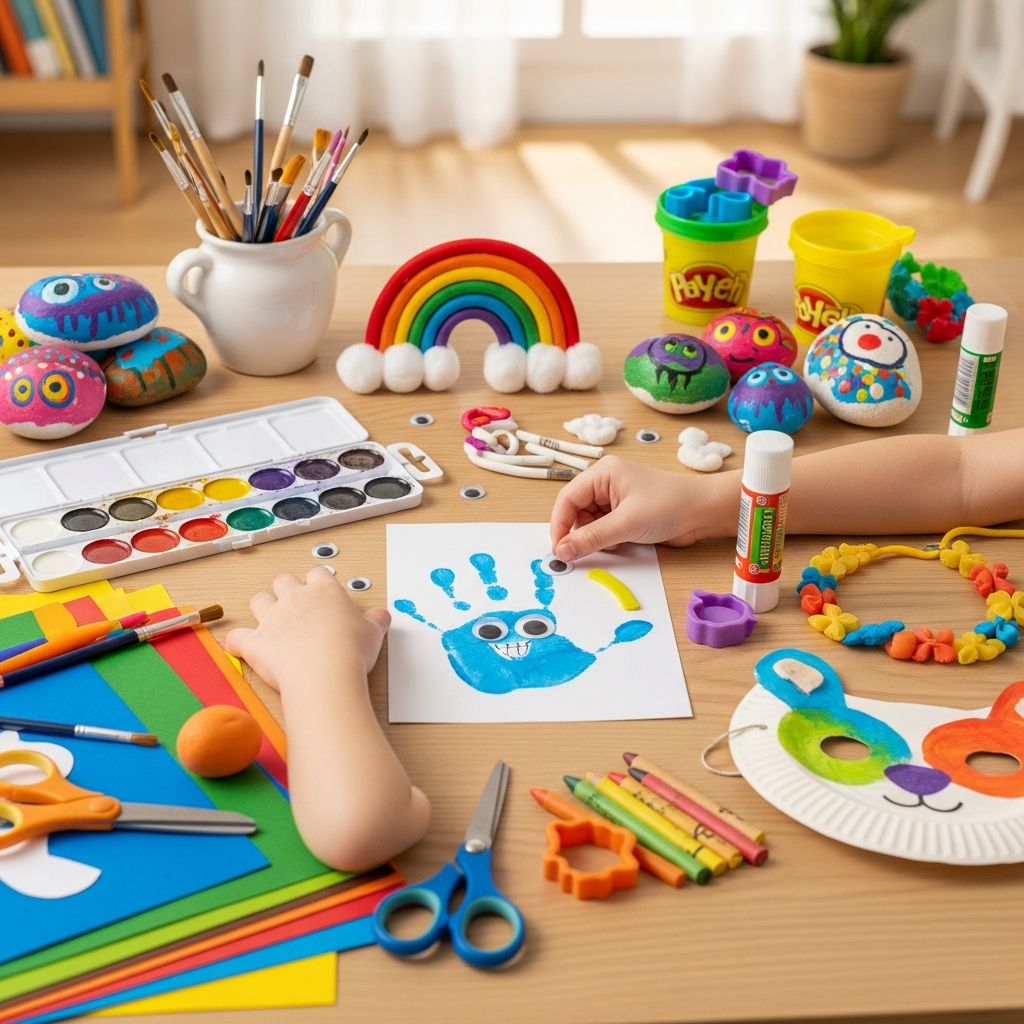
Art activities provide children with a joyful way to express themselves, develop fine motor skills, and explore colors and textures using items already found around the house. These projects require minimal preparation, promote creativity without overwhelming cleanup, and adapt easily to different age groups from toddlers to tweens. Parents can join in to foster family bonding while encouraging problem-solving and self-confidence through hands-on creation.
Why Household Art Boosts Child Development
Engaging in DIY crafts at home supports cognitive growth by teaching pattern recognition, spatial awareness, and cause-and-effect relationships. According to educational resources, activities like stamping or collaging enhance hand-eye coordination and patience.Key benefits include:
- Improved dexterity through cutting, gluing, and painting motions.
- Emotional expression via color choices and imaginative themes.
- Sensory exploration with varied textures like sponges or pasta.
- Family collaboration that strengthens relationships and communication.
These projects also introduce basic concepts in math, science, and history subtly, such as symmetry in weaving or patterns in mosaics.
Texture-Based Painting Adventures
Start with everyday absorbents to create textured masterpieces that feel exciting under little fingers.
Kitchen Sponge Designs
Cut clean kitchen sponges into shapes like circles, stars, or abstract blobs. Dip them into washable paints and press onto sturdy paper or cardboard. Layer colors for depth, experimenting with dabbing versus dragging techniques. This method introduces texture variation and color blending naturally.Ages: 2+.
Bubble Wrap Stamping
Apply paint to one side of deflated bubble wrap sheets, then press paper over it to capture the bubbly pattern. Repeat with multiple hues for overlapping effects resembling fireworks or ocean waves. The raised bubbles provide tactile feedback, making it ideal for sensory play.
Color Magic with Filters and Filters
Coffee Filter Butterflies
Color coffee filters with washable markers in vibrant patterns, then spritz with water to watch hues bleed and mix. Once dry, pinch the center with a clothespin for a body and add pipe cleaner antennae. Hang them near a window to catch light, teaching diffusion of color like a science demo.
Gluey Window Suncatchers
Squeeze white glue onto clear plastic sheets in swirling designs, drop in food coloring, and let dry to form translucent gems. Peel off and hang in sunlight for rainbow refractions. This low-mess project builds patience as layers set.
Mosaic and Collage Creations
Assemble tiny pieces into big pictures using recyclables for a satisfying puzzle-like experience.
Pasta Pattern Pictures
Dye uncooked pasta shapes in food coloring or paint, then glue onto cardboard sketches of animals, flowers, or abstracts. Vary pasta types for diverse textures—shells for petals, wheels for suns. Discuss symmetry and design as they build.
Magazine Image Mashups
Flip through old magazines or catalogs, clipping words, shapes, and photos to form dream scenes or self-portraits. Arrange before gluing to practice composition. This encourages storytelling and visual narrative skills.
Nature Finds Assembly
Collect leaves, twigs, and petals on a walk (or use indoor faux versions), glue to paper for landscapes or creatures. Add drawn details post-drying. Ties into environmental awareness.
Puppet and Mask Makeovers
Sock Character Builders
Stuff old socks with fabric scraps for heads, then decorate with yarn hair, button eyes, and felt mouths using fabric glue. Perform shows afterward to extend play into drama.
Plate Face Fantasies
Draw or paint on paper plates to craft animal or superhero masks, cutting eye holes carefully (adult supervision). Add elastic bands or sticks for holding. Great for role-play parties.
Outdoor and Sidewalk Spectacles
Chalk Shadow Tracings
On sunny days, position toys or hands to cast shadows on pavement or paper, outlining with chalk or pencils. Fill in with colors or patterns. Explores light and projection basics.
Cornstarch Sidewalk Canvases
Mix cornstarch, water, and washable paint for giant brushes or squirt bottles. Kids draw murals that rinse away easily, perfect for large-scale expression.
3D Sculpture Fun
Cardboard Robot Realm
Stack toilet paper rolls, cereal boxes, and foil into quirky robots. Secure with tape, decorate with markers and recyclables. Discuss shapes and engineering playfully.
Pool Noodle Neighborhoods
Slice foam noodles into buildings, roads, and figures; connect with toothpicks or glue. Builds 3D spatial thinking and urban design concepts safely.
Paper Bag Townscapes
Print or draw house templates, color, and attach to lunch bags standing as structures. Create a village for small world play.
Sensory and Edible Experiments
Homemade Finger Goo
Stir cornstarch, sugar, water, and food coloring into slick, non-toxic paint for squishy sensory bliss on trays or trays. Safe for taste-testing curious toddlers.
Ice Block Painting
Freeze paint-tinted water in trays; as ice melts, kids paint with the dripping colors on paper. Combines science of states of matter with art.
Weaving and Pattern Play
Slit Paper Weaves
Cut slits in construction paper, weave contrasting strips through for rugs or wall hangings. Introduces math sequences and rhythm.
Potato Stamp Patterns
Carve potatoes into shapes, stamp rhythmic designs. Explore tessellations by fitting shapes edge-to-edge.
Personalized Keepsakes
Time Capsule Treasures
Decorate a box with drawings and notes about today; bury or store to open later. Promotes reflection and memory-making.
Kindness Rocks
Paint smooth stones with uplifting messages or patterns. Hide in gardens for community cheer, teaching positivity.
Spin and Swirl Techniques
Plate Whirl Designs
Drip paint on a spinning paper plate (use a salad spinner or hand-spin) for centrifugal art. Demonstrates physics dynamically.
Frequently Asked Questions
What ages are these projects suitable for?
Most adapt from 2-12 years; simplify for toddlers (gluing only) and add challenges like themes for older kids.
Are these activities messy?
Many use washable paints and trays; opt for glue dots or tape to minimize residue.
What if I lack supplies?
Core items: paper, tape, markers, recyclables. Food coloring substitutes paints.
How to encourage reluctant artists?
Model first, praise efforts, tie to their interests like dinosaurs or unicorns.
Can these teach school skills?
Yes—colors, shapes, following steps align with preschool standards; older ones cover geometry and design.
| Type | Core Items | Age Range |
|---|---|---|
| Painting | Sponges, paints, paper | 2-10 |
| Collage | Glue, clippings, cardboard | 3-12 |
| 3D Builds | Recyclables, tape | 4-12 |
| Sensory | Cornstarch, coloring | 1-8 |
References
- 7 Art Projects Kids Can Do at Home With Everyday Materials — Golden Road Arts. 2023-05-15. https://www.goldenroadarts.org/art-resources/7-art-projects-kids-can-do-home-with-everyday-materials/
- 31 Arts and Crafts for Kids to Make at Home — Highlights Parents. 2024-02-20. https://parents.highlights.com/31-arts-and-crafts-kids-to-make-home
- Creative Art Projects for Kids: 15 Fun Ideas — Common Sense Press. 2023-11-10. https://commonsensepress.com/creative-art-projects-for-kids/
- At-Home Art Projects That Anyone Can Do — Creative Hearts. 2022-08-05. http://www.creative-hearts.com/blog/at-home-art-projects-that-anyone-can-do
- 40 Summer Art Ideas for Kids — Art Bar Blog. 2023-06-12. https://www.artbarblog.com/40-summer-art-ideas-for-kids/