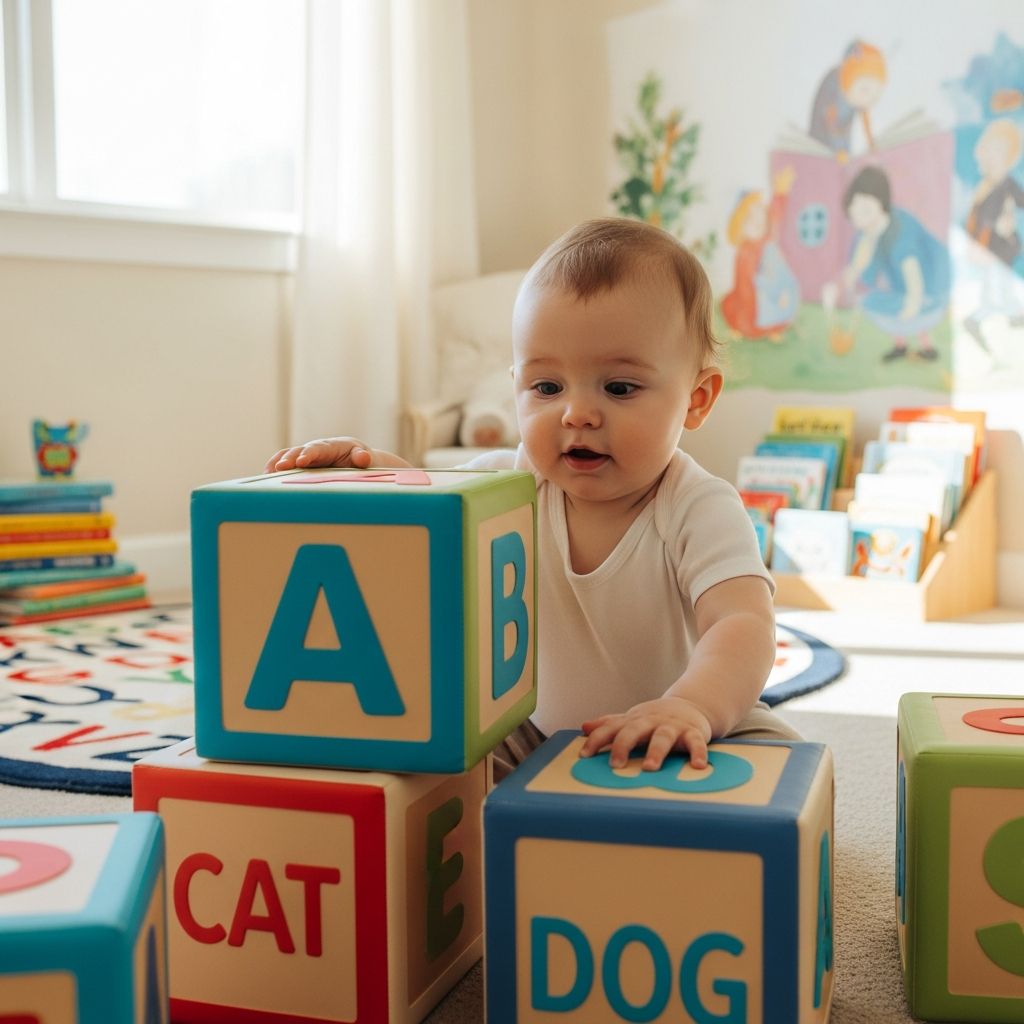
From the moment babies enter the world, their brains are wired for language and learning. Early literacy isn’t about teaching letters or words—it’s about sparking curiosity through sounds, stories, and interactions that lay the groundwork for reading success later in life. Research from the American Academy of Pediatrics emphasizes that shared reading with infants strengthens parent-child bonds and supports cognitive growth[10]. This guide explores practical, evidence-based ways to cultivate these foundational skills right from birth.
Why Early Literacy Matters for Infants
Infants’ brains form more neural connections in the first two years than at any other time, making this period ideal for literacy exposure. Studies show that babies exposed to rich language environments develop larger vocabularies and better reading skills by school age. Early literacy promotion, starting in the newborn phase, creates a home filled with books and reading routines, leading to measurable improvements in language comprehension by six months.
Unlike formal education, early literacy thrives on natural interactions. Babies absorb rhythms, rhymes, and repetitions from songs and stories, tuning into language patterns even before they speak. This foundation predicts later academic achievement, with children who experience frequent reading showing advanced language scores. Moreover, these activities reduce developmental gaps, especially in underserved communities where access to books may be limited.
- Brain Boost: Daily reading increases synaptic growth, enhancing memory and focus.
- Bonding Benefit: Close reading sessions release oxytocin, deepening emotional ties[10].
- Long-Term Gains: Early habits correlate with higher preschool language scores.
Foundational Skills Babies Build First
Early literacy encompasses more than print awareness—it’s a web of skills like recognizing sounds, handling objects, and understanding symbols. For newborns to toddlers, emergent literacy involves repeating rhymes, exploring book textures, and linking images to meanings. Oral language forms the bedrock, as babies primed for sounds in utero quickly discern speech patterns post-birth.
| Age Range | Key Milestone | How Play Supports It |
|---|---|---|
| Newborn-3 months | Responds to voices and rhymes | Singing lullabies builds auditory discrimination |
| 4-6 months | Grasps books, babbles | Board book exploration aids motor skills |
| 7-12 months | Points to pictures, says first words | Interactive pointing games expand vocabulary |
| 13-24 months | Follows simple stories, names objects | Puppet play reinforces sequencing |
These milestones emerge through play, not drills. Block building hones pattern recognition, a pre-reading skill, while symbolic pretend play links gestures to words, boosting vocabulary. Programs like Reach Out and Read (ROR) demonstrate that providing books at well-child visits from birth increases home reading frequency and book ownership.
Everyday Strategies to Spark Literacy
Parents are a baby’s first teachers—no fancy tools required. Start with talking constantly: Narrate diaper changes, describe meals, and label emotions. This ‘serve and return’ interaction—responding to coos with words—strengthens neural pathways for communication. Research confirms regular parent-child conversations yield richer vocabularies.
Reading routines transform quiet moments into learning adventures. Choose durable board books with high-contrast images for newborns. Hold baby close, point to pictures, and use exaggerated voices to mimic sounds. Even non-readers benefit: Early ROR participants had more books at home (5.4 vs. 4.0) and read more days per week (3.9 vs. 3.1) by six months. Aim for 15-20 minutes daily, adjusting for attention spans.
- Pick age-appropriate books: Cloth for mouthing, lift-the-flap for exploration.
- Make it interactive: Ask ‘Where’s the dog?’ and wait for responses.
- Vary tones: Whisper, roar, or sing to engage different senses.
Play as the Ultimate Literacy Tool
Play isn’t recess—it’s literacy in action. For tiny hands, stacking blocks teaches sequencing and spatial awareness, key for decoding words later. A study of toddlers found block play with parental guidance raised language comprehension scores significantly. Symbolic play, like pretending a spoon is a phone, connects actions to language, predicting speech growth.
Libraries shine here, offering literature-rich spaces for joint parent-child exploration. Unlike structured preschools, libraries allow families to play together, fostering reciprocal talks that expand vocabulary. At home, improvise: Use scarves for peekaboo (object permanence), pots for rhythm bands (phonemic awareness), or mirrors for self-naming (identity words).
- Sensory Play: Textured toys mimic book pages, building tactile familiarity.
- Gestural Games: Waves and claps pair movement with sounds.
- Outdoor Adventures: Point out signs, birds, and weather for real-world vocabulary.
Navigating Challenges in Early Literacy
Not all days are picture-perfect. Fussy babies or bilingual homes raise questions, but adaptations work. For multilingual families, reading in the home language builds bilingual literacy foundations that transfer to English. Screen time? Limit to none under 18 months; opt for live interactions[10].
Socioeconomic barriers fade with free resources: Pediatric clinics distribute books via ROR, proving feasible even in busy urban settings (82% implementation rate). Track progress informally—note babble variety or book interest—rather than pressuring performance.
Real-World Evidence from Research
Randomized trials validate these approaches. In one study of 120 Medicaid-eligible newborns, early book distribution and counseling yielded richer reading environments at six months, though language scores equalized by 24 months as standard care caught up. The American Academy of Pediatrics endorses daily reading from birth, citing enhanced relationships and development[10].
Play studies reinforce: Toddlers in block-play interventions showed superior word understanding. Oral language immersion via talks and songs underpins all, per policy research. These findings urge starting early, consistently.
Frequently Asked Questions
Can newborns really benefit from books?
Yes—holding and hearing books builds brain connections for language, even if they don’t understand words yet[10].
How often should I read to my baby?
Daily, in short bursts matching their attention: 5 minutes for newborns, building to 20.
What if my baby isn’t interested?
Follow their lead—try rhymes, props, or new books. Persistence pays off as curiosity grows.
Does bilingual reading confuse babies?
No, it strengthens cognitive flexibility and dual literacy.
Are apps a good substitute?
Not for under-2s; human interaction trumps screens for bonding and skill-building[10].
Stepping Up: From Baby Steps to Toddler Triumphs
As babies hit 12 months, layer in complexity: Predict story endings, act out animals, introduce rhymes. By two, they’re turning pages and reciting favorites. Consistency bridges to preschool readiness, where strong starters excel. Communities amplify this—join story hours, borrow library books, or form reading groups.
Empower your role: You’re not just reading; you’re architecting a literate mind. Small daily investments yield exponential returns in confidence, expression, and joy. Celebrate every gurgle, point, and word—milestones marking a literate future.
References
- Effects of Early Literacy Promotion on Child Language Development — Cates CB et al. National Library of Medicine. 2023-05-25. https://pmc.ncbi.nlm.nih.gov/articles/PMC10236559/
- Tiny Hands, Big Impact: Play’s Role in Early Literacy — Shortridge. American Library Association. 2023. https://journals.ala.org/index.php/cal/article/view/7800/10846
- Literacy Development in Children — Maryville University. Accessed 2026. https://slp.maryville.edu/blog/literacy-development-in-children/
- What We Know About Early Literacy and Language Development — Zero to Three. Accessed 2026. https://www.zerotothree.org/resource/what-we-know-about-early-literacy-and-language-development/
- Strengthening Early Literacy Practices with Evidence-Based Resources — Institute of Education Sciences. 2023. https://ies.ed.gov/learn/blog/strengthening-early-literacy-practices-evidence-based-resources
- Widening the Reach for Early Literacy — Harvard Graduate School of Education. 2022-12. https://www.gse.harvard.edu/ideas/news/22/12/widening-reach-early-literacy
- Early Literacy — First Things First. Accessed 2026. https://files.firstthingsfirst.org/for-parents-and-families/literacy
- Early Literacy: Policy and Practice in the Preschool Years — NIEER. 2023-08-10. https://nieer.org/sites/default/files/2023-08/10.pdf
- The Importance of Early Literacy in Early Childhood Programs — LENA. Accessed 2026. https://www.lena.org/resources/blog-posts/what-is-early-literacy-in-early-childhood/
- Early Literacy — American Academy of Pediatrics. Accessed 2026. https://www.aap.org/en/patient-care/early-childhood/early-childhood-health-and-development/early-literacy/