The Critical Role of Ear Health in Your Child’s Development
As a parent, you may think ear infections are simply an uncomfortable but temporary condition that children eventually outgrow. However, the ears play a far more significant role in your child’s overall development than many realize. When the auditory system functions properly, children develop the foundational skills needed for communication, learning, and social interaction. Understanding how the ear works and recognizing when something is amiss can help you take proactive steps to protect your child’s long-term health and educational success.
The ear is a complex organ with multiple parts working together to capture, process, and transmit sound to the brain. When any part of this system becomes compromised—particularly during the critical early years of development—the consequences can extend far beyond temporary discomfort. This guide provides comprehensive information to help you navigate ear health concerns and make informed decisions about your child’s care.
Anatomy and Function: How Children’s Ears Work
The human ear consists of three main sections: the outer ear, middle ear, and inner ear. Each section plays a specific role in the hearing process. The outer ear, including the visible part called the auricle and the ear canal, collects sound waves from the environment. These vibrations travel through the ear canal until they reach the eardrum, a thin membrane that vibrates in response to sound.
Beyond the eardrum lies the middle ear, a small air-filled space containing three tiny bones called the ossicles. When the eardrum vibrates, these bones transmit the vibrations to the inner ear, where they are converted into electrical signals. The inner ear also contains structures responsible for balance, which is why ear problems can sometimes affect a child’s coordination and stability.
One crucial feature in children’s ears is the Eustachian tube, a narrow passage connecting the middle ear to the back of the throat. This tube allows air pressure to equalize on both sides of the eardrum and drains fluid from the middle ear into the throat. In young children, this tube is shorter and more horizontal than in adults, making it more susceptible to blockage. When the Eustachian tube becomes congested due to colds, allergies, or infections, fluid can accumulate behind the eardrum, leading to the common condition known as otitis media.
Recognizing Warning Signs and Symptoms
Identifying ear problems in children requires awareness of both obvious and subtle symptoms. The presentation of ear issues can vary depending on the child’s age and the specific nature of the problem.
Acute Ear Infection Indicators
When a child develops an acute ear infection, symptoms often appear suddenly and can be quite pronounced. A child may experience significant ear pain, which they might indicate by tugging or pulling at the affected ear, especially in younger children who cannot verbalize their discomfort. Fever frequently accompanies ear infections as the body’s immune system fights the invading bacteria or virus. In some cases, yellow or greenish fluid or pus may drain from the ear, indicating a perforation of the eardrum. Decreased hearing ability, temporary balance problems, and difficulty concentrating or sleeping may also occur.
Chronic or Recurring Infection Signs
When infections become chronic or recurrent, the symptoms may be less dramatic but potentially more consequential. A child with persistent fluid in the middle ear might show no pain but could request that others speak louder or repeatedly ask people to repeat themselves. You may notice the child turning the volume up on television or digital devices to excessively loud levels. Speech development may appear slower than expected for the child’s age, or pronunciation may be unclear. Some children show signs of inattention or difficulty following directions, which can mistakenly be attributed to behavioral issues rather than hearing difficulties.
The Connection Between Ear Health and Language Development
Perhaps the most significant concern for parents should be the impact of ear problems on language development. The relationship between auditory input and language acquisition is well-established through decades of research. During the first three years of life, children’s brains are primed to absorb language patterns, vocabulary, and speech sounds from their environment. This is a critical window of neurological development during which the auditory cortex—the part of the brain responsible for processing sound—is being shaped by sensory input.
When a child experiences temporary hearing loss due to fluid accumulation or infection during these crucial years, the developing brain receives incomplete or distorted auditory information. Rather than hearing crisp, clear speech, the child’s auditory experience becomes muffled, similar to listening to a conversation while underwater. Over time, this interrupted auditory input can lead to measurable deficits in language development that persist long after the ear infection has resolved.
Research has shown that children who experienced several ear infections before age three demonstrated smaller vocabularies and difficulty discriminating between similarly sounding words compared to children with few or no infections. These children also showed reduced ability to detect changes in sound patterns, indicating problems in the brain’s auditory processing centers. Such deficits may not become immediately obvious but can manifest as academic struggles in later grades when language complexity increases significantly.
Age-Related Vulnerability and Risk Factors
Not all children experience ear infections at the same rate or severity. Certain age groups and demographic factors place children at higher risk. Children between six and eighteen months old face the greatest susceptibility to ear infections, coinciding precisely with the period when language development accelerates dramatically. By the third birthday, nearly ninety percent of children will have experienced at least one ear infection.
Several factors increase a child’s vulnerability to ear infections:
- Attendance at group childcare settings, where exposure to viruses and bacteria is greater
- Family history of ear infections or hearing problems
- Seasonal changes, particularly fall and winter months when upper respiratory infections are common
- Exposure to secondhand smoke
- Recent upper respiratory infections or colds
- Premature birth or developmental delays
- Certain genetic or ethnic backgrounds, particularly Indigenous populations who experience higher rates of otitis media
- Anatomical factors affecting the Eustachian tube drainage
Diagnosis and Professional Evaluation
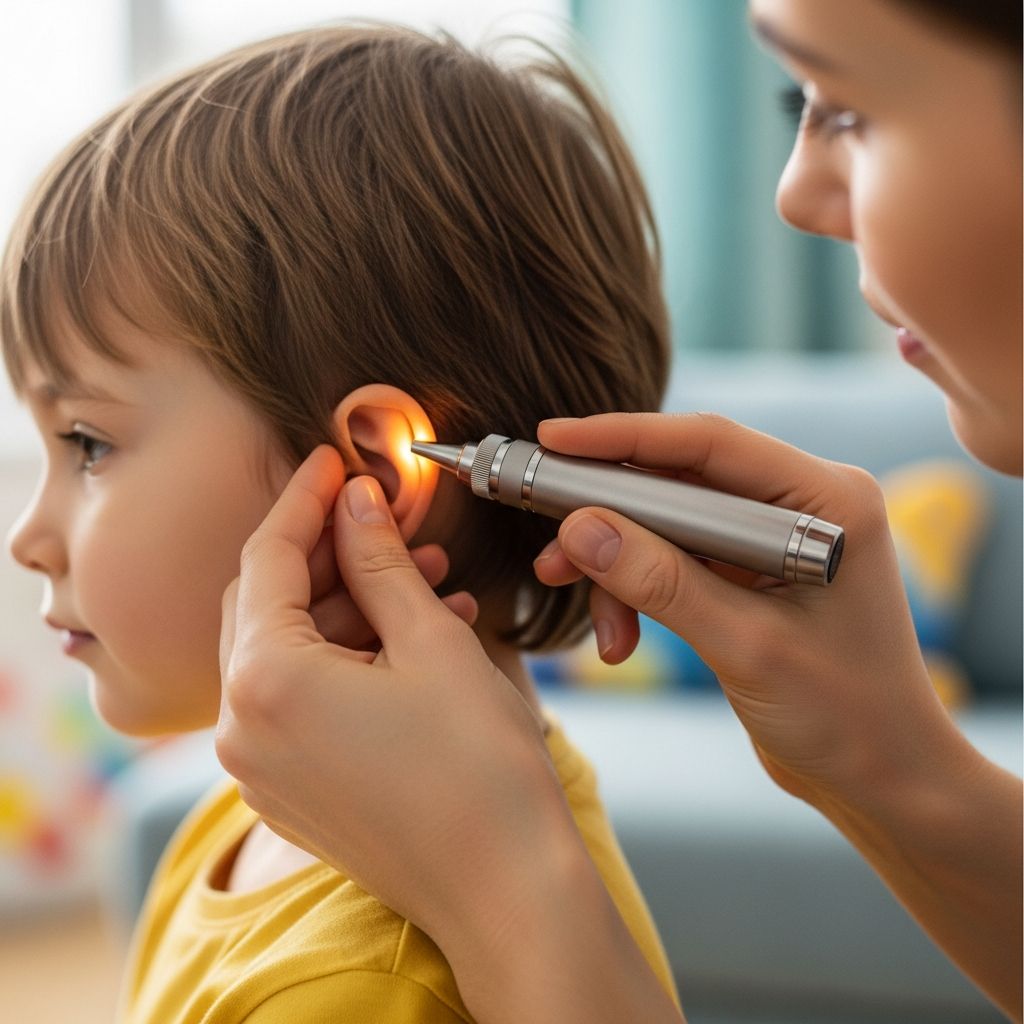
When you suspect your child has an ear infection or hearing problem, professional evaluation is essential. Your pediatrician can perform an initial assessment using an otoscope, an instrument that allows visualization of the ear canal and eardrum. A healthy eardrum appears translucent and slightly concave, while an infected eardrum may appear red, bulging, or cloudy.
For more detailed information about hearing capability and middle ear function, an audiologist can conduct specialized testing. Tympanometry measures how well the eardrum responds to pressure changes and can detect fluid behind the eardrum even when not accompanied by pain. Audiometric testing, appropriate for older children, measures hearing sensitivity across different frequencies. These objective tests provide crucial information for determining the appropriate course of treatment.
Treatment Options and Intervention Strategies
The approach to treating ear infections depends on factors including the child’s age, severity, frequency of infections, and whether fluid persists after the infection resolves.
Watchful Waiting
Many ear infections, particularly those caused by viruses, resolve on their own within a few days to two weeks. Your doctor may recommend a period of observation, during which time comfort measures like appropriate pain relief and fever management can ease your child’s symptoms. However, this approach requires careful follow-up to ensure the infection is indeed resolving and not progressing.
Antibiotic Treatment
When bacteria cause the ear infection or when symptoms are severe or the child is very young, antibiotics may be prescribed. Completing the full course of prescribed antibiotics is important, even if the child feels better, to ensure complete elimination of the infection and reduce the risk of recurrence.
Ear Tubes (Tympanostomy)
When infections become chronic or fluid persists for extended periods affecting hearing and development, ear tubes may be recommended. This minor surgical procedure involves placing small tubes through the eardrum. These tubes allow air to enter the middle ear and facilitate drainage of accumulated fluid, effectively normalizing ear pressure. Ear tubes are typically temporary and naturally extrude as the eardrum heals, usually within six to twelve months. This intervention can be remarkably effective in preventing fluid accumulation and reducing infection recurrence, thereby protecting language development during critical periods.
Hearing Support
In cases where hearing loss is significant or persistent, hearing aids may be recommended to provide adequate auditory input during critical development periods. Early amplification can support normal speech and language development by ensuring the child receives sufficient auditory information to process spoken language effectively.
Long-Term Consequences of Untreated or Recurring Problems
While acute ear infections typically resolve without lasting consequences, chronic or repeatedly recurring infections can have significant long-term effects. The cumulative impact of even mild daily hearing loss can substantially affect a child’s academic performance and social development.
Children who experience significant auditory deprivation during early critical periods may develop persistent language disorders that manifest as they progress through school. As academic language becomes increasingly complex, these children struggle with reading comprehension, written expression, and verbal participation in class discussions. Some children develop social difficulties, as communication challenges can lead to reduced peer interaction and potential isolation.
Additionally, untreated hearing loss or chronic ear fluid can affect a child’s ability to follow classroom instructions, complete assignments, and participate in group activities. Teachers may misinterpret these difficulties as behavioral problems or lack of motivation, potentially leading to inappropriate academic placements or disciplinary measures.
Preventive Measures and Risk Reduction
While not all ear infections can be prevented, several strategies can reduce their frequency and severity:
- Minimize exposure to secondhand smoke and indoor air pollution
- Ensure children receive recommended vaccinations, including pneumococcal and influenza vaccines
- Maintain good hand hygiene and respiratory etiquette to reduce cold and flu transmission
- Limit exposure to group settings when possible during peak illness seasons
- Keep water out of the ears during bathing and swimming
- Avoid inserting objects into the ear canal
- Maintain appropriate humidity levels in your home
- Avoid bottle-feeding in a supine position, which can increase fluid entering the Eustachian tube
- Consider breastfeeding when possible, as breast milk contains antibodies that support immune function
When to Seek Professional Help
Contact your pediatrician if your child experiences ear pain, fever, fluid drainage from the ear, or any signs of hearing difficulty. Additionally, if your child has had multiple ear infections within a year, if fluid persists in the ear for more than three months, or if you notice developmental delays in speech or language, professional evaluation is warranted. Early intervention can prevent or minimize long-term consequences.
Monitoring Development Beyond the Infection
An important takeaway for parents is that monitoring should continue long after the infection has resolved and the child seems completely better. Language deficits may not become apparent until the child enters school and is expected to use increasingly complex language skills. Speech-language pathologists can assess whether a child’s language development is progressing at an age-appropriate rate and identify delays that might benefit from intervention.
Frequently Asked Questions
How common are ear infections in children?
Nearly ninety percent of children will experience at least one ear infection by their third birthday. The condition is most common between six and eighteen months of age, coinciding with the period of most rapid language development.
Can ear infections cause permanent hearing loss?
Most ear infections cause only temporary hearing loss that resolves when the infection clears. However, repeated episodes during critical development periods can have lasting effects on language development, even after hearing returns to normal.
Are ear tubes safe for children?
Ear tube placement is a safe, common procedure performed on millions of children. The tubes are temporary and naturally extrude as the eardrum heals. The procedure can significantly reduce infection recurrence and prevent fluid accumulation.
Should all ear infections be treated with antibiotics?
Not necessarily. Many ear infections resolve on their own. Your doctor will consider factors like the child’s age, severity of symptoms, and whether the infection appears bacterial or viral before recommending antibiotics.
How can I tell if my child has a hearing problem?
Signs include difficulty following directions, requesting repetition, turning up volume on devices, delayed speech development, or failure to respond to their name. Professional hearing testing can provide definitive assessment.
References
- Chronic childhood ear infections delay language development — University of Florida News. 2023-12-14. https://news.ufl.edu/2023/12/ear-infection-language-development/
- How Ear Infections Can Affect Your Child’s Learning Development — Loyola Medicine. https://www.loyolamedicine.org/newsroom/blog-articles/effects-ear-infections-children
- Parent Perspectives of Ear Health and the Relationship with Children’s Speech and Language in the Longitudinal Study of Indigenous Children — National Center for Biotechnology Information (NCBI/PMC). https://pmc.ncbi.nlm.nih.gov/articles/PMC9857726/
- How Child Ear Infections Delay Development — Blue Cross of Idaho. https://bluebulletin.bcidaho.com/articles/how-child-ear-infections-delay-development
- Hearing Loss in Children — HealthyChildren.org (American Academy of Pediatrics). https://www.healthychildren.org/English/health-issues/conditions/ear-nose-throat/Pages/Hearing-Loss.aspx
- Ear Infections in Children, Babies & Toddlers — National Institute on Deafness and Other Communication Disorders (NIDCD/NIH). https://www.nidcd.nih.gov/health/ear-infections-children
- About Hearing Loss in Children — Centers for Disease Control and Prevention (CDC). https://www.cdc.gov/hearing-loss-children/about/index.html