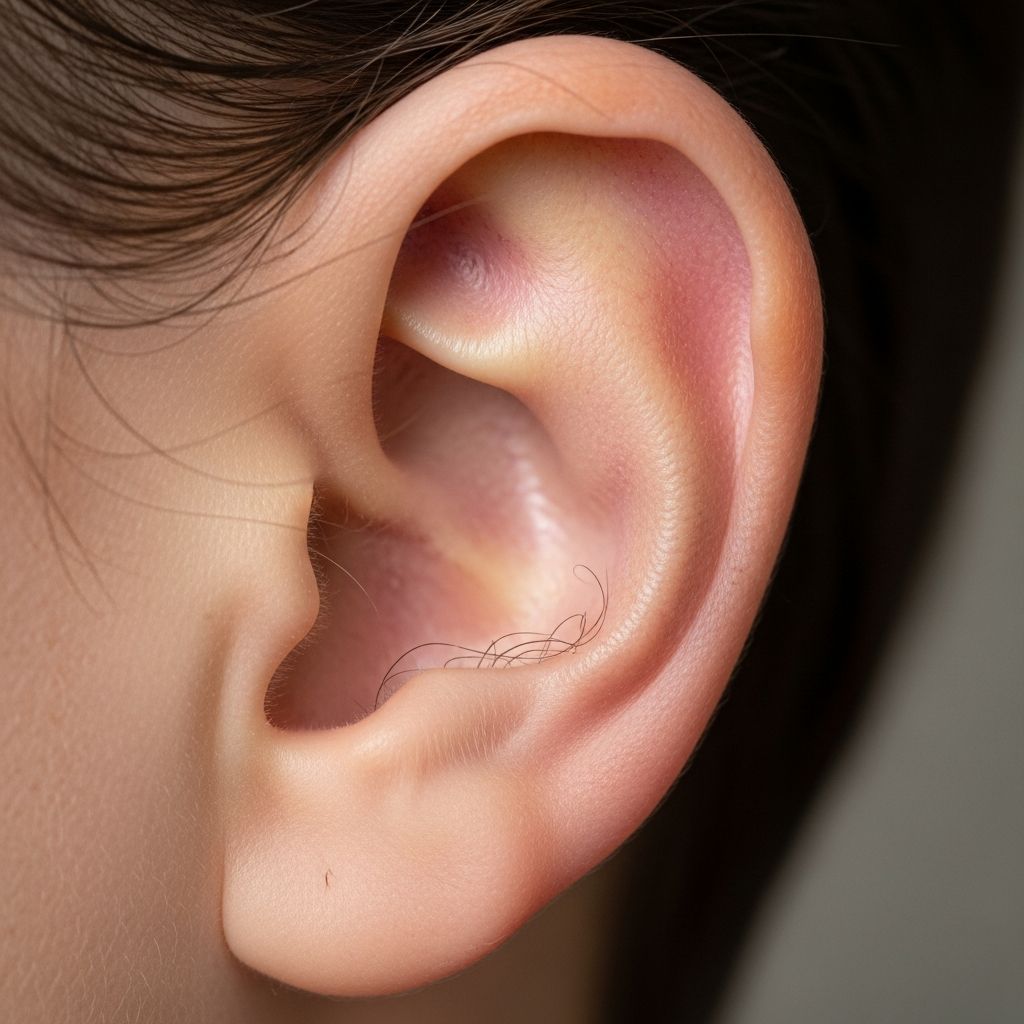
Sudden appearance of hair in or around the ears is a common phenomenon, particularly among aging men, driven primarily by hormonal influences and genetics. This article delves into the biological mechanisms, potential health implications including cardiovascular risks, functional benefits, and practical management strategies.
Biological Foundations of Ear Hair Development
Hair follicles across the body respond differently to hormonal signals, with those in the ears becoming notably active later in life. Androgens, such as testosterone, play a pivotal role; as men age, ear and nasal follicles exhibit heightened sensitivity to these hormones, leading to coarser, more visible terminal hairs.
Auricular hypertrichosis refers to excessive hair growth on the outer ear or within the canal, manifesting as tufts protruding from the ear opening or strands along the helix. This condition is more prevalent in certain populations, like those of Indian descent, where genetic predispositions result in hairy pinnae from an earlier age.
- Key Hormonal Drivers: Testosterone and its derivatives stimulate vellus hairs (fine, light) to transform into terminal hairs (thick, pigmented).
- Age-Related Changes: Post-puberty, androgen receptors in ear follicles upregulate, accelerating growth after age 40-50.
- Genetic Factors: Familial patterns suggest heritability, with some ethnic groups showing higher incidence.
Inside the ear canal, fine vellus hairs associated with ceruminous glands produce and trap earwax (cerumen), forming a natural defense against dust and microbes. Distinct from outer ear hair, these serve essential protective functions.
Types of Ear Hair and Their Locations
Ear hair varies by position and purpose, influencing both aesthetics and health.
| Type | Location | Function | Common Associations |
|---|---|---|---|
| Tragus/Antitragus Hair | Around ear opening | Barrier against particles | Hereditary, hormonal in older adults |
| Ceruminous (Vellus) Hair | Ear canal base | Earwax production/trapping | Protects eardrum from debris |
| Helix/Pinnae Hair | Outer ear rim | Cosmetic/minimal protection | Genetic in specific populations |
| Canal-Protruding Tufts | From canal outward | May trap water/dirt | Androgen sensitivity with age |
Understanding these distinctions aids in assessing whether growth is normal or excessive.
Health Implications: Beyond Cosmetics
While often dismissed as vanity, ear hair proliferation signals underlying physiological shifts and may correlate with serious conditions. Research highlights associations with coronary artery disease (CAD), where hair growth on the auricle or earlobe elevates risk independently of traditional factors like hypertension or diabetes.
A study on Iranian patients found ear hair presence increased CAD odds by 4.4-fold after adjusting for confounders, with higher severity (more affected vessels) in affected individuals. This phenotypic marker, alongside earlobe creases (2.4-fold risk), suggests shared pathogenic pathways involving inflammation, collagen degradation, or metabolic changes.
- Cardiovascular Link: Ear hair as a predictor, potentially tied to prostaglandins, growth hormones, and inflammatory cytokines.
- Other Risks: Excessive canal hair heightens swimmer’s ear (otitis externa) by trapping moisture; rare cases link to tinnitus if hairs contact the eardrum or folliculitis.
- Protective Aspects: Canal hairs filter debris, preventing infections; outer hairs block insects and particulates.
Speculative ties to HIV exist but lack robust confirmation; most growth remains benign.
Why Does It Seem ‘Sudden’?
The perception of abrupt onset stems from cumulative hormonal effects. Puberty initiates androgen surges, but ear follicles’ sensitivity peaks decades later. Genetics amplify this in predisposed individuals, while prostaglandins (E2, F2α), insulin-like growth factor, and thyroid hormones contribute. Men experience this more due to higher baseline testosterone.
Environmental triggers like stress or medications (e.g., minoxidil) can exacerbate, potentially causing hypertrichosis severe enough for canal occlusion.
Safe Grooming and Removal Techniques
Regular trimming maintains hygiene and appearance without medical necessity. Prioritize safety to avoid infections or injury.
- Tools: Use rounded-tip scissors, electric trimmers with guards, or depilatory creams (test for allergies).
- Method: Pull ear gently; trim protruding hairs only, avoiding deep canal insertion.
- Frequency: Every 1-2 weeks; never wax or pluck to prevent ingrown hairs or irritation.
- Post-Care: Clean tools; apply alcohol if nicking occurs.
Laser or electrolysis offers semi-permanent reduction for hypertrichosis, consulting dermatologists for severe cases.
Grooming Pros vs. Cons
| Pros | Cons |
|---|---|
| Improved aesthetics | Risk of cuts/infection |
| Reduces swimmer’s ear risk | Temporary regrowth |
| Enhances hygiene | Potential irritation |
Debunking Myths and Misconceptions
- Myth: Ear hair directly causes heart disease. Fact: It’s a correlative marker, not causative; prompts screening.
- Myth: Only men get it. Fact: Rare in women, but hormonal imbalances can trigger.
- Myth: Shaving makes it thicker. Fact: No evidence; blunts tips temporarily.
- Myth: All ear hair is bad. Fact: Canal hair protects; outer is cosmetic.
When to Consult a Professional
Seek medical advice if:
- Hair growth is rapid/asymmetric.
- Accompanied by pain, discharge, hearing changes, or tinnitus.
- Family history of CAD with new ear hair/earlobe crease.
- Sudden onset post-medication or in younger individuals.
Dermatologists assess hypertrichosis; cardiologists evaluate CAD risk via exams like ECG or angiography.
Frequently Asked Questions (FAQs)
Is ear hair a sign of heart problems?
Studies indicate association with higher CAD risk (4.4-fold odds), warranting check-ups, especially with other factors.
Why do ears grow hair but not scalp?
Unique androgen receptor distribution: ear/nose follicles hyper-responsive with age, unlike scalp.
Does trimming ear hair hurt hearing?
No, if done shallowly; inner hair cells (stereocilia) are unrelated to visible hair.
Can women get hairy ears?
Rarely, due to lower androgens; possible with PCOS or medications.
Is ear hair growth reversible?
Not naturally; grooming manages it effectively.
Protective Roles of Ear Hair in Daily Life
Beyond risks, ear hair evolved for utility. Canal vellus hairs with cerumen create a self-cleaning trap for pathogens, reducing otitis media incidence. Outer hairs deflect wind-blown debris, complementing the ear’s anatomy. Preserving some hair balances protection and grooming.
Research Evolution and Future Directions
Early observations linked ear phenotypes to CAD; recent analyses confirm via multivariable models. Ongoing genomic studies may pinpoint genes, refining risk scores. Integrating ear exams into routine check-ups could enhance early detection in at-risk populations.
References
- Transverse Groove on Earlobe: Coronary Artery Disease Risk — PMC/NCBI. 2021-07-28. https://pmc.ncbi.nlm.nih.gov/articles/PMC8343484/
- Ear hair — Wikipedia. N/A. https://en.wikipedia.org/wiki/Ear_hair
- Why Does Hair Grow in Ears? — Baptist Health. N/A. https://www.baptisthealth.com/blog/audiology/why-does-hair-grow-in-ears
- Ear Hair (Hairy Ears): Causes, Meaning & Removal — Cleveland Clinic. 2023-11-02. https://my.clevelandclinic.org/health/diseases/25162-ear-hair
- Why is There Hair in My Ears? — Earworx. N/A. https://www.earworx.com.au/why-is-there-hair-in-my-ears/
- Hair in Ears: Signs of Coronary Artery Disease — Lybrate. N/A. https://www.lybrate.com/topic/hair-in-ears-how-it-is-a-sign-of-warning/10bb641f9a6e9b5423a17fe915ce4d5f
- Ear Hair: Heart Disease, Outer, Ear Canal, and More — Healthline. N/A. https://www.healthline.com/health/ear-hair
- Why do ear and nose hair grow more as you age, but head hair grows less — Nebraska Medicine. N/A. https://www.nebraskamed.com/dermatology/why-do-ear-and-nose-hair-grow-more-as-you-age-but-head-hair-grows-less